Department of Justice misleads Americans about the true causes and costs of FOIA delays during Sunshine Week

For the first time in over a decade, the United States Department of Justice (DOJ) celebrated Sunshine Week with a blog post, instead of a public event. In past years, a high-ranking DOJ official — often the DOJ Chief FOIA Officer – would make a speech, followed by the Director of the Office of Information Policy (OIP).

The OIP director would make a presentation about the state of FOIA compliance across the executive branch, backed by data they’d collected from the annual reports agencies were required to submit.

And then the OIP Director would give out awards to the FOIA professionals across the executive branch, offering important public recognition for their service. (I know, because I have attended most of these events since 2016 at “Main Justice” in downtown DC.)

In 2026, there was no public ceremony or speeches, nor has OIP published and socialized open data that shows the state of agency compliance with the statutory obligation to respond to FOIA requests within 20 days that Congress has repeatedly mandated. 

Instead, OIP published a short statement by Associate Attorney General Stanley E. Woodward, Chief FOIA Officer of the  Department of Justice, atop a short blog post about Sunshine Week by Office of Information Policy Director Sean Glendening. 

To be clear, we vigorously agree with AAG Woodward that “our FOIA professionals are the unsung heroes of democracy” and welcome the Department honoring their service. Unfortunately, the Department of Justice also made several false assertions in his short statement to the American people that require correction.

1) This is not “the most transparent Department of Justice in our nation’s history,” by any objective measure. Any subjective assessment that ignores the contempt the USAG has shown towards Congress and the free press or the stonewalling around the Epstein Files isn’t honest.

2) Prior administrations made real progress in “improving FOIA processes and prioritizing citizens’ access to information about their government” by proactively disclosing data online. This administration has not. 

They’ve gutted FOIA offices, taken down public data and fired statistical officials, and stonewalled requestors, the direct result of which is more litigation and wasted taxpayer funds. It is downright Orwellian to state the inverse is true on a Department of Justice website during Sunshine Week. Doing so may even run afoul of the Information Quality Act, which requires officials to ensure “the quality, objectivity, utility, and integrity of information (including statistical information) disseminated by Federal agencies.”

3) The “ever-increasing burden” placed on FOIA professionals is the result of multiple administrations failing to invest far more in the FOIA, from modernization, increasing state capacity, carving out dedicated, secure alternatives for first-party records access to veterans and people seeking immigration records, to proactively disclosing records corporations are buying under the FOIA and other frequently requested records.

The need for systemic investment in improving the systemic problems that have made FOIA broken for people unwilling or unable to file lawsuits for access to information has been abundantly clear for decades. The American people can see this truth for themselves in the breadth and depth of recommendations made by the U.S. Freedom of Information Act Advisory Committee, or experience it by making a FOIA request through FOIA.gov.

As Nate Jones reported for the Washington Post, instead of “improving FOIA processes” as DOJ falsely claimed, this administration cut FOIA staff. That predictably has negatively affected the capacity of agencies to respond to requestors quickly – much less provide records responsive under the FOIA in a timely manner.

In his first public post about FOIA, the new OIP director did not recognize any of those facts, nor offer any thanks to the FOIA staff dismissed and honor their service — including his predecessor.

Instead, he and the AAG chose to try to create an “alternative fact” during a national celebration of public access to information. 

Namely, they’re advancing a narrative in which “a small group of frequent requesters accounts for an increasing volume of both total and complex FOIA requests” – without showing any data to back up this claim. In this alternative narrative, this “forces agencies to divert a disproportionate share of limited resources away from the timely processing of simpler requests submitted by individual members of the public.”

Got it? Increased secrecy, censorship of open data, legacy systems, diminished state capacity, lax Congressional oversight, malign negligence by OMB, firing the AOTUS, and serial underfunding for decades aren’t at fault for the increasingly poor performance by FOIA offices. Instead, it’s a “small group of requestors” that’s “forcing” agencies to divert “limited resources.” That’s transparently misleading.

As it does every year, OIP quoted James Madison, who famously stated “[a] popular Government, without popular information, or the means of acquiring it, is but a Prologue to a Farce or a Tragedy; or, perhaps, both. Knowledge will forever govern ignorance: and a people who mean to be their own Governors, must arm themselves with the power which knowledge gives.”  

That’s more true than ever in 2026. 

Thank you to the dedicated FOIA professionals and everyone else in and outside of government who continues to arm the American with the self-knowledge required for self-governance – including about the true state of the administration of the Freedom of Information Act and public access to the public records we all pay for with our taxpayer dollars. 

Smarter disclosure of hospital data may be a sovereign remedy for price gouging

If knowledge is power, ignorance is impotence. Citizens, consumers, investors, and patients all need trustworthy information when we vote, making purchasing decisions, buy stocks or other assets, or choose a surgeon, medical device, nursing home, or dialysis center. That’s why … Continue reading

How open government can prevent digital redlining

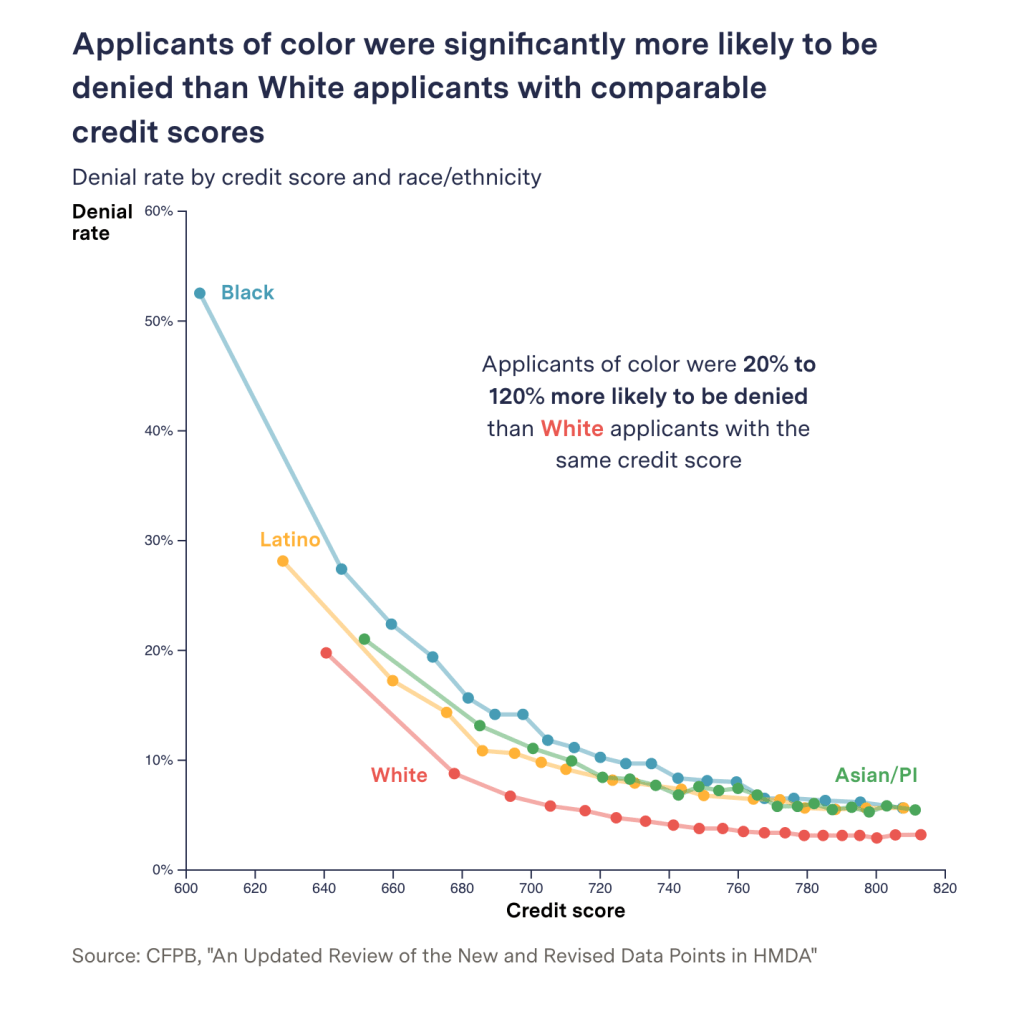
[Graphic from The Markup’s investigation of secret bias.]

On the morning of March 16, the Data Coalition hosted a public forum on how to use artificial intelligence in public sector regulation. As the Coalition notes, Congress enacted the National AI Initiative Act and the AI in Government Act in 2020, which required the Biden administration to launch of the National AI Research Resource (NAIRR) Task Force. The following remarks focus upon how open government can prevent digital redlining, as prepared for delivery in six minutes or less.

Today is National Freedom of Information Day, chosen in honor of President James Madison’s birthday, often cited as a founding father of open government in the United States. https://themarkup.org/denied/2021/08/25/the-secret-bias-hidden-in-mortgage-approval-algorithms

This public forum is happening during Sunshine Week, when we celebrate the public’s right to know and access to information.

That gives us a wonderful opportunity to talk more about how government transparency and disclosure can accelerate artificial intelligence (AI) while protecting privacy, security, and human rights.

As law becomes encoded by technology, code has become law. 

Accelerating AI in the public sector must not come at the expense of human rights, civil liberties, or the public’s right to know, which are central to democratic societies.

AI will be part of everyday life, but public sector algorithms have special importance: people don’t have a choice. From making unemployment decisions to getting loans to parole hearings to education and work, code is going to govern how we live, work, play, learn, and govern.

Public sector algorithms must be auditable to ensure that existing inequity and injustice is not codified in a rush to modernize. 

Open data and open source code can reveal and check algorithmic bias and racial, gender, or religious discrimination in public services, accommodations, and access to information.

Over the last five years, other nations have enacted laws and regulations that focus on the transparency, participation, and accountability of public sector algorithms, from France to the  Netherlands to New Zealand

In France, the Digital Republic Law mandates transparency of government-used algorithms. Public agencies are required to publicly list any algorithmic tools they use, and to publish their rules.

Imagine Congress ordering federal agencies to do so at Code.gov, and OMB forcing the issue.

Imagine an explicit extension of the Freedom of Information Act to code and meta data.

Imagine investment in the human and technical capacity of the SEC, FEC, & FTC to audit the use of AI across societies.

Imagine every city, state and democratic nation joining a global open algorithms network and committing to engaging everyone governed by code and upholding the rights of the people in these new systems.

Imagine a democratic vision for AI in the public sector that centers on human rights and the needs of the public to know in order to be self-governing, instead of authoritarian coercion, control, secrecy, opacity, and secrecy

The federal data strategy was part of the 4th National Action Plan for Open Government for the Open Government Partnership.

How many of you have ever heard of it? Please ask your colleagues in government when the General Services Administration and White House will begin co-creating a 5th plan that includes commitments on AI and democracy.

This Sunshine Week, please commit to pushing our government of, by, and for the people to collaborate WITH the people in developing legislation and rules that govern its use, codifying our “bill of rights” into the technologies we develop and use every day. 

What was missing from President Biden’s remarks at the Open Government Summit

On December 15th, President Joe Biden delivered pre-recorded remarks to the Open Government Partnership Summit, an international conference that convened dozens of nations in South Korea to discuss the past, present, and future of open government. It’s not clear how … Continue reading

Open letter on open government to Press Secretary Psaki and White House officials

Dear Secretary Psaki and the Office of the Press Secretary, My name is Alexander B Howard; you may have noticed me tweeting at you this past couple months during the transition and now the administration. I came to DC over … Continue reading

In a dual crisis of of pandemic and protest, DC extends “vote-by-email” to people who requested an absentee ballot

Digital democracy reforms tends to advance or retreat in fits and starts, but when exigent circumstances require more from us and our governments, change can happen unexpectedly. On May 26, I requested an absentee ballot, intending to cast my vote … Continue reading

What cities can learn from Gainesville’s experiment with radical transparency

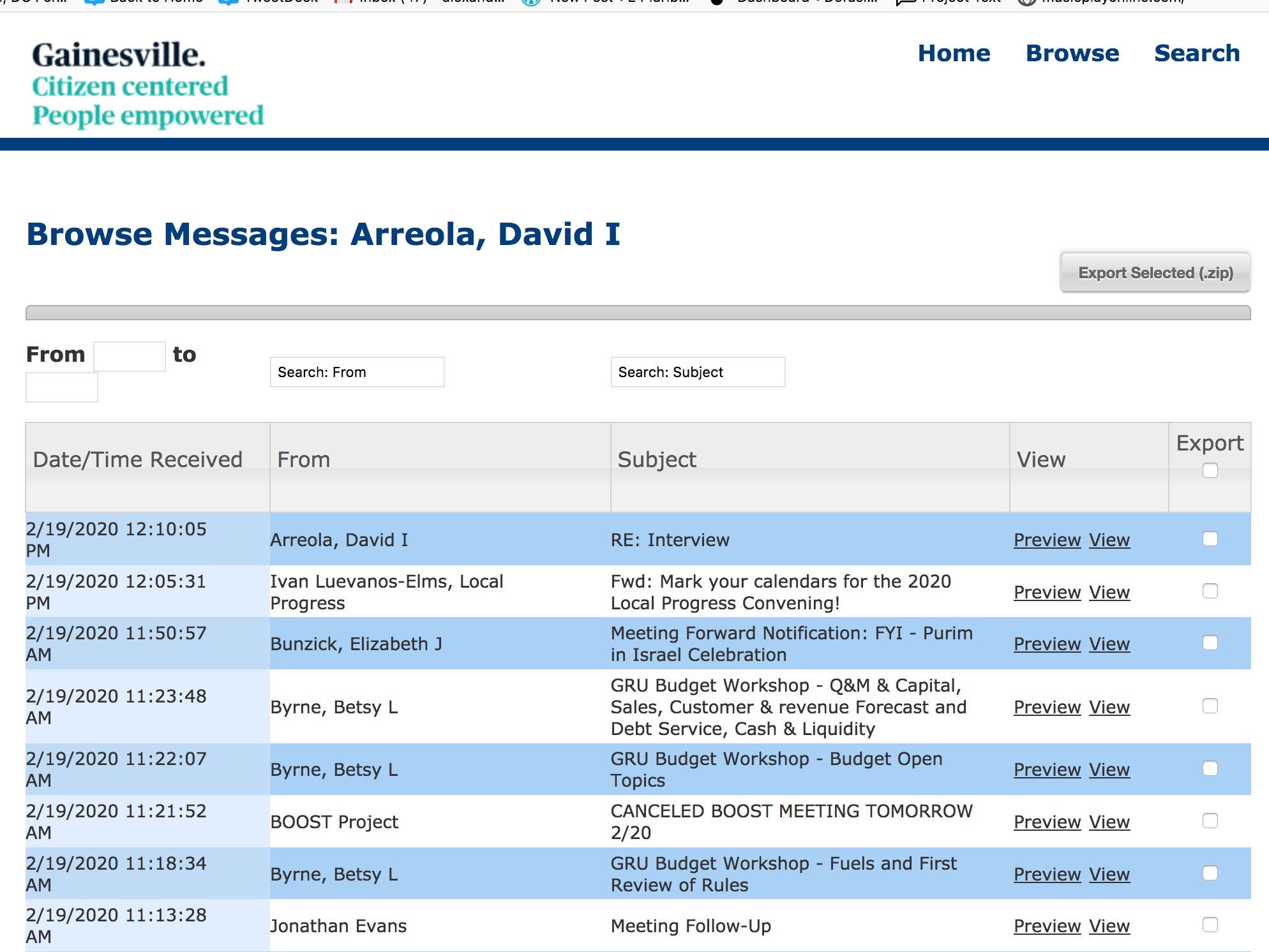
City_of_Gainesville_Commissioner_Mail_Archive_-_Message_Archive

There’s much to be learned from the experience of the city Gainesville, Florida, where a commissioners voted in 2014 to publish the public’s email correspondence with them and the mayor online.

More than five years on, the city government and its residents have are ground zero for an tumultuous experiment in hyper-transparent government in the 21st century, as Brad Harper reports for the Montgomery Advertiser.

It’s hard not to read this story and immediately see a core flaw in the design of this digital governance system: the city government is violating the public’s expectation of privacy by publishing email online.

“Smart cities” will look foolish if they adopt hyper-transparent government without first ensuring the public they serve understands whether their interactions with city government will be records and published online.

Unexpected sunshine will also dissolve public trust if there’s a big gap between the public’s expectations of privacy and the radical transparency that comes from publishing the emails residents send to agencies online.

Residents should be offered multiple digital options for interacting with governments. In addition to exercising their rights to freedom of expression, assembly and petition on the phone, in written communications with a given government, or in person at hearing or town halls, city (and state) governments should break down three broad categories of inquiries into different channels:

Emergency Requests: Emergency calls go to 911 from all other channels. Calls to 911 are recorded but private by default. Calls should not be disclosed online without human review.

Service Requests: Non-emergency requests should go 311, through a city call center or through 311 system. Open data with 311 requests is public by default and are disclosed online in real-time.

Information Requests: People looking for information should be able to find a city website through a Web search or social media. A city.gov should use a /open page that includes open data, news, contact information for agencies and public information officers, and a virtual agent or “chat bot” to guide their search.

If proactive disclosures aren’t sufficient, then there should be way to make Freedom of Information Act requests under the law if the information people seek is not online. But public correspondence with agencies should be private by default.


US FOIA Advisory Committee recommends agencies harmonize FOIA and open data programs

Yesterday, the United States Freedom of Information Act Advisory Committee met at the National Archives in Washington and approved a series of recommendations that would, if implemented, dramatically improve public access to public information. And in May, it will consider … Continue reading

Department of Justice Quietly Answers Senate Questions on FOIA Regression

During Sunshine Week in March 2019, members of the Senate Judiciary sent a letter to the Justice Department’s Office of Information Policy (OIP) that asked for information about the state of the Freedom of Information Act, noting a lack of … Continue reading