In a fascinating turn of events, rainy Oregon is embracing sunlight online after a scandal that led to the resignation of its governor. After governor Kate Brown was sworn in as the 38th governor of the state of Oregon, replacing fellow Democrat John Kitzhaber, her administration chose to try to restore public trust by not only posting public records requests online but including the authors, status and a downloadable link to the records themselves, once fulfilled. The records only go back to January 15th, 2015, with a note that requests made prior to that date are “still being processed.”
The City of Oakland’s public records system, built by Code for America, does the same thing but this appears to set a new bar for state government that’s unmatched in the United States of America. As has been reported elsewhere, exemptions to Oregon’s public records laws mean that this website will be no panacea, but it looks like progress from 3000 miles away in snowy Cambridge.
Day 1 in the books. It was an honor to be surrounded by family as I became OR's Governor. Together we move forward. pic.twitter.com/NnprrUkKBX
As Kirk Johnson reported for the New York Times, Brown’s record includes open government work while she was a state legislator, where, as Senate Majority Leader, she worked to reform Oregon’s ethics law and helped to enact legislation that created an online campaign finance database.
“…throughout my 24 years in public service, I have also sought to promote transparency and trust in government, working to build confidence that our public dollars are spent wisely,” she said, in her inaugural speech.
Later in her remarks, Governor Brown said that “we must seize this moment to work across party lines to restore the public’s trust. That means passing meaningful legislation that strengthens the capacity and independence of the Government Ethics Commission. We also must strengthen laws to ensure timely release of public documents.”
On that count, it’s notable that two of the records requests that have been posted for download involve Cynthia Hayes, the fiancee of former Governor Kitzhaber who was at the center of the scandals that led to his resignation. One comes from Margaret Olney, who is quite likely the same Margaret Olney who served in Oregon’s Department of Justice. The other requester was Alejandra Lazo, who co-authored a Wall Street Journal article on former Governor Kitzhaber’s resignation. In an interesting sidenote, the records for both responses were uploaded to Dropbox.
If you know of another state that meet or exceeds this standard for digital transparency, or have experience or feedback regarding the quality or importance of the public records posted by Oregon, please let us know in a comment.
Emily Shaw, the national policy manager at the Sunlight Foundation, said on Twitter that she has not seen any other state’s public records system exceed this standard of transparency.
According to Liang, as of June 2014 they were “the only place besides Healthcare.gov where this is possible. We have signed an agreement with CMS as a web based entity to do this. We are directly integrated with the federal data hub, so going through us is identical to going through Healthcare.gov.”
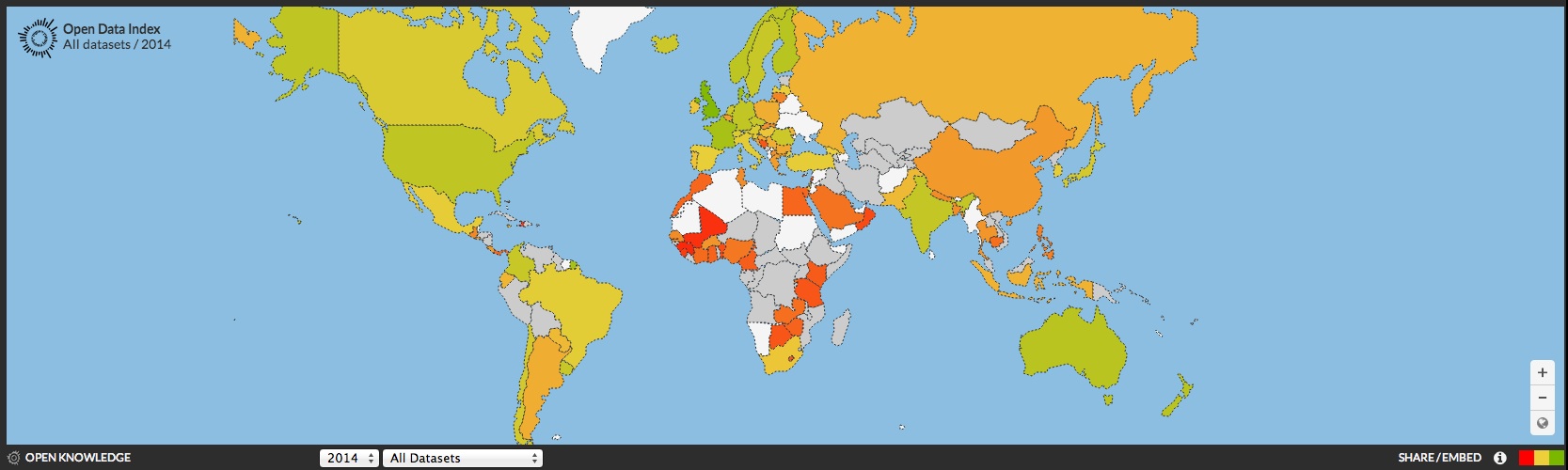
Today, Open Knowledge released its global 2014 Open Data Index, refreshing its annual measure of the accessibility and availability of government releases of data online. When compared year over year, these indices have shown not only the relatives openness of data between countries but also the slow growth in the number of open data sets. Overall, however, the nonprofit found that the percentage of open datasets across all 97 surveyed countries (up from 63 in 2013) remained low, at only 11%.
“Opening up government data drives democracy, accountability and innovation,” said Rufus Pollock, the founder and president of Open Knowledge, in a statement. “It enables citizens to know and exercise their rights, and it brings benefits across society: from transport, to education and health. There has been a welcome increase in support for open data from governments in the last few years, but this year’s Index shows that real progress on the ground is too often lagging behind the rhetoric.”
The map below can be explored in interactive form at the Open Knowledge website.
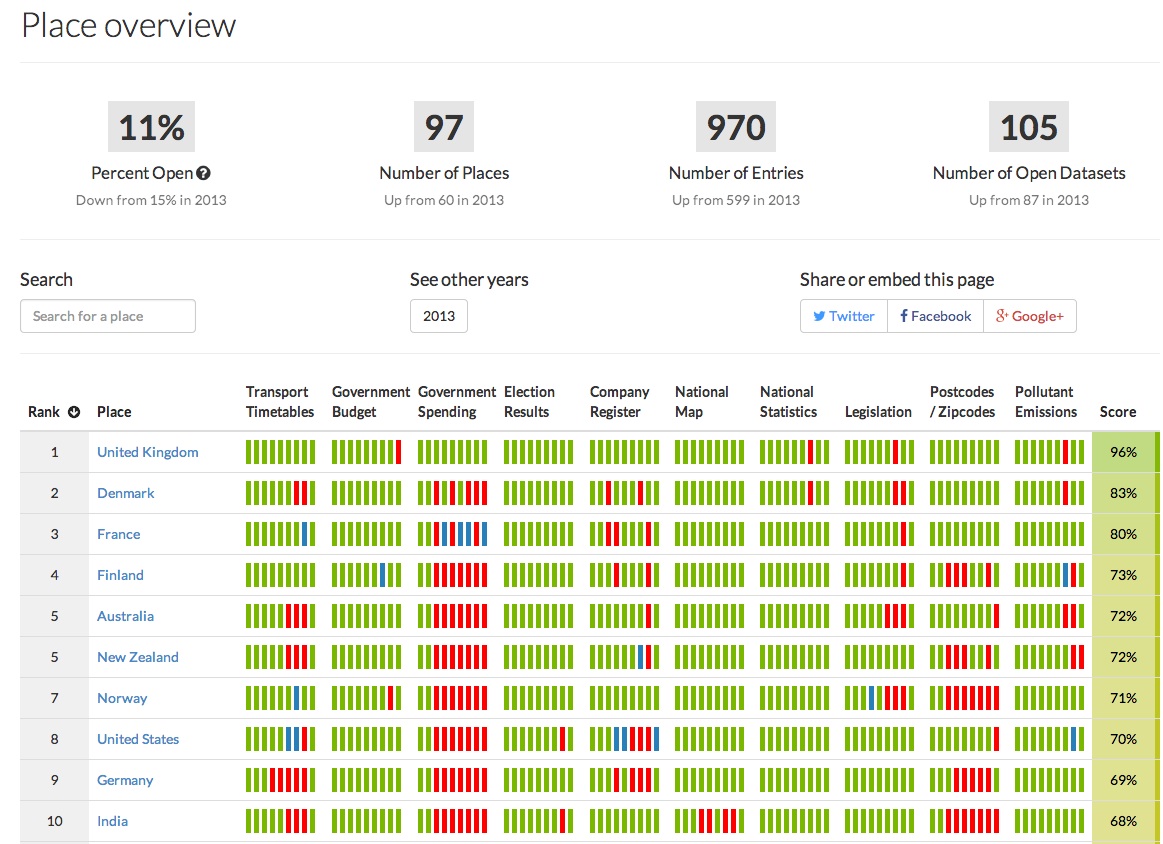
Open Knowledge also published a refreshed ranking of countries. The United Kingdom remains atop the list, followed by Denmark and France, which moved up from number 12 in 2013. India moved into the top 10, from #27, after the relaunch of its open data platform.
Despite the rhetoric emanating from Washington, the United States is ranked at number 8, primarily due to deficiencies in open data on government spending and an open register of companies. Implementation of the DATA Act may help, as would the adoption of an open corporate identified by the U.S. Treasury.
Below, in an interview from 2012, Pollock talks more about the relationship between open data and open government.
President Barack Obama shared the news that he would address the nation tomorrow night regarding an executive actions he would take on immigration on Facebook before embedding the video on The White House blog and tweeting a link to it.
President Obama will address the nation tomorrow night on new steps he's taking to fix our broken immigration system: http://t.co/tsLHuHb3Ed
On that count, the fact that the “big four” broadcast TV networks in the U.S., CBS, Fox, NBC and ABC, are not airing the speech is noteworthy, as is that fact that Telemundo and Univision will carry it live.
Univision will broadcast live President Obama's speech announcing his executive decision tomorrow at 8pm est. BIG deal for Latinos
There was no clear return on the investment provided on what providing this online service saved taxpayers, but if we assume there are processing costs involved with sending transcripts through the mail and that, once online, the Internet service scales, that’s a good result, as is enabling instant electronic access to something that used to take 5-10 business days to arrive in print form.
Of note: it looks like Americans can expect more online services from the IRS in the near future, according to the the authors of the White House blog post, U.S. Deputy Chief Technology Officer Nick Sinai and Rajive Mathur, director of Online Services at the Internal Revenue Service:
“Building on the initial success of Get Transcript, there are more exciting improvements to IRS services in the pipeline. For instance, millions of taxpayers contact the IRS every year to ask about their tax status, whether their filing was received, if their refund was processed, or if their payment posted. In the future, taxpayers will be able to answer these types of questions independently by signing in to a mobile-friendly, personalized online account to conduct transactions and see all of their tax information in one place. Users will be able to view account history and balance, make payments or see payment status, or even authorize their tax preparer to view or make changes to their tax return. This will also include the ability to download personal tax information in an easy to use and machine-readable format so that taxpayers can share with trusted recipients if desired.”
Improving online self-service could have an enormous impact upon every single American taxpayer, from saving tax dollars on the government side to saving time and gray hairs year round in offices and kitchen tables. Per Sinai and Mathur, the IRS currently receives over 80 million phone calls per year, sends out almost 200 million paper notices every year, receives over 50 million unique visitors to its website each month during filing season.
As a candidate, Senator Barack Obama said on November 14, 2007 that “I will take a back seat to no one in my commitment to network neutrality, because once providers start to privilege some applications or websites over others, then the smaller voices get squeezed out and we all lose. The Internet is perhaps the most open network in history, and we have to keep it that way.” Over the past six years, however, his voice has often been missing from the debate over how the providers of broadband Internet service should be regulated. This morning, however, President, Barack Obama came out much more strongly in favor of net neutrality.
In his statement (video embedded above, text linked) the president outlined 4 “bright line rules” that he wants the Federal Communications Commission to adopt for how consumer broadband Internet providers should behave (no blocking, no throttling, no paid prioritization, more transparency) and a rationale for how they should be regulated.
On that count, the biggest news comes further down in President Obama’s statement: “…the time has come for the FCC to recognize that broadband service is of the same importance and must carry the same obligations as so many of the other vital services do. To do that, I believe the FCC should reclassify consumer broadband service under Title II of the Telecommunications Act — while at the same time forbearing from rate regulation and other provisions less relevant to broadband services.”
That position is unquestionably a big win for activists, who are thrilled about the news this morning. If you’re unclear about what “forbearance” means, beyond the dictionary meaning of “holding back,” here’s a good article by Nancy Scola and and here’s a much longer post, by Harold Feld, which has more on the topic, and why it’s contentious among telecom lawyers and policy wonks. Should this plan actually make into Open Internet rules and be voted in, how forbearance is handled what Stacey Higgenbotham suggested watching in her excellent analysis of this net neutrality proposal.” They have the patience and lobbying muscle to ensure that in the process of forbearing them from certain practices that are irrelevant for a broadband era, they can get concessions that may make Title II less onerous for them,” she wrote.
Forbearing from rate regulation, or artificially controlling the price for a set level of service, would address one of the most significant objections to Title II that have been raised by American telecommunications companies. Other countries, like Argentina, are going a different route.
That didn’t stop Verizon from warning that reclassification under Title II would cause “great harm to an open Internet, competition and innovation. The National Cable and Telecommunications Agency released a statement that (former FCC chairman) CEO Michael Powell was “stunned” by the president’s statement on net neutrality and that the matter belongs in Congress.
“There is no substantive justification for this overreach, and no acknowledgment that it is unlawful to prohibit paid prioritization under Title II,” he said. “We will fight vigorously against efforts to impose this backwards policy.”
In a tweeted statement that was subsequently posted to Comcast’s blog, David L. Cohen, an executive vice president at Comcast Corporation, similarly said that President Obama’s policy stance would “jeopardize this engine for job creation and investment as well as the innovation cycle that the Internet has generated” and suggested that reclassification this was a matter for Congress to decide:
To attempt to impose a full-blown Title II regime now, when the classification of cable broadband has always been as an information service, would reverse nearly a decade of precedent, including findings by the Supreme Court that this classification was proper. This would be a radical reversal that would harm investment and innovation, as today’s immediate stock market reaction demonstrates. And such a radical reversal of consistent contrary precedent should be taken up by the Congress.
The other key detail in the policy position on net neutrality the White House published today was picked up over at the Verge: President Obama asked the FCC to apply these rules to mobile broadband internet providers as well. In his statement, he said that “the rules also have to reflect the way people use the Internet today, which increasingly means on a mobile device. I believe the FCC should make these rules fully applicable to mobile broadband as well, while recognizing the special challenges that come with managing wireless networks.”
As the president also noted, that “the FCC is an independent agency, and ultimately this decision is theirs alone,” but there’s no question that the President of the United States has put his thumb on the scale here, finally, and that it will put some pressure on the two Democratic commissioners, along with the man he nominated to lead the FCC, chairman Tom Wheeler.
Ball is still in the FCC’s court on #NetNeutrality. They aren’t required to follow the President’s approach. But it will be tough not to.
Here’s the statement released by Wheeler this morning, in response to the President’s position:
The President’s statement is an important and welcome addition to the record of the Open Internet proceeding. Like the President, I believe that the Internet must remain an open platform for free expression, innovation, and economic growth. We both oppose Internet fast lanes. The Internet must not advantage some to the detriment of others. We cannot allow broadband networks to cut special deals to prioritize Internet traffic and harm consumers, competition and innovation.
As an independent regulatory agency we will incorporate the President’s submission into the record of the Open Internet proceeding. We welcome comment on it and how it proposes to use Title II of the Communications Act.
In January, a federal court struck down rules that prevented Internet Service Providers from blocking and discriminating against online content. In May, the Commission sought comment on how to best reinstate these rules to protect consumers and innovators online while remaining within the parameters of the legal roadmap the court established. The goal was simple: to reach the outcomes sought by the 2010 rules. We sought comment on using Section 706 of the Telecommunications Act, as discussed by the court to protect what the court described as the “virtuous circle” of innovation that fosters broadband deployment and protects consumers.
The purpose of the Commission’s Notice of Proposed Rulemaking proposal was to elicit comments. In the past several months, we’ve heard from millions of Americans from across the country. From the beginning I have pledged to finally bring to an end the years-long quest for rules that are upheld in court. In May we sought comment on both Section 706 and Title II and I promised that in this process all options would be on the table in order to identify the best legal approach to keeping the Internet open. That includes both the Section 706 option and the Title II reclassification. Recently, the Commission staff began exploring “hybrid” approaches, proposed by some members of Congress and leading advocates of net neutrality, which would combine the use of both Title II and Section 706.
The more deeply we examined the issues around the various legal options, the more it has become plain that there is more work to do. The reclassification and hybrid approaches before us raise substantive legal questions. We found we would need more time to examine these to ensure that whatever approach is taken, it can withstand any legal challenges it may face. For instance, whether in the context of a hybrid or reclassification approach, Title II brings with it policy issues that run the gamut from privacy to universal service to the ability of federal agencies to protect consumers, as well as legal issues ranging from the ability of Title II to cover mobile services to the concept of applying forbearance on services under Title II.
I am grateful for the input of the President and look forward to continuing to receive input from all stakeholders, including the public, members of Congress of both parties, including the leadership of the Senate and House committees, and my fellow commissioners. Ten years have passed since the Commission started down the road towards enforceable Open Internet rules. We must take the time to get the job done correctly, once and for all, in order to successfully protect consumers and innovators online.
Whether this very public position by the White House leads the FCC to act any differently will be open to debate over the next month, as the deadline to get rules made and circulated to the commissioners before the last open meeting on December 11th grows near. It certainly gives them more political cover.
If the FCC does reclassify, expect the incoming 114th Congress and Republican majority to seek to shape that regulatory choice, perhaps by legislation, and that regulatory wrangling over net neutrality to end up in the courts. Again. (Conservatives concerned about the impact of applying Title II to the Internet may find this post by James Heaney of considerable interest.) Speaker of the House John Boehner was unequivocal in a statement released in response to President Obama’s position, asserting that “net neutrality hurts private-sector job creation“:
“It’s disappointing, but not surprising, that the Obama administration continues to disregard the people’s will and push for more mandates on our economy. An open, vibrant Internet is essential to a growing economy, and net neutrality is a textbook example of the kind of Washington regulations that destroy innovation and entrepreneurship. Federal bureaucrats should not be in the business of regulating the Internet – not now, not ever. In the new Congress, Republicans will continue our efforts to stop this misguided scheme to regulate the Internet, and we’ll work to encourage private-sector job creation, starting with many of the House-passed jobs bills that the outgoing Senate majority ignored.”
Evidence for the Speaker’s assertion regarding the impact of net neutrality laws on jobs is scant, as Carl Brooks, an IT analyst with 451 Research, noted: “Connection markets are robust and competitive in [the European Union] for business; for consumers, prices are dramatically lower.” (The European Parliament enacted a strong net neutrality law earlier this year.) “Net neutrality in the EU is explicit policy to encourage competition [and] benefit consumers on the backs of state telecom,” he went on.
This weekend, ZDNet columnist Mike Krigsman asked me what I thought of the tenure of United States chief information officer Steven VanRoekel and, more broadly, what I thought of the role and meaning of the position in general. Here’s VanRoekel’s statement to the press via Federal News Radio:
“When taking the job of U.S. chief information officer, my goal was to help move federal IT forward into the 21st Century and to bring technology and innovation to bear to improve IT effectiveness and efficiency. I am proud of the work and the legacy we will leave behind, from launching PortfolioStat to drive a new approach to IT management, the government’s landmark open data policy to drive economic value, the work we did to shape the mobile ecosystem and cloud computing, and the culmination of our work in the launch of the new Digital Service, we have made incredible strides that will benefit Americans today and into the future,” VanRoekel said in a statement. “So it is with that same spirit of bringing innovation and technology to bear to solve our most difficult problems, that I am excited to join USAID’s leadership to help stop the Ebola outbreak. Technology is not the solution to this extremely difficult task but it will be a part of the solution and I look forward to partnering with our federal agencies, non-profit organizations and private sector tech communities to help accelerate this effort.”
Here’s the part of what I told Krigsman that ended up being published, with added hyperlinks for context:
As was true for his predecessor, he was unable to create fundamental changes in the system he inherited. Individual agencies still have accountability for how money is spent and how projects are managed. The nation continues to see too many government IT projects that are over-budget, don’t work well, and use contractors with a core competency in getting contracts rather than building what is needed.
The U.S. has been unable or unwilling to reorganize and fundamentally reform how the federal government supports its missions using technology, including its relationship to incumbent vendors who fall short of efficient delivery using cutting-edge tech. The 113th Congress has had opportunities to craft legislative vehicles to improve procurement and the power of agency CIOs but has yet to pass FITARA or RFP-IT. In addition, too many projects still look like traditional enterprise software rather than consumer-facing tools, so we have a long way to go to achieve the objectives of the digital playbook VanRoekel introduced.
There are great projects, public servants and pockets of innovation through the federal government, but culture, hiring, procurement, and human resources remain serious barriers that continue to result in IT failures. The next U.S. CIO must be a leader in all respects, leading by example, inspiring, and having political skill. It’s a difficult job and one for which it is hard to attract world-class talent.
We need a fundamental shift in the system rather than significant tweaks, in areas such as open source and using the new Digital Service as a tool to drive change. The next US CIO must have experience managing multi-billion dollar budgets and be willing to pull the plug on wasteful or mismanaged projects that serve the needs of three years ago, not the future.
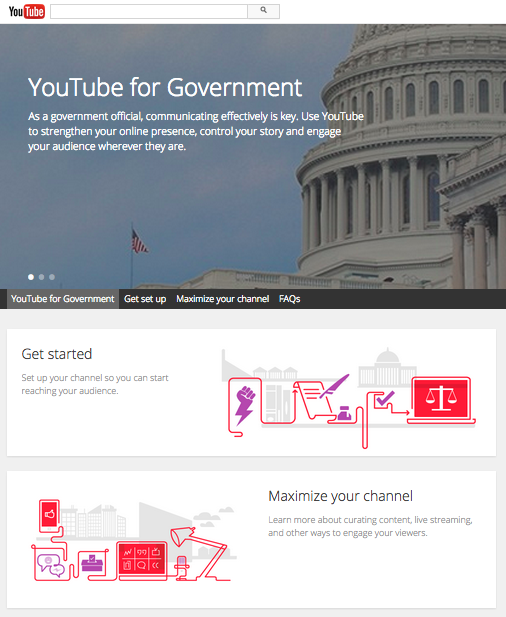
Putting aside the question of whether there’s two-way engagement going on or not in the comment sections on political videos on YouTube, which have been historically among the most toxic online, the guide will be useful to anyone looking for best practices on livestreaming or setting up a channel, playlists and other features. As I’ve found, it’s quite easy to livestream a Hangout, save the recording to YouTube and share it afterwards.
Here’s hoping more representatives use this new technology to listen to their constituents, not just use it as a cheaper way to broadcast their speeches. That’s the wish Google Feldman expressed: “If you’re a government official, whether you are looking for an answer to a quick question or need a full training on YouTube best practices, we hope this resource will help you engage in a rich dialogue with your constituents and increase transparency within your community.”
It’s a good day for open government in the District of Columbia. Today, DC’s Office of the Chief Technology Officer (OCTO) has updated the Terms and Conditions for DC.gov and the city’s new open data platform, addressing some of the concerns that the Sunlight Foundation and Code for DC expressed about the new open data policy introduced in July. The updated terms and conditions rolling out onto the city’s digital civic architecture this afternoon. “Today’s changes are really focused on aligning DC.Gov’s Terms and Conditions of Use with the new open data and transparency policy released this summer,” explained Mike Rupert, the communications director for OCTO,” in an interview. “The site’s T&C hadn’t been updated in many years,” according to Rupert. The new T&C will apply to DC.gov, the open data platform and other city websites. “It is encouraging that DC is taking steps toward considering feedback and improving its Terms and Conditions, but there is still room for improvement in the broader scope of DC’s policies,”said Alisha Green, a policy associate with Sunlight Foundation’s local policy team. “We hope those implementing DC’s new open data policy will actively seek stakeholder input to improve upon what the policy requires. The strength of the policy will be in its implementation, and we hope DC will take every opportunity to make that process as open, collaborative and impactful as possible.” So, OCTO both heard and welcomed the feedback from open government advocates regarding the policy and agreed that the policy implications of the terms and conditions were problematic. Certain elements of the previous Terms and Conditions of Use (Indemnity, Limitation of Liability) could have chilled the understanding of the public’s right to access and have been eliminated,” said Rupert. Those were the sections that prompted civic hacker Josh Tauberer to wonder whether he needed a lawyer to hack in DC are simply gone, specifically that Indemnity and Liability Section. Other sections, however, still remain. The revised policy I obtained before the updated terms and conditions went online differs in a couple of ways from the one that just that went online. First, the Registration section remains, as does the Conduct section, although DC eliminated the 11 specific examples. That said, it’s better, and that’s a win. District officials remain cautious about how and where reuse might occur, they’re going to at least let the data flow without a deeply flawed policy prescription. “While we want to be mindful of and address the potential for harm to or misuse of District government information and data, the Terms and Conditions of Use should promote the new open data and transparency philosophy in a more positive manner,” said Rupert. Sharp-eyed readers of the new policy, however, will note that DC’s open data and online information has now been released to the public under a Creative Commons license, specifically Attribution 3.0 United States. That means that anyone who uses DC’s open data is welcome to “Share — copy and redistribute the material in any medium or format and Adapt — remix, transform, and build upon the material — for any purpose, even commercially,” as long as they provide “Attribution — You must give appropriate credit, provide a link to the license, and indicate if changes were made. You may do so in any reasonable manner, but not in any way that suggests the licensor endorses you or your use.” When asked about the CC license choice, Rupert said that “The new copyright language from Creative Commons – which as you is know is becoming the international standard – better states the overriding principle of the public’s right to web content and data. ” That did not sit entirely well with open government advocates who hold that making open data license free is a best practice. Asked for comment, Tauberer emailed the following statement in a response to the draft of the revision, welcoming the District’s responsiveness but questioning the premise of the District of Columbia having any “terms and conditions” for the public using open government data at all.
The new terms drop the most egregious problems, but these terms still don’t count as “open.” Should I expect a lawsuit if I don’t tip my hat and credit the mayor every time I use the data we taxpayers paid to create? Until the attribution requirement is dropped, I will recommend that District residents get District data through Freedom of Information Act requests. It might take longer, but it will be on the people’s terms, not the mayor’s. It’s not that the District shouldn’t get credit, but the District shouldn’t demand it and hold civil and possibly criminal penalties over our heads to get it. For instance, yesterday Data.gov turned their attribution requirement into a suggestion. That’s the right way to encourage innovation. All that said, I appreciate their responsiveness to our feedback. Tim from DC GIS spent time at Code for DC to talk about it a few weeks ago, and I appreciated that. It is a step in the right direction, albeit one deaf to our repeated explanation that “open” does not mean “terms of use.
The good news is that DC’s OCTO is listening and has committed to being responsive to future concerns about how it’s handling DC’s online presences and policies. “Several of your questions allude to the overall open data policy and we will definitely be reaching out to you and all other interested stakeholders as we begin implement various elements of that policy,” said Rupert.
Update: On October 29th, DC updated its Terms and Conditions again, further improving them. Tauberer commented on the changes to the open data policy on his blog. In his view, the update represents a step forward and a step back:
In a new update to the terms posted today, which followed additional conversations with OCTO, there were two more great improvements. These terms were finally dropped:
agreeing to follow all “rules”, a very ambiguous term
the requirement to attribute the data to the District in all uses of the data (it’s now merely a suggestion)
The removal of these two requirements, in combination with the two removed in September, makes this a very important step forward.
One of my original concerns remains, however, and that is that the District has not granted anyone a copyright license to use District datasets. Data per se isn’t protected by copyright law, but the way a dataset is presented may be. The District has claimed copyright over its things before, and it remains risky to use District datasets without a copyright license. Both the September update and today’s update attempted to address this concern but each created more confusion that there was before.
Although today’s update mentions the CC0 public domain dedication, which would be the correct way to make the District data available, it also explicitly says that the District retains copyright:
The terms say, at the top, that they “apply only to . . . non-copyrightable information.” The whole point is that we need a license to use the aspects of the datasets that are copyrighted by the District.
Later on, the terms read: “Any copyrighted or trademarked content included on these Sites retains that copyright or trademark protection.” Again, this says that the District retains copyright.
And: “You must secure permission for reuse of copyrighted … content,” which, as written (but probably not intended), seems to say that to the extent the District datasets are copyrighted, data users must seek permission to use it first. (Among other problems, like side-stepping “fair use” in copyright law.)
With respect to the copyright question, the new terms document is a step backward because it may confuse data users into thinking the datasets have been dedicated to the public domain when in fact they haven’t been.
This post has been updated with comments from Tauberer and the Sunlight Foundation.
In 2010, President Barack Obama spoke to the United Nations General Assembly about open government. “The common thread of progress is the principle that government is accountable to its citizens,” he said, “and the diversity in this room makes clear — no one country has all the answers, but all of us must answer to our own people.”
In all parts of the world, we see the promise of innovation to make government more open and accountable. And now, we must build on that progress. And when we gather back here next year, we should bring specific commitments to promote transparency; to fight corruption; to energize civic engagement; to leverage new technologies so that we strengthen the foundations of freedom in our own countries, while living up to the ideals that can light the world.
Open government, said Samantha Power, now the U.S. ambassador to the United Nations, could have a global impact.
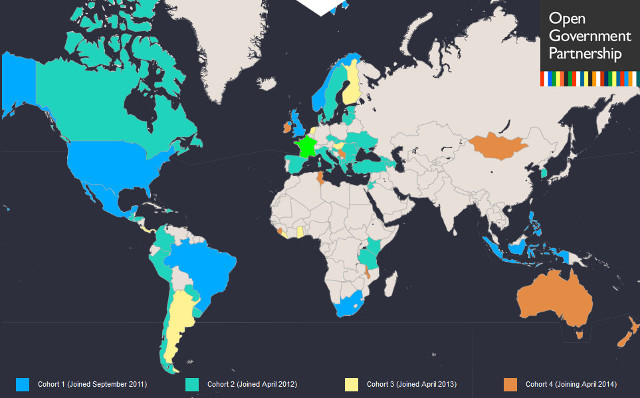
In 2011, a historic Open Government Partnership launched in New York City, hailed as a fresh approach to parting the red tape by the Economist. “The partnership is really the first time that there is a multilateral platform to address these issues,” said Maria Otero, former under secretary of state for democracy and global affairs at the United States State Department. “The partnership could have focused on countries come in and present best practices and exchange ideas and then just go home.”
“The partnership is really focused on first having countries participate that have already demonstrated interest in this area and have already put in place a number of specific things and the material laid out, if you will, the minimum standards that are being requested. What the partnership really looks for is to provide a mechanism by which the countries can each develop their own national plans on ways to expand what they’re doing on transparency, accountability, and civic engagement, or to start new initiatives for them. That is really what is very different and important about this partnership, is that it is very action- and results-oriented.”
It’s not about the abstraction about ‘fighting corruption’ or ‘promoting transparency’ or ‘harnessing innovation’ — it’s about ‘are the kids getting the textbooks they’re supposed to get’ or does transparency provide a window into whether resources are going where they’re supposed to go and, to the degree to which that window exists, are citizens aware and benefiting from the data and that information such that they can hold their governments accountable. And then, does the government care that citizens care that those discrepancies exist?
If the dominant binary of the 21st century is between open and closed, Russia looks more interested in opting towards more controllable, technocratic options that involve discretionary data releases instead of an independent judiciary or freedom of assembly or the press. One of the challenges of the Open Government Partnership has always been the criteria that a country had to pass to join and then continue to be a member. Russia’s inclusion in OGP instantly raised eyebrows, doubts and fears last April, given rampant corruption in the public sector and Russia’s terrible record on press freedom. “Russia’s withdrawal from the OGP is an important reminder that open government isn’t easy or politically simple,” said Nathaniel Heller, executive director of Global Integrity. “While we don’t yet fully understand why Russia is leaving OGP, it’s safe to assume that the powers that be in the Kremlin decided that it was untenable to give reformers elsewhere in the Russian government the freedom to advance the open government agenda within the bureaucracy.”
In November 2013, the world may have hit ‘peak open‘ at the OGP annual summit in London, despite the partnerships’ members facing default states of closed.
Swirling underneath the professional glitz of an international summit were strong undercurrents of concern about its impact upon governments reluctant to cede power, reveal corruption or risk embarrassment upon disclosure of simple incompetence. The OGP summit took place at a moment where 21st century technology-fueled optimism has splashed up against the foundations of institutions created in the previous century. While the use of the Internet as a platform for collective action has grown, so too have attendent concerns about privacy and surveillance, in the wake of disclosures by NSA contractor Edward Snowden, where the same technologies that accelerated revolutions across the Middle East and North Africa are being used to capture and track the people advocating for change.
After the speeches end and the presidents and prime ministers return home, serious questions will remain regarding their willingness to put political capitol behind reforms and take tough stands to ensure that their governments actually open up. Digital government is not open government, just as not all open data supports democratic reforms. As Mexico prepares to become lead co-chair of OGP, one element that didn’t make it into the challenges listed for the country is the state of press freedom in Mexico. As the Committee to Protect Journalists highlighted, open government is not sustainable without a free press. As long as the murders of journalists go unpunished in Mexico, the commitments and efforts of the Mexican national government will have to be taken in context.

 In a fascinating turn of events, rainy Oregon is embracing sunlight online after a scandal that led to the resignation of its governor. After governor Kate Brown was sworn in as the 38th governor of the state of Oregon, replacing fellow Democrat John Kitzhaber, her administration chose to try to restore public trust by not only posting public records requests online but including the authors, status and a downloadable link to the records themselves, once fulfilled. The records only go back to January 15th, 2015, with a note that requests made prior to that date are “still being processed.”



 E Pluribus Unum