Congress weighs deep cuts to funding for federal open government data platforms

Several core pillars of federal open government initiatives brought online by the Obama administration may be shuttered by proposed Congressional budget cuts. Data.gov, IT.USASpending.gov, and other five other websites that offer platforms for open government transparency are facing imminent closure. A comprehensive report filed by Jason Miller, executive editor of Federal News Radio, confirmed that the United States of Office of Management and Budget is planning to take open government websites offline over the next four months because of a 94% reduction in federal government funding in the Congressional budget. Daniel Schuman of the Sunlight Foundation first reported the cuts in the budget for data transparency. Schuman talked to Federal News Radio about the potential end of these transparency platforms this week.

Cutting these funds would also shut down the Fedspace federal social network and, notably, the FedRAMP cloud computing cybersecurity programs. Unsurprisingly, open government advocates in the Sunlight Foundation and the larger community have strongly opposed these cuts.

As Nancy Scola reported for techPresident, Donny Shaw put the proposal to defund open government datain perspective at OpenCongress: “The value of data openness in government cannot be overestimated, and for the cost of just one-third of one day of missile attacks in Libya, we can keep these initiatives alive and developing for another year.”

Daniel Schuman was clear about the value of data transparency funding at the Sunlight Foundation blog:

The returns from these e-government initiatives in terms of transparency are priceless. They will help the government operate more effectively and efficiently, thereby saving taxpayer money and aiding oversight. Although we have significant issues with some of these program’s data quality, and we are concerned that the government may be paying too much for the technology, there should be no doubt that we need the transparency they enable. For example, fully realized transparency would allow us to track every expense and truly understand how money — like that in the electronic government fund — flows to federal programs. Government spending and performance data must be available online, in real time, and in machine readable formats.

There is no question that Obama administration has come under heavy criticism for the quality of its transparency efforts from watchdogs, political opponents and media. OMB Watch found progress on open government in a recent report by cautioned that there’s a long road ahead. It is clear that we are in open government’s beta period. The transparency that Obama promised has not been delivered, as Charles Ornstein, a senior reporter at ProPublica, and Hagit Limor, president of the Society of Professional Journalists, wrote today in the Washington Post. There are real data quality and cultural issues that need to be addressed to match the rhetoric of the past three years. “Government transparency is not the same as data that can be called via an API,” said Virginia Carlson, president of the Metro Chicago Information Center. “I think the New Tech world forgets that — open data is a political process first and foremost, and a technology problem second.”

Carlson highlighted how some approaches taken in establishing Data.gov have detracted from success of that platform:

First, no distinction was made between making transparent operational data about how the government works (e.g, EPA clean up sites; medicaid records) and making statistical data more useful (data re: economy and population developed by the major Federal Statistical Agencies). So no clear priorities were set regarding whether it was an initiative meant to foster innovation (which would emphasize operational data) or whether it was an initiative meant to open data dissemination lines for agencies that had already been in the business of dissemination (Census, BLS, etc.), which would have suggested an emphasis on developing API platforms on top of current dissemination tools like American Fact Finder or DataFerrett.

Instead, a mandate came from above that each agency or program was responsible for putting X numbers of data sets on data.gov, with no distinction made as to source or usefulness. Thus you have weird things like cutting up geo files into many sub-files so that the total number of files on data.gov is higher.

The federal statistical agencies have been disseminating data for tens of decades. They felt that the data.gov initiative rolled right over them, for the most part, and there was a definite feeling that the data.gov people didn’t “get it” from the FSA perspective – who are these upstarts coming in to tell us how to release data, when they don’t understand how the FSAs function, how to deal with messy statistical data that have a provenance, etc. An open data session at the last APDU conference saw the beginnings of a conversation between data.gov folks and the APDU folks (who tend to be attached to the major statistical agencies), but there is a long way to go.

Second, individuals in bureaucracies are risk-averse. The political winds might be blowing toward openess now, but executives come and go while those in the trenches stay, (or would like to). Thus the tendency was to find data that was relatively low-risk. Agencies literally culled their catalogs to find the least controversial data that could be released.

Neither technical nor cultural changes will happen with the celerity that many would like, despite the realities imposed by the pace of institutional change. “Lots of folks in the open government space are losing their patience for this kind of thing, having grown accustomed to startups that move at internet speed,” said Tom Lee, director of Sunlight Labs. “But USAspending.gov really can be a vehicle for making smarter decisions about federal spending.”

“Obviously the data quality isn’t there yet. But you know what? OMB is taking steps to improve it, because the public was able to identify the problems. We’re never going to realize the incredible potential of these sites if we shutter them now. A house staffer, or journalist, or citizen ought to be able to figure out the shape of spending around an issue by going to these sites. This is an achievable goal! Right now they still turn to ad-hoc analyses by GAO or CRS — which, incidentally, pull from the same flawed data. But we really can automate that process and put the power of those analyses into everyone’s hands.”

Potential rollbacks to government transparency, if seen in that context, are detrimental to all American citizens, not just for those who support one party or the other. Or, for that matter, none at all. As Rebecca Sweger writes at the National Priorities Project, “although $32 million may sound like a vast sum of money, it is actually .0009% of the proposed Federal FY11 budget. A percentage that small does not represent a true cost-saving initiative–it represents an effort to use the budget and the economic crisis to promote policy change.”

Lee also pointed to the importance of TechStat to open government. TechStat was part of the White House making the IT Dashboard open source yesterday. “TechStat is one of the most concrete arguments for why cutting the e-government fund would be a huge mistake,” he said. “The TechStat process is credited with billions of dollars of savings. Clearly, Vivek [Kundra, the federal CIO] considers the IT Dashboard to be a key part of that process. For that reason alone cutting the e-gov fund seems to me to be incredibly foolish. You might also consider the fact pointed out by NPP: that the entire e-gov budget is a mere 7.7% of the government’s FOIA costs.”

In other words, it costs far more to release the information by the current means. This is the heart of the case for data.gov and data transparency in general: to get useful information into the hands of more people, at a lower cost than the alternatives,” said Lee. Writing on the Sunlight Labs blog, Lee emphasized today that “cutting the e-gov funding would be a disaster.”

The E-Government Act of 2002 that supports modern open government platforms was originally passed with strong bipartisan support, long before before the current president was elected. Across the Atlantic, the British parallel to Data.gov, Data.gov.uk continues under a conservative prime minister. Open government data can be used not just to create greater accountability, but also economic value. That point was made emphatically last week, when former White House deputy chief technology officer Beth Noveck made her position clear on the matter: cutting e-government funding threatens American jobs:

These are the tools that make openness real in practice. Without them, transparency becomes merely a toothless slogan. There is a reason why fourteen other countries whose governments are left- and right-wing are copying data.gov. Beyond the democratic benefits of facilitating public scrutiny and improving lives, open data of the kind enabled by USASpending and Data.gov save money, create jobs and promote effective and efficient government.

Noveck also referred to the Economist‘s support for open government data: “Public access to government figures is certain to release economic value and encourage entrepreneurship. That has already happened with weather data and with America’s GPS satellite-navigation system that was opened for full commercial use a decade ago. And many firms make a good living out of searching for or repackaging patent filings.”

The open data story in healthcare continues to be particularly compelling, from new mobile apps that spur better health decisions to data spurring changes in care at the Veterans Administration. Proposed cuts to weather data collection could, however, subtract from that success.

As Clive Thompson reported at Wired this week, public sector data can help fuel jobs, “shoving more public data into the commons could kick-start billions in economic activity.” Thompson focuses on the story of Brightscope, where government data drives the innovation economy. “That’s because all that information becomes incredibly valuable in the hands of clever entrepreneurs,” wrote Thompson. “Pick any area of public life and you can imagine dozens of startups fueled by public data. I bet millions of parents would shell out a few bucks for an app that cleverly parsed school ratings, teacher news, test results, and the like.”

Lee doesn’t entirely embrace this view but makes a strong case for the real value that does persist in open data. “Profits are driven toward zero in a perfectly competitive market,” he said.

Government data is available to all, which makes it a poor foundation for building competitive advantage. It’s not a natural breeding ground for lucrative businesses (though it can certainly offer a cheap way for businesses to improve the value of their services). Besides, the most valuable datasets were sniffed out by business years before data.gov had ever been imagined. But that doesn’t mean that there isn’t huge value that can be realized in terms of consumer surplus (cheaper maps! free weather forecasts! information about which drug in a class is the most effective for the money!) or through the enactment of better policy as previously difficult-to-access data becomes a natural part of policymakers’ and researchers’ lives.

To be clear, open data and the open government movement will not go away for lack of funding. Government data sets online will persist if Data.gov goes offline. As Samantha Power wrote at the White House last month, transparency has gone global. Open government may improve through FOIA reform. The technology that will make government work better will persist in other budgets, even if the e-government budget is cut to the bone.

There are a growing number of strong advocates who are coming forward to support the release of open government data through funding e-government. My publisher, Tim O’Reilly, offered additional perspective today as well. “Killing open data sites rather than fixing them is like Microsoft killing Windows 1.0 and giving up on GUIs rather than keeping at it,” said O’Reilly. “Open data is the future. The private sector is all about building APIs. Government will be left behind if they don’t understand that this is how computer systems work now.”

As Schuman highlighted at SunlightFoundation.com, the creator of the World Wide Web, Sir Tim Berners-Lee, has been encouraging his followers on Twitter to sign the Sunlight Foundation’s open letter to Congress asking elected officials to save the data.

What happens next is in the hands of Congress. A congressional source who spoke on condition of anonymity said that they are aware of the issues raised with cuts to e-government finding and are working on preserving core elements of these programs. Concerned citizens can contact the office of the House Majority Leader, Representative Eric Cantor (R-VI) (@GOPLeader), at 202.225.4000.

UPDATE: The Sunlight Foundation’s Daniel Schuman, who is continuing to track this closely, wrote yesterday that, under the latest continuing resolution under consideration, funding for the E-Government Fund would be back up in the tens of millions range. Hat tip to Nancy Scola.

UPDATE II: Final funding under FY 2011 budget will be $8M. Next step: figuring out the way forward for open government data.

John Wonderlich on the aspirations and limitations of open data initiatives

New abilities given to citizens and open government watchdogs through the lens of technology means sunlight can be applied to government transparency in powerful ways. This past weekend, John Wonderlich, policy director for the Sunlight Foundation, spoke about open data and transparency at the slashroots ./roots/DEV in Jamaica. His keynote is embedded below.

./roots/Dev Conference 2011 – Keynote Day 2 Pt 1/2 from slashroots on Vimeo.

Google Public Data Explorer adds Census Bureau data, state government statistics

Last month, the Google Public Data Explorer went public. Today, Google added U.S. Census Bureau and state government finance statistics to the database, allowing everyone to gain new insight into our present.

The numbers may be beautifully displayed but they tell a grim tale when it comes to state budgets. The crisis in state budgets across the country will be the primary driver for the adoption of new approaches to governance and service delivery in 2011. If Gov 2.0 goes local, citizensourcing smarter government couldn’t come at a more timely moment.

A movement to spur innovation and participation in government

This past weekend, Syracuse MPA grad student Pat Fiorenza spoke about Gov 2.0 at the We Live NY Conference in upstate New York. In a wrap up posted after the conference, Fiorenza touched of what people think about when they hear “Gov 2.0,” including:

Fiorenza’s recap of his Gov 2.0 presentation also describes both why the idea is important to him and why it’s important to people who aren’t developers.

“Gov 2.0 extends beyond a great programmer – I’ve noticed that when I talk to some people about Gov 2.0 they immediately associate me as a geeky-computer programming-MPA student (only 2 of the 3!). I’ve developed a passion for Gov 2.0 because it holds so much potential for government. It’s about getting access to data and information immediately, improving constituent services, crowd sourcing information, and empowering citizens. Gov 2.0 requires someone to identify an existing problem and conceptualize a solution – then someone to run with the idea and develop the program, with a lot of collaboration in between.”

Fiorenza also pointed the way to Remy DeCausemaker (@remy_d, a “resident hacktivist and storyteller” at the Rochester Institute for Technology’s Lab for Technological Literacy, who also presented on Gov 2.0 at the conference.

DeCausemaker works on FOSS at RIT and CIVX, an open source public information system for raw data. His presentation (PDF) on open government and open data will be of interest to many people in the Gov 2.0 community.

Beth Noveck on connecting the academy to open government R&D

Earlier this week, the White House convened an open government research and development summit at the National Archives. Columbia statistics professor Victoria Stodden captures some key themes from it at her blog, including smart disclosure of government data and open government at the VA. Stodden also documented the framing questions that federal CTO Aneesh Chopra asked for help answered from the academic community:

1. big data: how strengthen capacity to understand massive data?
2. new products: what constitutes high value data?
3. open platforms: what are the policy implications of enabling 3rd party apps?
4. international collaboration: what models translate to strengthen democracy internationally?
5. digital norms: what works and what doesn’t work in public engagement?

In the video below, former White House deputy CTO for open government, Beth Noveck, reflected on what the outcomes and results from the open government R&D summit at the end of the second day. If you’re interested in a report from one of the organizers, you’d be hard pressed to do any better.

The end of the beginning for open government?

The open government R&D summit has since come under criticism from one of its attendees, Expert Labs’ director of engagement Clay Johnson, for being formulaic, “self congratulatory” and not tackling the hard problems that face the country. He challenged the community to do better:

These events need to solicit public feedback from communities and organizations and we need to start telling the stories of Citizen X asked for Y to happen, we thought about it, produced it and the outcome was Z. This isn’t to say that these events aren’t helpful. It’s good to get the open government crowd together in the same room every once and awhile. But knowing the talents and brilliant minds in the room, and the energy that’s been put behind the Open Government Directive, I know we’re not tackling the problems that we could.

Noveck responded to his critique in a comment where she observed that “Hackathons don’t substitute for inviting researchers — who have never been addressed — to start studying what’s working and what’s not in order to free up people like you (and I hope me, too) to innovate and try great new experiments and to inform our work. But it’s not enough to have just the academics without the practitioners and vice versa.”

Justin Grimes, a Ph.D student who has been engaged in research in this space, was reflective after reading Johnson’s critique. “In the past few years, I’ve seen far more open gov events geared towards citizens, [developers], & industry than toward academics,” he tweeted. “Open gov is a new topic in academia; few people even know it’s out there; lot of potential there but we need more outreach. [The] purpose was to get more academics involved in conversation. Basically, government saying ‘Hey, look at our problems. Do research. Help us.'”

Johnson spoke with me earlier this year about what else he sees as the key trends of Gov 2.0 and open government, including transparency as infrastructure, smarter citizenship and better platforms. Given the focus he has put on doing, vs researching or, say, “blogging about it,” it will be interesting to see what comes out of Johnson and Expert Labs next.

Todd Park on unleashing the power of open data to improve health

What if open health data were to be harnessed to spur better healthcare decisions and catalyze the extension or creation of new businesses? That potential future exists now, in the present. Todd Park, chief technology officer of the Department of Heath and Human Services, has been working to unlock innovation through open health data for over a year now. On many levels, the effort is the best story in federal open data. Park tells it himself in the video below, recorded yesterday at the Mutter Museum in Philadelphia.

Over at e-patients.net, Pew Internet researcher Susannah Fox asked how community organizations can tap into the health data and development trend that Park has been working hard to ignite. She shared several resources (including a few from this correspondent) and highlighted the teams who competed in a health developer challenge tour that culminated at the recent Health 2.0 conference.

Check out this article about HealthData.gov including footage of Park talking about the “health data eco-system” at the code-a-thon (and actually, the video also features local health hacker Alan Viars sitting there at the right).

Here are 3 blog posts about last year’s event, including mine:

Making Health Data Sing (Even If It’s A Familiar Song)

Community Health Data Initiative: vast amounts of health data, freed for innovators to mash up!

Making community health information as useful as weather data: Open health data from Health and Human Services is driving more than 20 new apps.

The next big event in this space on June 9 at the NIH. If you’re interested in what’s next for open health data, track this event closely.

Making open government data visualizations that matter

Every month, more open government data is available online. Local governments are becoming data suppliers. Open healthcare data is spurring better decisions. There’s a tremendous amount of activity in open data – but there’s a long road ahead for open government. At the SXSW Interactive Festival in Austin, Texas, Jeremiah Akin and Michael Castellon made a case for “why visualizing government data makes taxpayers happy.”

The expectation of transparency is creating demand for government agencies to develop new ways to communicate complex data and trends to the public in easy-to-access and easy-to-understand formats.

Some agencies are turning to Google Maps and KML data to visualize raw information online and on mobile devices. Delivering data in more easily understandable formats not only boosts trust and confidence between government agencies and their publics, but also streamlines workloads among Data, Web, Editorial, and Customer Service teams.

The two men talked about how the Texas Comptroller is using public-facing maps to communicate with the public, including to the rapidly increasing numbers of citizens accessing government websites from mobile devices.

The utility of open government data can be quite concrete, as when live tsunami data is used to help save lives. It can also help people to understand more about the virtual lines in their towns and cities. In Texas, ClaimItTexas.org shows unclaimed property in Lone Star State.

Mobile transparency

The Texas Transparency Map is also available for touchscreen mobile devices and for tablets. That’s no accident: Akin said that mobile traffic to the site up four-fold since lat year.

“We’re seeing a lot more mobile access,” he said. “If we want to make it available on multiple devices, we need to create in a way that can be displayed.” That insight is a crucial one, and reverberates far beyond the government sphere. By choosing to develop non-native Web applications written in HTML5, Javascript and JSON, this cohort of Texas government avoided “Shiny App Syndrome.” Next steps include support for street level detail, Google Fusion tables, and geolocation.

Putting open government data to work

“Open government data has been used for a long time,” said Akin, citing the use of census data in newspapers. A new class of new media journalism is putting data to use in innovative ways, pointed out Castellon. “The Texas Tribune is one of the leaders in data visualization,” he said, which helps citizens to make sense of government data.

The key here, emphasized Akin, is that is not just enough to simply dump data. You need ways to visualize it and make it meaningful as information. “There’s a lot of resistance – people have been there, and that’s not how they’ve done things,” he said. “If you make a visualization that makes someone’s job easier pretty soon they start coming back to you.

With better data visualizations and more information, Castellon posited that more problem solving can take place. “When you release data, especiallly with science, education or research, there are stories embedded in that data,” he said.

In this narrative, it’s up to governments to release better, clean data in consumable formats and the evolving art of data journalism to make stories from it that give citizens, businesses and elected officials insight into the complexities of modern life.

Visualizing the future of programmable cities

Technology is fueling new visions for the future of cities. Today at the South by Southwest Interactive festival, a panel considered “Web Mashup Platforms and Future Programmable Cities. NYC chief digital officer Rachel Sterne (@RachelSterne) joined Christine Outram (@cityinnovation), Vlad Trifa (@vladounet) and Dominique Guinard (@domguinard) in exploring how open data, mobile platforms and citizen engagement will shape what comes next in urban life.

Below, visual notes by OgilvyNotes and ImageThink capture the conversation.

n Web Mashup Platforms and Future Programmable Cities

For more on how cities are embracing new platforms and technologies, learn about citizensourcing smarter government in New York City.

[Hat Tip: Rachel Sterne]

Transit data as open government fuel for economic growth

Transportation Camp Big Board

At the Big Board at Transportation Camp NYC. Credit: Transportation Camp

Today in New York City, the attendees of TransportationCamp will look for ways to build a better to and fro. Technologists, trains fans, government workers and East Coast civic hackers have gathered for a sold out two-day unconference at the New York Law School Institute for Information Law and Policy. TransportationCamp East.

They’ve come together to discuss how the modern transit system can be improved, focusing on the intersection between technology, citizens, public data and government. Around the United States, there has been a blossoming of innovation in the city transit sector, driven by the passion of citizens and fueled by the release of real-time transit data by their city governments. These efforts have a long way to go, given challenges of driving interoperability standards to address the break of gauge. As open government moves from theory to practice, what lies ahead for Gov 2.0 will include more innovation in opening transit data as a platform for civic innovation.

In many cities, the future of open transit data is already around us, but the promise has yet to be fully realized. The case for open data in transit is made in the video below:

A Case for Open Data in Transit from Streetfilms on Vimeo.

An “open data project that I’m fond of that started very early in the open government process is GTFS, the General Transit Feed Specification,” said Tim O’Reilly.

That’s the data standard that lets transit districts feed their bus and train arrival times to applications like Google Transit, or any of the many smartphone apps that help you plan your trip on public transit. This standard started as a collaboration between Google and the city of Portland, but is now available from many cities. It’s a great example of how governments can think like platform providers. They have to equip their buses and trains with GPS, and report out the data. They could report it just to their own bus stops and train stations, or they could make it available to third parties to deliver in a hundred ways. Which is better for citizens? It’s pretty obvious.”

For passionate civic advocates like Laurel Ruma, a colleague at O’Reilly Media, getting real-time transit data in Boston was better than winning the World Series. (That might have been a harder sell in 2003, but table that for now). The decision to release and support open transit data online has spawned a new ecosystem of mobile applications, many of which are featured at MBTA.com. The addition of real-time transit data could add more value to the apps offering help for MBTA riders that went online in 2009, like the Mass Transit app that has been making money for SparkFish Creative.

It’s that kind of economic value creation combined with civic utility and accountability that has many people in the open government community excited. “Transportation has been a breakout segment of the “Gov 2.0” space over the last several years — it’s an issue with direct impacts on every citizen, and an area where we are seeing tons of innovation right now,” said Nick Grossman, director of civic works at OpenPlans. “Agencies are re-thinking their tech and data strategies, entrepreneurs and “civic hackers” are building tools at a furious rate, and the public is benefiting in tangible ways. We are excited to bring together many of the players in the space for two weekends of discussing, debating, and building at TransportationCamp.”

The unconference organizers posted the http://transportationcamp.org/topics/”>discussion topics online before Transportation Camp kicked off, so virtual onlookers and on-site participants alike can get a flavor of interests that range from walking to to cycling to ride sharing. (No evidence of transit via horse, mule nor camel is to be found, no doubt because of the changing face of New York City versus their utility).

“We are honored to be partnering with former White House deputy CTO for open government Beth Noveck and the Do Tank & Democracy Design Workshop at New York Law School, said Grossman. “Beth’s and the Do Tank’s work has been an inspiration for all forms of collaborative work around civic issues, governance, and democracy.”

TransportationCamp West will be in San Francisco March 19-20. Both of the unconferences are sponsored by NYC-based nonprofit OpenPlans. ”

“TransportationCamp is all about building connections across a widespread sector, from public officials, to software developers, to academics, to urban advocates and interested citizens,” said Grossman. “We hope to not only address some immediate issues (such as working on technical data standards), but also plant the seed for longer-term partnerships.”

Luke Fretwell captured an extensive Q&A with Grossman, were he talks more about TransportationCamp’s objectives and transportation’s impact on the bigger issues around Gov 2.0 and open government.

Follow @transpocamp and the #transpo hashtag on Twitter today and over the coming weeks to watch the discussion data unfold in real-time.

http://widgets.twimg.com/j/2/widget.js

new TWTR.Widget({
version: 2,
type: ‘search’,
search: ‘transpo’,
interval: 6000,
title: ‘What\’s happening at’,
subject: ‘Transportation Camp’,
width: ‘auto’,
height: 300,
theme: {
shell: {
background: ‘#005e8a’,
color: ‘#ffffff’
},
tweets: {
background: ‘#ffffff’,
color: ‘#444444’,
links: ‘#730000’
}
},
features: {
scrollbar: false,
loop: true,
live: true,
hashtags: true,
timestamp: true,
avatars: true,
toptweets: true,
behavior: ‘default’
}
}).render().start();

Frank Hebert posted a recap of Saturday morning at Transportation Camp at the camp blog.

Beth Noveck testifies in Canadian Parliament on why open government matters

Today, Beth Noveck testified before the Canadian Parliament. She posted her testimony before the information privacy and ethics committee on her personal blog, including a statement on why open government matters:

Open government goes far beyond transparency. Opening up how institutions work to enable greater collaboration – open innovation – affords the opportunity to use network technology to discover creative solutions to challenges that a handful of people in Ottawa or Washington might not necessarily devise. By itself, government doesn’t have all the answers.

In the network age, twenty-first-century institutions are not bigger or smaller ones: they are smarter hybrids that leverage somewhat anarchic technologies within tightly controlled bureaucracies to connect the organization to a network of people in order to devise new approaches that would never come from within the bureaucracy itself. By using technology to build connections between institutions and networks, we can open up new, manageable and useful ways for government and citizens to solve problems together. Everyone is an expert in something and so many would be willing to participate if given the opportunity to bring our talents, skills, expertise and enthusiasm to bring to bear for the public good.

Noveck offered 10 principles for open government::

1. Go Open – Government should work in the open. Its contracts, grants, legislation, regulation and policies should be transparent. Openness gives people the information they need to know how their democracy works and to participate.

2. Open Gov Includes Open Access – Work created by and at the behest of the taxpayer whether through grants or contracts should be freely available. After the public has paid once, it shouldn’t have to pay again.

3. Make Open Gov Productive Not Adversarial – Given the time-consuming nature of responding to information requests today, Government should invest its human and financial capital in providing the data that people really want and will use. Officials should articulate what they hope people will do with the data provided (ie. design a new Federal Register) and also be open to the unexpected contributions that improve the workings of the organization and help the public.

4. Be Collaborative – It isn’t enough just to be transparent; officials need to take the next step of actively soliciting engagement from those with the incentives and expertise to help. Legislation and regulatory rulemaking should be open to public as early as possible in the process to afford people an opportunity – not simply to comment — but to submit constructive alternative proposals. Legislation should also mandate that agencies undertake public engagement during implementation.

5. Love Data – Design policies informed by real-time data. With data, we can measure performance, figure out what’s working, and change what’s not. Publishing the data generated in connection with new policies as well as “crowdsourcing” data gathered by those outside government enables innovation in policymaking. As an added bonus, open data also has the potential to create economic opportunity.

The National Oceanic and Atmospheric Agency in the United States has a ~$5 billion dollar annual budget. Through the open release of data, NOAA is catalyzing at least 100 times that value in the private sector market of weather and climate services when including market and non-market valuations. [15] The ~$1 billion it spends on the National Weather Service helps enable weather.com, which has since been sold for $3.5 billion. Hidden within the troves of public data is information that can translate into the next GPS or genomics industry.

6. Be Nimble – Where possible, invite innovations that can be implemented in 90 days or less. Forcing organizations to act more quickly discourages bureaucracy and encourages creative brainstorming and innovation. The need for speed encourages a willingness to reach out to others, including across the public sector.

7. Do More, Spend Less – Design solutions that do more with less. Instead of cutting a service to save money, ask if there is another way such as a prize or challenge to address people’s problems that both serves their needs and cuts costs. In this era of scientific and technological advances, we have amazing new ways of addressing problems if we can only recognize and implement them. Innovation may ultimately bring the win-win of more cost-effectiveness and greater engagement.

8. Invest in Platforms – So long as Freedom of Information, declassification and records management processes are entirely manual and data is created in analog instead of digital formats, open government will be very hard. Further, without tools to engage the public in brainstorming, drafting, policy reviews, and the other activities of government, collaboration will elude us. Focus on going forward practices of creating raw data and real engagement.

9. Invest in People – Changing the culture of government will not happen through statements of policy alone. It is important to ensure that policy empowers people to seek democratic alternatives and pursue open innovation. Consider appointing Chief Innovation Officers, Chief Democracy Officers, Chief Technology Officers.

10. Design for Democracy – Always ask if the legislation enables active and constructive engagement that uses people’s abilities and enthusiasm for the collective good. It is not enough to simply “throw” Facebook or Twitter at a problem. A process must be designed to complement the tool that ensures meaningful and manageable participation for both officials and the public.

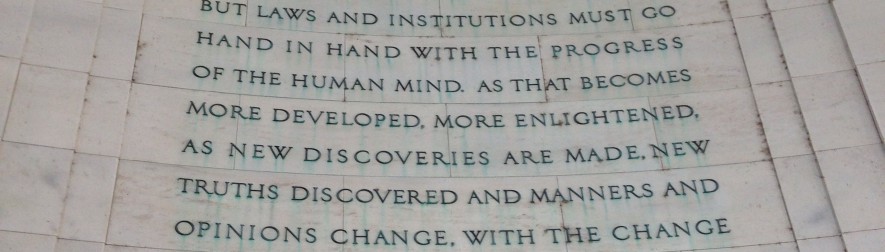
Open government is not only an American endeavor, although aspects of the philosophy espoused by Thomas Jefferson can be found in the architectures of participation being built today. There are reasons to be by turns cynical, hopeful, concerned or inspired by the transitions taking place around the world, from Brazil to the Middle East to Europe to China. Noveck testified to that reality today:

“Transparency, participation, collaboration” is, by no means, an exclusively American mantra. Ten countries have launched national data portals to make public information transparent and accessible in raw formats. The British Parliament is debating amending its Freedom of Information Act to provide that, when so requested, the government must “provide the information to the applicant in an electronic form which is capable of re-use.”[10] Poland and Brazil are also working on open access legislation. Ten Downing Street like the White House has invited the citizenry and civil servants to brainstorm ideas for how to cut spending. They both publish government contracting data.[11a][11b] Australia launched a national Government 2.0 taskforce to explore opportunities for citizen engagement. The United Nations and the World Bank are jumping on the open-data and collaboration bandwagon. India and the United States have an open government partnership. Local governments from Amsterdam to Vladivostok are implementing tools bring citizens into governance processes to help with everything from policing to public works in manageable and relevant ways

These recommendations will be useful to other government officials or countries considering open government programs.
They should be also weighed against the analysis that John Foley recently posted at Information Week Government, where he published 10 steps to open government. Foley acknowledged the success of the open government efforts of the current administration, including the accomplishments that Noveck described in her testimony, and offered a critical list of the ways that those entrusted with carrying policy forward will need to grow and improve in implementation.

Of these, perhaps the most important is awareness: without public participation, many of the initiatives and platforms that Noveck helped to start are not likely gain the critical mass, scrutiny or traction that they require to succeed.

With that aim of raising more awareness about what open government means in practice, here’s Noveck’s talk on “10 ways to change the world” from last year’s Gov 2.0 Summit is embedded below: