On June 10, 2025, the U.S. House Transparency Caucus hosted a discussion about current issues, promising proposals, and ongoing successes in government transparency in the Rayburn building.
Congressman Mike Quigley (D-IL-5), chair and founder of the Transparency Caucus, gave opening remarks about the importance of open government in American democracy, reflecting on his experiences in Chicago and Washington, DC.
The cost of corruption is dollars, but the real cost of corruption is the loss of public trust. That trust has been on steady decline for the last 20 years,” said Quigley. “If we can improve the openness in communication between the government and the people, we can build a government that works better for the people.”
Panel Participants: -Courtney Bublé (Moderator), Congress Reporter with Law360 -Lauren Harper, Daniel Ellsberg Chair on Government Secrecy with the Freedom of the Press Foundation -Demian Brady, Vice President of Research with the National Taxpayers Union Foundation -Jason Powell, Policy Director with the Citizens for Responsibility and Ethics in Washington (CREW)
“Another thing we need to pay attention to is the destruction of records and agencies discontinuing the practice of maintaining certain records,” said Harper. “You can not get a FOIA response if an agency has destroyed those documents. Or if it has opted to stop creating those records.”
Members of Congress “don’t lose their pensions until they’re finally convicted. That means many can sit in jail, and appeal, and still collect their taxpayer-funded pension,” said Brady. “The last piece of transparency we need for that is from the Office of Personnel Management, but they haven’t answered my emails since 2020.”
“Sunlight in government is essential to a functioning democracy,” said Powell. “As part of DOGE’s efforts to reshape the government, on April 1st the CDC’s entire FOIA office was suspended without prior notice or without a plan for how the statutorily required work would continue. The CDC is now not able to respond to new [FOIA] requests, existing requests, or make statutorily-required proactive disclosures.”
On Monday morning, I read Daniel Schuman’s excellent newsletter focused on the First Branch of the United States government, which included a section that collected several notable developments in the open government space. These updates include:
The launch of the General Services Administration (GSA) Open Government Secretariat’s new website. This website replaces the now defunct page at open.usa.gov — which not to be confused with the GSA’s old and degraded open government website at GSA.gov/open which is required under the Open Government Directive. This new website does not list public meetings that were held prior to 2021 in its public engagement section, neatly memory-holing what occurred under the Trump and Obama administrations. (There will continue to be readouts available about that history on this website, however, for as long as it stays online.) I was interviewed about this new open government website for the GSA; I’m sorry to report that it does not include many of the government-wide resources and initiatives I’d requested. Instead, it’s primarily focused on compliance with the Open Government Partnership’s requirements to maintain an online repository of commitments, as is the Secretariat itself. Daniel has curated a useful set of links related to open government that’s more up to date than the GSA page,
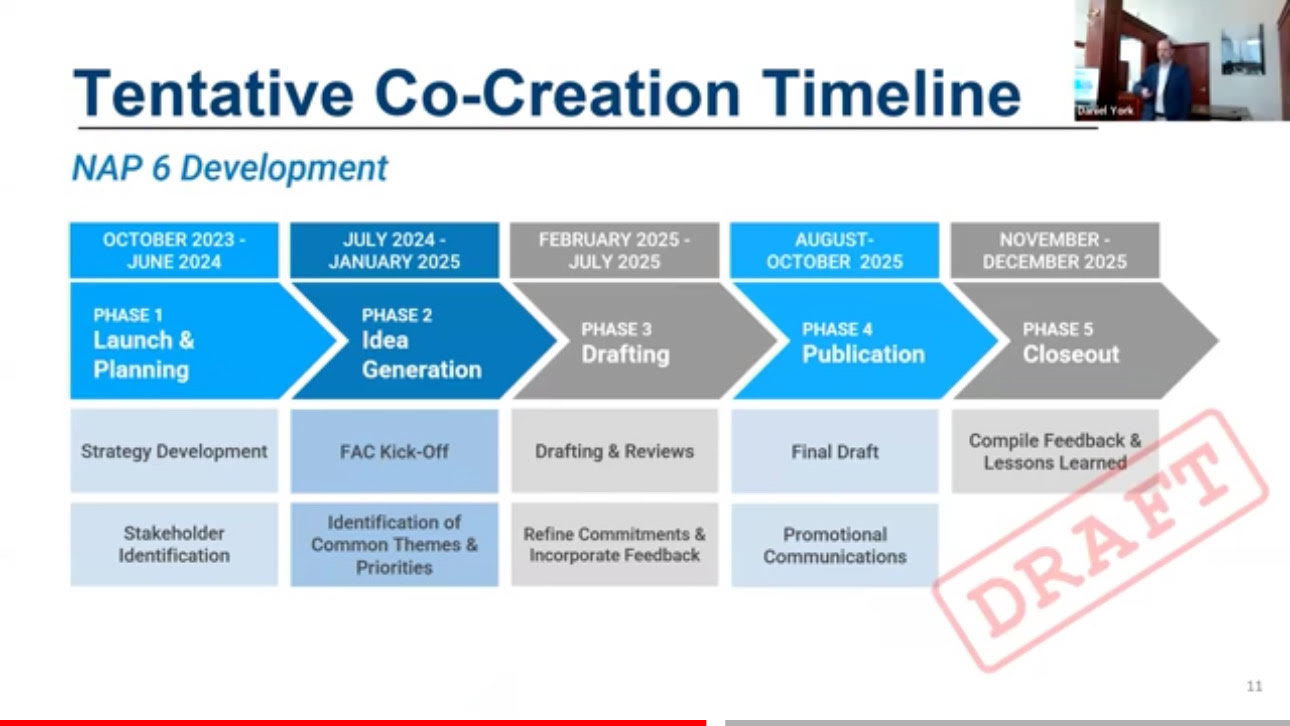
The membership of the new Open Government Federal Advisory Committee, which Daniel now chairs. Speaking at at the iirst meeting of the FOIA Advisory Committee for the 2024-2026 term, Alina Semo, director of the Office of Government Information Services, said that the first public meeting of this new OG FAC will be in October – I believe on the 23rd. That has not been publicly announced, yet.
Generally speaking, this is all good news. I want to highlight a specific issue, however, which is crucial to understanding why the Open Government has not had the positive effects in the United States that people in other nations participating in the global multi-stakeholder initiative have seen: Neither Congress nor the judicial branch has ever been involved.
Daniel has framed the Secretariat’s efforts as an “executive branch” plan, which isn’t inaccurate within the scope of the mission that has been defined for them by GSA leadership — and presumably this White House:
But saying that OGP is only about the executive branch of the federal government in the United States reflects also a specific design and governance choice that the Obama White House made. That choice has undermined the impact, influence, and relevance of the Partnership in the United States ever since, given that neither the Trump administration nor Biden administration took any action to change it.
I raised this issue in April at the Transparency Caucus briefing in Congress. Jump ahead to 54:30, where I ask if U.S participation in the Open Government Partnership is “doomed” unless we see a President engaging the American people about it and Congress involved.
There are other factors that have led to the ongoing failure of OGP in the United States. The Open Government Partnership commissioned research in 2020 that explored that question and called on the U.S. government to “seize the moment” in spring of 2021, which I participated in.
Neither Trump nor Biden ever called on all Americans to participate on air, online, or on the world stage using the bully pulpit, online or off. Championship sports teams and athletes have gotten far more presidential recognition – and thus public attention – than open government has since 2016. (Before, too, if we’re being honest, but former President Obama’s participation in a UN event in New York City in 2015 with other world leaders elevated this work far more than anyone since.)
Neither White House ever effectively engaged the American public, press, or media companies about OGP. They never formed partnerships with tech companies or non-government organizations that work on or deploy civic technologies like pol.is, while resetting the official defaults for public communications from the administration to opacity, “on background.”
The Biden White House ignored coalition letters and refused to co-create commitments, revise them, or add new ones based on our priorities.
Instead of “standing with the people demanding transparency” and accountability from our government – as President Biden called on everyone to do in December 2021, presumably including his own administration – the White House has mostly maintained strategic silence, leaving it to an extraordinary public servant – GSA Administrator Robin Carnahan – to gamely lead these efforts without top-down air cover.
The cumulative outcome of leadership, design, and governance choices over the last decade has meant that OGP’s platform or processes have not been a useful platform to reverse low trust and faith in U.S. government, despite the vigorous efforts of civil servants who remained engaged or scrubbed in, in hopes of helping keep it alive in other nations where the visibility was helpful to members of civil society there.
More than three years on, the future of OGP in the USA still depends on White House leadership — but it will be the next administration that co-creates that future or abandons it — unless President Biden decides to make open governance a priority in the last months of his term with the executive actions we’ve been calling for since he won election in November 2020.
I look forward to reading more responses to the GSA RFI that explore why OGP hasn’t worked in the USA, which the federal government and philanthropic community can apply to making this work meaningful in the future. No one involved wants to spend more time on an approach to open government that’s flailing.
Now that the GSA has officially kicked off the co-creation process, nongovernmental organizations, the press, and the American public will all need to decide whether legitimizing OGP through our participation is worth or not it in 2025.
If the next President is not willing to reify OGP through their personal participation, making clear that policy, programs, and legislative reforms are on the table, and then acts to expand OGP’s remit to Congress and the courts, set your expectations for impact in the United States accordingly.
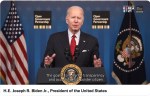
In December 2021, President Biden urged “every nation in the Open Government Partnership to take up a call to action to fight the scourge of corruption, to “stand with those in civil society and courageous citizens around the world who are demanding transparency of their governments,” and to “all work together to hold governments accountable for the people they serve.”
That disconnect was evident at a public meeting with the Department of Justice’s Office of Information Policy (OIP) on September 26, 2023. Members of the public and press who are interested in a first look at the Freedom of Information “Wizard” the OIP has been building with Forum One Communications can watch recorded video of the meeting on YouTube, along with DoJ’s work on common business standards and the “self-assessment toolkit” the agency updated. All three of these pre-existing initiatives were submitted as commitments on FOIA in the 5th U.S. National Action Plan for Open Government last December.
The General Services Administration’s new Open Government Secretariat will post a “meeting record” at open.usa.gov — their summary of what happened — though it’s not online yet. (Slides are online, along with agenda and screenshots.)
We posed a number of questions via chat that Lindsey Steel from OIP acknowledged, though not always directly answered — like the U.S. government not co-creating any of the FOIA commitments that were being discussed with civil society, in the Open Government Partnership model. (Unlike other previous public meetings in 2022 and 2023, members of civil society were given the opportunity to ask questions on video.)
While it’s both useful and laudable for OIP to take public questions on its work, the pre-baked commitments they presented on were not responsive to the significant needs of a historic moment in which administration of the Freedom of Information Act appears broken to many close observers, and follow an opaque, flawed consultation that was conducted neither in the spirit nor co-creation standards of the Open Government Partnership itself.
While the Open Government Partnership’s Independent Review Mechanism is far slower that press cycles in 2023, the independent researchers there have caught up with the USA’s poor performance since 2016. (Unfortunately, the OGP’s Independent Review Mechanism and Steering Committee’s governance processes both move too slowly to sanction governments during or after the co-creation process for failing to meet co-creation standards in a way that would have empowered US civil society in 2022.)
The U.S. government’s response did not directly acknowledge any of the substantive criticism in the IRM or by good government watchdogs, much less announce a plan to address its failure to co-create a 5th National Action Plan last fall by coming back to the table.
Instead, the General Services Administration simply promised to do better in 2024 in a 6th plan and to keep updating the public on the work U.S. government was already doing.
The request of the coalition prior to the Open Government Partnership Summit was for the U.S. government to come back to the table and co-create new commitments that are representative of our priorities, not to continue hosting virtual webinars at which civil servants provide “updates” on pre-existing commitments in order to be in compliance with the bare minimum that OGP asks of participating nations.
With respect to FOIA, doing more than the minimum would look like the White House making new commitments to effective implementation of the FOIA Improvement Act of 2016 and the Open Government Data Act through executive actions, including:
Building on U.S. Attorney General’s memorandum mandating the presumption of openness and ensure fair and effective FOIA administration.
Convening the U.S. Digital Service, 18F, and the nation’s civic tech community to work on improving FOIA.gov, using the same human-centric design principles for improved experience that are being applied to service delivery across U.S. government.
Making sure FOIA.gov users can search for records across reading rooms, Data.gov, USASpending.gov, and other federal data repositories.
Collecting and publishing data on which records are being purchased under the FOIA by commercial enterprises for non-oversight purposes, and determine whether that data can or should be proactively disclosed.
Funding and building dedicated, secure online services for people to gain access to immigration records and veterans records — as the DHS Advisory Committee recommended — instead of forcing them to use the FOIA.
Commiting to extending the FOIA to algorithms and revive Code.gov as a repository for public sector code.”
We continue to hope that President Biden will take much more ambitious actions on government transparency, accountability, participation, and collaboration in order to restore broken public trust in our federal government, acting as a bulwark against domestic corruption and authoritarianism.
This post contains an audio recording (above) of a public Zoom call held on July 20, 2023 to update Americans on select commitments in the 5th U.S. National Action Plan for Open Government, more than six months after the White House published the plan online at the end of December 2022.
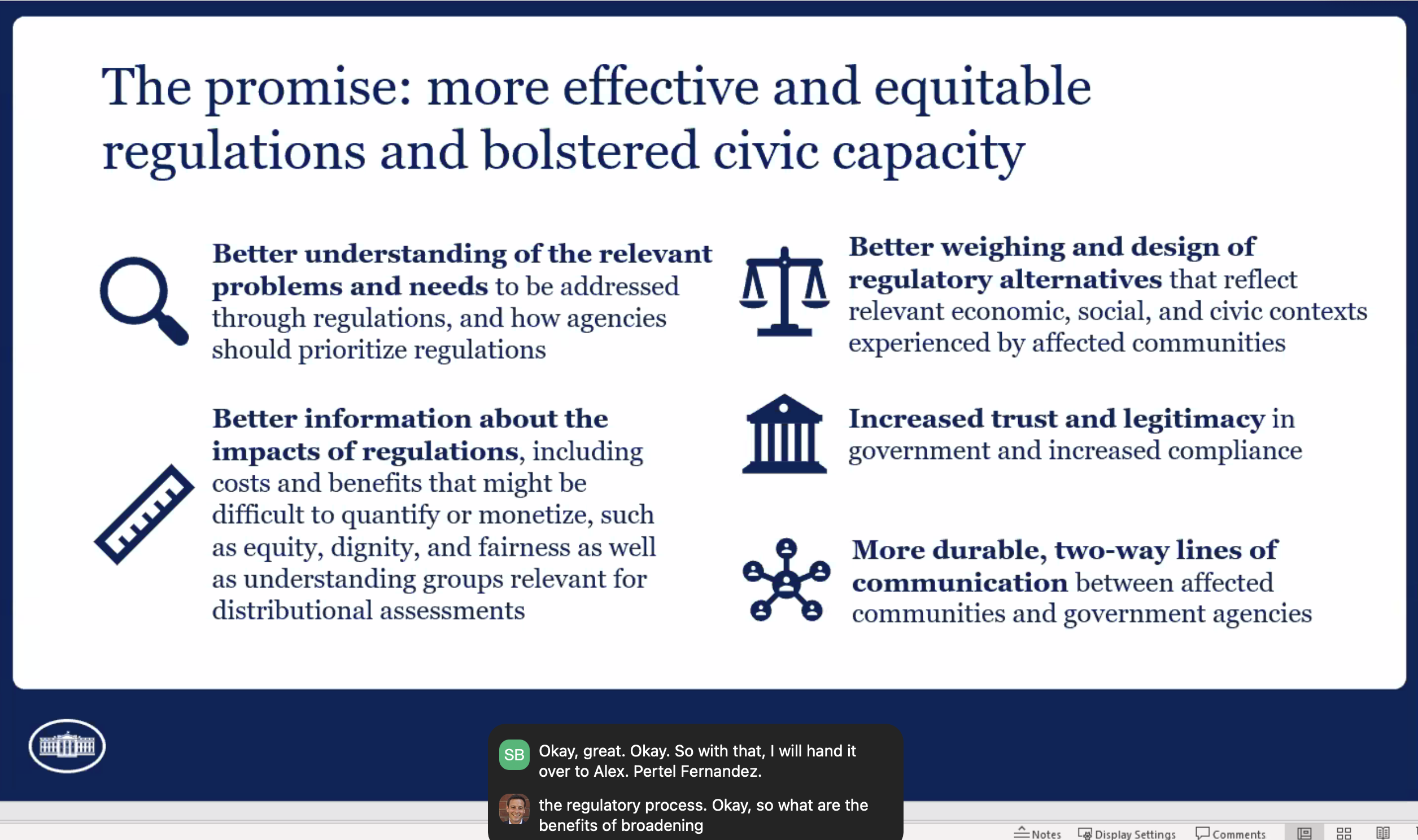
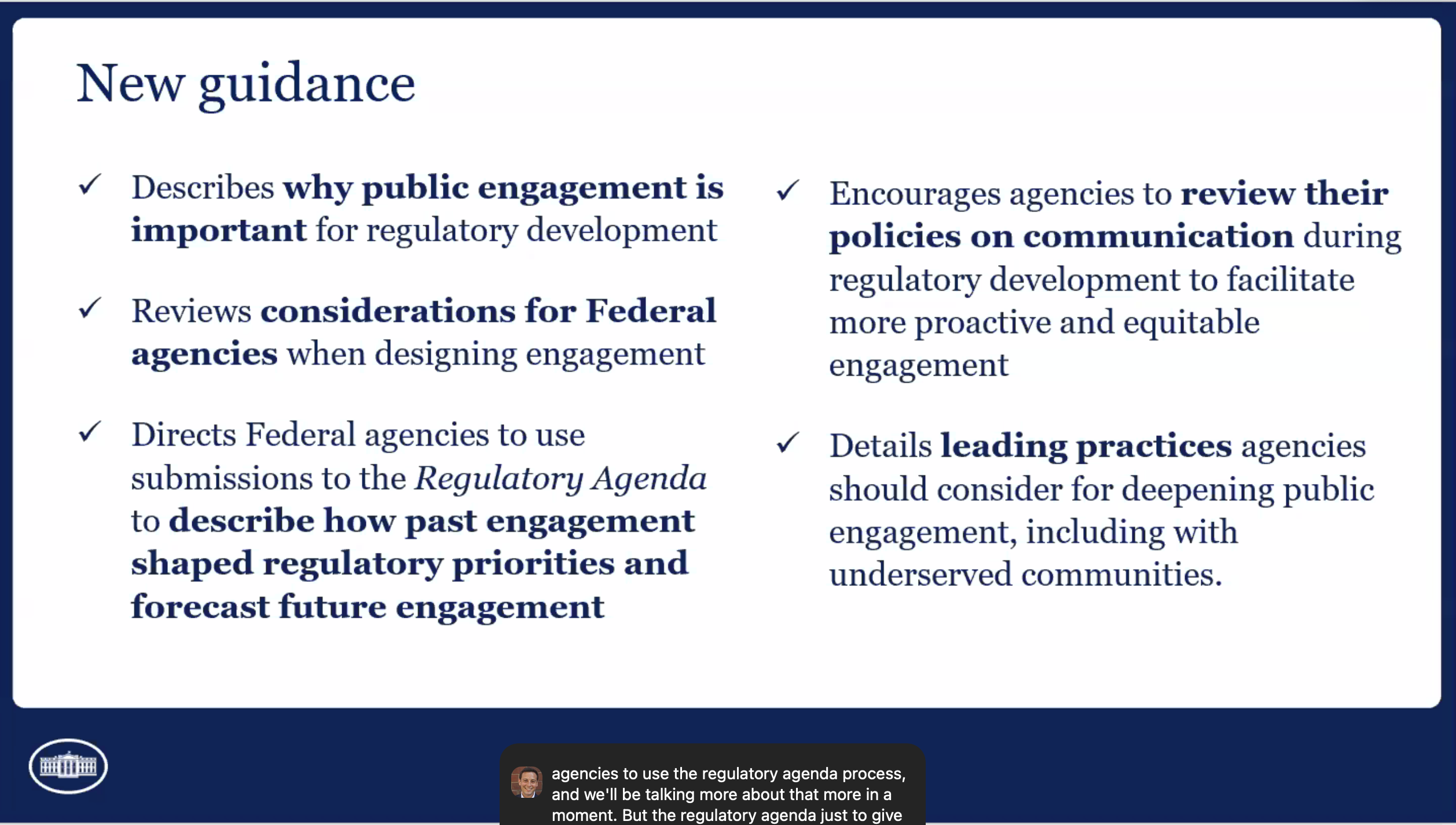
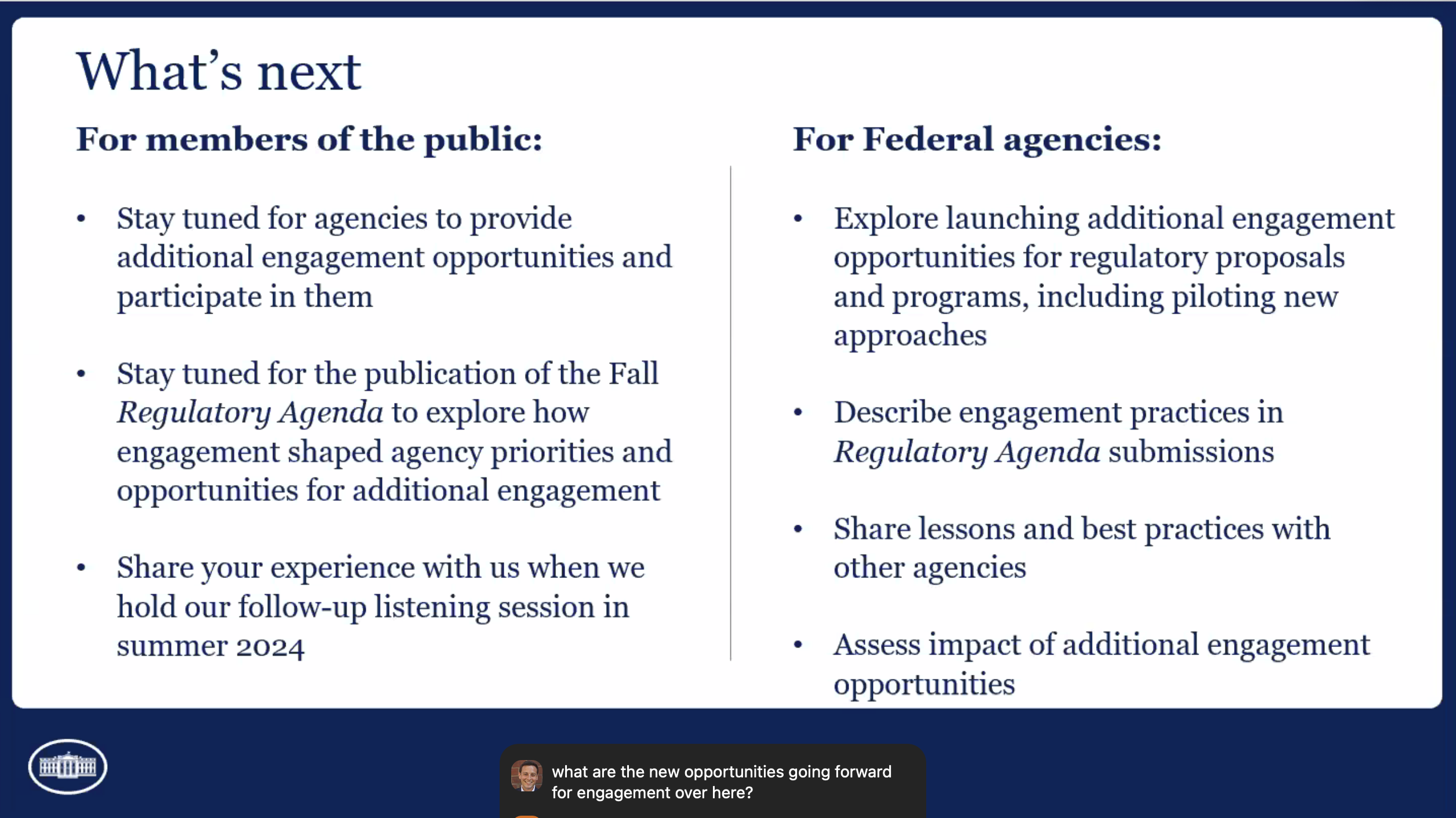
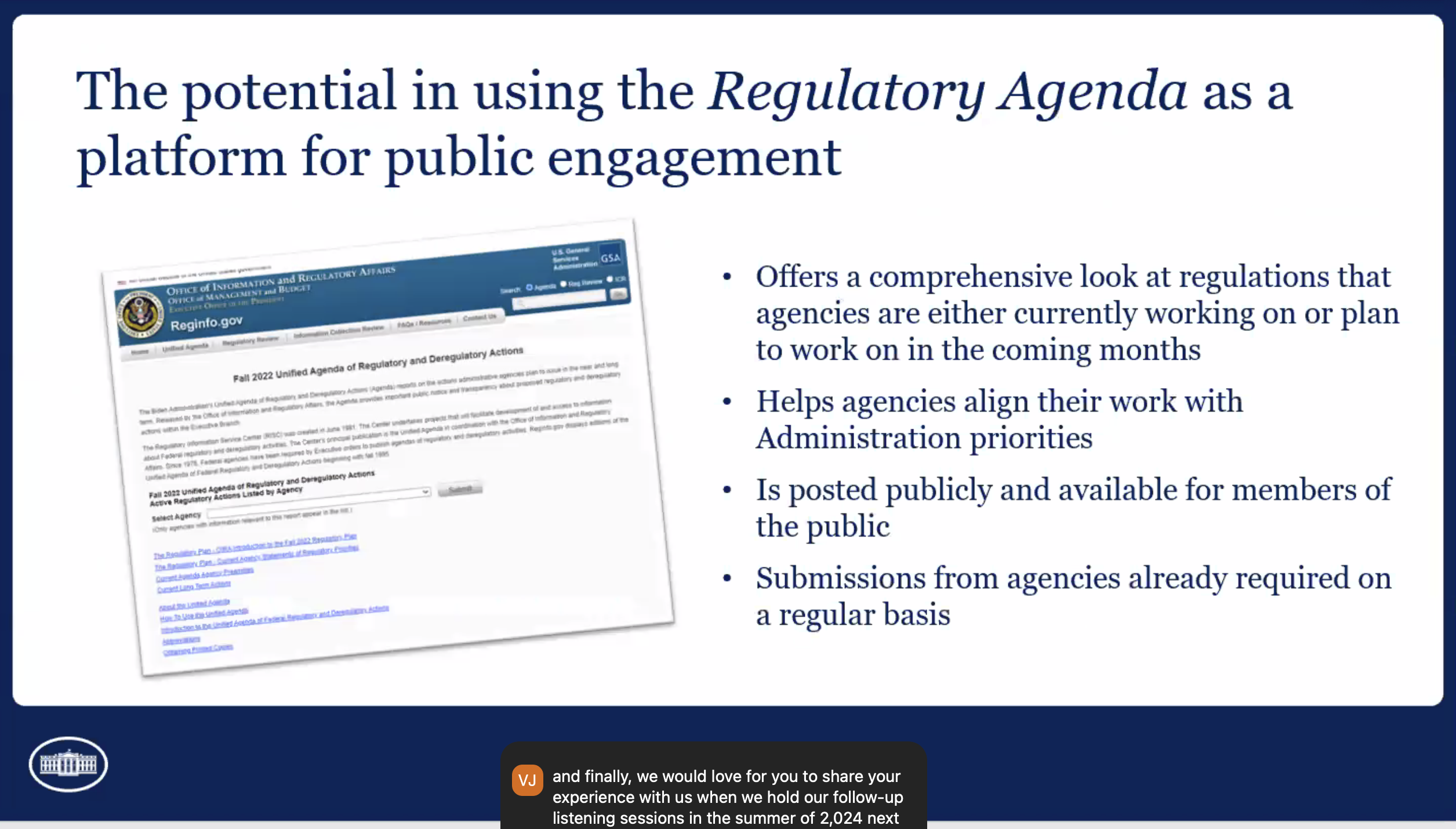
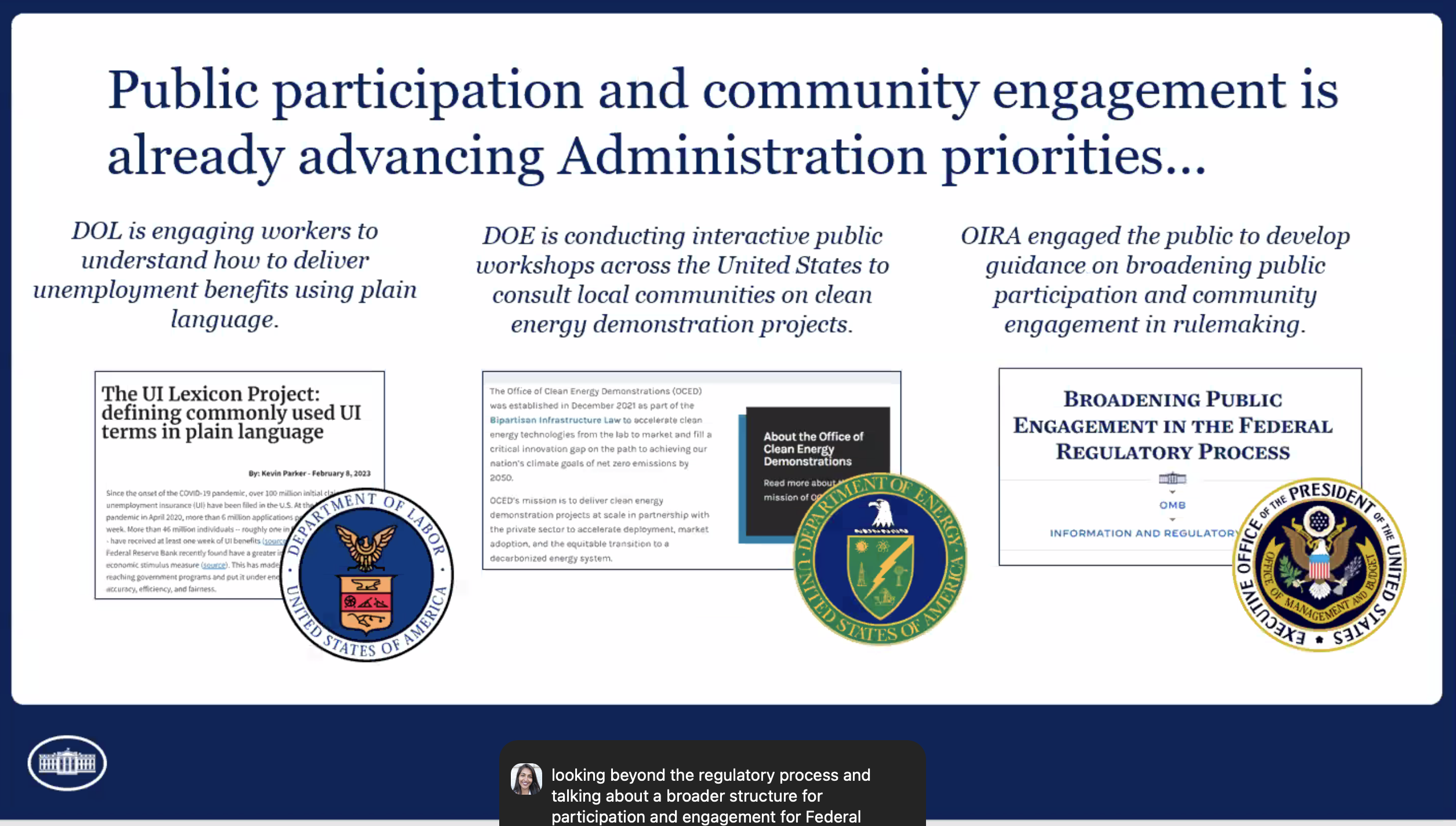
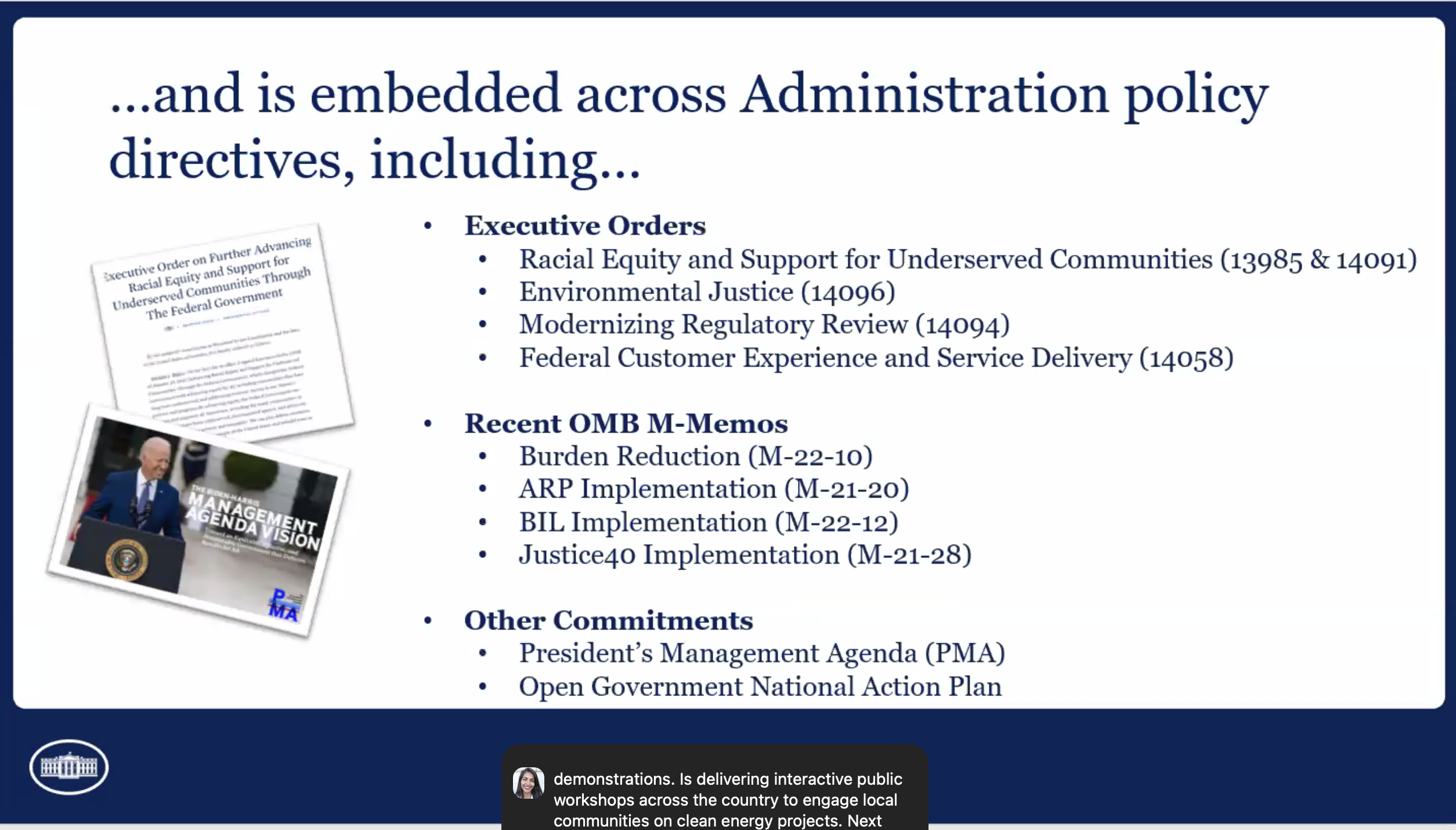
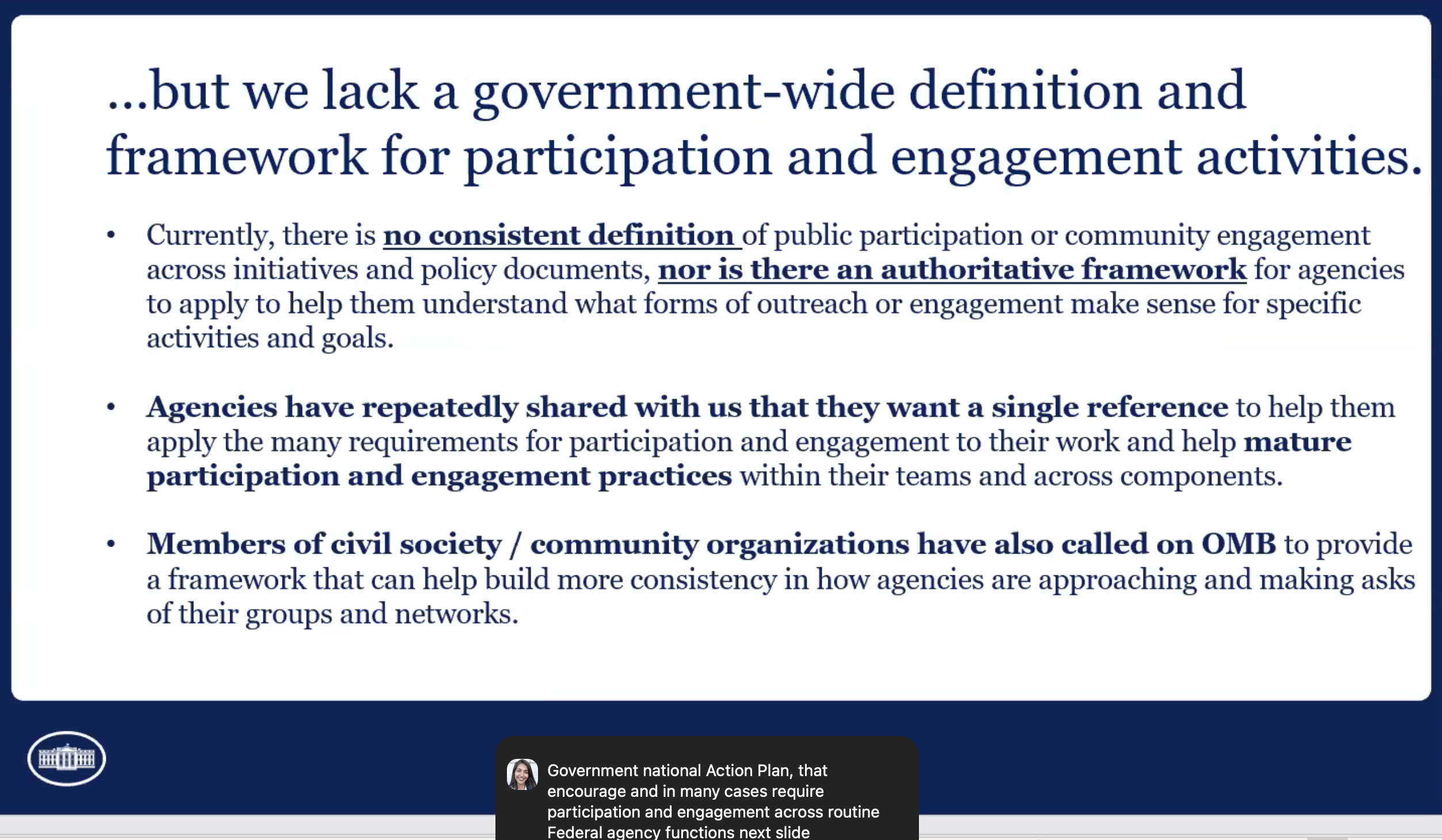
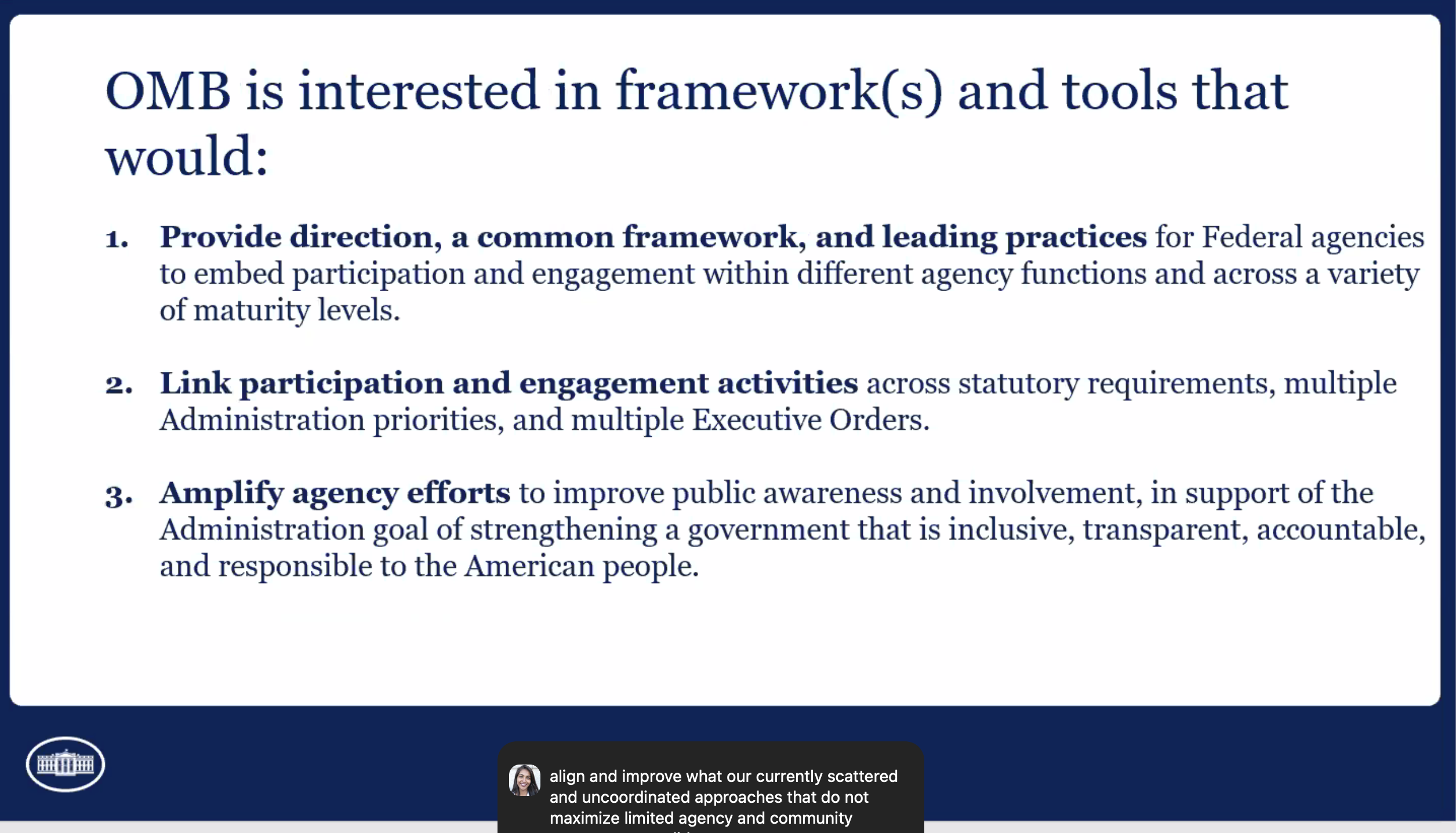
Officials at the White House Office of Management and Budget (OMB) and the Office of Information and Regulatory Affairs (OIRA) presented on their work on commitments to make the voices of the public heard.
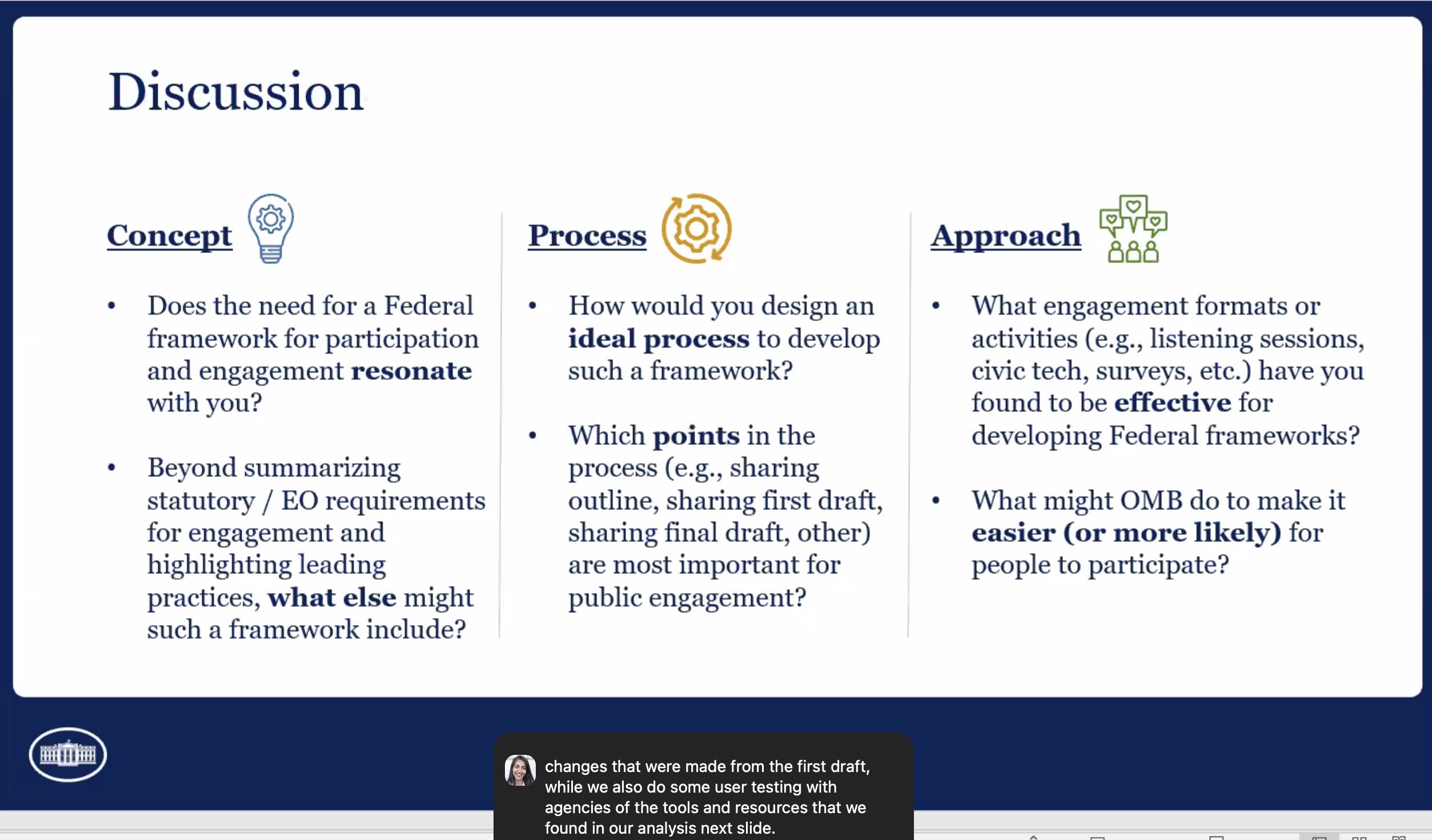
Should the Federal government adopt a common framework for participation and engagement? What might such a framework include?
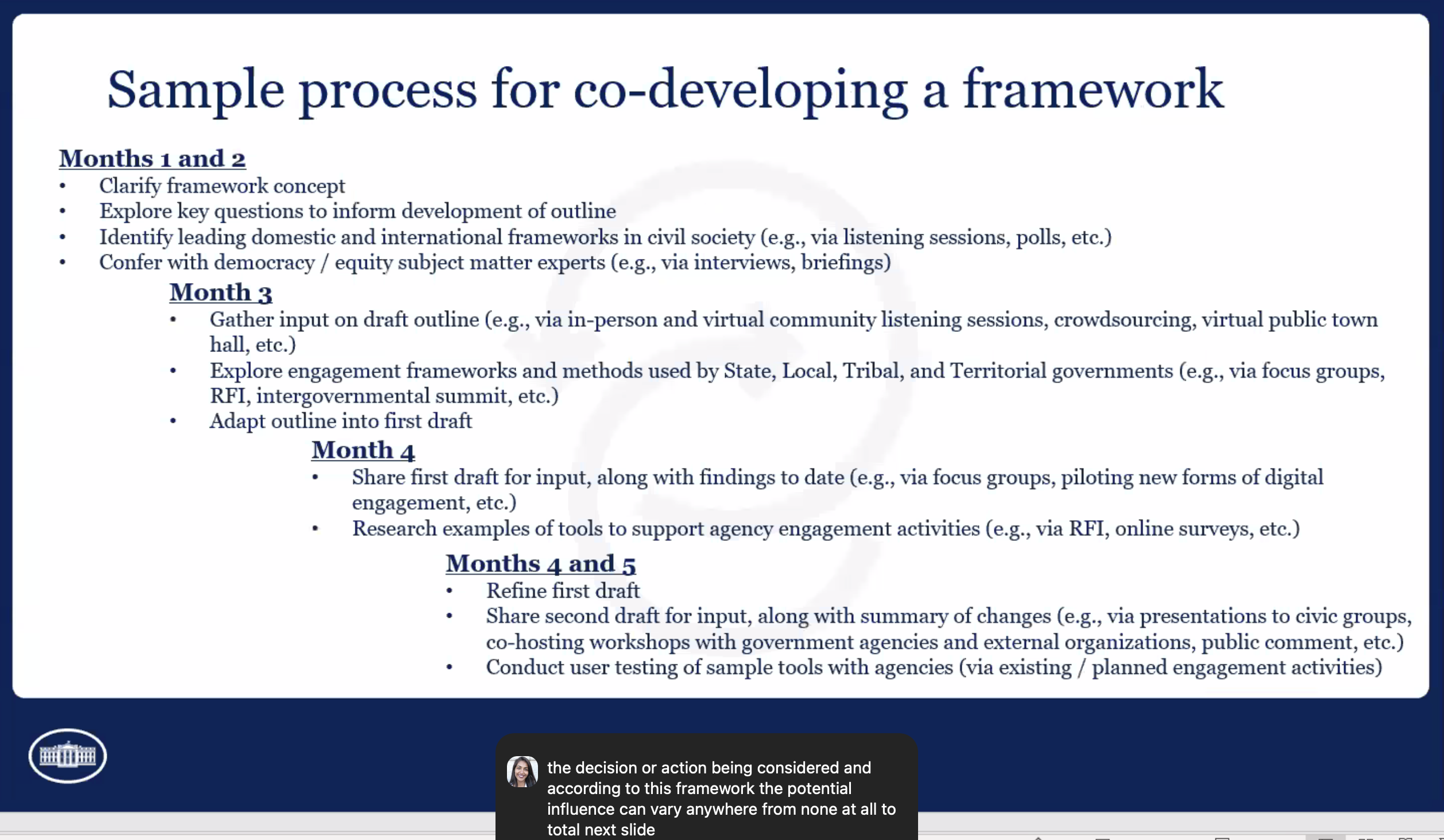
How would you design an ideal process to develop such a framework?
What points in the process (e.g., outline, first draft, final draft) are most important for public engagement?
What engagement formats or activities would be most effective for developing a Federal framework?
What might the Federal government do to make it easier for people to participate?
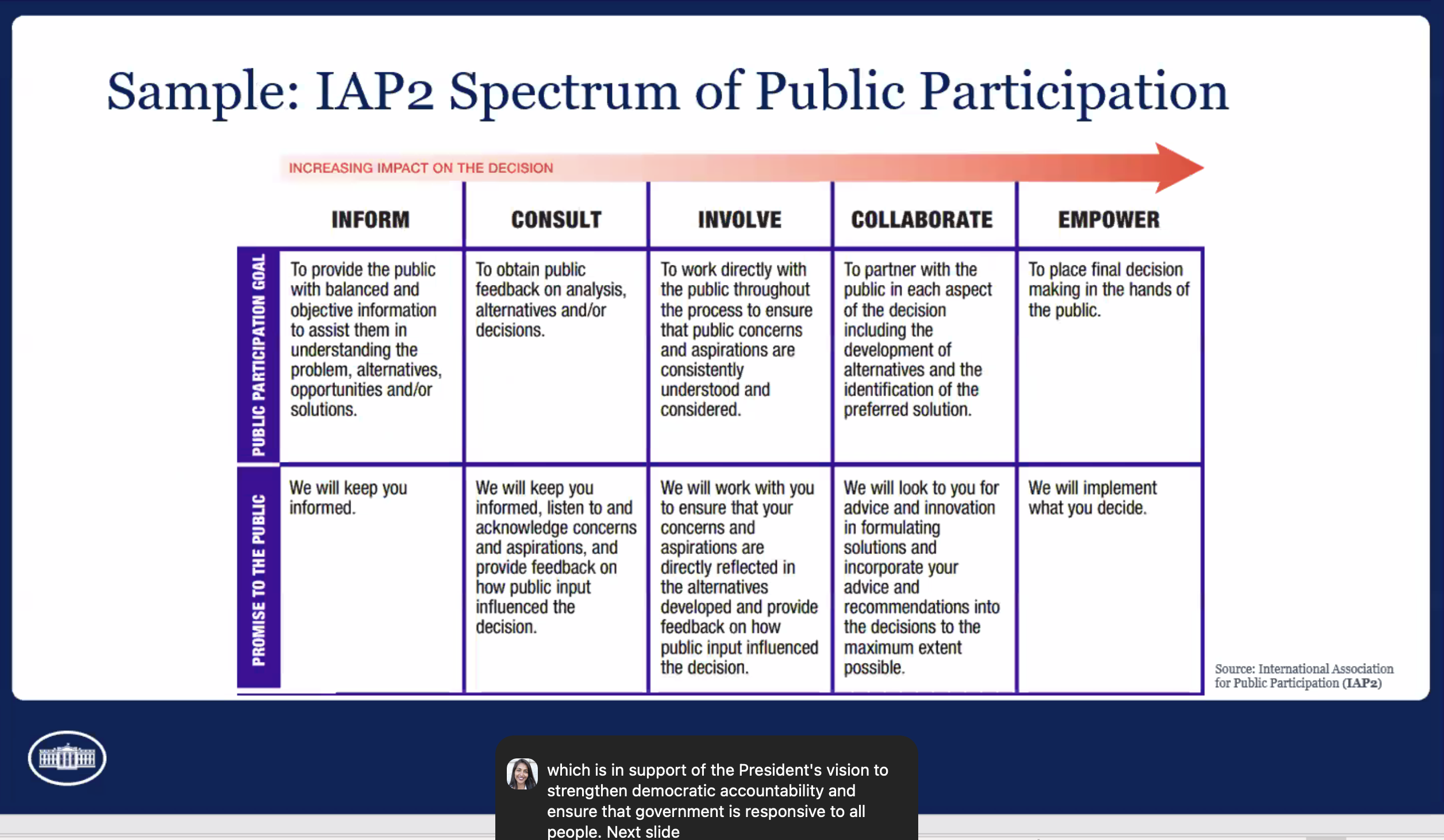
Our view? OMB should go back to the future. Review the Public Participation Playbook the Obama White House developed with the public in 2015, as part of the US government’s efforts to open government. Then, working in collaboration with the Office of Public Engagement, host a series of open government roundtables with the nation’s leading authorities on civic engagement and public participation in 2023 and 2024 that inform guidance for the federal government.
Officials might review what approaches were effective in engaging Americans with public health information in the pandemic, voting information, and extreme weather — and which were not.
That work should be part of a new open government plans at OMB and OSTP that are hosted at whitehouse.gov/open, showing President Biden’s commitment to government transparency like whitehouse.gov/equity shows his administration’s commitment to equity.
Screenshots of the presentation follow. (Our apologies: we missed slide 3 and 9.)
Should this White House publish slides or notes from this public session on its work implementing open government commitments, we will update this post.
(Officials said that the session was not recorded, so we are providing the above resources for the Americans who were unable to attend or who did not hear about this opportunity to engage with OMB and OIRA about broadening public engagement because this administration did not engage the public. As you’ll hear in the recording, the public participants in this listening session offered praise for the guidance and suggestions for improvement tempered with critiques of the opaque process, poor communications about the forum, and dissatisfaction at the lack of a cohesive way to track and understand this administration’s work on government transparency and accountability.)
This post contains an audio recording (above) of the Zoom call held on July 12, 2023 to update the public on select commitments in the 5th U.S. National Action Plan for Open Government, more than six months after the White House published the plan online in December 2022.
Should the General Services Administration publish video and transcript of this session, as the Open Government Secretariat indicated they would explore, we will add both.
If knowledge is power, ignorance is impotence. Citizens, consumers, investors, and patients all need trustworthy information when we vote, making purchasing decisions, buy stocks or other assets, or choose a surgeon, medical device, nursing home, or dialysis center. That’s why … Continue reading →
On December 15th, President Joe Biden delivered pre-recorded remarks to the Open Government Partnership Summit, an international conference that convened dozens of nations in South Korea to discuss the past, present, and future of open government. It’s not clear how … Continue reading →
Today, the White House Press Secretary Jen Psaki said that the White House is open to bringing back the “Skype seat” again and to taking questions from it. Psaki noted she took Q’s on Twitter — she then replied to … Continue reading →
Dear Secretary Psaki and the Office of the Press Secretary, My name is Alexander B Howard; you may have noticed me tweeting at you this past couple months during the transition and now the administration. I came to DC over … Continue reading →
Did YOU know the USA has a Federal Data Strategy? Or that it’s part of National US Plan for Open Government? This President and White House should have told you, instead of failing to engage Americans. I participated in another … Continue reading →






 E Pluribus Unum