On June 10, 2025, the U.S. House Transparency Caucus hosted a discussion about current issues, promising proposals, and ongoing successes in government transparency in the Rayburn building.
Congressman Mike Quigley (D-IL-5), chair and founder of the Transparency Caucus, gave opening remarks about the importance of open government in American democracy, reflecting on his experiences in Chicago and Washington, DC.
The cost of corruption is dollars, but the real cost of corruption is the loss of public trust. That trust has been on steady decline for the last 20 years,” said Quigley. “If we can improve the openness in communication between the government and the people, we can build a government that works better for the people.”
Panel Participants: -Courtney Bublé (Moderator), Congress Reporter with Law360 -Lauren Harper, Daniel Ellsberg Chair on Government Secrecy with the Freedom of the Press Foundation -Demian Brady, Vice President of Research with the National Taxpayers Union Foundation -Jason Powell, Policy Director with the Citizens for Responsibility and Ethics in Washington (CREW)
“Another thing we need to pay attention to is the destruction of records and agencies discontinuing the practice of maintaining certain records,” said Harper. “You can not get a FOIA response if an agency has destroyed those documents. Or if it has opted to stop creating those records.”
Members of Congress “don’t lose their pensions until they’re finally convicted. That means many can sit in jail, and appeal, and still collect their taxpayer-funded pension,” said Brady. “The last piece of transparency we need for that is from the Office of Personnel Management, but they haven’t answered my emails since 2020.”
“Sunlight in government is essential to a functioning democracy,” said Powell. “As part of DOGE’s efforts to reshape the government, on April 1st the CDC’s entire FOIA office was suspended without prior notice or without a plan for how the statutorily required work would continue. The CDC is now not able to respond to new [FOIA] requests, existing requests, or make statutorily-required proactive disclosures.”
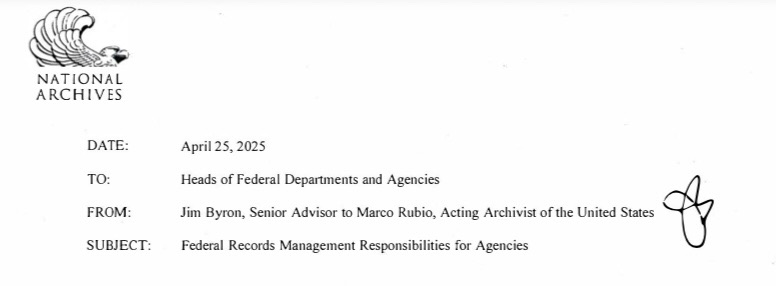
On April 25, 2025, the senior advisor to the acting Archivist of the United States (AOTUS) sent a memorandum to the heads of federal departments and agencies on the management responsibilities they have with respect to electronic messages that constitute public records.
In the memorandum (below), Jim Byron, Senior Advisor to Secretary Marco Rubio, Acting AOTUS, reminds agencies the obligation all officials have to memorialize official business conducted on a personal device or account by forwarding or copying an official account with the electronic correspondence.
Byron observes that “the use of the auto-delete function on digital messaging applications may prevent agency officials from meeting this critical obligation, possibly resulting in the permanent loss of federal records,” but this conflicts common sense.
That policy emphasizes that “the basic rule is to preserve all work-related communications and records, regardless of format.”
Messages that constitute public business that are sent on personal devices and on Signal must be archived, which means any auto-delete feature in the app should be disabled, not enabled by default — including those in the chat Acting Archivist Rubio was on with the National Security Advisor.
Screenshot of NARA memo header
Federal Records Management Responsibilities for Agencies
Congratulations to all of you on your recent appointments to federal service.
I write to make you aware of resources that are available to you and your employees regarding records management in your agencies.
All federal employees create and manage records as an integral part of their responsibilities in performing agency missions. Federal records protect the rights and interests of the public, allow officials to be held accountable for their actions, and document our nation’s history. Also, good records management helps your agency operate more effectively and efficiently.
It is crucial agency heads work with their Senior Agency Official for Records Management and Agency Records Officers to communicate the importance of their records management responsibilities to all staff, including political appointees.
Together, federal agencies and the National Archives work toward government transparency, public engagement, and accountability by promoting our obligations under the Federal Records Act (FRA). The FRA, at 44 U.S.C. § 3101, charges you, as the agency head, with creating and preserving federal records containing adequate and proper documentation of the agency’s activities so that the legal and financial rights of the Government and individuals affected by the agency’s activities are protected.
The emergence of —and increasing reliance upon — new forms of electronic communication can make records management more challenging, but no less important. The FRA imposes strict requirements on the use of personal accounts to conduct agency business. If any agency employee uses a personal account to engage in official business, they must copy an official account or forward their message to an official account within 20 days. 44 U.S.C. § 2911.
The use of the auto-delete function on digital messaging applications may prevent agency officials from meeting this critical obligation, possibly resulting in the permanent loss of federal records.
It is thus vital that you ensure staff are properly trained on their FRA obligations. Agency heads must ensure that their records management programs provide effective control over the creation and maintenance of records, 44 U.S.C. § 3102, and safeguard against the removal or loss of records, 44 U.S.C. § 3105.
We encourage you to take prompt action to ensure that your recordkeeping policies are up-to-date, and that they adequately educate agency staff how to create, maintain, and dispose of federal records, especially when using third-party apps. Additional details about the appropriate maintenance of electronic records, including metadata retention requirements, can be located at 36 CFR Part 1236.
Questions related to FRA compliance may also arise when agencies transfer their functions to other agencies. Agencies must ensure that:
Paper and electronic records are properly identified and segregated from non-records, as those terms are defined by federal law;
Temporary paper and electronic records are only disposed of in accordance with a NARA-approved agency-specific or General Records Schedule; and
Paper and electronic records are transferred to another federal entity, inactive storage, or NARA only in accordance with the procedures outlined in 36 CFR Parts 123 | to 1235.
NARA will be issuing additional guidance and resources to assist agencies with fulfilling their records management responsibilities when consolidating and reorganizing.
Thank you for your attention to these matters. If you have any questions about your agency’s records management responsibilities or would like to discuss anything further, I invite you to contact William Fischer, Acting Chief Records Officer at NARA, at william.fischer@nara.gov.
cc
Senior Agency Officials for Records Management Agency Records Officers
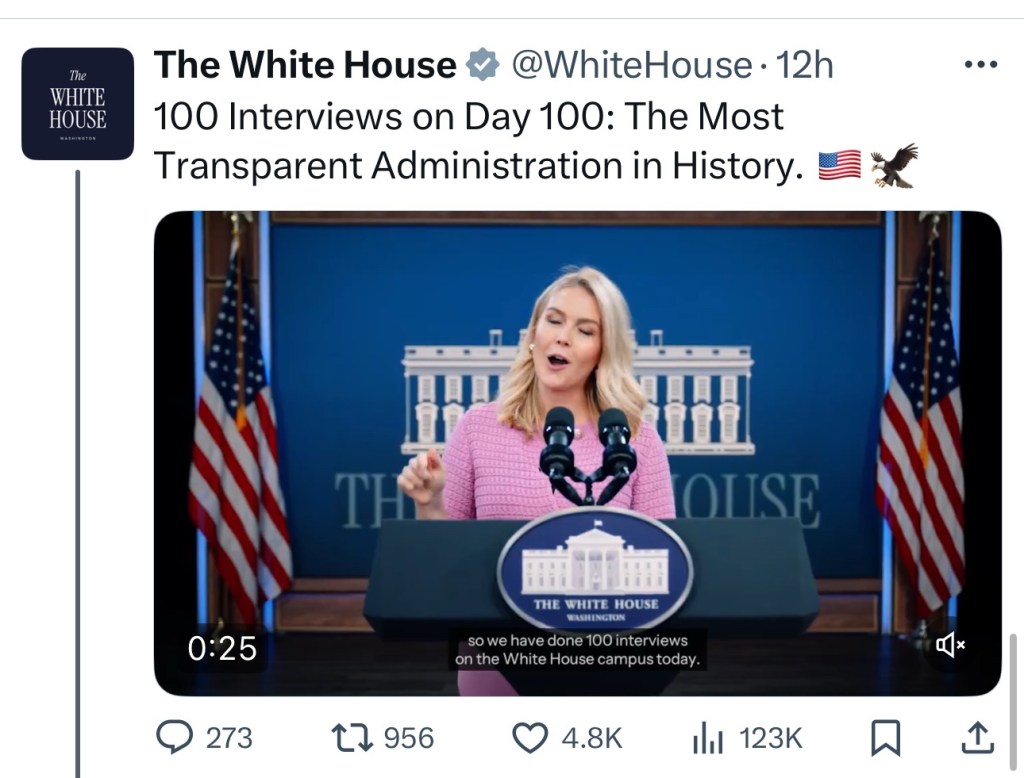
If this White House is using NDAs, renewed claims of historic transparency are even more ludicrous.
The “most transparent administration in history” would honor the Presidential Records Act and fire a National Security Advisor who set records to auto-delete in a Signal chat, not tolerate lawlessness.
In December 2021, President Biden urged “every nation in the Open Government Partnership to take up a call to action to fight the scourge of corruption, to “stand with those in civil society and courageous citizens around the world who are demanding transparency of their governments,” and to “all work together to hold governments accountable for the people they serve.”
That disconnect was evident at a public meeting with the Department of Justice’s Office of Information Policy (OIP) on September 26, 2023. Members of the public and press who are interested in a first look at the Freedom of Information “Wizard” the OIP has been building with Forum One Communications can watch recorded video of the meeting on YouTube, along with DoJ’s work on common business standards and the “self-assessment toolkit” the agency updated. All three of these pre-existing initiatives were submitted as commitments on FOIA in the 5th U.S. National Action Plan for Open Government last December.
The General Services Administration’s new Open Government Secretariat will post a “meeting record” at open.usa.gov — their summary of what happened — though it’s not online yet. (Slides are online, along with agenda and screenshots.)
We posed a number of questions via chat that Lindsey Steel from OIP acknowledged, though not always directly answered — like the U.S. government not co-creating any of the FOIA commitments that were being discussed with civil society, in the Open Government Partnership model. (Unlike other previous public meetings in 2022 and 2023, members of civil society were given the opportunity to ask questions on video.)
While it’s both useful and laudable for OIP to take public questions on its work, the pre-baked commitments they presented on were not responsive to the significant needs of a historic moment in which administration of the Freedom of Information Act appears broken to many close observers, and follow an opaque, flawed consultation that was conducted neither in the spirit nor co-creation standards of the Open Government Partnership itself.
While the Open Government Partnership’s Independent Review Mechanism is far slower that press cycles in 2023, the independent researchers there have caught up with the USA’s poor performance since 2016. (Unfortunately, the OGP’s Independent Review Mechanism and Steering Committee’s governance processes both move too slowly to sanction governments during or after the co-creation process for failing to meet co-creation standards in a way that would have empowered US civil society in 2022.)
The U.S. government’s response did not directly acknowledge any of the substantive criticism in the IRM or by good government watchdogs, much less announce a plan to address its failure to co-create a 5th National Action Plan last fall by coming back to the table.
Instead, the General Services Administration simply promised to do better in 2024 in a 6th plan and to keep updating the public on the work U.S. government was already doing.
The request of the coalition prior to the Open Government Partnership Summit was for the U.S. government to come back to the table and co-create new commitments that are representative of our priorities, not to continue hosting virtual webinars at which civil servants provide “updates” on pre-existing commitments in order to be in compliance with the bare minimum that OGP asks of participating nations.
With respect to FOIA, doing more than the minimum would look like the White House making new commitments to effective implementation of the FOIA Improvement Act of 2016 and the Open Government Data Act through executive actions, including:
Building on U.S. Attorney General’s memorandum mandating the presumption of openness and ensure fair and effective FOIA administration.
Convening the U.S. Digital Service, 18F, and the nation’s civic tech community to work on improving FOIA.gov, using the same human-centric design principles for improved experience that are being applied to service delivery across U.S. government.
Making sure FOIA.gov users can search for records across reading rooms, Data.gov, USASpending.gov, and other federal data repositories.
Collecting and publishing data on which records are being purchased under the FOIA by commercial enterprises for non-oversight purposes, and determine whether that data can or should be proactively disclosed.
Funding and building dedicated, secure online services for people to gain access to immigration records and veterans records — as the DHS Advisory Committee recommended — instead of forcing them to use the FOIA.
Commiting to extending the FOIA to algorithms and revive Code.gov as a repository for public sector code.”
We continue to hope that President Biden will take much more ambitious actions on government transparency, accountability, participation, and collaboration in order to restore broken public trust in our federal government, acting as a bulwark against domestic corruption and authoritarianism.
This post contains an audio recording (above) of a public Zoom call held on July 20, 2023 to update Americans on select commitments in the 5th U.S. National Action Plan for Open Government, more than six months after the White House published the plan online at the end of December 2022.
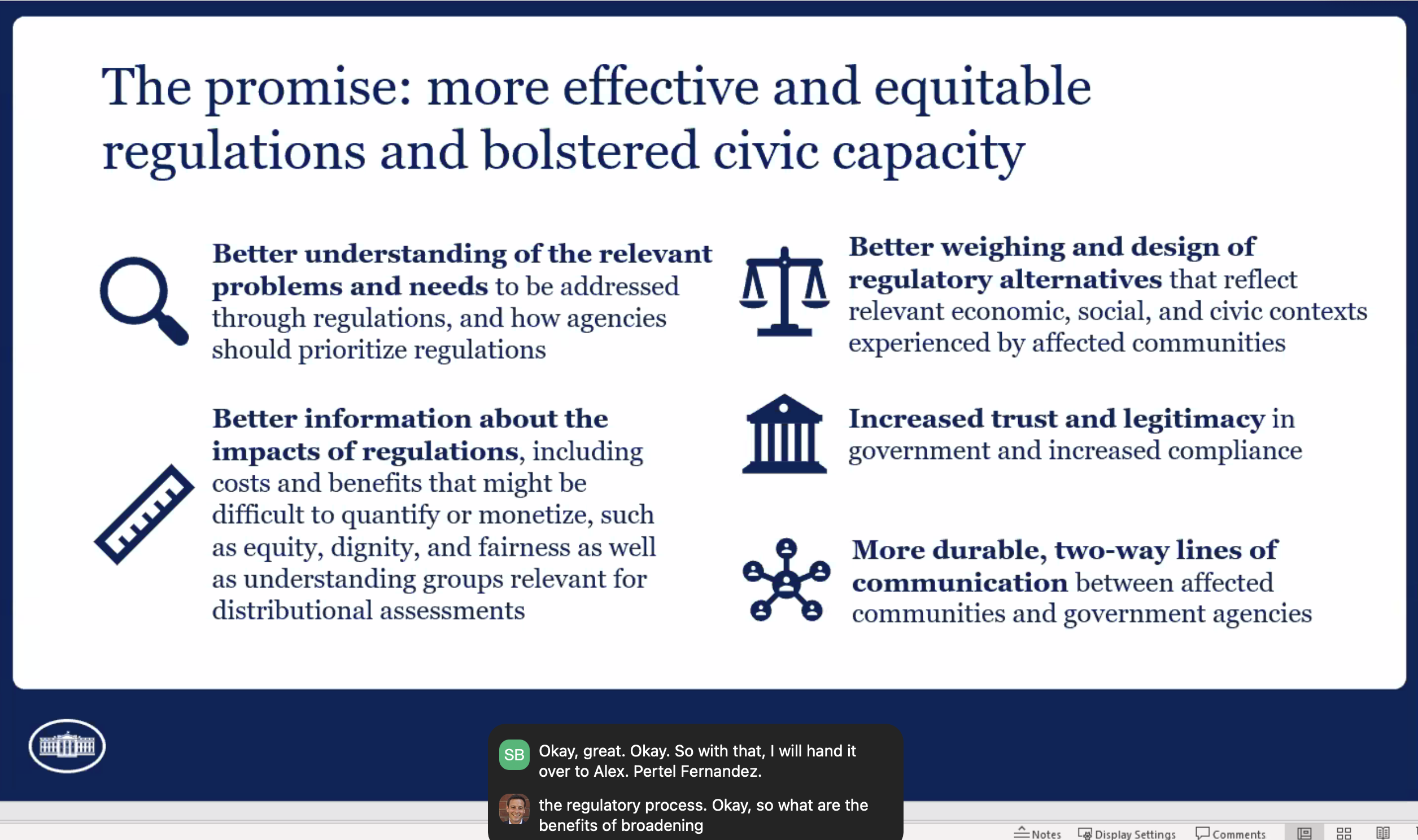
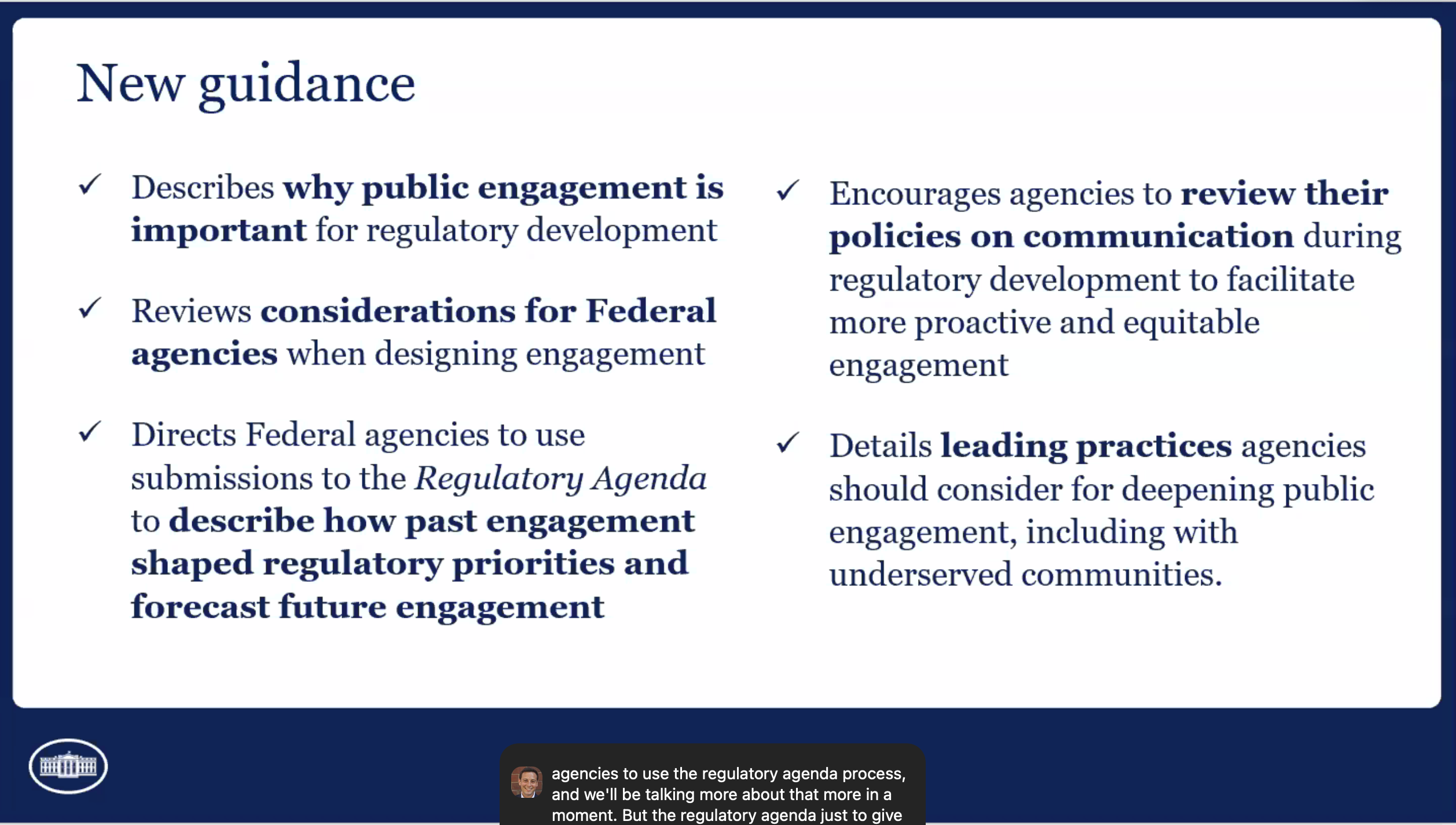
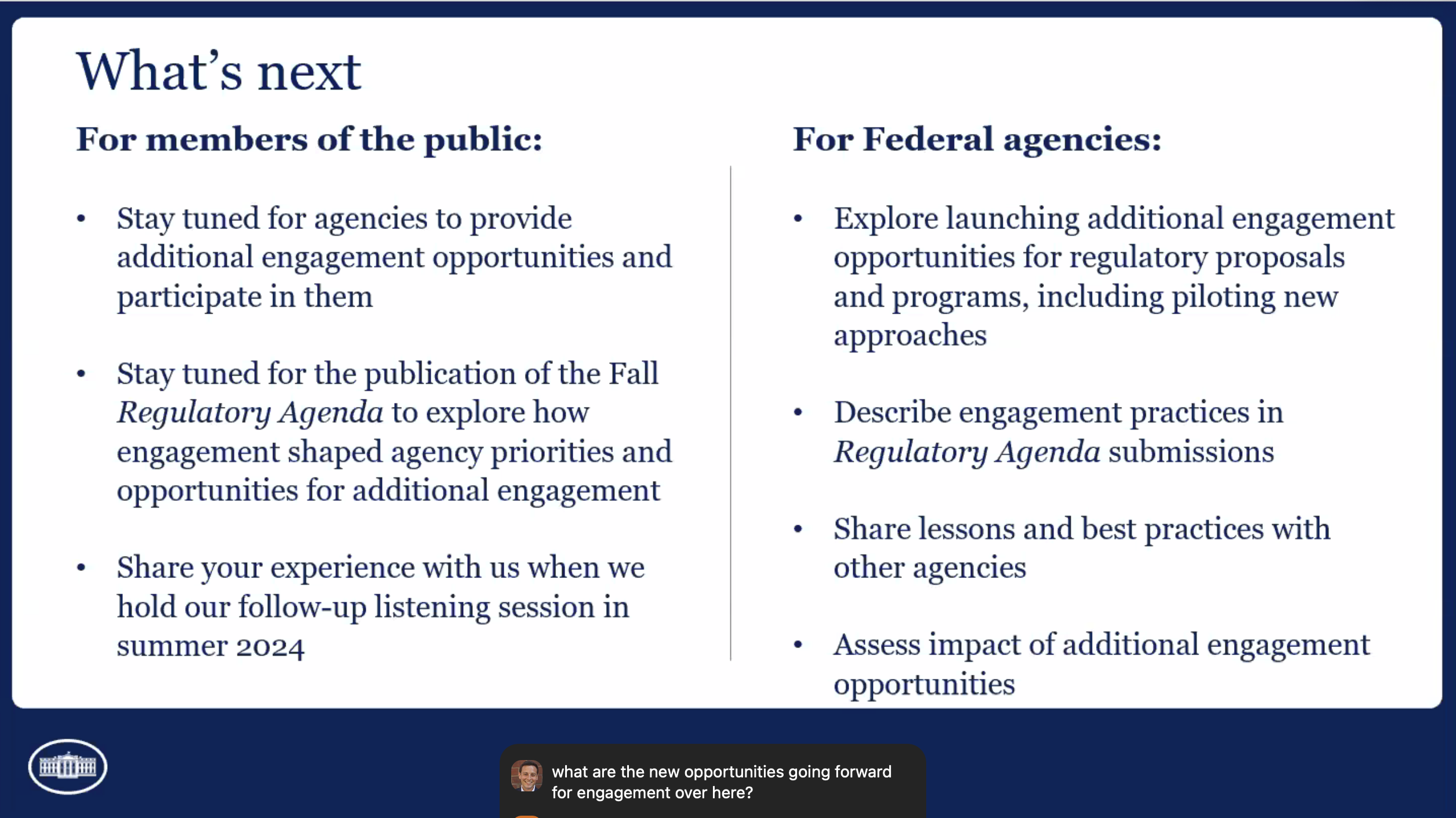
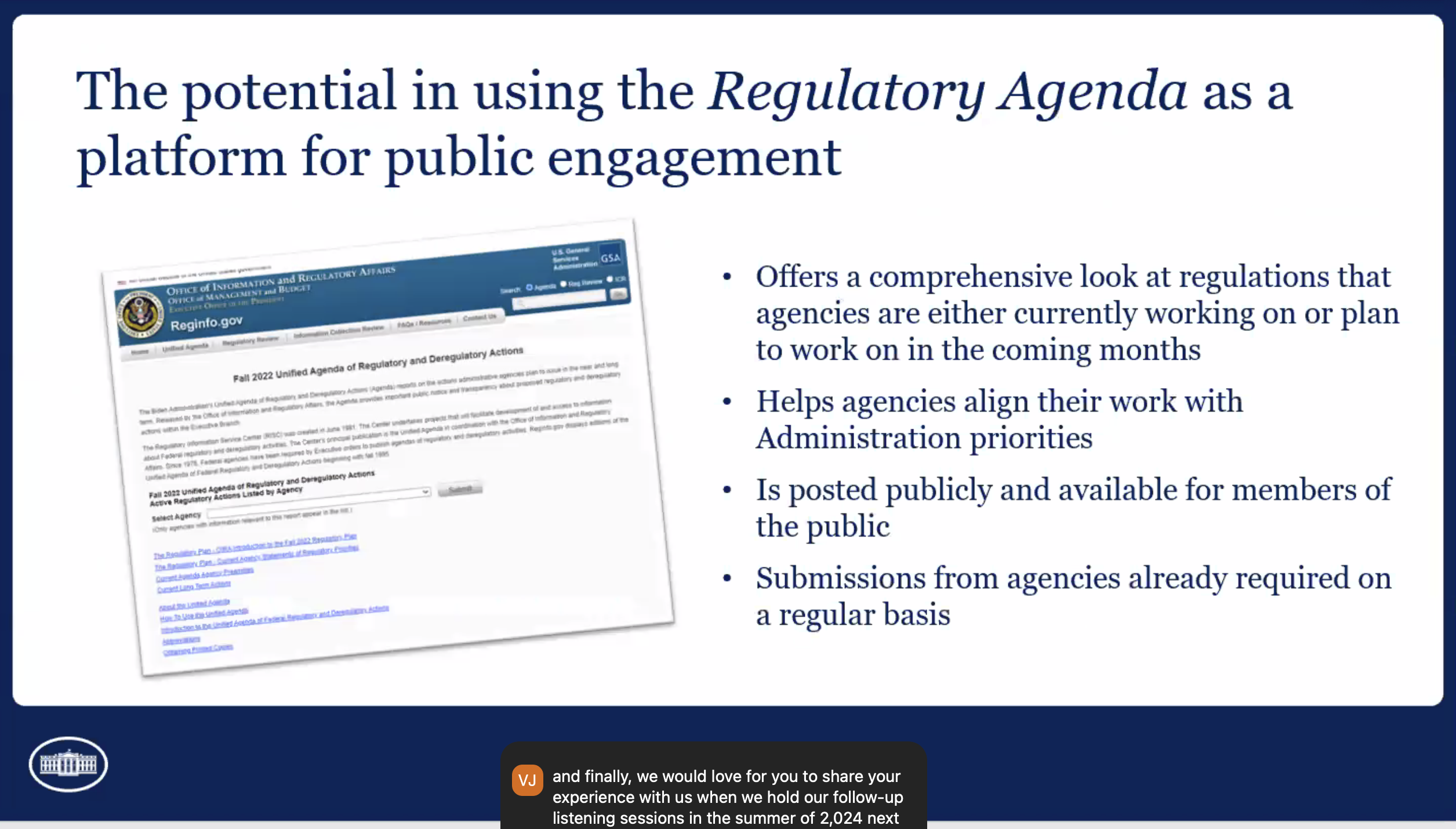
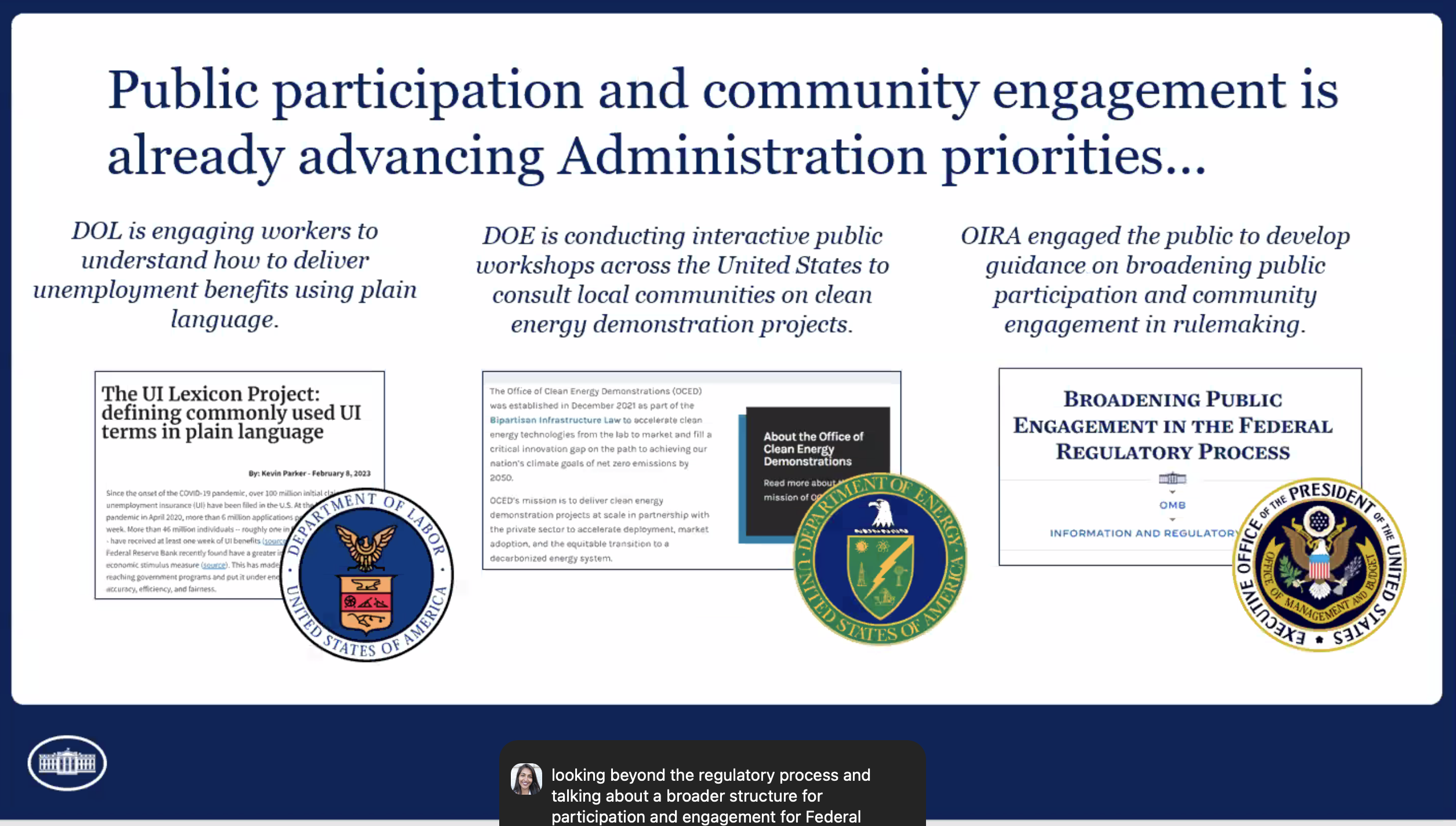
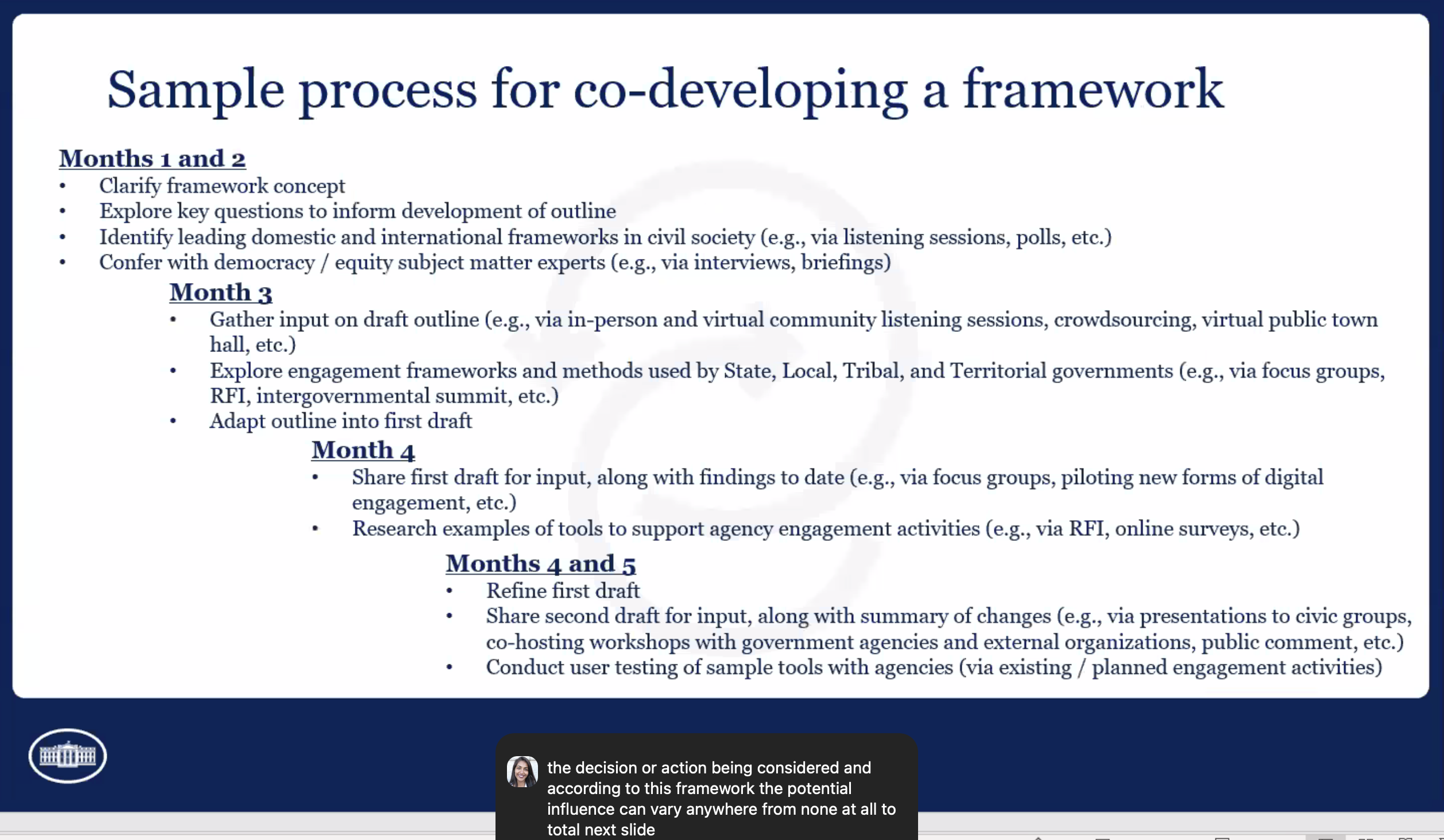
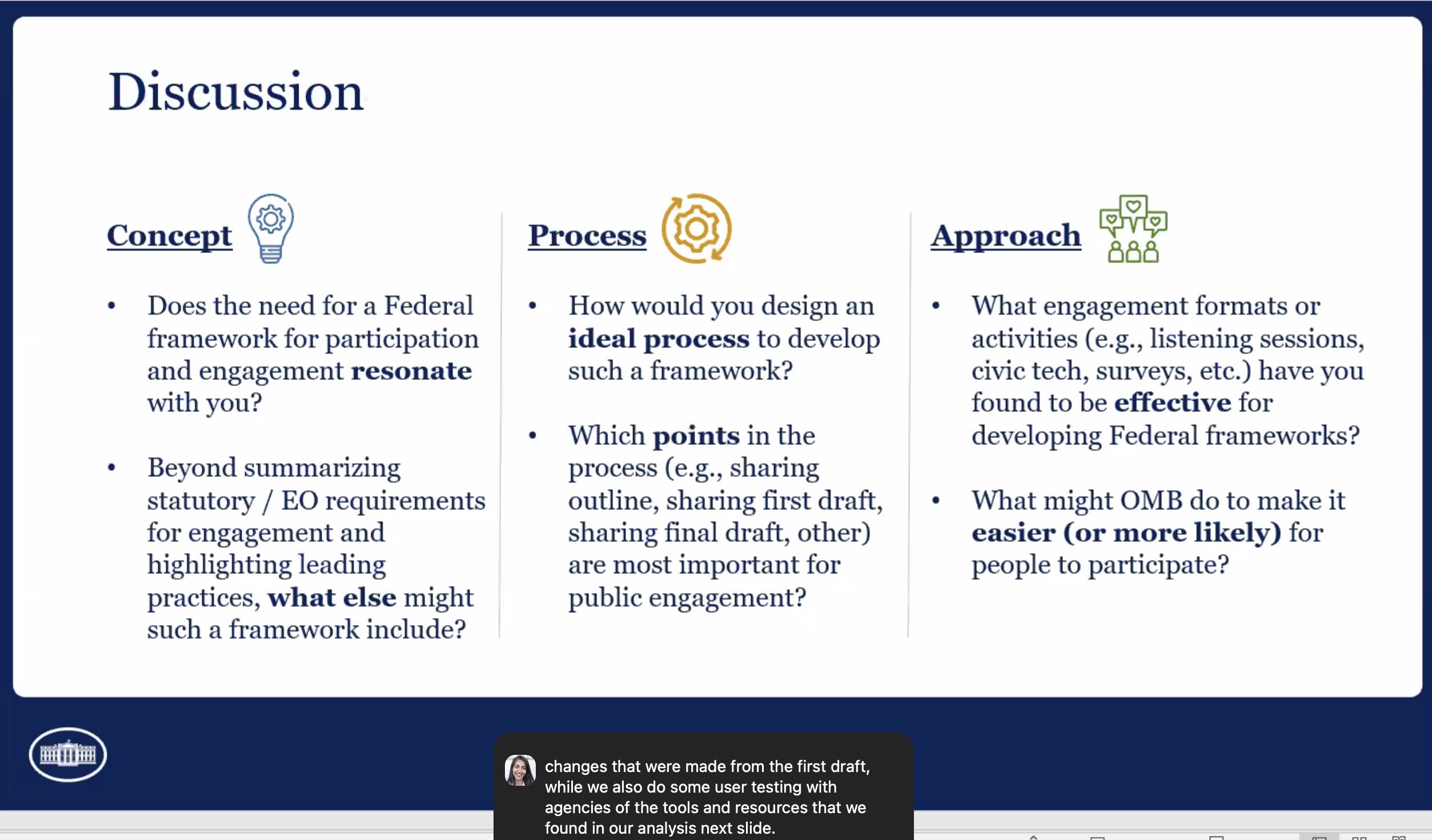
Officials at the White House Office of Management and Budget (OMB) and the Office of Information and Regulatory Affairs (OIRA) presented on their work on commitments to make the voices of the public heard.
Should the Federal government adopt a common framework for participation and engagement? What might such a framework include?
How would you design an ideal process to develop such a framework?
What points in the process (e.g., outline, first draft, final draft) are most important for public engagement?
What engagement formats or activities would be most effective for developing a Federal framework?
What might the Federal government do to make it easier for people to participate?
Our view? OMB should go back to the future. Review the Public Participation Playbook the Obama White House developed with the public in 2015, as part of the US government’s efforts to open government. Then, working in collaboration with the Office of Public Engagement, host a series of open government roundtables with the nation’s leading authorities on civic engagement and public participation in 2023 and 2024 that inform guidance for the federal government.
Officials might review what approaches were effective in engaging Americans with public health information in the pandemic, voting information, and extreme weather — and which were not.
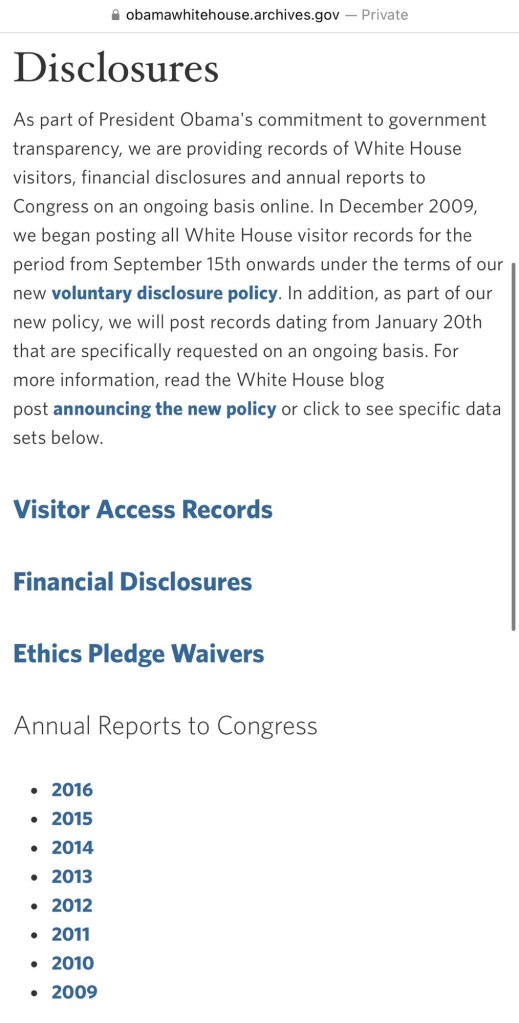
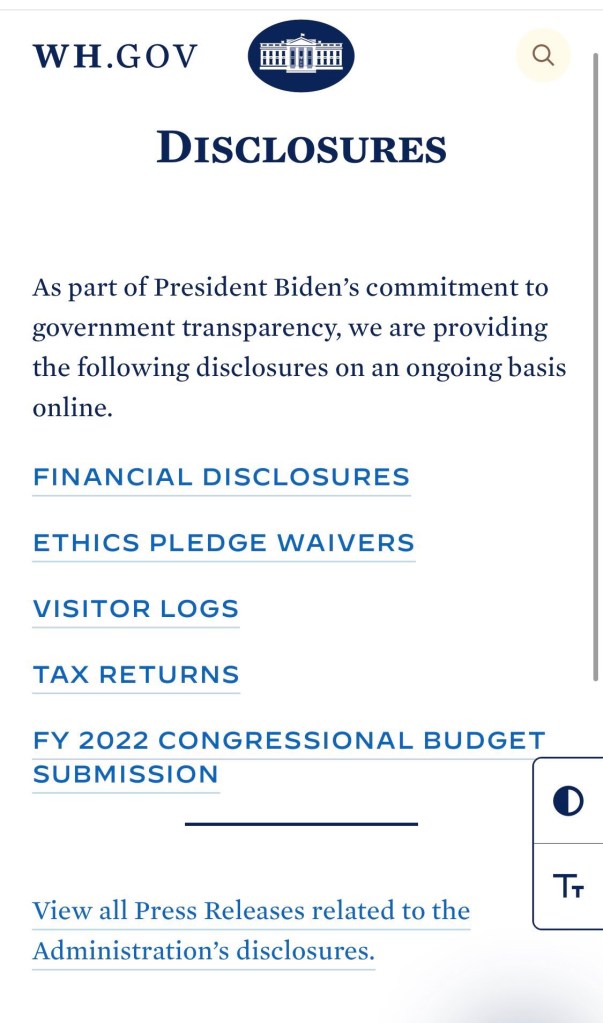
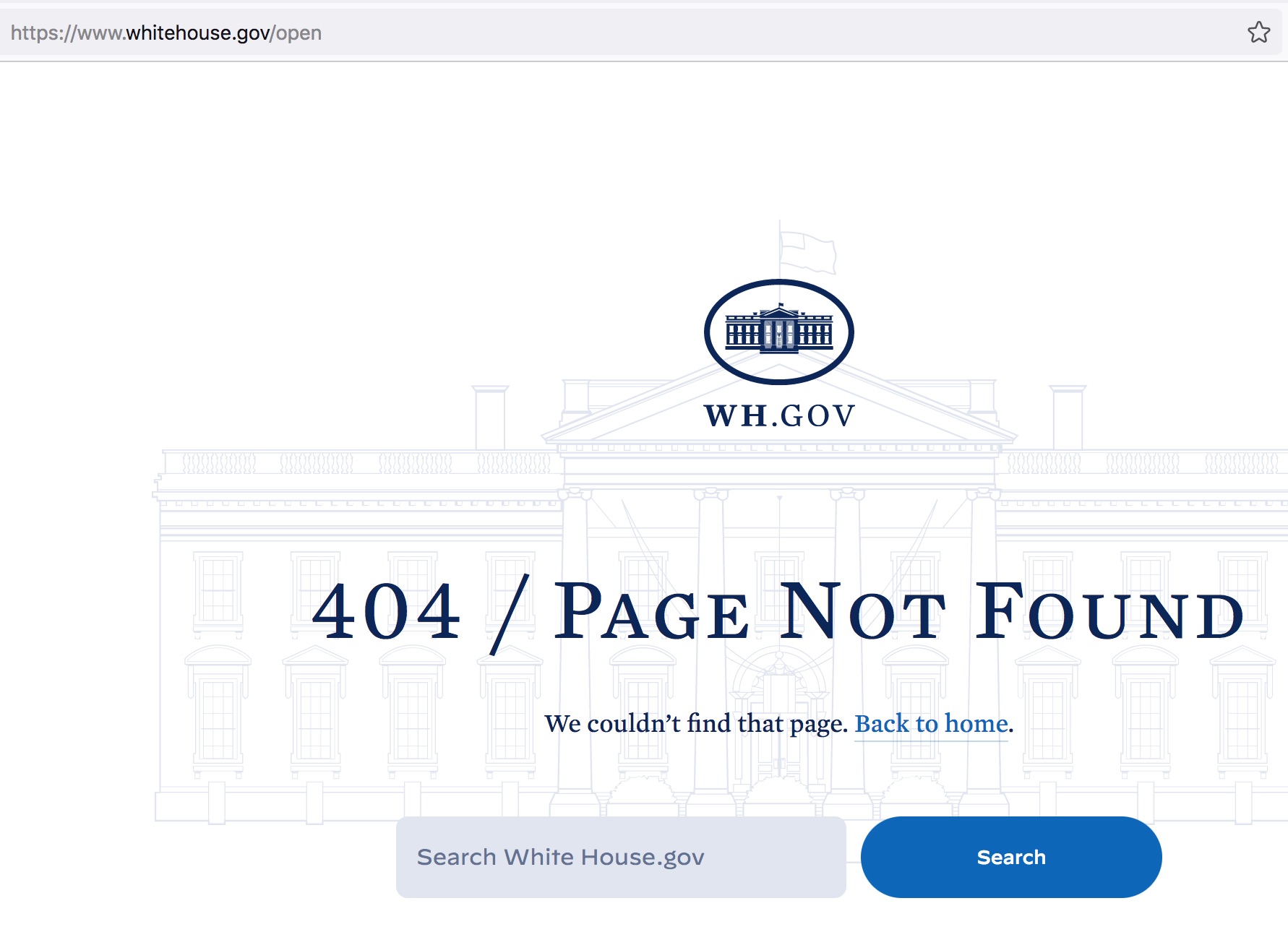
That work should be part of a new open government plans at OMB and OSTP that are hosted at whitehouse.gov/open, showing President Biden’s commitment to government transparency like whitehouse.gov/equity shows his administration’s commitment to equity.
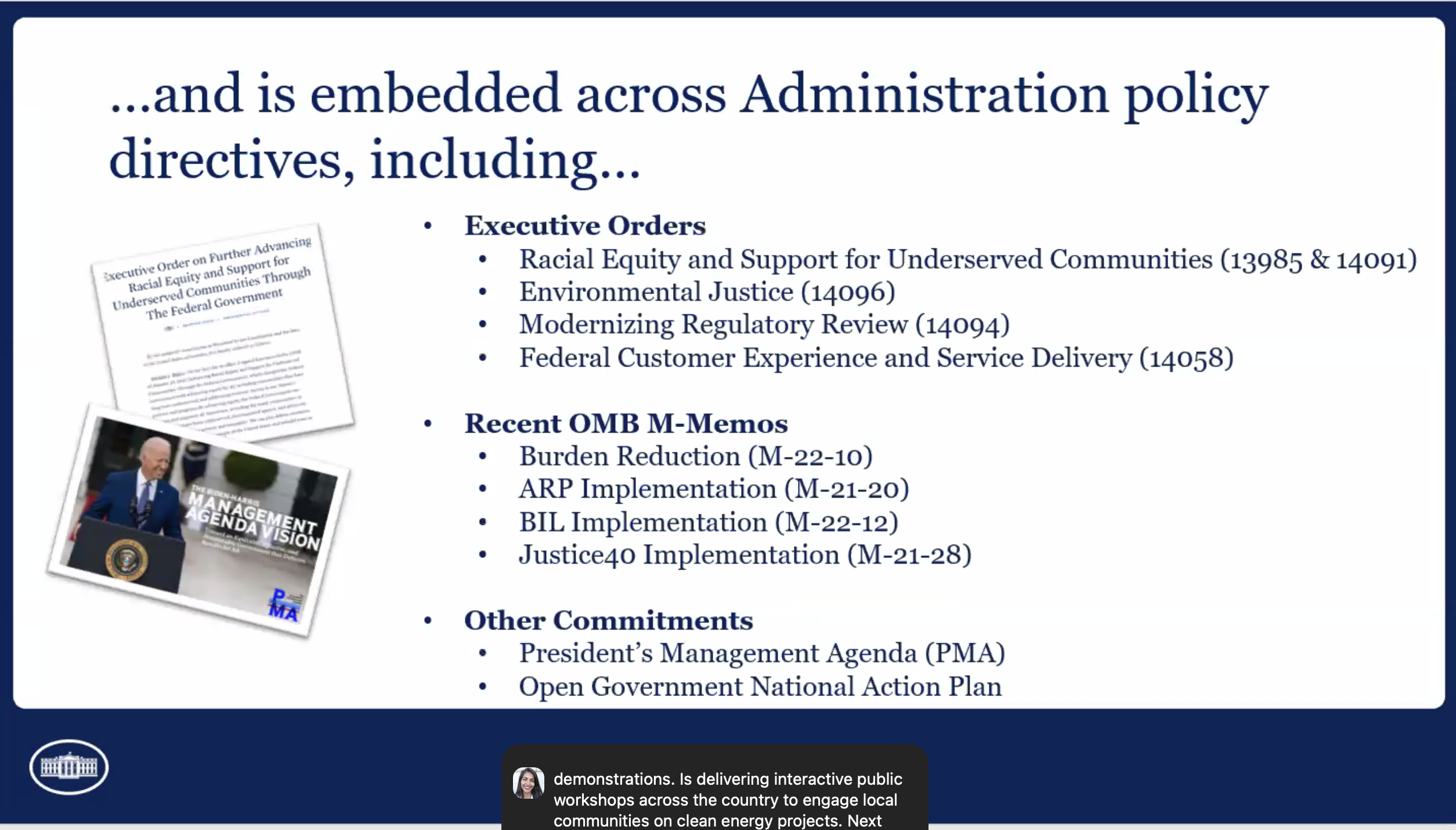
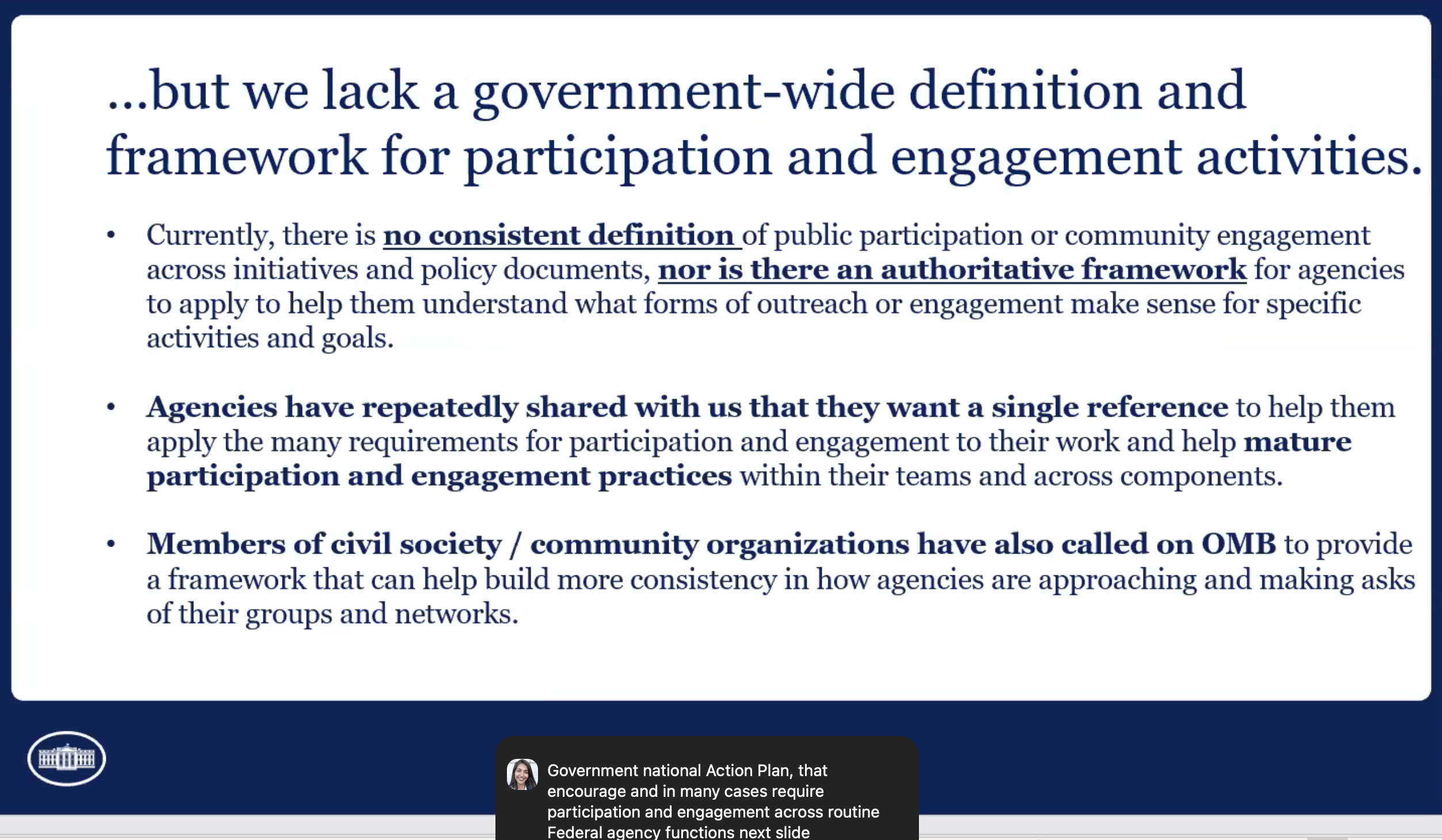
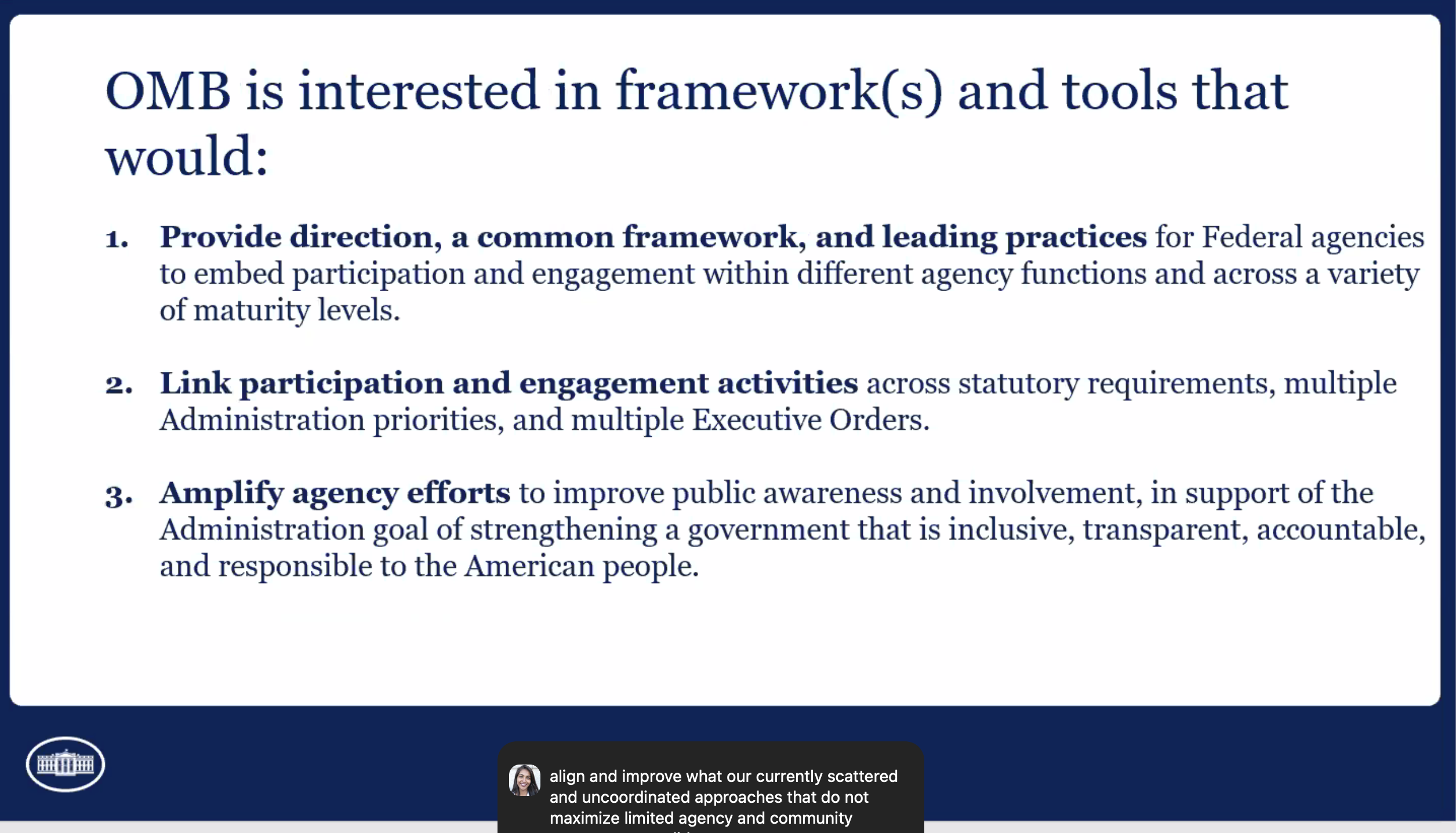
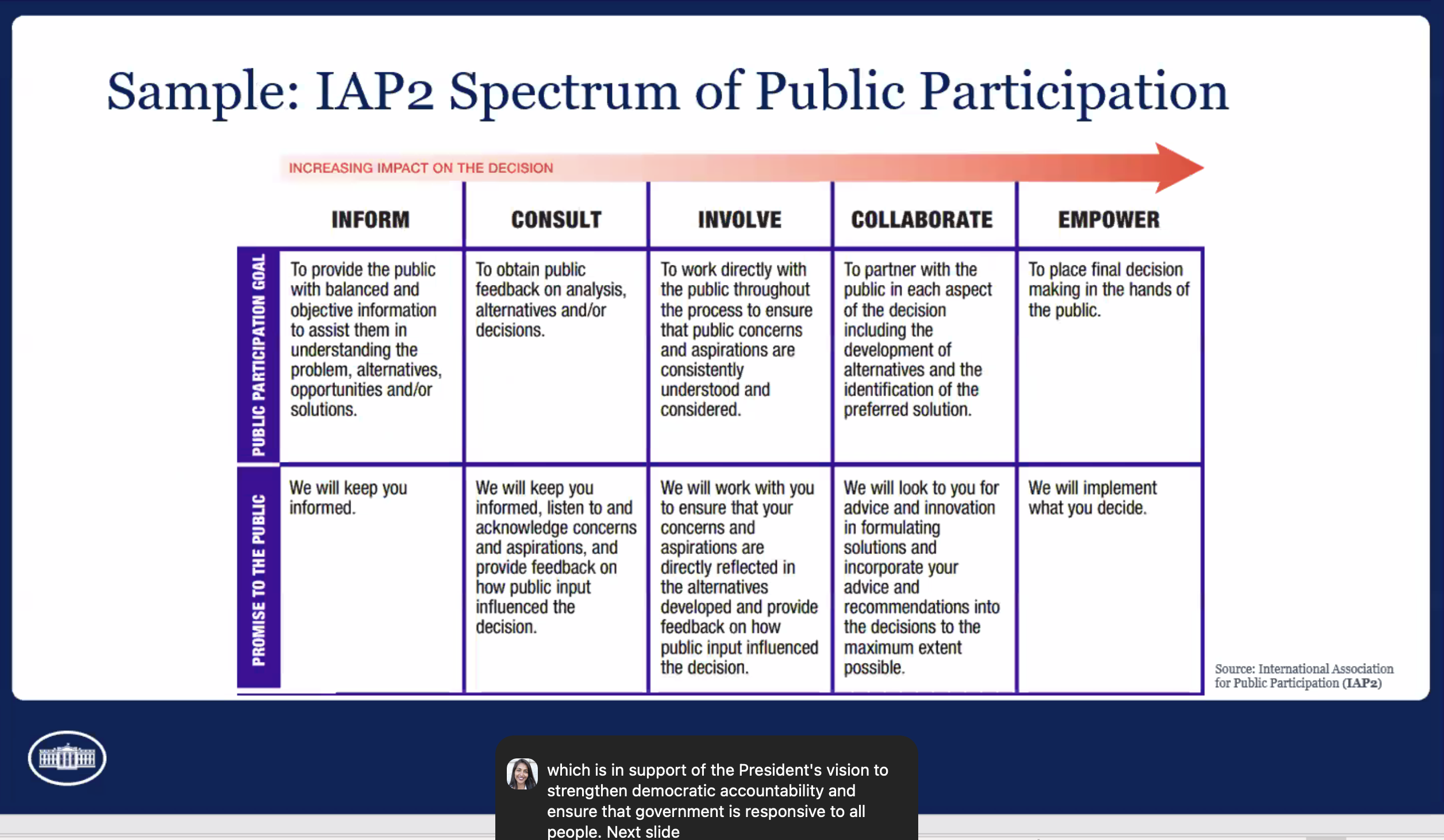
Screenshots of the presentation follow. (Our apologies: we missed slide 3 and 9.)
Should this White House publish slides or notes from this public session on its work implementing open government commitments, we will update this post.
(Officials said that the session was not recorded, so we are providing the above resources for the Americans who were unable to attend or who did not hear about this opportunity to engage with OMB and OIRA about broadening public engagement because this administration did not engage the public. As you’ll hear in the recording, the public participants in this listening session offered praise for the guidance and suggestions for improvement tempered with critiques of the opaque process, poor communications about the forum, and dissatisfaction at the lack of a cohesive way to track and understand this administration’s work on government transparency and accountability.)
In an email posted to a newsgroup addressed to the “open government community,” the General Services Adminstration asked for comment on which of the past commitments the United States has made to the Open Government Partnership (OGP) should be submitted for a “people’s choice award” at an international summit in December.
At a basic level, the problem with this outreach is many of the dozen listed commitments are of questionable value, or have been rescinded.
For instance, the United States withdrew from a flagship commitment when the Trump White House withdrew from the Extractive Industries Transparency Initiative in 2017. The Institutional Review Mechanism should not have listed it.
“Amendments to the Freedom of Information Act” were not achieved through OGP: the Department of Justice lobbied against reforms, and the Obama White House did not push for reform, resulting in a weaker bill.
The Trump administration censored open climate data and pushed out climate scientists who collected and published it, instead of “promoting” it. The former president directed hatred towards a whistleblower who came forward about the president’s corruption, instead of strengthening whistleblower protections. And so on.
The fact that the IRM put these commitments forward at all places considerable doubt on whether the IRM researchers are accurate arbiters of US government performance or record. It also casts doubt on whether the Biden administration is willing or able to be an honest broker regarding what’s happened to open government initiatives or policies over the past decade. The tepid criticism in the most recent IRM report on the U.S. government’s record on open government, from 2019, did not acknowledge the Trump administration’s attacks on transparency, much less the impact on public trust that would later be so devastating in the pandemic.
At a higher level, however, the fundamental problem in September 2021 is that the Biden White House has not publicly or privately re-engaged with many of the good governance watchdogs and open government advocates that have repeatedly called on the administration to act on the reforms.
To echo an indictment of the last administration’s “opacity by obscurity,” not introducing this call for comment on open government commitments at a press conference and taking questions on it falls far short of the bare minimum we should expect of the United States government. If it’s not issued in the the Federal Register or blogged about at WhiteHouse.gov, why should Americans take it seriously?
That’s a compounding mistake. Instead of rebuilding the broken trust between US government, the people it serves, and the reformers who seek to strengthen it, the White House is not using its convening power or capacity to be publicly responsive to the legitimate concerns of watchdogs exhausted by years of devolving good governance.
There is no reason that GSA Administrator Robin Carnahan, an honorable human with a long record of public service, should not have done so, save that it would be more appropriate if it was coming from the White House. President Biden and Vice President Kamala Harris have had little to say or do regarding the multi-stakeholder initiative that the current administrator for U.S. Agency for International Development once called President Obama’s “signature good governance initiative.”
After the most corrupt administration in U.S. history showed the dire weaknesses in a system built upon adherence voluntary democratic norms, that has been a profound disappointment for anyone that hoped to see more than a return to the mixed record of the Obama administration. President Biden and Vice President Harris should be holding U.S. government accountable with executive action.
They should be marshaling support for legislative and regulatory reforms externally, & making it clear to faithful civil servants and allies internally that this White House is committed to cultural changes as well, after years fear and chaos, by putting officials on the record and appointing senior ethics officials.
They also should be honest about how past reforms came to pass, what came of them, and what has happened to them since. Neither Data.gov nor USASpending.gov were achieved as the “result” of OGP. White House petitions were ignored under the Trump administration and have not been brought back by this one. So why are all three listed on the GSA’s open government page?
It’s worth noting that this void in public engagement itself violates the final commitment in the most recent National Action Plan for Open Government, which was to Expand Public Participation in Developing Future U.S. National Action Plans:
“Citizen engagement and public participation area among the most important elements of the NAP co-creation process. During the development of this NAP4,everyday Americans provided some of the most thoughtful and engaging ideas. As we begin to contemplate a fifth national action plan, we will prioritize including a more geographically diverse and diffuse representation of citizen stakeholders in the development of the document.We will aim to conduct a series of consultation sessions, in-person meetings,and livestreamed discussions around the country to generate ideas, encourage public input, and engage in conversations with the most important stakeholder–the American public.”
None of that happened after the plan was released in early 2019.
An administration genuinely “committed to transparency” and good governance can and must build back better, from the Office of Management and Budget issuing guidance on the Open Government Data Act (and enforcing it) to shifting its posture on declassification and the Freedom of Information Act.
It’s time for this White House to provide much more than diplomatic cover at the State Department for the civil servants who kept both the spirit and practice of open government alive over the past four years.
There’s no shortage of good ideas, only the political will and personnel capacity dedicated to implementing them.
Dear Secretary Psaki and the Office of the Press Secretary, My name is Alexander B Howard; you may have noticed me tweeting at you this past couple months during the transition and now the administration. I came to DC over … Continue reading →
Government secrecy, as measured by censorship or non-responsiveness under the Freedom of Information Act, is at an all-time high during the Trump administration. The Freedom of Information Act is getting worse under Trump for a variety of reasons. Continued secrecy … Continue reading →
Like Google, Facebook and Twitter, Snapchat now has an online political ad library. That’s good news: every technology company that accept money to run issues and campaign ads should have a political ad file – particularly one that has aspirations … Continue reading →
For a decade, I’ve tracked the contours of open data, digital journalism, open source software and open government, publishing research on the art and science of data journalism that explored and tied together those threads.
We joined 43 other authors in a 18-month project that reflected on “10 years of community action and review the capacity of open data to address social and economic challenges across a variety of sectors, regions, and communities.”
The publication and the printed review copy I now possess is the end of a long road.
Over the past year, people and organizations from around the world weighed in – & Eva Constantaras joined me as co-editor & lead author, creating a “network scan” of the space. The writing project traveled with me, after I left Sunlight, and over this winter we edited and synthesized the scan into a polished chapter.
The book was originally going to be introduced at the 5th International Open Government Data Conference in Buenos Aires, in the fall of 2018, but will instead be officially launched at the Open Government Partnership’s global summit in Ottawa, Canada at the end of May 2019.
The book, which was funded by the International Research Centre and supported by the Open Data for Development (OD4D) Network. As a result of that support, “The State of Open Data” was also published in print by African Minds, from whom it may also be purchased. (While I was paid to edit and contribute, I don’t receive any residuals.)
Last night, I joined Tim Davies and other authors at the OpenGov Hub in DC to talk about the book & our chapters. Video of Davies, who managed to cover a tremendous amount of ground in ten minutes, is embedded below.
Thank you to everyone who contributed, commented and collaborated in this project, which will inform the public, press and governments around the world.