In March 2025, a coalition of organizations and individuals who work on government transparency and accountability in the United States respectfully requested the Open Government Partnership (OGP) to immediately place the United States government under review for actions contrary to the principles and policies of the partnership.
The OGP Steering Committee declined to do so, citing lack of precedent in its letter, despite the USA repeatedly acting “contrary to process” in the design & implementation of the 4th & 5th U.S. National Action Plans from 2017 to 2023.
In a new letter transmitted today, Daniel Schuman, and Alexander B. Howard, founder of this very publication, filed an addendum identifying instances of the Trump administration violating the principles of the Open Government Partnership, as requested by the OGP Secretariat.
We once again respectfully requested the OGP Steering Committee formally trigger a response policy case regarding the United States’ departure from OGP values.
It is our view that the U.S. government should have remained under review after the Trump administration openwashed participation, submitted a weak, prebaked plan, and made a mockery of good governance during the pandemic in 2020.
The Biden administration’s failed consultation and similarly weak, prebaked plan did not right the ship of state over the past four years. Instead, the President directed public attention, news media reporting, state capacity, and global government participation to the “Summit for Democracy,” and deprived OGP domestically of all of them.
In effect, former President Biden and his advisors created a weaker multistakeholder initiative without a secretariat, steering committee, independent review mechanism, or policies for membership, co-creation, implementation, review, or suspension, which has now been relegated to history.
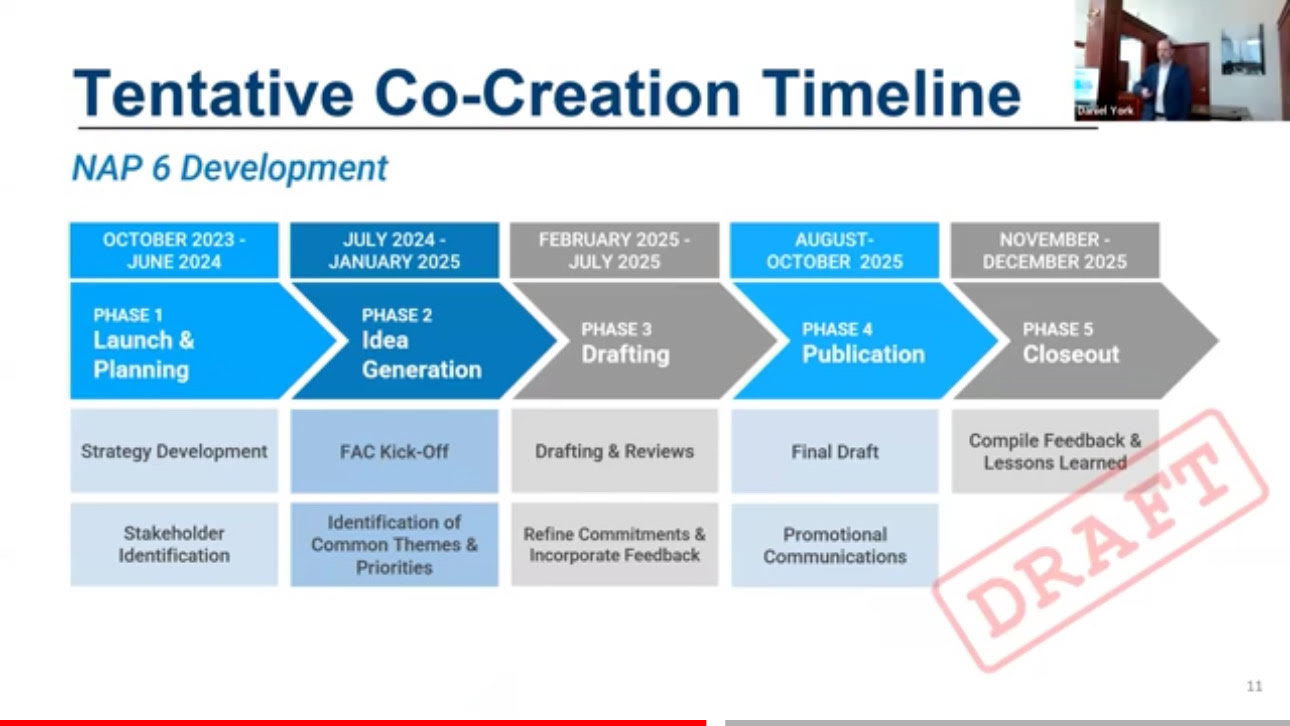
While the Open Government Secretariat and Open Government Advisory Committee were founded by the Biden administration in 2023 and 2024, to address serious deficiencies in process and outcomes, enabling a more robust co-creation process for the 6th NAP, both Secretariat and Advisory Committee were dissolved in 2025.
The GSA is now misrepresenting US government activity, falsely claiming on its website that there is a “current plan” and that staff are “leading reporting on existing commitments in existing national action plans” (none since 2024), “conducting engagement sessions with civic organizations and members of federal, state, and local governments” (none since 2024), and “actively collaborating with the public (no evidence).
The OGP Steering Committee should recognize that unprecedented actions in the USA require a more robust response than continued silence and inaction. Thank you to everyone who continues to serve in our union and around the world.
On Monday morning, I read Daniel Schuman’s excellent newsletter focused on the First Branch of the United States government, which included a section that collected several notable developments in the open government space. These updates include:
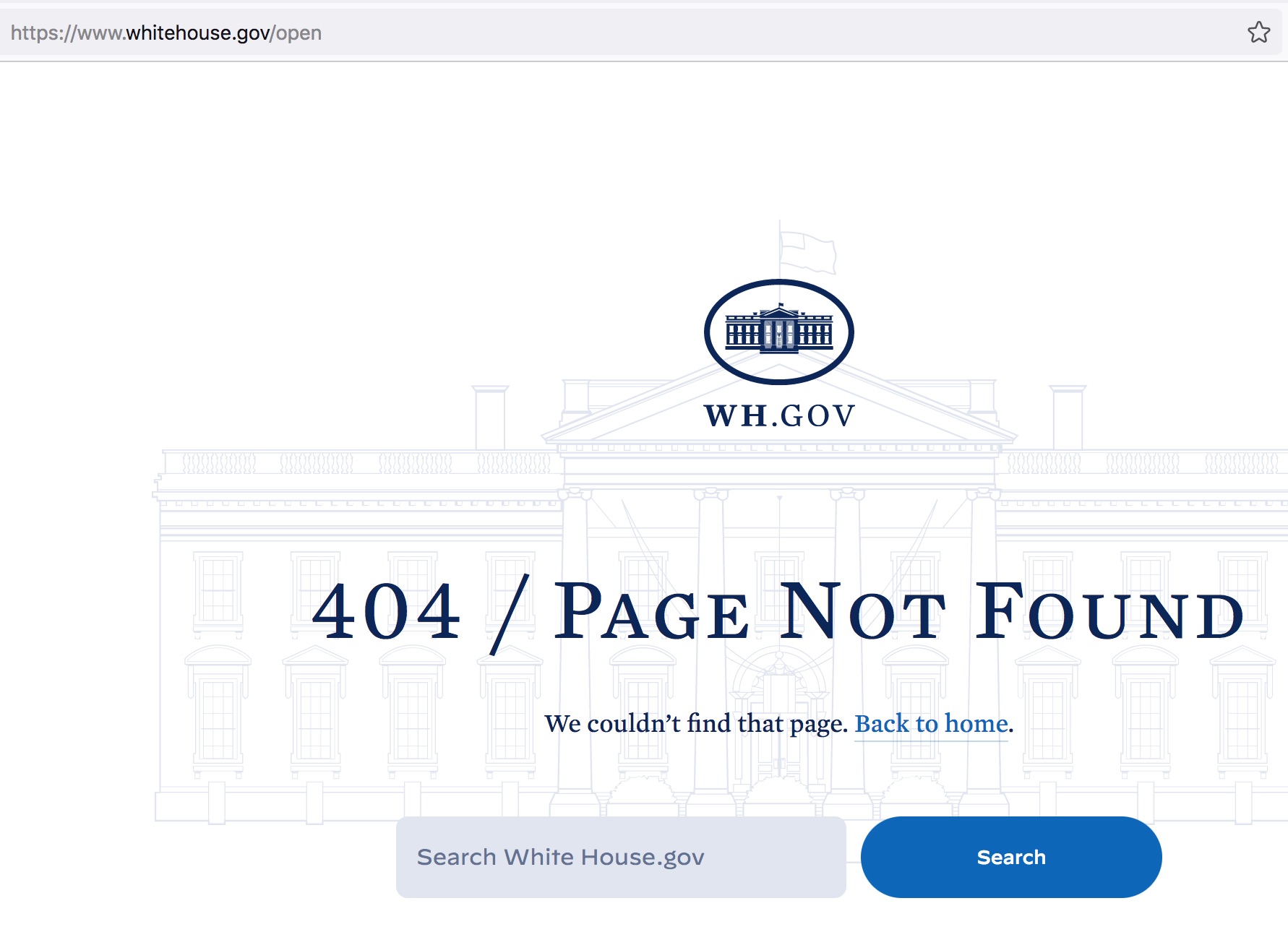
The launch of the General Services Administration (GSA) Open Government Secretariat’s new website. This website replaces the now defunct page at open.usa.gov — which not to be confused with the GSA’s old and degraded open government website at GSA.gov/open which is required under the Open Government Directive. This new website does not list public meetings that were held prior to 2021 in its public engagement section, neatly memory-holing what occurred under the Trump and Obama administrations. (There will continue to be readouts available about that history on this website, however, for as long as it stays online.) I was interviewed about this new open government website for the GSA; I’m sorry to report that it does not include many of the government-wide resources and initiatives I’d requested. Instead, it’s primarily focused on compliance with the Open Government Partnership’s requirements to maintain an online repository of commitments, as is the Secretariat itself. Daniel has curated a useful set of links related to open government that’s more up to date than the GSA page,
The membership of the new Open Government Federal Advisory Committee, which Daniel now chairs. Speaking at at the iirst meeting of the FOIA Advisory Committee for the 2024-2026 term, Alina Semo, director of the Office of Government Information Services, said that the first public meeting of this new OG FAC will be in October – I believe on the 23rd. That has not been publicly announced, yet.
Generally speaking, this is all good news. I want to highlight a specific issue, however, which is crucial to understanding why the Open Government has not had the positive effects in the United States that people in other nations participating in the global multi-stakeholder initiative have seen: Neither Congress nor the judicial branch has ever been involved.
Daniel has framed the Secretariat’s efforts as an “executive branch” plan, which isn’t inaccurate within the scope of the mission that has been defined for them by GSA leadership — and presumably this White House:
But saying that OGP is only about the executive branch of the federal government in the United States reflects also a specific design and governance choice that the Obama White House made. That choice has undermined the impact, influence, and relevance of the Partnership in the United States ever since, given that neither the Trump administration nor Biden administration took any action to change it.
I raised this issue in April at the Transparency Caucus briefing in Congress. Jump ahead to 54:30, where I ask if U.S participation in the Open Government Partnership is “doomed” unless we see a President engaging the American people about it and Congress involved.
There are other factors that have led to the ongoing failure of OGP in the United States. The Open Government Partnership commissioned research in 2020 that explored that question and called on the U.S. government to “seize the moment” in spring of 2021, which I participated in.
Neither Trump nor Biden ever called on all Americans to participate on air, online, or on the world stage using the bully pulpit, online or off. Championship sports teams and athletes have gotten far more presidential recognition – and thus public attention – than open government has since 2016. (Before, too, if we’re being honest, but former President Obama’s participation in a UN event in New York City in 2015 with other world leaders elevated this work far more than anyone since.)
Neither White House ever effectively engaged the American public, press, or media companies about OGP. They never formed partnerships with tech companies or non-government organizations that work on or deploy civic technologies like pol.is, while resetting the official defaults for public communications from the administration to opacity, “on background.”
The Biden White House ignored coalition letters and refused to co-create commitments, revise them, or add new ones based on our priorities.
Instead of “standing with the people demanding transparency” and accountability from our government – as President Biden called on everyone to do in December 2021, presumably including his own administration – the White House has mostly maintained strategic silence, leaving it to an extraordinary public servant – GSA Administrator Robin Carnahan – to gamely lead these efforts without top-down air cover.
The cumulative outcome of leadership, design, and governance choices over the last decade has meant that OGP’s platform or processes have not been a useful platform to reverse low trust and faith in U.S. government, despite the vigorous efforts of civil servants who remained engaged or scrubbed in, in hopes of helping keep it alive in other nations where the visibility was helpful to members of civil society there.
More than three years on, the future of OGP in the USA still depends on White House leadership — but it will be the next administration that co-creates that future or abandons it — unless President Biden decides to make open governance a priority in the last months of his term with the executive actions we’ve been calling for since he won election in November 2020.
I look forward to reading more responses to the GSA RFI that explore why OGP hasn’t worked in the USA, which the federal government and philanthropic community can apply to making this work meaningful in the future. No one involved wants to spend more time on an approach to open government that’s flailing.
Now that the GSA has officially kicked off the co-creation process, nongovernmental organizations, the press, and the American public will all need to decide whether legitimizing OGP through our participation is worth or not it in 2025.
If the next President is not willing to reify OGP through their personal participation, making clear that policy, programs, and legislative reforms are on the table, and then acts to expand OGP’s remit to Congress and the courts, set your expectations for impact in the United States accordingly.
There are reasons to be hopeful about open government as the United States as the new year begins, but also cause for grave concern. In December 2023, researchers at the Independent Review Mechanism (IRM) of the Open Government Partnership (OGP) confirmed what good governance advocates have said since 2017: the federal government is still not meeting the standards for open government domestically that the State Department and U.S. Agency for International Development (USAID) encourages other nations to adopt internationally.
Instead of standing with people demanding transparency from U.S. government, as President Biden encouraged other nations to do in December 2021, the White House refused to hold meetings in person in 2022 and 2023 and to incorporate the priorities of the (dwindling number of) good governance organizations and individuals willing to participate in voluntary multi-stakeholder processes after years of eroding trust and inaction.
Instead of seizing the moment and reviving the process with renewed leadership, the Biden administration starved OGP of attention, capacity, and relevance while creating a far weaker multi-stakeholder initiative, the Summit for Democracy.
The White House did not co-create a new “National Action Plan” for Open Government in 2022 with the American people and then announce it in a press conference, embrace accountability for the failures of the previous administration, and then use participation and collaboration to build back public trust.
Instead, the IRM found that the White House pre-drafted and then published a report full of vague, mostly pre-existing commitments – including many that were not relevant to government transparency and accountability – ignored expert feedback regarding opaque processes and flawed product, and then published yet another weak open government plan online over the holidays in December 2022.
This is unfortunately not novel. The OGP IRM has found the United States to have repeatedly acted contrary to process for years now. Nonetheless OGP restored the country to good standing after the Trump White House delivered a new plan in 2019 – despite ample cause for keeping a corrupt, secretive administration under review prior to a historic pandemic and attempted auto-coup.
After documenting the White House’s failures to engage the American public at scale, collaborate in choosing and drafting commitments on transparency and accountability, disclose comments, or provide a reasoned response for ignoring the consensus recommendations of good governance organizations, researchers at the Open Government Partnership Independent Review Mechanism recommended that the U.S. government collaborate with civil society to identify verifiable commitments with the most potential and refine them in 2024.
In their report, the IRM identified six “promising commitments” in a policy area that important to stakeholders or the national context which are verifiable, have an open government lens, and modest or substantial potential for results:
Commitment 1: Production, dissemination, and use of equitable data
Commitment 4: Public access to federally funded research
Commitment 8: Data for environmental justice Commitment 18: Government-wide anti-corruption strategy
Commitment 27: Access to government information through FOIA
Commitment 35: Effective and accountable policing and criminal justice
The good governance community also called on the US government to add new commitments to the 5th NAP in August, which the White House has so far declined to do — despite a mechanism that would allow it, as in the 3rd NAP.
Unfortunately, the White House has yet to acknowledge the (incredibly) constructive criticism from the researchers by revising selected commitments – much less added new ones, as the Obama White House did in 2016.
Instead, the administration invested a million dollars to fund an Open Government Secretariat within the General Services Administration to track progress on the commitments the White House chose and host a series of virtual seminars in 2023, complying with the bare minimum of the Open Government Partnership’s requirements for documenting implementation.
The Biden administration also has yet to respond formally to the “contrary to process” letter the Partnership sent in August or the letter a coalition of good governance groups sent to the President, bring senior officials to in-person roundtables in DC and around the nation, fix an opaque process, and heal badly broken relationships.
There continue to be good faith efforts across the agencies in the executive branch, from the National Archives to the General Services Administration, but strategic silence from the White House on open government has signaled to civil society and officials alike that this is not a priority.
If the President and his advisors see the value of investing political capitol, oversight capacity, and top-level leadership in open government across the federal government, change is possible. It’s crucial to provide dedicated civil servants with the air cover and capacity to do the work necessary to bring dormant or dissolved policies, programs, and partnerships back online to build resilience against headwinds for American democracy at home and abroad.
If the United States does not lead by the power of our example in 2024, our government will lose an opportunity to build trust in democratic governance through accountability and increase resilience against authoritarianism though transparency.
On December 15th, President Joe Biden delivered pre-recorded remarks to the Open Government Partnership Summit, an international conference that convened dozens of nations in South Korea to discuss the past, present, and future of open government. It’s not clear how … Continue reading →
In an email posted to a newsgroup addressed to the “open government community,” the General Services Adminstration asked for comment on which of the past commitments the United States has made to the Open Government Partnership (OGP) should be submitted for a “people’s choice award” at an international summit in December.
At a basic level, the problem with this outreach is many of the dozen listed commitments are of questionable value, or have been rescinded.
For instance, the United States withdrew from a flagship commitment when the Trump White House withdrew from the Extractive Industries Transparency Initiative in 2017. The Institutional Review Mechanism should not have listed it.
“Amendments to the Freedom of Information Act” were not achieved through OGP: the Department of Justice lobbied against reforms, and the Obama White House did not push for reform, resulting in a weaker bill.
The Trump administration censored open climate data and pushed out climate scientists who collected and published it, instead of “promoting” it. The former president directed hatred towards a whistleblower who came forward about the president’s corruption, instead of strengthening whistleblower protections. And so on.
The fact that the IRM put these commitments forward at all places considerable doubt on whether the IRM researchers are accurate arbiters of US government performance or record. It also casts doubt on whether the Biden administration is willing or able to be an honest broker regarding what’s happened to open government initiatives or policies over the past decade. The tepid criticism in the most recent IRM report on the U.S. government’s record on open government, from 2019, did not acknowledge the Trump administration’s attacks on transparency, much less the impact on public trust that would later be so devastating in the pandemic.
At a higher level, however, the fundamental problem in September 2021 is that the Biden White House has not publicly or privately re-engaged with many of the good governance watchdogs and open government advocates that have repeatedly called on the administration to act on the reforms.
To echo an indictment of the last administration’s “opacity by obscurity,” not introducing this call for comment on open government commitments at a press conference and taking questions on it falls far short of the bare minimum we should expect of the United States government. If it’s not issued in the the Federal Register or blogged about at WhiteHouse.gov, why should Americans take it seriously?
That’s a compounding mistake. Instead of rebuilding the broken trust between US government, the people it serves, and the reformers who seek to strengthen it, the White House is not using its convening power or capacity to be publicly responsive to the legitimate concerns of watchdogs exhausted by years of devolving good governance.
There is no reason that GSA Administrator Robin Carnahan, an honorable human with a long record of public service, should not have done so, save that it would be more appropriate if it was coming from the White House. President Biden and Vice President Kamala Harris have had little to say or do regarding the multi-stakeholder initiative that the current administrator for U.S. Agency for International Development once called President Obama’s “signature good governance initiative.”
After the most corrupt administration in U.S. history showed the dire weaknesses in a system built upon adherence voluntary democratic norms, that has been a profound disappointment for anyone that hoped to see more than a return to the mixed record of the Obama administration. President Biden and Vice President Harris should be holding U.S. government accountable with executive action.
They should be marshaling support for legislative and regulatory reforms externally, & making it clear to faithful civil servants and allies internally that this White House is committed to cultural changes as well, after years fear and chaos, by putting officials on the record and appointing senior ethics officials.
They also should be honest about how past reforms came to pass, what came of them, and what has happened to them since. Neither Data.gov nor USASpending.gov were achieved as the “result” of OGP. White House petitions were ignored under the Trump administration and have not been brought back by this one. So why are all three listed on the GSA’s open government page?
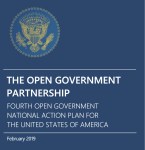
It’s worth noting that this void in public engagement itself violates the final commitment in the most recent National Action Plan for Open Government, which was to Expand Public Participation in Developing Future U.S. National Action Plans:
“Citizen engagement and public participation area among the most important elements of the NAP co-creation process. During the development of this NAP4,everyday Americans provided some of the most thoughtful and engaging ideas. As we begin to contemplate a fifth national action plan, we will prioritize including a more geographically diverse and diffuse representation of citizen stakeholders in the development of the document.We will aim to conduct a series of consultation sessions, in-person meetings,and livestreamed discussions around the country to generate ideas, encourage public input, and engage in conversations with the most important stakeholder–the American public.”
None of that happened after the plan was released in early 2019.
An administration genuinely “committed to transparency” and good governance can and must build back better, from the Office of Management and Budget issuing guidance on the Open Government Data Act (and enforcing it) to shifting its posture on declassification and the Freedom of Information Act.
It’s time for this White House to provide much more than diplomatic cover at the State Department for the civil servants who kept both the spirit and practice of open government alive over the past four years.
There’s no shortage of good ideas, only the political will and personnel capacity dedicated to implementing them.
Dear Secretary Psaki and the Office of the Press Secretary, My name is Alexander B Howard; you may have noticed me tweeting at you this past couple months during the transition and now the administration. I came to DC over … Continue reading →
Did YOU know the USA has a Federal Data Strategy? Or that it’s part of National US Plan for Open Government? This President and White House should have told you, instead of failing to engage Americans. I participated in another … Continue reading →
This White House’s decision to continue U.S. government participation in the Open Government Partnership was far from certain, given the demonstrated distaste of the Trump administration for international agreements and institutions. In that context, The Trump administration’s commitment to participating … Continue reading →
If the American public wants to see meaningful progress on transparency, accountability or ethics in U.S. government, it should call on Congress to act, not the Trump White House. With little fanfare or notice, the United States of America has … Continue reading →
researchers from the Open Government Partnership’s Independent Reporting Mechanism (IRM) shared a new end of term report that detailed both progress and regression in meeting the commitments in the third United States National Action Plan for Open Government between October 2015 and May 2017. To be charitable, the researchers found a mixed record on open government during that time period, with poor public engagement, limited government feedback, and lack of civil society setting the agenda or participating in an iterative dialog with government. Continue reading →



 E Pluribus Unum