Pew: Open government is tied to higher levels of community satisfaction

The results from a new study from Pew Internet and Life Project found that when citizens believe their governments are sharing more information, they are more likely to feel satisfied with civic life. The study will offer some evidence for elected officials who run on open government platforms or who work for more transparency. Broadband users are more critical of their communities and local institutions.

The study, released by the Pew Research Center, Monitor Institute and Knight Foundation found that citizens who believe that their city hall is more transparency are more likely to have positive feelings about:

  • the overall quality of their community
  • the ability of their community, including media and neighbors, to provide them with information that matters;
  • the overall performance of their local government
  • the performance of civic and journalistic institutions, including public safety, libraries, and media outlets.

The Pew study also found that government transparency was associated with how empowered residents feel. Specifically, those who think government shares information well “are more likely to say that average citizens can have an impact on government.” That said, the authors of the report made sure to caution not to draw too broad a conclusion from these findings:

We did not establish causality here – for instance, that greater government transparency provides benefits to a host of civic organizations or that broadband-adoption initiatives will heighten citizens’ critical thinking about their community or that higher-quality journalism will encourage more people to turn out for town meetings. Yet these possibilities emerge in the answers citizens and their leaders gave.

The degree of open government in a given community isn’t just about how citizens feel about it, however, as transparency advocates have emphasized: it’s  about how well government is actually sharing information, versus how well citizens feel they are. One interesting finding from the survey was that with increased broadband use, citizens become more critical of their communities and institutions.

“This result suggests that those citizens with broadband expect – but don’t always find – information from their governments, schools and other local civic organizations there where they want it when they want it,” noted report author Tony Siesfeld, head of research for the Monitor Institute, in a prepared statement. “It may be that broadband is raising ‘the bar’ on information transparency.”

The Internet is playing a role in the new information ecosystem. According to the survey:

  • 32% of the residents of the towns surved now get local news from social networking sites like Facebook
  • 19% get local news from blogs
  • 12% get it on smartphones and mobile devices like smartphones
  • 7% get local news from Twitter.

“There have been vast changes in the local news and information landscape in recent years,” noted Lee Rainie, Director of the Pew Internet Project and an author of a report on the findings, in a prepared statement.  “One of the key insights here is that citizens have new ways to assess the performance of city hall. They are paying attention to how transparent their government is. If they feel public agencies are forthcoming, they also feel better about other parts of town. There might be a real civic payoff if governments shared more. ”

There’s much more to dig through in the survey (both the OhMyGov.com and techPresident analyses are worth reading) but one findings is worth highlighting for local government leaders making policy decisions this year:

Each of the 3 communities surveyed (San Jose, CA, Macon, GA, and Philadelphia, PA) have what the report calls an “online portal” for government and civic information. Even so, only a little more than a third of their residents were fully aware of the local government website.. From the report:

Moreover, in the opinion surveys, we found that many who tried to use the internet to get local civic information could not always find what they were seeking. Only a quarter of these residents said that when they did searches for local civic information they always found what they were seeking. Yet even when they found what they were seeking, only 37% said the information presented to them was very clear and easy to understand.

There’s clearly some room for local governments to improve here. The survey results suggested what could be done: “one strong yearning residents expressed was for a central location for civic information that is maintained by the government. More than three-quarters of the respondents in these three communities (78%) said it was ‘very important’ that a government website be set up for this and another 17% said it was ‘somewhat important.'”

Throughout United States and elsewere in the world, there are more examples of technology-fueled open government, where citizensourcing is part of the set of tools officials deploy. If local governments keep using technology to deliver smarter government, there’s reason to be hopeful that new online hubs fueled by open government data will play an important role in the information needs of citizens.

Crowdsourcing where to put QR codes in NYC

This February, New York City adopted QR codes in a significant way. “QR” stands for “quick response” codes. QR codes enable somebody with the appropriate software and hardware to quickly scan a code for information from any direction. As TechCrunch reported, NYC will put QR codes on all of its building permits.

The QR codes will link users to a mobile version of the Department of Buildings Information System, and will give them the option to click a link that will initiate a phone call to the city’s 311 phone service, where they can register a complaint about noise, safety or other concerns.

As permits at 975,000 building and construction sites that already have them are replaced, they will have QR codes added; all New York City permits are expected to have QR codes by roughly 2013.

QR Code on Love ArtPhoto illustration by Zachary M. Seward based on a photo by Chris Goldberg
QR codes can be scanned by smartphones equipped with relevant software in much the same way that a handheld scanner can scan the more familiar horizontal barcodes used globally in shipping and retail industries. Their use is hardly limited to building permits, however, as Zach Seward pointed out at the Wall Street Journal:

In 2011, you’re likely to see more QR codes on billboards, print publications, museum placards — anywhere with limited space and lots of information to convey. On city building permits, scanning the QR code will direct you to a website with more information about the construction project, if you’re into that.

But the New Yorkers who responded to Sterne are more excited about the prospect of applying QR codes to the city’s public-transit system. One  common suggestion: place them at bus stops, where schedules aren’t always displayed and are often out of date.

So where should New York City place QR codes? As Seward reported, New York City’s chief digital officer, Rachel Sterne, is looking for ideas. Seward captured her questions and the responses of citizens (including this correspondent) using Storify:

http://storify.com/zseward/qr-codes-in-new-york-city.js[View the story “QR codes in New York City” on Storify]

Civic coders for America gather in DC for a Presidents’ Day datacamp

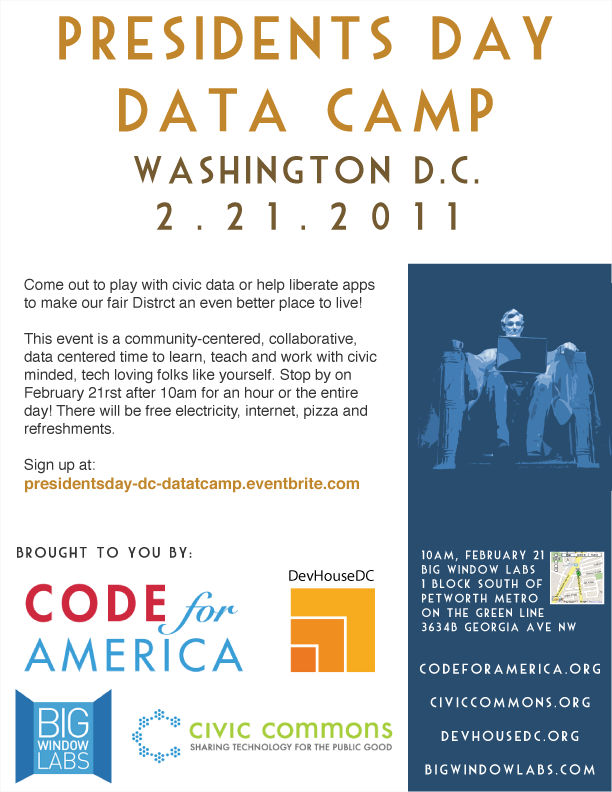
This past weekend, civic developers gathered at a Seattle data camp to code for America. This Presidents’ Day, the day before George Washington’s Birthday, dozens of government technologists, data nerds, civic hackers and citizens from around the District of Columbia, Virginia and Maryland will join Code for America fellows for a datacamp at Big Window Labs.

The attendees of the Washington datacamp can look to the Seattle Data Camp for inspiration. The civic hacktivism on display there led to engaged discussions about Seattle’s South Park neighborhoodmobile damage assessment appstransit apps, mobile / geolocation appsdata mininginformation visualization.

Perhaps even more impressive, one of those discussions lead to the creation of a new smartphone application. Hear Near pushes alerts about Seattle events nearby to iPhone or Android device users using text messages. Hear Near is now available from iTunes and Android.

Joe McCarthy published a terrific post about Data Camp Seattle that offers a great deal of insight into why the event worked well. McCarthy helped the HearNear team by identifying and defining mappings between the GeoLoqi API and the iCal feed.

McCarthy describes how a creative discussion amongst talented, civic-minded people enabled them to donate their skills to putting the open data from Seattle’s data repository to work for its citizens. He also explored what inspires him about Code for America:

I wasn’t sure what to expect going into the event, but was greatly impressed with the interactions, overall experience and outcomes at Data Camp Seattle. I’ve admired the Code for America project since first learning about it, and have been a proponent of open data and platform thinking (and doing) on my blog. It was inspiring and empowering to have an opportunity to do more than simply blog about these topics … though I recognize the potential irony of writing that statement in a new blog post about these topics.

I suspect that one of the most durable outcomes of the Code for America project will be this kind of projection or radiation of civic empowerment through – and beyond – the efforts of the CfA fellows and their collaboration partners. In The Wealth of Networks, Yochai Benkler writes about how “[t]he practice of producing culture makes us all more sophisticated readers, viewers, and listeners, as well as more engaged makers”. In Program or Be Programmed, Doug Rushkoff warns against “relinquishing our nascent collective agency” to computers and the people who program them by engaging in “a renaissance of human capacity” by becoming programmers ourselves.

While many – or even most – of the specific applications we designed and developed during the Data Camp Seattle civic hackathon may not gain widespread traction and use, if the experience helps more of us shift our thinking – and doing – toward becoming co-creators of civic applications – and civic engagement – then the Code for America project will have succeeded in achieving some grand goals indeed.

This example of directed action at an unconference has fast become the next step in the evolution of camps, where a diverse set of volunteers come together to donate more than money or blood: they exchange information and then apply their skills to creating solutions to the needs defined by a given set of societal challenges.

This model of directed civic involvement has became a global phenomenon in wake of the crisiscamps that sprung up after the earthquake in Haiti last year. The cultural DNA of these camps has evolved into CrisisCommons, which has acted as platform for volunteers to donate their skills to help in natural disasters and other crises.

As the role of the Internet as a platform for collective action grows, those volunteers are gaining more ability to make a difference using powerful lightweight collaboration tecnology and open source data tools.

From the towns of the United States to cities in Denmark, Brazil, Kenya, Illinois and India, people interested in local Gov 2.0 have been gathering to to create applications that use open public data. In December, Around the world, the International Open Data Hackathon convened participants in over 56 cities in 26 countries on 5 continents.

As Seattle CIO Bill Schrier put it this past weekend, they’re turning data into information. Federal CTO Aneesh Chopra has praised these kinds of efforts “hacking for humanity.” An event like Random Hacks of Kindness “brings together the sustainable development, disaster risk management, and software developer communities to solve real-world problems with technology.”

On President’s Day, another datacamp will try to put that vision into action.

http://widgets.twimg.com/j/2/widget.js //

Solving your neighbor’s possum problem in the dark? There’s an app for that.

One of the most common aphorisms heard around the Gov 2.0 world is that “potholes are the gateway drugs to civic engagement.”

After a recent report in Boston, maybe Hub pundits can add a new phrase to the lexicon: “possums are the gateway animal to citizens connecting.

As the indefatigable Adam Gaffin reported at Universal Hub, the wonderful hyperlocal blog in Beantown, the Citizens Connect app has now been deployed as Boston’s high tech possum saver.

According to Gaffin’s post, Susan Landibar of South Boston saw a possum report:

“Possum in my trash can. Can’t tell if it’s dead. Barrel in back of 168 west 9th. How do I get this removed?”

And acted upon it:

Labandibar reports:
11:15PM Walked over to West Ninth Street. It’s about three blocks from my house. Locate trash can behind house. Possum? Check. Living? Yep.

Turned the trash can on its side. Walked home. Good night, sweet possum.

When the city of Boston released the Citizens Connect application, which works on Android phones and iPhones, officials no doubt expected it to help constituents report potholes, graffiti, unplowed snow and trash removal.

And indeed, if you look through the list of reported issues, that’s the bulk of it.

After today, however, the city can add “possum problems” to the list of resolved issues. Crucially, however, it wasn’t the city that fixed it: it was a fellow citizen who saw an issue using the app and then went and took care of it herself.

For good or ill, this example of “do it ourselves” government is a data point that may be increasingly relevant. Plummeting city budgets mean smarter cities will need citizen sensors to detect issues and take civic pride into their own hands. As Gov 2.0 goes local, applications that connect citizens to one another in crises may become as important as technologies that connect citizens to government, like Citizens Connect.

As the role of the Internet as a platform for collective action grows, Clay Shirky may be proven prescient: “We have historically overestimated the value of access to information and underestimated the value of access to one another.”

Clinton: There is no silver bullet in the struggle against Internet repression. There’s no “app” for that

Today in Washington, Secretary of State Clinton reiterated the State Department’s commitment to an Internet freedom policy in a speech at George Washington University. Rebecca MacKinnon, journalist, free speech activist, and expert on Chinese Internet censorship, provided some on the spot analysis immediately following Clinton’s words. MacKinnon made an interesting, and timely, point: there are limits to directly funding certain groups. “I think one of the reasons that the Egyptian and Tunisian revolutions were successful was that they were really home grown, grass roots. At the end of the day, the people in the countries concerned need to really want change and drive that change.”

MacKinnon parsed the considerable complexity of advocating for Internet freedom in the context of Wikileaks and electronic surveillance in other areas of the federal government. For those interested, she elaborated on the issues inherent in this nexus of government and technology in her Senate testimony last year. At some point this winter, there will be a hearing on “CALEA 2″ in the United States Congress that’s going to be worth paying close attention to for anyone tracking Internet freedom closer to home, so to speak.

Should the U.S. support Internet freedom through technology, whether it’s an “app” or other means? To date, so far the State Department has allocated only $20 million of the total funding it has received from Congress, according to a report on Internet censorship from the Senate Foreign Relations Committee obtained by the AFP. (Hat tip to Nick Kristof on that one).

Clinton defended the slow rollout of funding today in her speech (emphasis is added):

“The United States continues to help people in oppressive Internet environments get around filters, stay one step ahead of the censors, the hackers, and the thugs who beat them up or imprison them for what they say online. While the rights we seek to protect are clear, the various ways that these rights are violated are increasingly complex. Some have criticized us for not pouring funding into a single technology—but there is no silver bullet in the struggle against Internet repression. There’s no “app” for that. And accordingly, we are taking a comprehensive and innovative approach—one that matches our diplomacy with technology, secure distribution networks for tools, and direct support for those on the front lines.”

The caution in spending may well also be driven by the issues that the State Department encountered with Haystack, a much celebrated technology for Internet freedom tool that turned out to be closer to a fraud than a phenomenon.

There may be no silver bullet to deliver Internet freedom to the disconnected or filtered masses, per se, but there are more options beyond the Tor Project that people in repressive regimes can leverage. Today, MIT’s Technology Review reported on an app for dissidents that encrypts phone and text communications:

Two new applications for Android devices, called RedPhone and TextSecure, were released last week by Whisper Systems, a startup created by security researchers Moxie Marlinspike and Stuart Anderson. The apps are offered free of charge to users in Egypt, where protesters opposing ex-president Hosni Mubarak have clashed with police for weeks. The apps use end-to-end encryption and a private proxy server to obfuscate who is communicating with whom, and to secure the contents of messages or phone conversations. “We literally have been working night and day for the last two weeks to get an international server infrastructure set up,” says Anderson.

No word on whether they’ve received funding from State yet. For more on today’s speech, read the full report on the State department’s Internet freedom policy at the Huffington Post, Ethan Zuckerman or the ever sharp Nancy Scola on #NetFreedom, which does, in fact, now look like a “big deal.”

Why does government social media use matter to citizens?

An important role of technology journalists in the 21st century is to explain how broader trends that are changing technology, government and civic society relate to average citizens. Some have called this broader trend towards smarter, more agile government that leverage technology “Gov 2.0.” (Readers of this blog are no doubt familiar with the term.) When you dig into the topic, you can get stuck in a lot of buzzwords and jargon quickly. Most people don’t care about how a satellite gets into orbit, the release of community health data or the standards of an API for product recalls. They care quite a bit, however, about whether their GPS receiver enables them to get to a job interview, if a search engine can show them ER waiting room times and quality statistics, or if a cradle for their baby is safe. Those wonky policies can lead to better outcomes for citizens.

If you follow Mashable, you might have read about the ways that social media promotes good health or how government works better with social media.

The following stories have little to do with technology buzzwords and everything to do with impact. Following are five stories about government 2.0 that matter to citizens, with issues that literally come home to everyone.

1) The Consumer Product Safety Commission has launched a public complaints database at SaferProducts.gov. You could think of it as a Yelp for government, or simply as a place where consumers could go to see what was safe. Add that to the mobile recalls application that people can already use to see whether a product has been recalled.

2) The new Consumer Financial Protection Bureau will use technology to listen to citizens online to detect fraud. If you haven’t heard, DC has a new startup agency. That hasn’t happened in a long time. Your could think of it as Mint.gov mashed up with HealthCare.gov. The CFPB plans to use technology in a number of unprecedented ways for fraud detection, including crowdsourcing consumer complaints and trends analysis. Given how much financial fraud has affected citizens in recent years,and how much of the anger that the public holds for the bailouts of banks remains, whether this agency leveraging technology well will matter to many citizens.

3) Social data and geospatial mapping join the crisis response toolset. Historic floods in Australia caused serious damage and deaths. Government workers used next-generation technology that pulled in social media in Australia and mapped the instances using geospatial tools so that first responders could help citizens faster, more efficiently and more effectively. It’s an excellent example of how an enterprise software provider (ESRI) partnered with an open source platform (Ushahidi) to help government workers use social media to help people.

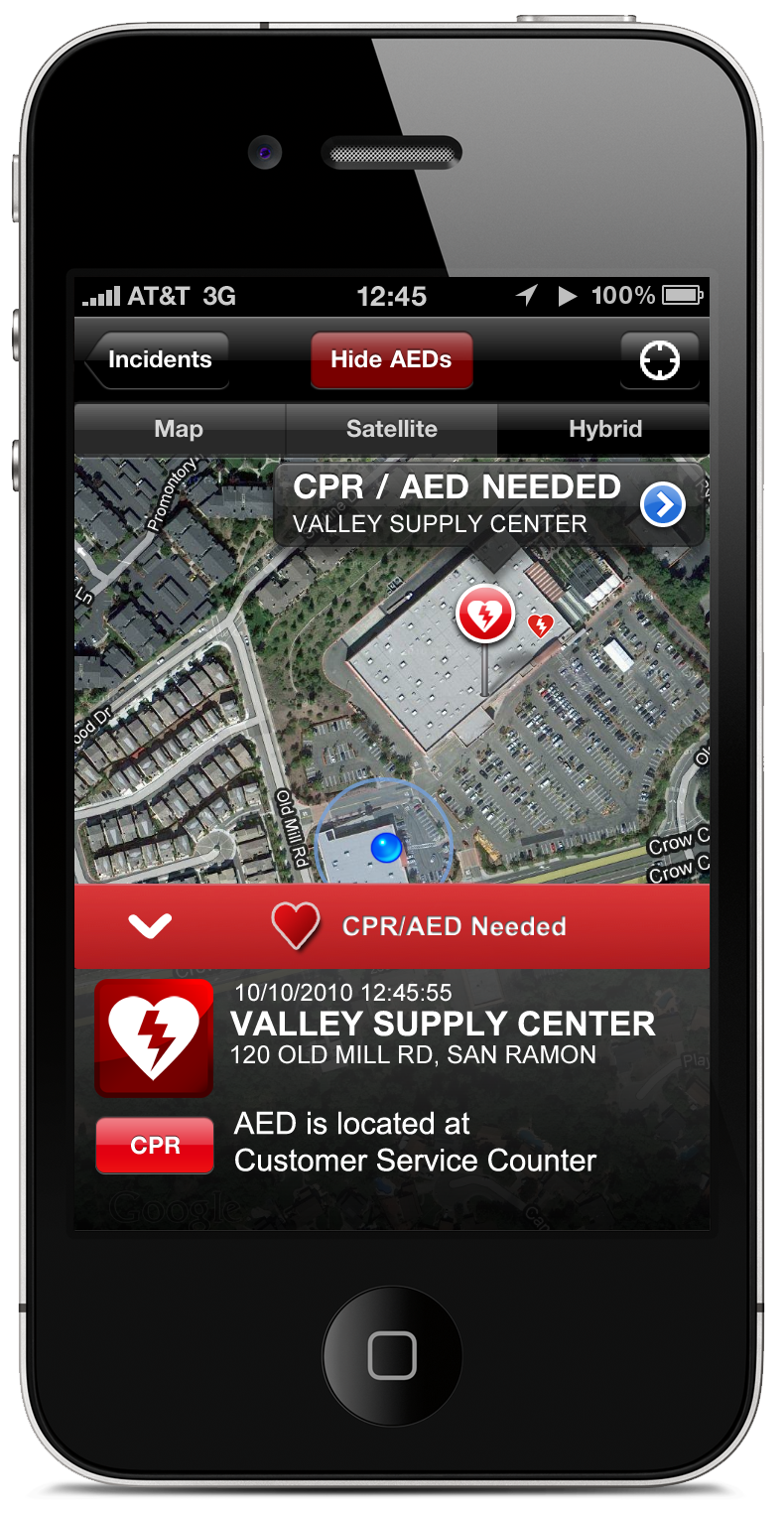
4) New geolocation app connects first responders to heart attack victims.The average citizen will never need to know what Web 2.0 or Gov 2.0 means. Tens of thousands, however, will have heart attacks every year. With a new geolocation mobile application that connects citizen first responders to heart attack victims, connected citizens trained in CPR now have a new tool to help them save lives.

Better access to information about food safety, product recalls and financial fraud will help citizens around the country. Improvements to the ability of government workers to direct help in a disastrous flood or for citizens to receive immediate help from a trained first responder in an emergency are important developments. As 2011 takes shape, the need for government to use social media well has become more important than ever. That’s why the perspective of government officials like FEMA administrator Craig Fugate matter.

“We work for the people, so why can’t they be part of the solution? “
said Fugate, speaking to delegates from the distributed chapters of Crisis Commons assembled at FEMA headquarters. “The public is a resource, not a 
liability.”

For example, Fugate said that FEMA used reporters’ tweets during Hurricane Ike for
 situational awareness. “We’ve seen mashups providing better info than
 the government.” Listening and acting upon those digital cries for help on social media during crisis could literally be a matter of life and death.

Whether government can adapt to a disrupted media landscape and the new realities of information consumption is of substantial interest to many observers, both inside and out of government. Whether government can be smarter, agile and more effective is a great interest to all.

A Tunisian on the role of social media in the revolution in Tunisia

Last week, dozens of people made their way through streets clogged with “thundersnow” to hear a special guest speak about social media and the Tunisian revolution at the January meeting of DC Media Makers. Much has already been written about Twitter, Tunisia, revolutions and the role of the Internet. For this dedicated audience at NPR headquarters in Washington, the reflections of Rim Nour, a young Tunisian techie who personally took part in the “Jasmine Revolution,” were not to be missed. Their interest was born by the spotlight on Web tools and change that digital activism in North Africa and the Middle East has created.

Her perspective can’t be taken as the definitive version of what happened or why, but given that she participated from on the ground, as a witness to history she provided a valuable account of the role of technology. In Nour’s account, this Tunisian revolution was fundamentally powered by people and the conditions of their lives. Tunisia wasn’t a Twitter or Facebook or Wikileaks revolution, said Nour. It was Tunisians on the ground. Regional disparities, corruption, unemployment were primary drivers, she emphasized.

That said, the online and offline worlds appear to have interacted in unprecedented ways in Tunisia. (That insight reflects new Pew research on the role of the Internet as a platform for collective action in the United States, where many expert observers see the decline of the distinctions between “cyberspace” and the material world). The disruptive effect of cameraphones and other devices was particularly important in Tunisia, and, really, everwhere. As Bryce Roberts observed, “mobile devices are the Gutenberg presses of our generation.”

Nour said that Twitter played an important initial role in Tunisia for much of December. As the revolution gathered steam, the new minister of youth and sports, was an inspiration for bloggers in Tunisia, said Nour. @slim404, as he’s known in 140 characters or less, was been a constant source of insight into Tunisia’s inner workings on Twitter. After December 24th that soon Facebook became the main organizing tool for protests and sharing videos. That’s congruent with the statistics the DC Media Makers audience heard. According to Nour, there is about 85% cellphone penetration in Tunisia, with around 30% of Tunisian citizens are on the Internet. She said that there are 500 or so active Twitter accounts there, as compared to more than 2 million active Facebook users.

NPR senior strategist Andy Carvin, co-founder of DC Media Makers and an expert analyst regarding the role of online communications in uprising, observed that Facebook was the open platform for Tunisians to share videos. People in Europe would migrate those videos into Posterous, then upload to YouTube, and then share them using Twitter. Carvin pointed out the nawaat.org also aggregated Facebook videos almost as fast as they went up. All of the services worked together on top of platform that the Internet provides.

Nour also emphasized the role of Al Jazeera, which she said was “the only channel worth following.” As many people have seen around the world this week as events in Egypt unfold, Al Jazeera is playing a galvanizing role in Arab protests. A global audience is tuned into the Al Jazeera English livestream at AlJazeera.net.

Nour highlighted four ways that social media played a role in the Tunisian revolution, all of which can be applied to other contexts.

  1. Grassroots mobilization. Nour said that some of the organization of protests happened on Facebook, which effectively played the role of community organizing platform
  2. Organize the rise of civil society and active citizenship. Citizens used social media to identify the positions of snipers, police and looters, and to alert one another to other violence, said Nour, who also noted that networks formed to clean streets, protect shops or organize bread lines.
  3. Counter rumor or propaganda tool. When there were concerns about water being poisoned, people sharing information on Facebook helped to counter that falsehood, said Nour. When reports came in that there was massive shooting in a neighborhood, a few minutes later, a few dozen people said that was untrue.
  4. Helped people analyze government statements. Nour said that when government went on TV, people went on online to analyze what president aid and to form a consensus on whether the positions met their requirements. Ultimately, they did not.

Would the revolution have happened without social media? Yes, asserted Nour, but “it wouldn’t have happened as fast.”

Now Tunisians face the next steps: what happens after this uprising. “In a revolution, as in a novel, the most difficult part to invent is the end,” observed Nour, quoting de Tocqueville.

In this historic moment, we’re all living stories. When combined into the narratives of entire countries, they make for fascinating, sometimes heartrending reading.

How GIS technology and social media helped crisis response in Australia

As a new article at the O’Reilly Radar showed today, social data and geospatial mapping have joined the crisis response toolset. A new online application from geospatial mapping giant ESRI applies trend analysis to help responders to Australia’s recent floods create relevance and context from social media reporting. The Australian flood trends map shows how crowdsourced social intelligence provided by Ushahidi enables emergency social data to be integrated into crisis response in a meaningful way.

The combination of Ushahidi and ESRI in Australia shows that “formal and innovative approaches to information collection and analysis during disasters is possible,” said Patrick Meier, “and that there is an interface that can be crafted between official and non-official responses.” Meier is a research fellow at the Harvard Humanitarian Initiative and director of crisis mapping at Ushahidi and was reached via email.

Russ Johnson, ESRI’s global director for emergency response, recently spoke with the correspondent at the ESRI federal user conference in Washington, D.C. Johnson spent 32 years as a federal employee in southern California, predominantly working in the U.S. Forest Service. He was one of the pioneers who built up the FEMA incident response system, and he commanded one of the 18 teams around the nation that deploy assets in the wake of floods, fires and other disasters. At ESRI, Johnson helps the company understand the workflow and relevance of GIS for first-response operations. Our full interview is embedded below in the following video.

The world of crisis response has changed dramatically in the past several years, said Johnson. The beauty of the present historic moment is that “everybody can be a sensor,” said Johnson. “Everybody is potentially part of the network. The struggle that operators have is taking all of that free form data and trying to put into some sort of framework that makes it accurate.”

Emergency and crisis responders are faced with significant cultural barriers that have nothing to do with logging on to a website or configuring a new account, explained Johnson. “Public safety organizations are really, really resistant to change,” he said. “Technology has frightened a lot of people before social media was a new data source. It’s a new challenge that’s threatening to a lot of people. The question I pose is simple. Let’s use the first responder scenario, where you have 4-6 minutes from the time you get the call. the expectation is you’ll be on scene. Think about the possibility that before you arrive, thousands of people will have video on YouTube. They may have more situation awareness. When you arrive, you’ll be videoed, watched, and critiqued. Shouldn’t you consider that data if it can help you deploy more safely or effectively?”

Johnson said that he really likes FEMA director Fugate’s philosophy and operational mentality in that context. Fugate has emphasized that he believes the public can be a resource in crises, instead of a hindrance. The current FEMA chief is tapping social media’s potential for aiding disaster response. “There are times when agencies can’t get good intelligence,” said Johnson. “I cannot tell you how many times where we had televisions and the best information we were getting was from CNN or helicopters. There are times when it may be wrong but I’d rather have it be part of our mashup of data to help validate and inform responders.”

The technology itself has also evolved recently, said Johnson. “We used to have to have a specific person to support mission, which meant we had to drag a person trained in GIS everywhere. As the technology has evolved, and data has evolved, the tools have reached the operator and first responder level. We can now match persona, mission and task to GIS tech so that it fits them. You can get complex answers that can be generated by an operator, not a GIS geek.”

How did Haiti change the conversation?

“Everyone thought Haiti would be completely dark,” said Johnson, with all information provided by boots on the ground. In fact, social media played an important role, he said, highlighted by the efforts of Crisis Congress and others who heard those digital cries for help. Social media “brought the light on,” said Johnson, providing not just something to act on but perhaps the only thing to act on, at least initially. In subsequent crises, responders have found that crisis data, particularly when added to maps for context, can provide valuable insight long before official reports emerge.

This trend is a key issue for communities as more citizen engagement platforms emerge. “When you have a large emergency, who are the first responders? Who can get to you the most quickly? Your neighbors,” says Johnson. “if you can have a universal way to communicate to the people who can help you, that may have the only help you have. Conventionally, you think of the guys in uniforms and helmets.”

In 2011, citizens have the opportunity to shoulder more of that shared responsibility than ever.

New iPhone app connects trained citizens to others in cardiac distress

In 2011, there needs to be a better way to empower citizens trained in CPR to receive alerts about nearby cardiac arrest victims with geolocated maps and the location of electronic defribrillators to help them.

Now, there’s an app for that too: firedepartment.mobi. The new new geolocation app connects citizen first responders to heart attack victims in San Ramon. FireDepartment can be downloaded directly from iTunes.

Today the San Ramon Valley Fire Protection District (SRVFPD) in California launched a iPhone app that will dispatch trained citizens to help others in cardiac emergencies. This new application is the latest evolution of the role of citizens as sensors, where resources and information are connected to those who need it most in the moment. This FireDepartment app is also an important example of Gov 2.0, where a forward looking organization created a platform for citizens to help each another in crises and planned to make the underlying code available for civic developers to improve on. Given context and information, trained citizens in San Ramone will now be able to do more than alert authorities and share information: they can act to save lives. Here’s a demo of the app:

iPhone Demo from Fire Department on Vimeo.

Adriel Hampton called FireDepartment the perfect blend of technology, government and volunteers. Can an everyday citizen become a hero? As Joe Hackman observed, “Today it just got a lot easier.”

http://widgets.twimg.com/j/2/widget.js

new TWTR.Widget({
version: 2,
type: ‘search’,
search: ‘beahero’,
interval: 6000,
title: ‘Cardiac arrest near you?’,
subject: ‘Be a hero.’,
width: ‘auto’,
height: 300,
theme: {
shell: {
background: ‘#054766’,
color: ‘#ffffff’
},
tweets: {
background: ‘#ffffff’,
color: ‘#444444’,
links: ‘#1985b5’
}
},
features: {
scrollbar: false,
loop: true,
live: true,
hashtags: true,
timestamp: true,
avatars: true,
toptweets: true,
behavior: ‘default’
}
}).render().start();

Pew: Disability or illness hinders many Americans from using the Internet

President Barack Obama talks with, from left, Rep. Steny Hoyer, D-Md., James Sensenbrenner, R-Wisc., Cheryl Sensenbrenner, James Langevin, D-R.I., and Sen. Tom Harkin, D-Iowa, in the Oval Office, July 26, 2010, prior to an event on the South Lawn commemorating the 20th anniversary of the Americans with Disabilities Act. (Official White House Photo by Pete Souza)

President Barack Obama talks with, from left, Rep. Steny Hoyer, D-Md., James Sensenbrenner, R-Wisc., Cheryl Sensenbrenner, James Langevin, D-R.I., and Sen. Tom Harkin, D-Iowa, in the Oval Office, July 26, 2010, prior to an event on the South Lawn commemorating the 20th anniversary of the Americans with Disabilities Act. (Official White House Photo by Pete Souza)

A new report from the Pew Internet and American Life Project includes the sobering figure that potentially hundreds of thousands of Americans live with disabilities or illness that makes it harder or impossible for them to use the Internet. According to Pew, some two percent of American adults are unable to fully make use of one of the greatest platforms for collective action in history. ‘

The survey was based on a national survey of 3,001 U.S. adults in September 2010. Here are three other data points to consider:

  • 27% of American adults live with a disability that interferes with activities of daily living.
  • 54% of adults living with a disability use the internet, compared with 81% of adults who report none of the disabilities listed in the survey.
  • 41% of adults living with a disability have broadband at home, compared with 69% of those without a disability.

“This is a correlation that we observed, not causation,” said Susannah Fox (@SusannahFox), associate director at the Pew Internet & American Life Project. “We don’t know that it’s the disability that’s causing that difference, but we do know that it’s not just lower levels of education or income, or age, all of which tend to depress Internet access rates. It’s something else.”

This research should be considered in the context of an ongoing matter before the Department of Justice (DoJ): the modernization of the Americans with Disabilities Act. When the Act was first passed, the DoJ stated in the preamble to the original 1991 ADA regulations that those regulations should be interpreted to keep pace with developing technologies. (28 CFR part 36, app. B.)

Needless to say, the Internet has come a long way since 1991. The power of technology and equality came into sharp focus this year on the 20th anniversary of the ADA. Iif the United States government intends to go forward with creating online open government platforms for all the people, accessibility and access issues are part of that picture. The country will need ability maps and to consider how to balance the accessibility needs of all Americans as more civic engagement goes digital. Disability advocates agree that transparency without accessibility would be a poor version of Gov 2.0.

“The reality is that so much of what’s happening today in the world is online,” said Fox. “There’s a real difference between a someone in their 70s who doesn’t want to add the Internet to their life and someone in their 20s who can’t go online because of a disability.”

When the ADA was passed, Congress contemplated that the Department of Justice would apply the statute in a manner that evolved over time, and delegated authority to the Attorney General  of the United States to put forward regulations to carry out the Act´s broad mandate. How the Department of Justice does so is still a matter for debate.  The DoJ is considering extending the enforcement of the ADA to include websites operated by more entities, including the following list of 12 categories of “places of public accommodation” covered by the ADA from ADA.gov.

(1) An inn, hotel, motel, or other place of lodging, except for an establishment located within a building that contains not more than five rooms for rent or hire and that is actually occupied by the proprietor of the establishment as the residence of the proprietor;
(2) A restaurant, bar, or other establishment serving food or drink;
(3) A motion picture house, theater, concert hall, stadium, or other place of exhibition or entertainment;
(4) An auditorium, convention center, lecture hall, or other place of public gathering;
(5) A bakery, grocery store, clothing store, hardware store, shopping center, or other sales or rental establishment;
(6) A laundromat, dry-cleaner, bank, barber shop, beauty shop, travel service, shoe repair service, funeral parlor, gas station, office of an accountant or lawyer, pharmacy, insurance office, professional office of a health care provider, hospital, or other service establishment;
(7) A terminal, depot, or other station used for specified public transportation;
(8) A museum, library, gallery, or other place of public display or collection;
(9) A park, zoo, amusement park, or other place of recreation;
(10) A nursery, elementary, secondary, undergraduate, or postgraduate private school, or other place of education;
(11) A day care center, senior citizen center, homeless shelter, food bank, adoption agency, or other social service center establishment; and
(12) A gymnasium, health spa, bowling alley, golf course, or other place of exercise or recreation.

The public comment period for the Department of Justice’s notice of rulemaking regarding this extension will end on Monday, January 24th. The questions being contemplated by the DoJ are straightforward and yet potentially significant, with respect to their effects upon businesses: Do they operate a website? If so, does that website also have to be accessible?

The considerations and trade offs involved in answering those questions are complex but important. For people for whom accessibility is more than a “nice to have” feature, however, those answers will be meaningful.

“It’s not just the group today that’s having trouble going online,” said Fox, ” it’s about how the conversation today contributes towards building towards the future.”

POSTSCRIPT: Audrey Watters, a staff writer at ReadWriteWeb, referenced this article in her post, “Pew Internet Study Points to Challenges Americans with Disabilities Have with Internet Access.” One of her readers, John Mill, replied to Watters on Twitter: “Thanks for posting that. This inspires me as I’m applying for an internship and need to talk about greatest challenge faced by students with disabilities and how I might do something about it.”

Mill said that “many things have actually gone backward” with regards to Web accessibility. “Facebook, for one. Probs with Captcha for another.” When reached for further comment, he tweeted more about the challenge of navigating the social Web as a blind man:

I’d say the single biggest issue is the rate of change on websites and in software apps. Our screen-readers are constantly playing catch-up, and soon as they do another update is released that breaks things! With regards to social networking, FB is difficult also, as they change regularly. New Twitter is all but [unusable], but enterprising blind devs have created a software program called Qwitter client, found at www.qwitter-client.net. Those are a few of my thoughts. Apparently I could write a book!

According to Mill, the new version of Twitter, set to be rolled out to all users this year, “causes screen-readers to become sluggish and unresponsive. Also hard to find where to write the new tweets.” With respect to Facebook, “I can’t really access the main site, largely because I’m not sure where anything is!” tweeted Mills. “The mobile site works well enough, for the most part. All those games and such are out, but I mostly use it to update statuses and message friends and family.”