Shadows and celebrations for Sunshine Week 2019

swlogo2-1024x601.jpg

Sunshine Week 2019 may officially begin on March 10, but it’s unofficially kicking off tomorrow with the National Freedom of Information Day Conference at the Newseum in DC.

For those unfamiliar with this annual celebration of open government around the United States, Sunshine Week was founded over a decade ago by the American Society of Newspaper Editors, who now support it with the Reporters Committee for Freedom of the Press.

Sunshine Week always falls around President James Madison’s birthday on March 16. Madison is generally regarded as the forefather of open government in the United States, as evidenced by this memorable letter in 1822:
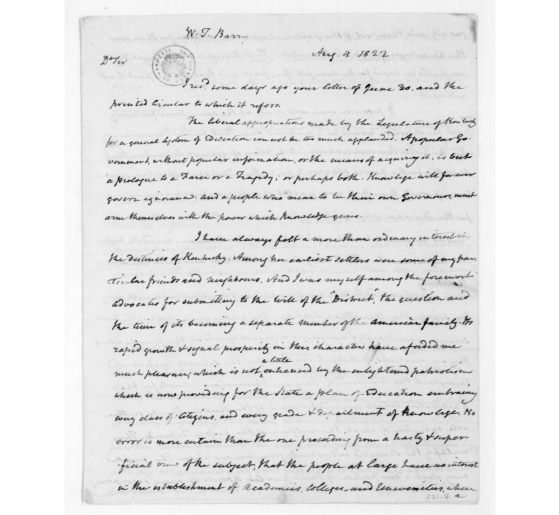
madison letter

“Knowledge will forever govern ignorance: And a people who mean to be their own Governors, must arm themselves with the power which knowledge gives,” he wrote.

In 2018, the “information darkness” of the Trump administration led to ignominy, from the Electronic Frontier Foundation’ “Foilies” to the Society for Professional Journalists’  Black Hole Award to the National Security Archives’ Rosemary Awards.

In 2019, transparency and accountability have taken on additional context during the Trump administration, which has continued to be allergic to transparency, rife with conflicts of interest, and hostile to the essential role journalism plays in a democracy. When the President of the United States repeatedly calls journalists “the enemy of the people,” a disinformation virus is weakening our body politic.

Despite the enactment of a historic open government data bill, the state of open government (data) remains divided, at risk, and underfunded in the United States.

After years of delays and democratic regression, the US government released a weak open government plan for the Open Government Partnership that was not responsive to the demands of this moment. The Open Government Partnership’s researchers found backsliding in the USA

Representative Elijah Cummings, D-Md, and Senators Chuck Grassley, R-Iowa, Patrick Leahy, D-Vt., and John Cornyn, R-Texas, recently sent a stern letter to the Interior Department reprimanding the agency for its efforts to weaken its FOIA regulations and urging it to reconsider the rule change. The proposed rule changes which garnered more than 65,000 comments – include allowing the DOI to preemptively reject what it defines as “unreasonably burdensome” requests, the possibility of imposing a monthly limit to the number of either pages or requests from a single requester the agency will process, and a host of other changes that may make it more difficult to obtain fee waivers and expedited processing.

The bipartisan group of lawmakers, all seasoned FOIA champions, told the Interior Department, “We write to express significant concern with the rule recently proposed by the Department of the Interior (DOI) concerning its Freedom of Information Act (FOIA) procedures. The proposed rule appears to restrict public access to DOI’s records and delay the processing of FOIA requests in violation of the letter and spirit of FOIA. The American people have the right to access information from DOI, and the proposed rule needlessly encroaches on that right.”

The context for oversight of open government at the national level for this year, however, is different. 2018 midterm elections delivered a 116th Congress that brought with it a commitment to oversight that was sorely lacking in the last session. A core element of that oversight has been public hearings that hold public officials and corporate executives accountable for their service or services.

That will continue next week, when, as has been the tradition in past years, the U.S. House Oversight Committee will be holding a hearing during Sunshine Week in 2019, considering the Freedom of Information Act and transparency under the Trump administration.

There will be many other Sunshine Week events around DC as well. The Department of Justice’s awards for FOIA officers. The National Archives celebrating the 10th anniversary of the Office of Government Information Services (aka the federal FOIA ombudman) during the day on March 11. That night, there will be a panel discussion on how to obtain and improve coverage of climate data at the National Press Club hosted by its Journalism Institute and Freedom of the Press Committee.

There will be a DC Open Government Summit and a forum on science in the Trump era put on by the Government Accountability Project, the Union of Concerned Scientists, and the Sunlight Foundation’s Web Integrity Project on the evening of March 12.

Despite the threats to American democracy at the federal level and ongoing challenges to open government in the states and cities, there’s still much to celebrate in 2019.

The free press, independent judiciary, and watchdog organizations have continued to provide transparency when elected officials and civil servants have tried to make decisions in secrecy, shedding light on corruption, fraud, waste, abuse and incompetence.

Their combined efforts to bring in sunshine in government across American civil society have been a bulwark against tyranny and corruption in the United States and around the world. Thank you to everyone who continues to support, defend and extend the public’s right to know in the 21st century.

Open Government Partnership IRM finds backsliding in the USA

This White House’s decision to continue U.S. government participation in the Open Government Partnership was far from certain, given the demonstrated distaste of the Trump administration for international agreements and institutions. In that context, The Trump administration’s commitment to participating … Continue reading

After years of delays and democratic regression, USA releases weak open government plan

If the American public wants to see meaningful progress on transparency, accountability or ethics in U.S. government, it should call on Congress to act, not the Trump White House. With little fanfare or notice, the United States of America has … Continue reading

The state of open government (data) remains divided, at risk, and underfunded

What’s next for open data in the United States? That was the open question posed at the Center for Data Innovation (CDI) last week, where a panel of industry analysts and experts gathered to discuss the historic open government data … Continue reading

Open government data complements FOI laws, but it cannot replace them

In March 2018, three public policy scholars posted a provocative question: could the open government movement shut the door on freedom of information? At the time, I let it flow without refuting it from the Sunlight Foundation’s platform, but it’s … Continue reading

US CIO says White House OMB will continue to explore selling public data

When I asked whether when or if it is acceptable for the United States government to charge companies, journalists and the public for government data, citing the example of paywalled immigration data, the chief information officer of the United States told me that “it’s part of the commercial equation” and that it was “actually a discussion point for the strategy” in her office in the White House Office of Management and Budget.

“I don’t have a specific answer,” Suzette Kent went on. “That is something that we’re looking at because there’s many tenets of it. There’s some data the government collects & document on behalf of the american public that may have the mode. There’s other types of data, that people are asking for. It’s a broad spectrum and one we are going to continue to explore.” Kent was speaking at the Data Coalition’s Data Demo Day on June 6 in Washington, DC. Video of the keynote speech she gave on data is embedded below:

When asked about the continued disclosure of data in PDFs and non-machine readable forms by federal agencies, despite President Barack Obama’s 2013 executive order, Kent said simply that she advocates compliance with every executive order and law and cited a Cross-Agency Priority goal to remove paper from agency systems.

Charging for public data is not a new topic or debate, but it has continued to be relevant during the Trump administration, when new concerns have grown about government data access, collection, and quality.

As I wrote back in 2014, local, state and national governments across the United States and around the world can and do charge for access to government data.

While some developers in Europe advocate charging for public sector information (PSI) as a way to ensure higher service levels and quality, adding fees does effectively charge the public for public access and has frequently been used as a barrier to press requests:

A city hall, state house or government agency charging the press or general public to access or download data that they have already paid for with their tax revenues, however, remains problematic.

It may make more sense for policy makers to pursue a course where they always make bulk government data available for free to the general public and look to third parties to stand up and maintain high quality APIs, based upon those datasets, with service level agreements for uptime for high-volume commercial customers.

Instead of exploring a well-trodden path, the United States government should follow the money and determine which data is agencies are currently charging for under public records requests or other means, using FOIA demand to drive open data disclosure.

United States opens public comment on commitments for a new national open government plan

Last fall, the U.S. government delayed formation of the fourth national action plan after committing to participation with a public consultation – despite historic regressions on open government across federal agencies under the Trump administration. This May, the White House quietly … Continue reading

Federal judge rules public officials blocking the public on Twitter violates the First Amendment

img_4058

When the president or others with access to his Twitter account block American citizens from following @realDonaldTrump based upon the viewpoints they express, it violates their First Amendment rights.

In a historic decision, a federal judge ruled today that it is unconstitutional for President Donald J. Trump to block his critics on Twitter, as portions of @realDonaldTrump account constitute a public forum, which means blocking them based on their political speech violates the First Amendment:

We hold that portions of the @realDonaldTrump account — the “interactive space” where Twitter users may directly engage with the content of the President’s tweets — are properly analyzed under the “public forum” doctrines set forth by the Supreme Court, that such space is a designated public forum, and that the blocking of the plaintiffs based on their political speech constitutes viewpoint discrimination that violates the First Amendment. In so holding, we reject the defendants’ contentions that the First Amendment does not apply in this case and that the President’s personal First Amendment interests supersede those of plaintiffs.

This is a historic win for the First Amendment and the public’s right to access official statements and participate in public discourse regarding those statements.

As I highlighted last year, tweets by @realDonaldTrump are official statements from the President, which means that the public has a right to equal access and participation around them, even when their speech is hosted on a private platform. The public interest argument was clear then:

“A president’s statements are not just made for people who voted for him or support his policies or politics.

Unfortunately, Trump is not alone: other local, state and federal politicians are also blocking their constituents on Twitter.

Doing so sends the wrong message to the public about whom they serve. Listening and responding to members of the public that they represent is a minimum expectation for public servants in any democratic state, whether those voices are raised in protest, petition, email, send letters or reply on social media. While there are practical challenges to making sense of millions of emails, tweets, call or letters, blocks are not the solution to filter failure.”

No President should block Americans from reading his official statements, replying or interacting with others here.

No other public servant should block constituents, either, from city councilors and alderman to judges, governors and mayors.

On Twitter, officials and politicians who have blocked constituents now consider policies to Mute accounts if someone is being vile or abusive, with transparency about guidelines and use. Users who abuse one another are already subject to accountability for violations of @Twitter rules, which could be reported by officials or civil society.

As the judge noted, addressing President Trump blocking people is legally tricky.

While we reject defendants’ categorical assertion that injunctive relief cannot ever be awarded against the President, we nonetheless conclude that it is unnecessary to enter that legal thicket at this time. A declaratory judgment should be sufficient, as no government official — including the President — is above the law, and all government officials are presumed to follow the law as has been declared.

President Trump should acknowledge the ruling and follow the law, unblocking everyone. Whether he’ll embrace such a change on his social platform of choice isn’r clear at all — especially given his refusal to follow security protocols for his iPhone, despite the risk of nation states spying on him.

In the wake of this ruling, the president should acknowledge the ruling in a video & tweeted post, work with Twitter to unblock everyone, and apologize for engaging in viewpoint-based discrimination and chilling the speech of his constituents, the American public.

But I doubt Trump will.

So, here’s a different idea. It would be an unprecedented move for an unprecedented presidency, but I hope Jack Dorsey and his board will seriously consider removing the Block feature from all official government accounts verified by Twitter.

If code is law and law is now encoded, one way for Twitter to embrace its DNA as a 21st century platform for free speech is to make open, public access to official statements the default, putting pressure on Facebook, Google and others to follow.

VA rejects Freedom of Information Act request for missing open government plan

The VA is being neither open nor transparent about its missing open government plans or policies. On March 29, 2018, I made a Freedom of Information Act request to the United States Department of Veterans Affairs (VA) in which I … Continue reading

Open Government Partnership researchers find flaws and growing regression on open government in the USA

researchers from the Open Government Partnership’s Independent Reporting Mechanism (IRM) shared a new end of term report that detailed both progress and regression in meeting the commitments in the third United States National Action Plan for Open Government between October 2015 and May 2017. To be charitable, the researchers found a mixed record on open government during that time period, with poor public engagement, limited government feedback, and lack of civil society setting the agenda or participating in an iterative dialog with government. Continue reading