On June 10, 2025, the U.S. House Transparency Caucus hosted a discussion about current issues, promising proposals, and ongoing successes in government transparency in the Rayburn building.
Congressman Mike Quigley (D-IL-5), chair and founder of the Transparency Caucus, gave opening remarks about the importance of open government in American democracy, reflecting on his experiences in Chicago and Washington, DC.
The cost of corruption is dollars, but the real cost of corruption is the loss of public trust. That trust has been on steady decline for the last 20 years,” said Quigley. “If we can improve the openness in communication between the government and the people, we can build a government that works better for the people.”
Panel Participants: -Courtney Bublé (Moderator), Congress Reporter with Law360 -Lauren Harper, Daniel Ellsberg Chair on Government Secrecy with the Freedom of the Press Foundation -Demian Brady, Vice President of Research with the National Taxpayers Union Foundation -Jason Powell, Policy Director with the Citizens for Responsibility and Ethics in Washington (CREW)
“Another thing we need to pay attention to is the destruction of records and agencies discontinuing the practice of maintaining certain records,” said Harper. “You can not get a FOIA response if an agency has destroyed those documents. Or if it has opted to stop creating those records.”
Members of Congress “don’t lose their pensions until they’re finally convicted. That means many can sit in jail, and appeal, and still collect their taxpayer-funded pension,” said Brady. “The last piece of transparency we need for that is from the Office of Personnel Management, but they haven’t answered my emails since 2020.”
“Sunlight in government is essential to a functioning democracy,” said Powell. “As part of DOGE’s efforts to reshape the government, on April 1st the CDC’s entire FOIA office was suspended without prior notice or without a plan for how the statutorily required work would continue. The CDC is now not able to respond to new [FOIA] requests, existing requests, or make statutorily-required proactive disclosures.”
In December 2021, President Biden urged “every nation in the Open Government Partnership to take up a call to action to fight the scourge of corruption, to “stand with those in civil society and courageous citizens around the world who are demanding transparency of their governments,” and to “all work together to hold governments accountable for the people they serve.”
That disconnect was evident at a public meeting with the Department of Justice’s Office of Information Policy (OIP) on September 26, 2023. Members of the public and press who are interested in a first look at the Freedom of Information “Wizard” the OIP has been building with Forum One Communications can watch recorded video of the meeting on YouTube, along with DoJ’s work on common business standards and the “self-assessment toolkit” the agency updated. All three of these pre-existing initiatives were submitted as commitments on FOIA in the 5th U.S. National Action Plan for Open Government last December.
The General Services Administration’s new Open Government Secretariat will post a “meeting record” at open.usa.gov — their summary of what happened — though it’s not online yet. (Slides are online, along with agenda and screenshots.)
We posed a number of questions via chat that Lindsey Steel from OIP acknowledged, though not always directly answered — like the U.S. government not co-creating any of the FOIA commitments that were being discussed with civil society, in the Open Government Partnership model. (Unlike other previous public meetings in 2022 and 2023, members of civil society were given the opportunity to ask questions on video.)
While it’s both useful and laudable for OIP to take public questions on its work, the pre-baked commitments they presented on were not responsive to the significant needs of a historic moment in which administration of the Freedom of Information Act appears broken to many close observers, and follow an opaque, flawed consultation that was conducted neither in the spirit nor co-creation standards of the Open Government Partnership itself.
While the Open Government Partnership’s Independent Review Mechanism is far slower that press cycles in 2023, the independent researchers there have caught up with the USA’s poor performance since 2016. (Unfortunately, the OGP’s Independent Review Mechanism and Steering Committee’s governance processes both move too slowly to sanction governments during or after the co-creation process for failing to meet co-creation standards in a way that would have empowered US civil society in 2022.)
The U.S. government’s response did not directly acknowledge any of the substantive criticism in the IRM or by good government watchdogs, much less announce a plan to address its failure to co-create a 5th National Action Plan last fall by coming back to the table.
Instead, the General Services Administration simply promised to do better in 2024 in a 6th plan and to keep updating the public on the work U.S. government was already doing.
The request of the coalition prior to the Open Government Partnership Summit was for the U.S. government to come back to the table and co-create new commitments that are representative of our priorities, not to continue hosting virtual webinars at which civil servants provide “updates” on pre-existing commitments in order to be in compliance with the bare minimum that OGP asks of participating nations.
With respect to FOIA, doing more than the minimum would look like the White House making new commitments to effective implementation of the FOIA Improvement Act of 2016 and the Open Government Data Act through executive actions, including:
Building on U.S. Attorney General’s memorandum mandating the presumption of openness and ensure fair and effective FOIA administration.
Convening the U.S. Digital Service, 18F, and the nation’s civic tech community to work on improving FOIA.gov, using the same human-centric design principles for improved experience that are being applied to service delivery across U.S. government.
Making sure FOIA.gov users can search for records across reading rooms, Data.gov, USASpending.gov, and other federal data repositories.
Collecting and publishing data on which records are being purchased under the FOIA by commercial enterprises for non-oversight purposes, and determine whether that data can or should be proactively disclosed.
Funding and building dedicated, secure online services for people to gain access to immigration records and veterans records — as the DHS Advisory Committee recommended — instead of forcing them to use the FOIA.
Commiting to extending the FOIA to algorithms and revive Code.gov as a repository for public sector code.”
We continue to hope that President Biden will take much more ambitious actions on government transparency, accountability, participation, and collaboration in order to restore broken public trust in our federal government, acting as a bulwark against domestic corruption and authoritarianism.
On December 15th, President Joe Biden delivered pre-recorded remarks to the Open Government Partnership Summit, an international conference that convened dozens of nations in South Korea to discuss the past, present, and future of open government. It’s not clear how … Continue reading →
Yesterday, the United States Freedom of Information Act Advisory Committee met at the National Archives in Washington and approved a series of recommendations that would, if implemented, dramatically improve public access to public information. And in May, it will consider … Continue reading →
During Sunshine Week in March 2019, members of the Senate Judiciary sent a letter to the Justice Department’s Office of Information Policy (OIP) that asked for information about the state of the Freedom of Information Act, noting a lack of … Continue reading →
Government secrecy, as measured by censorship or non-responsiveness under the Freedom of Information Act, is at an all-time high during the Trump administration. The Freedom of Information Act is getting worse under Trump for a variety of reasons. Continued secrecy … Continue reading →
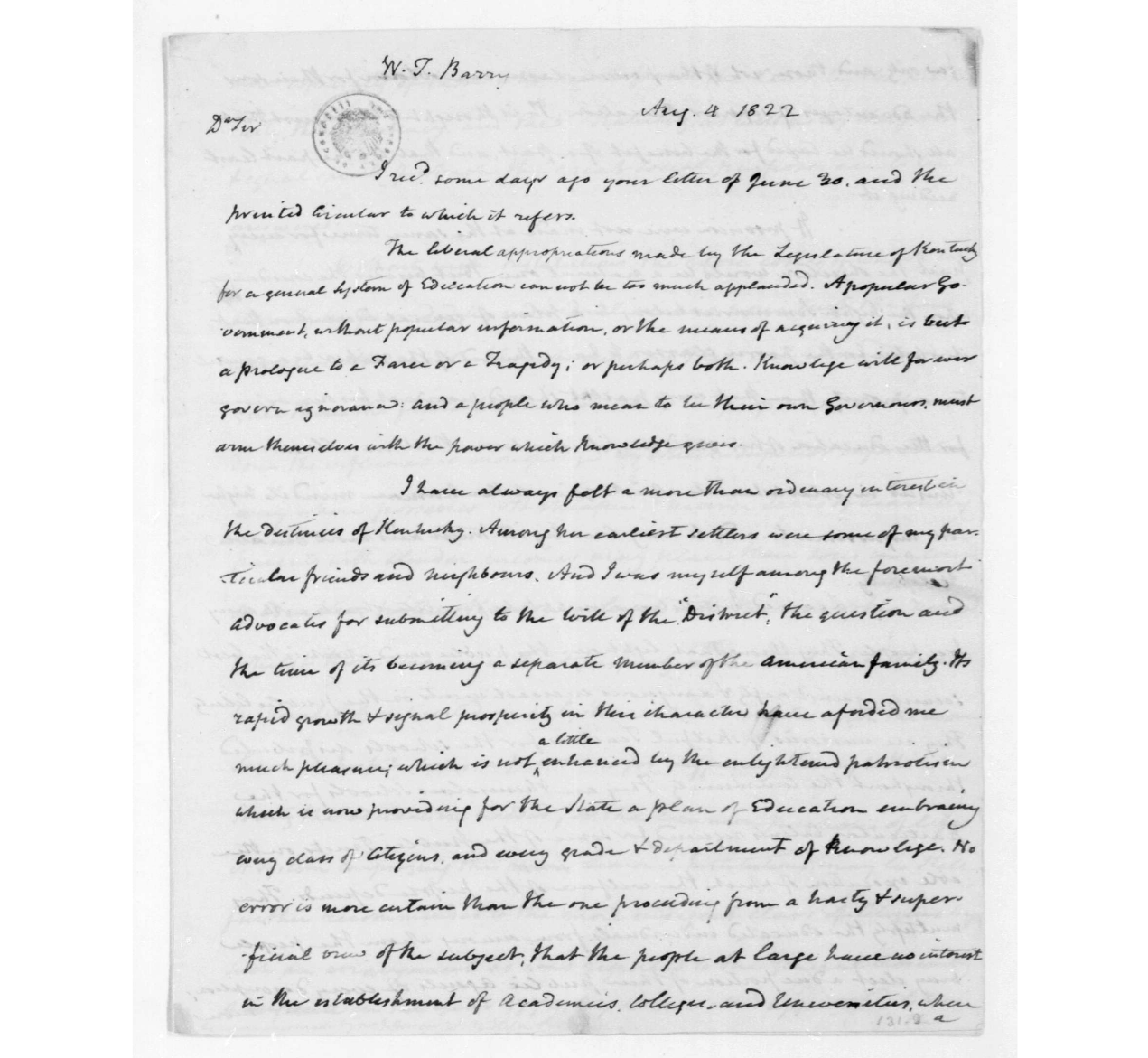
Sunshine Week always falls aroundPresident James Madison’s birthday on March 16. Madison is generally regarded as the forefather of open government in the United States, as evidenced by this memorable letter in 1822:
“Knowledge will forever govern ignorance: And a people who mean to be their own Governors, must arm themselves with the power which knowledge gives,” he wrote.
Every Sunshine Week is an opportunity to take stock of how federal, state and local governments are complying with public records, public meetings laws, and ethics statutes with disclosure requirements, from city halls to legislatures. As the National Security Archive highlighted, the state of the Freedom of Information Act is cloudy:
Representative Elijah Cummings, D-Md, and Senators Chuck Grassley, R-Iowa, Patrick Leahy, D-Vt., and John Cornyn, R-Texas, recently sent a stern letter to the Interior Department reprimanding the agency for its efforts to weaken its FOIA regulations and urging it to reconsider the rule change. The proposed rule changes which garnered more than 65,000 comments – include allowing the DOI to preemptively reject what it defines as “unreasonably burdensome” requests, the possibility of imposing a monthly limit to the number of either pages or requests from a single requester the agency will process, and a host of other changes that may make it more difficult to obtain fee waivers and expedited processing.
The bipartisan group of lawmakers, all seasoned FOIA champions, told the Interior Department, “We write to express significant concern with the rule recently proposed by the Department of the Interior (DOI) concerning its Freedom of Information Act (FOIA) procedures. The proposed rule appears to restrict public access to DOI’s records and delay the processing of FOIA requests in violation of the letter and spirit of FOIA. The American people have the right to access information from DOI, and the proposed rule needlessly encroaches on that right.”
The context for oversight of open government at the national level for this year, however, is different. 2018 midterm elections delivered a 116th Congress that brought with it a commitment to oversight that was sorely lacking in the last session. A core element of that oversight has been public hearings that hold public officials and corporate executives accountable for their service or services.
There will be many other Sunshine Week events around DC as well. The Department of Justice’s awards for FOIA officers. The National Archives celebrating the 10th anniversary of the Office of Government Information Services (aka the federal FOIA ombudman) during the day on March 11. That night, there will be a panel discussion on how to obtain and improve coverage of climate data at the National Press Club hosted by its Journalism Institute and Freedom of the Press Committee.
There will be a DC Open Government Summit and a forum on science in the Trump era put on by the Government Accountability Project, the Union of Concerned Scientists, and the Sunlight Foundation’s Web Integrity Project on the evening of March 12.
Despite the threats to American democracy at the federal level and ongoing challenges to open government in the states and cities, there’s still much to celebrate in 2019.
The free press, independent judiciary, and watchdog organizations have continued to provide transparency when elected officials and civil servants have tried to make decisions in secrecy, shedding light on corruption, fraud, waste, abuse and incompetence.
Their combined efforts to bring in sunshine in government across American civil society have been a bulwark against tyranny and corruption in the United States and around the world. Thank you to everyone who continues to support, defend and extend the public’s right to know in the 21st century.
This White House’s decision to continue U.S. government participation in the Open Government Partnership was far from certain, given the demonstrated distaste of the Trump administration for international agreements and institutions. In that context, The Trump administration’s commitment to participating … Continue reading →
What’s next for open data in the United States? That was the open question posed at the Center for Data Innovation (CDI) last week, where a panel of industry analysts and experts gathered to discuss the historic open government data … Continue reading →
In March 2018, three public policy scholars posted a provocative question: could the open government movement shut the door on freedom of information? At the time, I let it flow without refuting it from the Sunlight Foundation’s platform, but it’s … Continue reading →





 E Pluribus Unum