Open government advocates: terms and conditions mean DC open data is fauxpen data

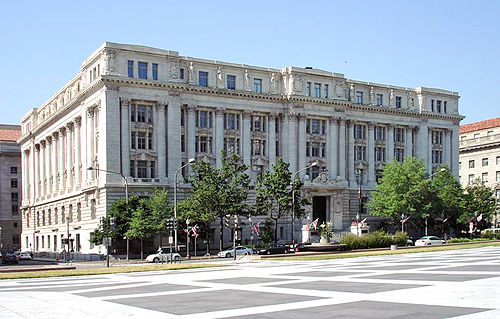
500px-WilsonbldgEarlier this summer, this blog covered the launch of District of Columbia’s executive order on open government, open data policy, open data platform and online FOIA portal. Last week, the Sunlight Foundation laid out what DC should have done differently with its open data policy.

“The evolution of open data policies since 2006 provides a chance for stakeholders to learn from and build on what’s been accomplished so far,” wrote policy associate Alisha Green. “This summer, a new executive directive from Mayor Vincent Gray’s office could have taken advantage of that opportunity for growth, It fell far short, however. The scope, level of detail, and enforceability of the policy seem to reveal a lack of seriousness about making a significant improvement on DC’s 2006 memorandum.”

Green says that DC’s robust legal, technology and advocacy community’s input should have helped shape more of the policy and that “the policy should have been passed through the legislative, not executive, process.” Opportunities, missed.

Yesterday, civic hacker and Govtrack.us founder Joshua Tauberer took the critique one step further, crying foul over the terms of use in the DC data catalog.

“The specter of a lawsuit hanging over the heads of civic hackers has a chilling effect on the creation of projects to benefit the public, even though they make use of public data released for that express purpose,” he wrote. “How does this happen? Through terms of service, terms of use, and copyright law.”

The bottom line, in Tauberer’s analysis, is that the District oF Columbia’s open data isn’t truly open. To put it another way, it’s fauxpen data.

“Giving up the right to take legal action and being required to follow extremely vague rules in order to use public data are not hallmarks of an open society,” writes Tauberer. “These terms are a threat that there will be a lawsuit, or even criminal prosecution, if civic hackers build apps that the District doesn’t approve of. It has been a long-standing tenant that open government data must be license-free in order to truly be open to use by the public. If there are capricious rules around the reuse of it, it’s not open government data. Period. Code for DC noted this specifically in our comments to the mayor last year. Data subject to terms of use isn’t open. The Mayor should update his order to direct that the city’s “open data” be made available a) without restriction and b) with an explicit dedication to the public domain.”

In the wake of these strong, constructive critiques, I posted an update in an online open government community wondering what the chances ar that DC public advocates, technologists, lawyers, wonks, librarians and citizens will go log on to the DC government’s open government platform, where the order is hosted, and suggest changes to the problematic policy? So far, few have.

The issue also hasn’t become a serious issue for the outgoing administration of Mayor Vincent Gray, or in the mayoral campaign between Muriel Bowser and David Catania, who both sit on the DC Council.

The issues section of Bowser’s website contains a positive but short, vague commitment to “improved government”: “DC needs a government that works for the people and is open to the people,” it reads. “Muriel will open our government so that DC residents have the ability to discuss their concerns and make suggestions of what we can do better.”

By way of contrast, Catania published a 128 page platform online that includes sections on “democracy for the District” and “accountable government.”(Open data advocates, take note: the document was published on Scribd, not as plaintext or HTML.) The platform includes paragraphs on improving access to government information, presenting information in user-friendly formats, eradicating corruption and rooting out wasteful spending.

Those are all worthy goals, but I wonder whether Catania knows that the city’s current policy and the executive order undermines the ability and incentives for journalists, NGOs, entrepreneurs and the District’s residents to apply the information he advocates disclosing for the purposes intended.

Last week, I asked Bowser and Catania how their administrations would approach open data in the District.

To date, I’ve heard no reply. I’ve also reached out to DC’s Office of Open Government. If I hear from any party, I’ll update this post.

Update: In answer to a question I posed, the Twitter account for DC.gov, which manages DC’s online presence and the open data platform in question as part of the Office of the Chief Technology Officer, indicated that “new terms and conditions [were] coming shortly.” No further details were offered.

“Internet Slowdown Day” sends over hundreds of thousands* of new comments on net neutrality to FCC

unnamed

Today, dozens of websites “slowed down” for a cause, collectively advocating against Open Internet rules proposed by the Federal Communications Commission. None of the participants in today’s “Internet Slowdown Day” actually delayed access to their websites: instead, they used code to add a layer to visitors’ Web browsers with one of the loading icons grimly familiar to anyone who’s ever waited for a long download or crufty operating system function to finish in an overlay and linked to BattleForThenet.com/September10, which encouraged visitors to sign a letter supporting net neutrality, or to use online tools to call Congress.

While many big tech companies didn’t participate, millions of visitors to Reddit, Tumblr, Netflix, Free Press, Reddit, Netflix, Mozilla, Kickstarter, Upworthy, Automattic, Digg, Vimeo, Boing Boing, Urban Dictionary, Foursquare, Cheezburger and the Sunlight Foundation saw the spinning icon, among others.

stop-slow-lanes

The effort appears to have made a difference: According to the FCC*, by 6 PM ET the agency saw 111,449 new public comments added to the already record-setting total, with some 41,173 filed into the 14-28 docket of the FCC’s website since and another 70,286 sent to the openinternet@fcc.gov inbox, setting a new high water mark of some 1,515,144 to date, with more yet to come. As reported by Mike Masnick, citing ThinkProgress, the Internet slowdown generated 1000 calls per minute to Congress. *Update: Fight for the Future claims that more than 740,000 comments were submitted through Battleforthenet.com and that the FCC hasn’t caught up. According to the nonprofit, “this happened during our last big push too when their site crashed. We are storing comments and will deliver all.”

“We sent 500K+ comments,” wrote Tiffaniy Cheng, co-founder of Fight for the Future, in an email. “They’re getting backlogged as the FCC can’t handle the amount of data. The FCC asked us to hold as they could not accept them and can’t handle all the load. So, they only just got to accepting them again.”

That means there have been at least 409,522 reply comments filed since July 18, with five days left in the reply comment period, with more than one quarter of them coming in a single day. (*If Fight for the Future’s total is correct, the number of reply comments filed passed 800,000, with the total nearing 2 million.) The FCC will host a public Open Internet roundtable discussion on September 16, the day after the period closes. According to an analysis of the first 800,000 public comments by the Sunlight Foundation, less than 1 percent of the submissions were clearly opposed to net neutrality.

These numbers are still dwarfed by the millions of calls and emails sent to Washington during the campaign to halt the Stop Online Piracy Act (SOPA) and PROTECT-IP Act in Congress in 2012, when Google and Wikipedia connected visitors to their websites to switchboards on Capitol Hill. They may also have less of an effect on an independent regulatory agency that has yet to chart a sustainable legal course in the storm of online criticism and intense lobbying by affected industries.

According to a FCC spokesman, the agency expected an increased volume of traffic due to the “slowdown.” Perhaps anticipating the interest, the @FCC’s first tweet today encouraged people to submit comments via email:

The total number of comments on the Open Internet proceeding is sure to grow in the remaining week, with the number of emails sent to the FCC’s dedicated inbox likely to go past a million. (Update: On Thursday morning, the FCC confirmed that a total of 632,328 comments filed to ECFS and 1,118,107 sent to openinternet@fcc.gov, for a cumulative total of 1,750,435.) In many ways, that outcome feels appropriate.

When the FCC’s 18 year-old online commenting system has groaned under a huge volume of online traffic, people have routed around the downed comment system and used the original killer app of the Internet: email, the “tremendous, decentralized, open platform on which new, innovative things can and have been built,” based upon the same kinds of open protocols that enabled the unprecedented growth of a wealth of networks to grow around the world.

Update: At the end of the day after the Internet Slowdown, the FCC still working to enter all of the new comments created the day before into their systems — and the agency decided to offer another way to file comments: using email attachments.

In fact, FCC asked for something unexpected, simple and smart: for comments to be submitted at bulk open data, as .csv files of no more than 9 MB each. While the FCC doesn’t refer specifically to the comments that Fight for the Future has collected, this option does offer an easy way to electronically transfer the comments through an established channel. In the future, perhaps this will become the default option for
filing bulk comments collected by advocates, at least until Congress funds a new online filing system or the agency finds a way to use Dropbox. It should certainly make releasing them online as structured data for third-party analysis much easier; if the FCC wanted to, if could publish them almost as quickly as the comments came in.

The agency’s chief information officer, David Bray, explained the additional option in a blog post:

The volume of public feedback in the Open Internet proceeding has been commensurate with the importance of the effort to preserve a free and open Internet.

The Commission is working to ensure that all comments are processed and that we have a full accounting of the number received as soon as possible. Most important, all of these comments will be considered as part of the rulemaking process. While our system is catching up with the surge of public comments, we are providing a third avenue for submitting feedback on the Open Internet proceeding.

In the Commission’s embrace of Open Data and a commitment to openness and transparency throughout the Open Internet proceedings, the FCC is making available a Common Separated Values (CSV) file for bulk upload of comments given the exceptional public interest. All comments will be received and recorded through the same process we are applying for the openinternet@fcc.gov emails.

Attached is a link to the CSV file template along with instructions. Once completed, the CSV file can be emailed to openinternet@fcc.gov where if it matches the template the individual comments will be filed for the public record with the Electronic Comment Filing System. When you email this file, please use the subject “CSV”. We encourage CSV files of 9MB or less via email.

The Commission welcomes the record-setting level of public input in this proceeding, and we want to do everything we can to make sure all voices are heard and reflected in the public record.

A reply to an anonymous sexist comment about women, business and leadership

The Women of ENIAC

The “Women of ENIAC.” For their history, read “Programming the ENIAC” and “When Computers Were Women.”

My reply to an anonymous commenter on my recent column about the next US CTO deserved to be edited and posted separately: while the percentage of women in leadership roles at at Fortune 500 companies remains small, recent research from management science leaves little doubt about the effectiveness of their leadership. According to at least one analysis from the American Psychological Society, people generally do not doubt the leadership abilities of women.

The primary reason Megan Smith is the new United States chief technology officer is because she’s immensely capable, and has proved it over the decades since she graduated from MIT. The nation is fortunate that someone of her talents has chosen to enter public service.

I hope Smith inspires other young women to pursue careers in technology, shine, and then apply their talents on behalf of their fellow citizens. Including women matters for the future of technology and society.

(Thanks to Chris Brogan for reminding me of why highlighting a comment can be valuable.)

The White House (quietly) asks for feedback on the open government section of its website

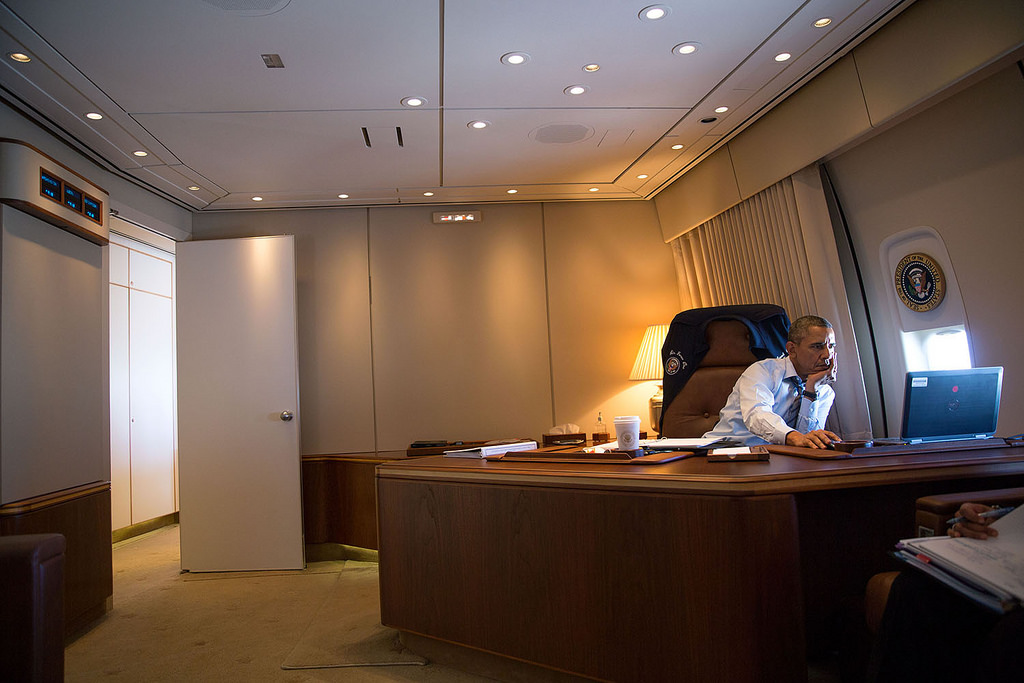
Obama at computer. Official White House Photo by Pete Souza

Official White House Photo by Pete Souza

Over at Govfresh, Luke Fretwell took note of the White House asking for feedback on the open government section of WhiteHouse.gov. Yesterday, Corinna Zarek, senior advisor for open government in the White House Office of Science and Technology Policy (OSTP), where the administration’s Open Government Initiative was originally spawned under former deputy chief technology officer Beth Noveck, published a email to the US Open Government Google Group:

We are working on a refresh of the Open Gov website, found at whitehouse.gov/open, and we’d like your help!

If you’re familiar with the history of the page, you can see we have begun updating it by shifting some of the existing content and adding new tabs and material.

What suggestions do you have for the site? What other efforts might we feature?

Please let us know – reply back to this thread, email us at opengov@ostp.gov, or tweet us at @OpenGov!

Here’s some background on the group and its purpose: The White House’s Open Government Working Group needs to solicit feedback from civil society in the United States on the various initiatives and commitments the administration has made. Such engagement is essential to the providing feedback from governance experts, advocates and the public on the development of new agency open government plans and discuss progress on the national open government action plan.

As a result of a discussion at the working group this spring, OSTP created the US Open Government discussion group to connect White House staff and agency officials who work on open government to people outside of the federal government. According to the group’s description, the goal of this group is to “provide a safe and welcoming arena for government-focused collaboration and news-sharing around Open Government efforts of the United States government.” That “safe and welcoming” language is notable: the group is moderated by OpenTheGovernment.org with an eye on constructive, on-topic feedback, as opposed to, say, the much more open-ended freewheeling posts and threads on the (long-since closed) Open Government Dialog of 2009 or Change.gov.

After almost six months, the open government group, which can be accessed through a Web browser or using an email listserv, has 177 members and 37 posts. By almost any measure, these are extremely low levels of participation and engagement, although the quality of feedback from those members remains extremely high. By way of contrast, a open government and civic tech group on Facebook now has over 1900 members and an open government community on Google+ has over 1400 members, with both enjoying almost daily contributions. Low participation rates on this US Open Government Google Group are likely due in part to lack of promotion by other White House staff to the media or using the various social media platforms has joined, which cumulatively have millions of followers, and, more broadly, the historic lows of public trust in government which have created icy headwinds for open government initiatives in recent years.

So far, Zarek’s solicitation has received two responses. One comes from Daniel Schuman, policy director for Citizens for Responsibility and Ethics (CREW) in Washington, who made great suggestions, like adding a link to ethics.data.gov, a list of staff working on openness in the White House and their areas of responsibility, a link to 18f and the USDS.

“Finally, there are many great ideas about how to make government more open and transparent,” wrote Schuman. “Consider including a way for people to submit ideas where those submissions are also visible to the public (assuming they do not violate TOS). Consider how agencies or the government could respond to these suggestions. Perhaps a miniature version of “We the People,” but without the voting requiring a response.”

The other idea comes from open government consultant Lucas Cioffi, who suggested adding a link to a “community-powered open government phone hotline” like the experiment he recently created.

To those ideas, I’ll add eight quick suggestions in the spirit of open government:

1) Reinstate the open government dashboard that was removed and update it to the current state of affairs and compliance, with links to each. The Sunlight Foundation and CREW have already audited agency compliance with the Open Government Directive. By keeping an updated scorecard in a prominent place, the Obama administration could both increase transparency to members of the public wondering about what has been done and by whom, and put more pressure on agencies to be accountable for the commitments they have made.

2) Re-integrate individual case studies from the “Innovator’s Toolkit,” which was also removed, under participation and collaboration

3) Create a Transparency tab and link to the “IC on the Record” tumblr and other public repositories for formerly secret laws, policies or documents that have been released.

4) Blog and tweet more about what’s happening in the open government world outside of the White House. Multiple open government advocates do daily digests and there’s a steady stream of news and ideas on the #opengov and #opendata hashtags on Twitter. Link to what’s happening and show the public that you’re reading and responding to feedback.

5) Link to the White House account and open government projects on Github under both the new participation and collaboration tabs, like Project Open Data.

6) Highlight 18F’s effort to reboot the Freedom of Information Act.

7) Publish the second national action plan on open government as HTML on the site, and post and link to a version on Github where people can comment on it.

8)  Create a FAQ under “participation” that lists replies to questions sent to @OpenGov

If you have ideas for what should be wh.gov/open, well, now you know who to tell, and where.

18F launches alpha foia.gov in a bid to reboot Freedom of Information Act requests for the 21st century

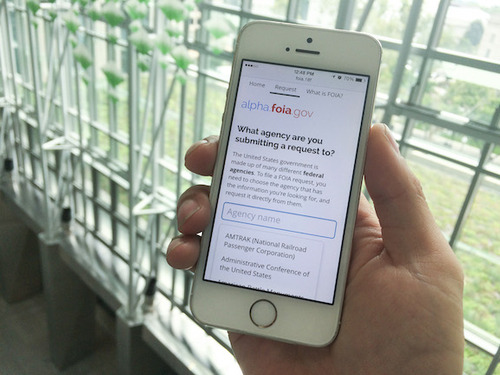
alpha foia gov

18F, the federal government’s new IT development shop, has launched a new look at the Freedom of Information Act (FOIA) in the form of a open source application hosted on Github. Today’s announcement is the most substantive evidence yet that the Obama administration will indeed modernize the Freedom of Information Act, as the United States committed to doing in its second National Action Plan on Open Government. Given how poor some of the “FOIA portals” and underlying software that supports them exists is at all level of government, this is tremendous news for anyone that cares about the use of technology to support open government.

Notably, 18F already has a prototype (pictured above) online that shows what a consolidated request submission hub could look like and plans to iterate upon it.  This is a perfect example of “lean government,” or the application of lean startup principles and agile development to the creation of citizen-centric services in the public sector.  Demonstrating its commitment to developing free and open source software in the open, 18F asked the public to follow the process online at their FOIA software repository on Github, send them feedback or even contribute to the project.

18F has now committed to creating software that improvse how requests made under the Freedom of Information Act can be improved through technology. Specifically that it will develop tools that “improve the FOIA request submission experience,” “create a scalable infrastructure for making requests to federal agencies” and “make it easier for requesters to find records and other information that have already been made available online.”

According to 18F’s blog post, this work is supported and overseen by a “FOIA Task Force,” consisting of representatives from the Department of Justice, Environmental Protection Agency, the Office of Management and Budget, the Office of Science and Technology Policy. The task force will need to focus upon more than technology: while poor software has hindered requests and publishing, that’s not the primary issue that’s hindering the speed or quality of responses.

Despite the U.S. attorney general’s laudable commitment to a new era of open government in 2009, the Obama administration received a .91 GPA in FOIA compliance earlier this year from the Center for Effective Government.

While White House press secretary Josh Earnest may be well correct in stating that the federal government is processing more FOIA requests than ever, As the National Security Archive noted in March, the use of a FOIA exemption (protecting “deliberative processes”) to deny or heavily redact requests has skyrocketed in the past two years.

use of B5 exemptions

[NATIONAL SECURITY ARCHIVE: Chart created by Lauren Harper.]

As with the reduced access to government staff and scientists that a group of 38 journalism and open government advocates decried earlier this year, improving FOIA compliance cannot solely be addressed through technological means. To address endemic government secrecy and outright abuse of exemptions to protect against politically inconvenient disclosures, Obama administration — in particular, the U.S. Justice Department — will need to expend political capital and push agencies to actually shift the cultural default towards openness and release uncomfortable or embarrassing data and documents and not redact them beyond understanding.

That’s admittedly a huge challenge, particularly for an administration facing multiple foreign and domestic conundrums, including a scandal over missing IRS emails and obfuscated records in an election year and the most politically polarized Congress and electorate in the nation’s history, but if President Barack Obama is truly committed to “creating an unprecedented level of openness in government,” it’s one that he and his administration will need to take on.

White House e-petition system hits 15 million users, 22 million signatures and 350,000 petitions

Last week, the White House took a victory lap  for a novel event in U.S. history, when a bill that had its genesis as an online petition to the United States government filed at WhiteHouse.gov became law after the 113th Congress actually managed to passed a bill.

In a blog post explaining how cell phone locking became legal, Ezra Mechaber, deputy director of email and petitions in the White House Office of Digital Strategy, noted that this outcome “marked the very first time a We the People petition led to a legislative fix.” Mechaber also highlighted continued growth for the national e-petition platform: 15 million users, 22 million signatures and 350,000 petitions since it was launched in 2011.

WeThePeople epetition statistics

Mechaber also mentioned two other things worth highlighting: “a simplified signing process that removes the need to create an account just to sign a petition”  and a Write API that will “eventually allow people to sign petitions using new technologies, and on sites other than WhiteHouse.gov.” If and when that API goes live, I expect user growth and activity to spike again. Imagine, for instance, if people could sign petitions from within news stories or though Change.org. Enabling petition creators to have more of a relationship with signatories would also address one of the principal critiques levied against the site’s function. Professor Dave Karpf:

Launching the online petition at We The People created the conditions for a formal response from the White House.  That was a plus.  We The People provided no help in amplifying the petitions through email and social media.  That was neutral in this case, since Reddit, EFF, Public Knowledge, and others were helping to amplify instead.  But the site left the petition-creators with no residual list for follow-up actions.  That’s a huge minus.

If the petition had been launched through a different site (like Change.org), then it would have been less likely to get a formal White House response, but more likely to facilitate the follow-up actions that Khanna/Howard, Wiens and Khanifar say are vital to eventual success.

The White House has not provided a timeline for when the beta API will become public. If they respond to my questions, I’ll update this post.

White House formally launches U.S. Digital Service, publishes open source “Playbook” on Github

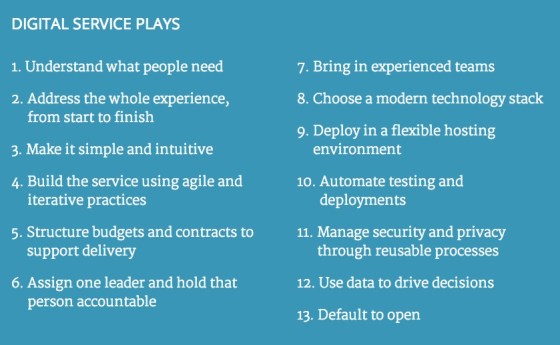
digital service plays

The White House officially launched a U.S. Digital Service today, promising to deliver “customer-focused government through smarter IT. The new Digital Service will be “a small team made up of our country’s brightest digital talent that will work with agencies to remove barriers to exceptional service delivery,” according to a blog post by Beth Cobert, deputy director for management at the Office of Management and Budget (OMB), U.S. chief information officer Steve VanRoekel and US chief technology officer Todd Park.

We are excited that Mikey Dickerson will serve as the Administrator of the U.S. Digital Service and Deputy Federal Chief Information Officer. Mikey was part of the team that helped fix HealthCare.gov last fall and will lead the Digital Service team on efforts to apply technology in smarter, more effective ways that improve the delivery of federal services, information, and benefits.

The Digital Service will work to find solutions to management challenges that can prevent progress in IT delivery. To do this, we will build a team of more than just a group of tech experts – Digital Service hires will have talent and expertise in a variety of disciplines, including procurement, human resources, and finance. The Digital Service team will take private and public-sector best practices and help scale them across agencies – always with a focus on the customer experience in mind. We will pilot the Digital Service with existing funds in 2014, and would scale in 2015 as outlined in the President’s FY 2015 Budget.

The USDS goes live with a Digital Services Playbook and “TechFAR,” a subsection of the guide that “highlights the flexibilities in the Federal Acquisition Regulation (FAR) that can help agencies implement ‘plays’ from the Digital Services Playbook.”

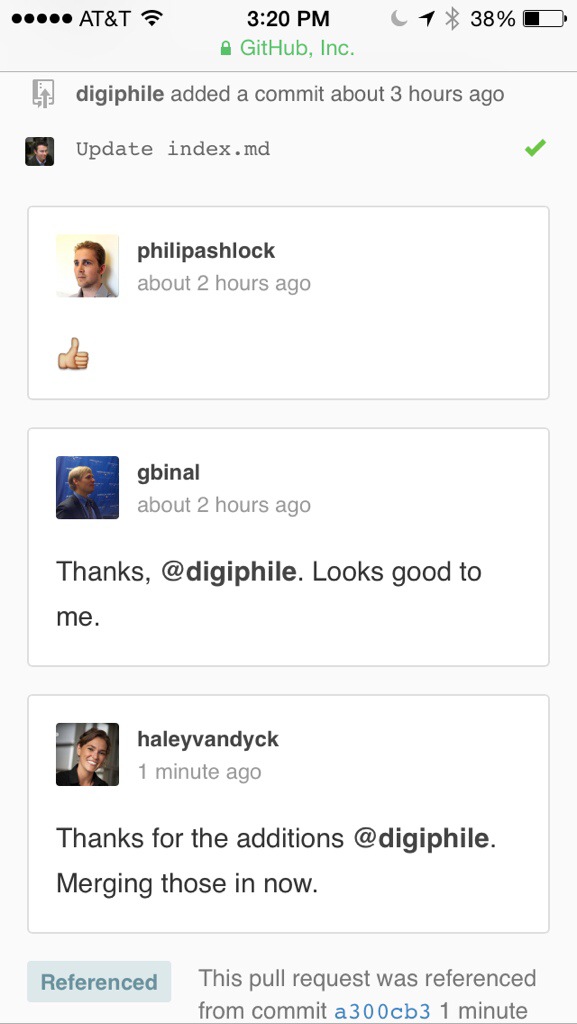
In what now appears to be de rigueur for information technology and digital government initiatives in the second term of the Obama administration, the playbook has been published on the White House account on Github, where the public is encouraged to give feedback and make suggestions upon the documents using  GitHub Issues and to propose changes to the playbook by submitting a pull request. According to the Github account, pull requests that are made and accepted before September 1, 2014 “will be incorporated into the next release of the Digital Services Playbook and the TechFAR Handbook.”

While a team of 25 folks in OMB led by former Googler Mikey Dickerson and a playbook will not prevent the next healthcare.gov debacle, there’s a lot that’s good here.

As some guy wrote in November 18, 2013: “If Obama now, finally, fully realizes how much of an issue the broken state of government IT procurement is to federal agencies fulfilling their missions in the 21st century, he’ll use the soft power of the White House to convene the smartest minds from around the country and the hard power of an executive order to create the kernel of a United States Digital Services team built around the DNA of the CFPB: digital by default, open by nature.”

This isn’t quite that – the USDS looks like more of a management consulting shop, vs the implementation and building than the Presidential Innovation Fellows and folks at 18F, but maybe, all together, they’ll add up to much more than the sum of their parts.

18F commits to developing free and open source software by default for Uncle Sam

5682524083_4c81641ce1_oAt 18F, Uncle Sam is hoping to tap the success of the U.K.’s Government Digital Services. If the new digital government team housed with the U.S. General Services Administration gets it right, they’ll succeed in building 21st century citizen services by failing fast instead of failing big, as the Center for Medicare and Medicaid Services memorably did last year with Healthcare.gov through poor planning and oversight and Social Security has this summer. One of the lessons learned from the Consumer Financial Protection Bureau‘s successful use of technology is to align open source policy with mission. This week, 18F has done just that, publishing an open source policy on Github that makes open source the default in development:

The default position of 18F when developing new projects is to:
1. Use Free and Open Source Software (FOSS), which is software that does not charge users a purchase or licensing fee for modifying or redistributing the source code, in our projects and contribute back to the open source community.
2. Create an environment where any project can be developed in the open.
3. Publish publicly all source code created or modified by 18F, whether developed in-house by government staff or through contracts negotiated by 18F.

Eric Mill and Raphael Majma published a post on Tumblr that explained what FOSS, the policy, 18F’s open source team, approach and teased forthcoming guidelines for reuse:

FOSS is software that does not charge users a purchase or licensing fee for modifying or redistributing the source code. There are many benefits to using FOSS, including allowing for product customization and better interoperability between products. Citizen and consumer needs can change rapidly. FOSS allows us to modify software iteratively and to quickly change or experiment as needed.

Similarly, openly publishing our code creates cost-savings for the American people by producing a more secure, reusable product. Code that is available online for the public to inspect is open to a more rigorous review process that can assist in identifying flaws in the source code. Developing in the open, when appropriate, opens the project up to that review process earlier and allows for discussions to guide the direction of a products development. This creates a distinct advantage over proprietary software that undergoes a less diverse review and provides 18F with an opportunity to engage our stakeholders in ways that strengthen our work.

The use of open source software is not new in the Federal Government. Agencies have been using open source software for many years to great effect. What fewer agencies do is publish developed source code or develop in the open. When the Food and Drug Administration built out openFDA, an API that lets you query adverse drug events, they did so in the open. Because the source code was being published online to the public, a volunteer was able to review the code and find an issue. The volunteer not only identified the issue, but provided a solution to the team that was accepted as a part of the final product. Our policy hopes to recreate these kinds of public interactions and we look forward to other offices within the Federal Government joining us in working on FOSS projects.

In the next few days, we’re excited to publish a contributor’s guide about reuse and sharing of our code and some advice on working in the open from day one.

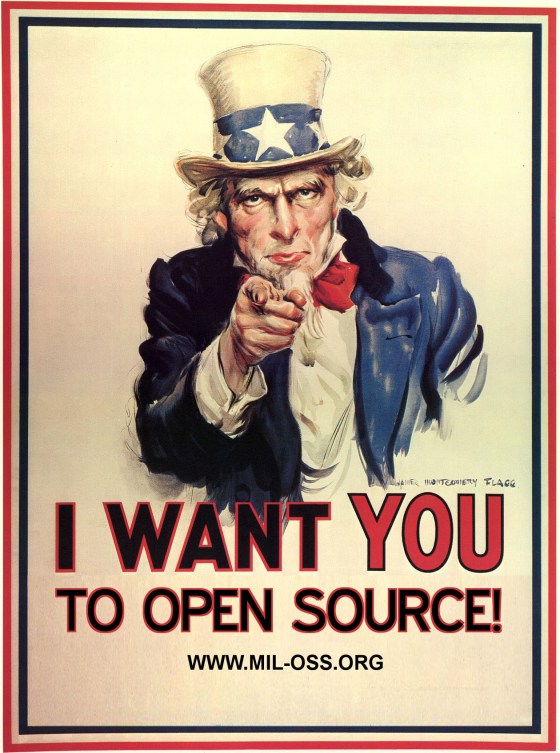
IMAGE CREDIT: mil-oss.org

Congress passes bill to make unlocking cellphones legal, shining new sunlight on White House e-petitions

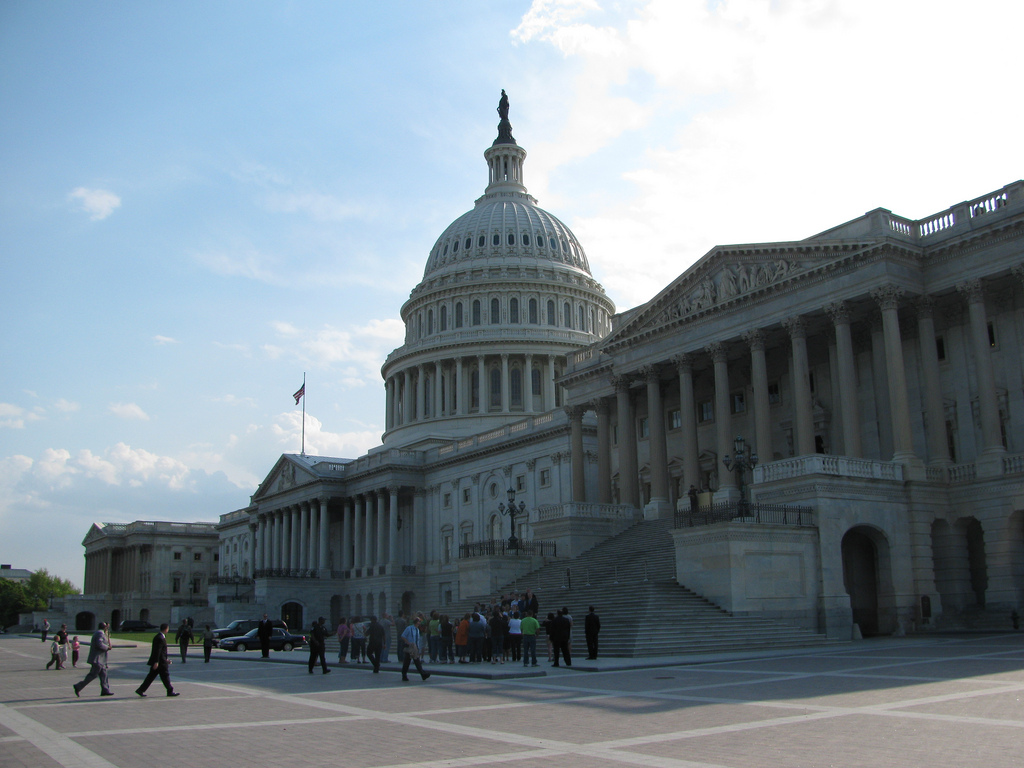
us-capitol-dome-sun

When the U.S. House of Representatives passed S.517 today, voting to send the “Unlocking Consumer Choice and Wireless Competition Act” that the U.S. Senate passed unanimously last week, the legislative branch completed an unprecedented democratic process: a bill that had in its genesis in a White House e-petition signed by more than 100,000 consumers was sent back to the White House for the President’s signature. If signed into law, the bill would 1) make it legal for consumers to unlock their cellphones in January 2015, reversing a controversial decision made by the Librarian of Congress in 2013 by reinstating a 2010 rulemaking and 2) direct the Librarian to consider if other mobile devices, like tablets, should also be eligible to be unlocked.

As Vermont Senator Patrick Leahy’s staff highlighted, the ranking members and chairmen of the House and Senate Judiciary Committees started cooperating on the issue in 2013 after the White House responded to the e-petition.

“I thank the House for moving so quickly on the bill we passed in the Senate last week and for working in a bipartisan way to support consumers,” said Leahy, in a statement. “The bipartisan Unlocking Consumer Choice and Wireless Competition Act puts consumers first, promotes competition in the wireless phone marketplace, and encourages continued use of existing devices. Once the President signs this bill into law, consumers will be able to more easily use their existing cell phones on the wireless carrier of their choice.”

In the annals of still-embryonic American experiments in digital democracy, I can find no ready equivalent or precedent for this positive outcome for the people petitioning their government. The closest may be when the White House responded to an e-petition on the Stop Online Piracy Act in 2012, taking a position on anti-piracy bills that posed a threat to online industry, security and innovation. Even then, it the voices of millions of people activated online to change Washington and the votes of members of Congress.

It’s critical to note that there’s a much deeper backstory to why activism worked: the people behind the e-petition didn’t stop with an official response from the White House. After making a lot of noise online, activists engaged Congress over a year and a half, visiting Capitol Hill, sitting in on phone calls and hearings, and being involved in the democratic process that led to this positive change.

“Many of the initial conversations on DMCA reform were engaged with the Republic Study Committee copyright memo in 2012, so it’s been a 21 month process,” said former Congressional staffer Derek Khanna, via email, “but such sea changes in policy usually take a long time, particularly if you’re confronting very powerful interests.”

Khanna, now a fellow at Yale Law School and columnist, was part of the coalition of activists advocating for this change in Congress.

“The campaign on unlocking was really trying to drive those issues and solutions through movement politics,” he said, “and that movement has succeeded in more than just the unlocking bill: now there is also the Judiciary Committee having hearings on copyright reform. The YG Network report, “Room to Grow,” also called for wholesale copyright and patent reforms and cited the RSC memo.”

This is an important lesson in why “clicktivism” alone won’t be enough to make changes to laws or regulations emanating from Washington:  people who want to shifts in policy or legislation have to learn how Congress works and act.

“A key part of our success was starting small with definable goals, and taking small successes and building upon them,” said Khanna. “Most movements throughout history have followed this strategy. Sometimes, e-campaigns shoot for the moon when the small battles have not been won yet. This is particularly a problem with tech issues. One reason why the unlocking petition was more successful than others was because it was only a tool in the toolkit. While it was ongoing, I was arguing our cause in the media, writing op-eds, meeting with Congress, giving speeches, and working with think-tanks. We basically saw the petition as energy to reinforce our message and channel our support, not the entire ballgame. Some petition campaigns fail because they assume that the petition is it: you get it to 100,000 signatures and you win or lose. Some fail because they don’t have a ground presence in Washington, DC, trying to influence the actual channels that Members of Congress and their staff follow.”

The hardest part, according to Khanna, was  keeping the momentum going after the e-petition succeeded and the White House responded, agreeing with the petitioners.

“We had no list-serve of our signatories, no organization, and no money,” he said. “It was extremely difficult. In fact, some of us were pushing for a more unified organization at the time. Others were more reluctant to go in that direction. A unified organization will be critical to future battles. Special interests were actively working against us and even derailed the original House bill after it passed Committee; having a unified organization would have helped move this process more quickly.”

That organization and DC ground game doesn’t mean that this e-petition didn’t matter: its success was a strong signal for policy makers that people cared about this issue. That’s also important: in the years since the launch of White House e-petitions in September 2011, the digital manifestation of the right of the people to “to petition the Government for a redress of grievances” guaranteed by the First Amendment of the Bill of Rights of the Constitution of the United States has come in for a lot of grief.

While White House e-petitions do sometimes work, 10% of successful e-petitions remain unanswered months or even years after they passed the threshold for a response, with activity in 2014 leading some critics to call “We the People” a “virtual ghost town.” Many of these criticisms remain founded in fact: popular epetitions do remain open. The longer these e-petitions remain open, the higher the chance that the platform will drive public disillusionment in “We the People,” not confidence that public participation of the people matters.

For instance, an e-petition on ECPA reform still sits unaddressed. For those unfamiliar with the acronym, it refers long-overdue legislative effort to make due process digital by updating the Electronic Communications Privacy Act to require law enforcement to get a warrant before accessing cloud-based email or data of American citizens online. A majority of the U.S. House of Representatives supports ECPA reform. The White House has voiced support for “robust privacy and civil liberties protections.” The Supreme Court has made it clear that law enforcement needs a warrant to search the contents of cellphones.

In a statement published by Politico, President Obama indicated that he would make unlocking cellphones legal: “The bill Congress passed today is another step toward giving ordinary Americans more flexibility and choice so that they can find a cellphone carrier that meets their needs and their budget,” he said.

Perhaps it’s now, finally, time for the President of the United States to personally respond to a second e-petition, making it clear whether or not a constitutional law professor believes that the federal government should have to get a warrant before reading the email or personal papers of citizens stored online.

UPDATE: On August 1st, President Obama signed the bill into law.

President Barack Obama signs S. 517, Unlocking Consumer Choice and Wireless Competition Act, in the Oval Office, Aug. 1, 2014. (Official White House Photo by Pete Souza)

President Barack Obama signs S. 517, Unlocking Consumer Choice and Wireless Competition Act, in the Oval Office, Aug. 1, 2014. (Official White House Photo by Pete Souza)

This is an example of the federal government “answering the public’s call,” wrote Jeffrey Zients, Director of the National Economic Council and Assistant to the President for Economic Policy, Senator Patrick Leahy, Chairman, Senate Judiciary Committee.

“Today, President Obama will sign into law the Unlocking Consumer Choice and Wireless Competition Act, and in doing so, will achieve a rare trifecta: a win for American consumers, a win for wireless competition, and an example of Democracy at its best — bipartisan Congressional action in direct response to a call to action from the American people.

The story of how we broke through Washington gridlock to restore the freedom of consumers to take their mobile phone wherever they choose is one worth telling, and a model worth repeating.”

Activist Sina Khanifar added a celebratory note via email, echoing Khanna’s points about process and highlighting what’s left to do to enable all consumers to unlock their mobile devices:

The original petition did a lot to kick off the process, but it took about a year and a half of negotiating with stakeholders, going back and forth with congressional staffers, and pushing back against corporate lobbies to get to an actual law. A big thanks to public advocacy groups like Public Knowledge, Consumers Union and the Electronic Frontier Foundation who helped guide that process.

The bill’s a great step forwards, but we had to make a lot of compromises along the way. For one thing, it’s not a permanent fix. In 2015, the exemption expires and the Librarian of Congress will make another rulemaking and decide the fate of unlocking. I asked repeatedly for Congress to make the exemption permanent, and Rep. Zoe Lofgren even introduced the excellent “Unlocking Technology Act of 2013” that would have done just that. Unfortunately, Congress wasn’t ready to deal with the underlying copyright issue that makes it illegal to unlock your phone. Doing so would require amending the DMCA’s controversial anti-circumvention provisions, a step that’s desparately needed.

It’s not too late for Congress to pass real reform along the lines of Zoe Lofgren’s bill. I’ll continue to push for that change as part of my campaign at FixtheDMCA.org. In the meanwhile, I’m going to be celebrating tonight. And consumers have another year and half to unlock their devices. Hopefully the Librarian of Congress will have better sense than to deny an unlocking exemption again – congress sent a very clear message that unlocking should be legal by overturning a DMCA rulemaking for the first time in the law’s history.

UPDATE: On August 15th, weeks after the bill passed, the White House published a blog post with its take on how cell phone unlocking became legal, including a note regarding explicit involvement in policy change:

The White House policy team convened more than a half-dozen agencies and offices’ senior officials to ask a simple question: How can we move this issue forward? After careful deliberation, it was clear to us: The Administration couldn’t agree more with petitioners, and we came out in strong support of again making it legal for consumers to unlock their devices.

But we didn’t just agree; we offered a template for how to make it a reality. Our response laid out steps that the Federal Communications Commission (FCC), wireless carriers, and Congress could take to make sure copyright law didn’t stand in the way of consumer choice. And over the following weeks and months, we worked with the FCC and wireless carriers to reach voluntary agreements to provide consumers with additional flexibility. That captured national attention, including support from national editorial pages.

All that helped motivate Congress to take action, and heed the call in a bipartisan way.

This post has been updated with a statement from the White House, comments from Derek Khanna, Sina Khanifar, a post by Senator Leahy and Jeffrey Zients, director of the National Economic Council and Assistant to the President for Economic Policy, and a WhiteHouse.gov blog post.