Coalition asks Open Government Partnership to place the U.S. government under review

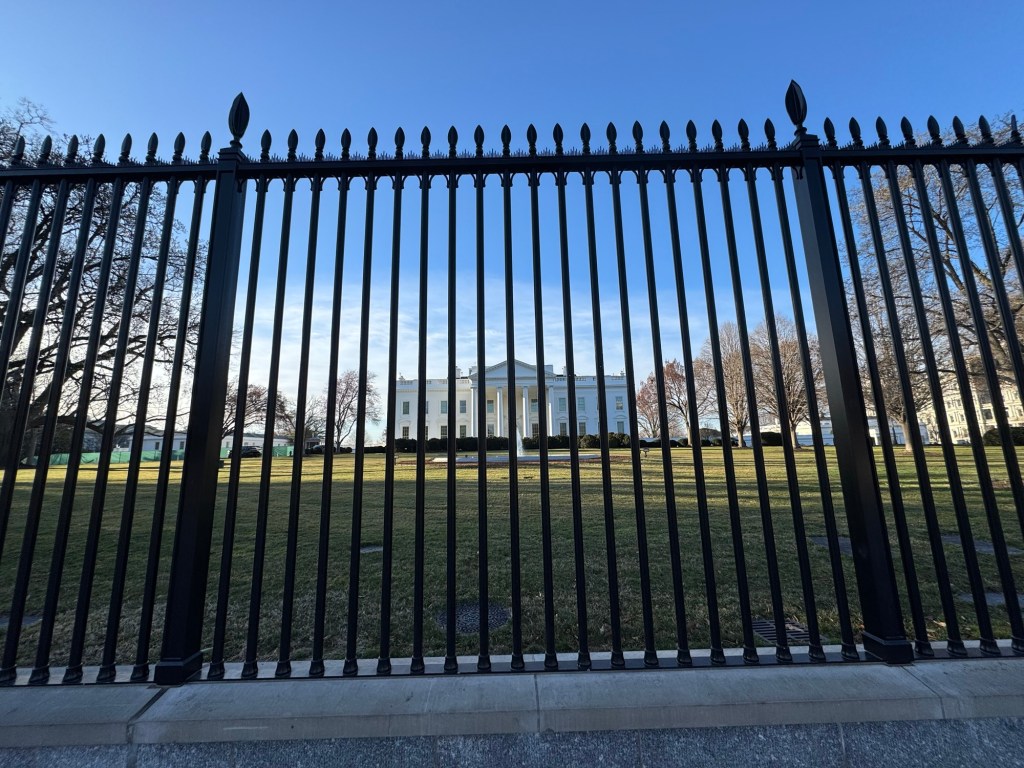
White House fence, DC, 2025

In March 2025, a coalition of organizations and individuals who work on government transparency and accountability in the United States respectfully requested the Open Government Partnership (OGP) to immediately place the United States government under review for actions contrary to the principles and policies of the partnership. 

The OGP Steering Committee declined to do so, citing lack of precedent in its letter, despite the USA repeatedly acting “contrary to process” in the design & implementation of the 4th & 5th U.S. National Action Plans from 2017 to 2023.

In a new letter transmitted today, Daniel Schuman, and Alexander B. Howard, founder of this very publication, filed an addendum identifying instances of the Trump administration violating the principles of the Open Government Partnership, as requested by the OGP Secretariat. 

We once again respectfully requested the OGP Steering Committee formally trigger a response policy case regarding the United States’ departure from OGP values.

It is our view that the U.S. government should have remained under review after the Trump administration openwashed participation, submitted a weak, prebaked plan, and made a mockery of good governance during the pandemic in 2020. 

The Biden administration’s failed consultation and similarly weak, prebaked plan did not right the ship of state over the past four years. Instead, the President directed public attention, news media reporting, state capacity, and global government participation to the “Summit for Democracy,” and deprived OGP domestically of all of them. 

In effect, former President Biden and his advisors created a weaker multistakeholder initiative without a secretariat, steering committee, independent review mechanism, or policies for membership, co-creation, implementation, review, or suspension, which has now been relegated to history.

While the Open Government Secretariat and Open Government Advisory Committee were founded by the Biden administration in 2023 and 2024, to address serious deficiencies in process and outcomes, enabling a more robust co-creation process for the 6th NAP, both Secretariat and Advisory Committee were dissolved in 2025. 

The GSA is now misrepresenting US government activity, falsely claiming on its website that there is a “current plan” and that staff are “leading reporting on existing commitments in existing national action plans” (none since 2024), “conducting engagement sessions with civic organizations and members of federal, state, and local governments” (none since 2024), and “actively collaborating with the public (no evidence). 

The OGP Steering Committee should recognize that unprecedented actions in the USA require a more robust response than continued silence and inaction. Thank you to everyone who continues to serve in our union and around the world.

U.S. National Archives reminds all officials that public records on Signal must be preserved under the law

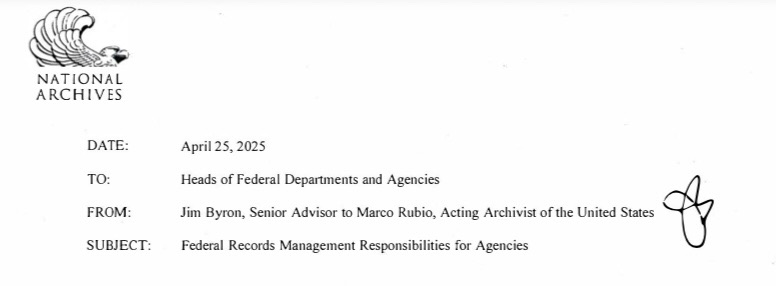
On April 25, 2025, the senior advisor to the acting Archivist of the United States (AOTUS) sent a memorandum to the heads of federal departments and agencies on the management responsibilities they have with respect to electronic messages that constitute public records.

In the memorandum (below), Jim Byron, Senior Advisor to Secretary Marco Rubio, Acting AOTUS, reminds agencies the obligation all officials have to memorialize official business conducted on a personal device or account by forwarding or copying an official account with the electronic correspondence.

Byron observes that “the use of the auto-delete function on digital messaging applications may prevent agency officials from meeting this critical obligation, possibly resulting in the permanent loss of federal records,” but this conflicts common sense.

The memorandum does not reference the March 25, 2025 guidance from the White House to staff at the U.S. DOGE Service, which is far clearer.

That policy emphasizes that “the basic rule is to preserve all work-related communications and records, regardless of format.” 

Messages that constitute public business that are sent on personal devices and on Signal must be archived, which means any auto-delete feature in the app should be disabled, not enabled by default — including those in the chat Acting Archivist Rubio was on with the National Security Advisor.


Screenshot of NARA memo header

Federal Records Management Responsibilities for Agencies

Congratulations to all of you on your recent appointments to federal service.

I write to make you aware of resources that are available to you and your employees regarding records management in your agencies.

All federal employees create and manage records as an integral part of their responsibilities in performing agency missions. Federal records protect the rights and interests of the public, allow officials to be held accountable for their actions, and document our nation’s history. Also, good records management helps your agency operate more effectively and efficiently.

It is crucial agency heads work with their Senior Agency Official for Records Management and Agency Records Officers to communicate the importance of their records management responsibilities to all staff, including political appointees.

Together, federal agencies and the National Archives work toward government transparency, public engagement, and accountability by promoting our obligations under the Federal Records Act (FRA). The FRA, at 44 U.S.C. § 3101, charges you, as the agency head, with creating and preserving federal records containing adequate and proper documentation of the agency’s activities so that the legal and financial rights of the Government and individuals affected by the agency’s activities are protected.

The emergence of —and increasing reliance upon — new forms of electronic communication can make records management more challenging, but no less important. The FRA imposes strict requirements on the use of personal accounts to conduct agency business. If any agency employee uses a personal account to engage in official business, they must copy an official account or forward their message to an official account within 20 days. 44 U.S.C. § 2911.

The use of the auto-delete function on digital messaging applications may prevent agency officials from meeting this critical obligation, possibly resulting in the permanent loss of federal records.

It is thus vital that you ensure staff are properly trained on their FRA obligations. Agency heads must ensure that their records management programs provide effective control over the creation and maintenance of records, 44 U.S.C. § 3102, and safeguard against the removal or loss of records, 44 U.S.C. § 3105.

We encourage you to take prompt action to ensure that your recordkeeping policies are up-to-date, and that they adequately educate agency staff how to create, maintain, and dispose of federal records, especially when using third-party apps. Additional details about the appropriate maintenance of electronic records, including metadata retention requirements, can be located at 36 CFR Part 1236.

Questions related to FRA compliance may also arise when agencies transfer their functions to other agencies. Agencies must ensure that:

Paper and electronic records are properly identified and segregated from non-records, as those terms are defined by federal law;

Temporary paper and electronic records are only disposed of in accordance with a NARA-approved agency-specific or General Records Schedule; and

Paper and electronic records are transferred to another federal entity, inactive storage, or NARA only in accordance with the procedures outlined in 36 CFR Parts 123 | to 1235.

NARA will be issuing additional guidance and resources to assist agencies with fulfilling their records management responsibilities when consolidating and reorganizing.

Thank you for your attention to these matters. If you have any questions about your agency’s records management responsibilities or would like to discuss anything further, I invite you to contact William Fischer, Acting Chief Records Officer at NARA, at william.fischer@nara.gov.

cc

Senior Agency Officials for Records Management Agency Records Officers

General Counsels

Why the Trump White House is neither the most transparent nor most accessible ever

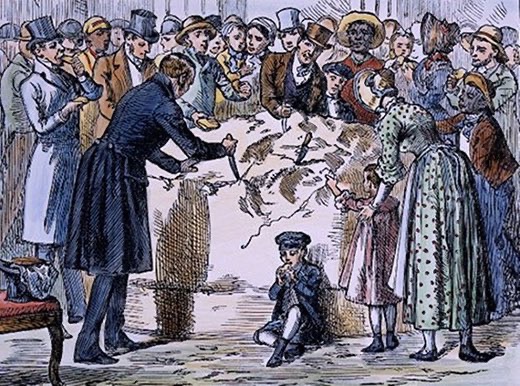
188 years ago, President Andrew Jackson had a 1,400-pound block of cheddar cheese brought to the foyer of the White House and opened the People’s House to thousands of Americans to talk with him and his staff. That remains the “most accessible” White House ever.

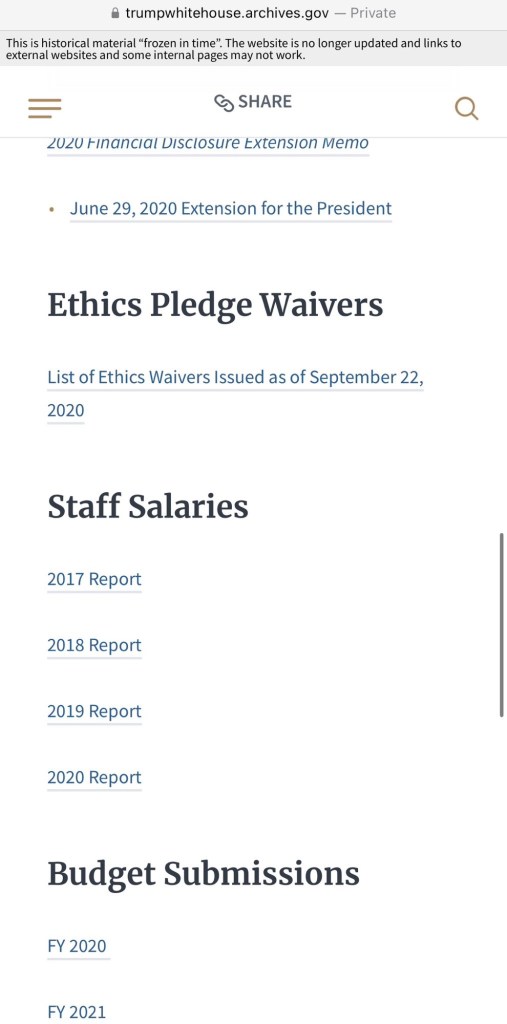
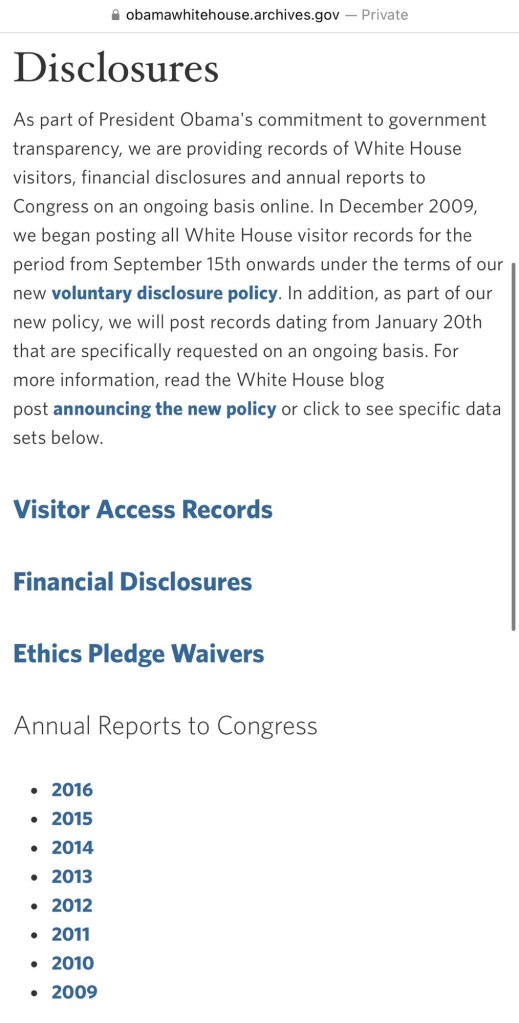
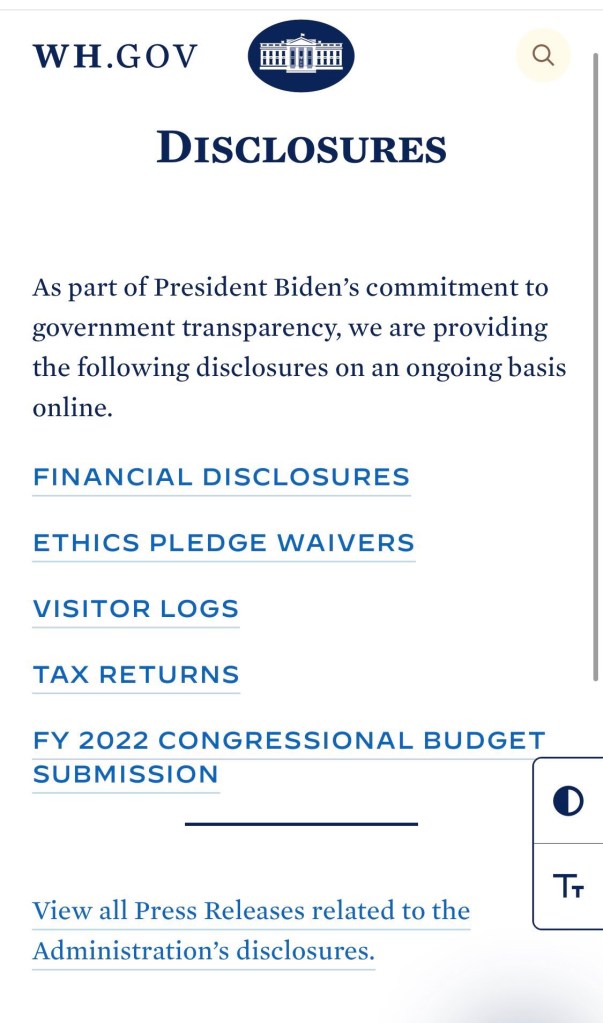
In 2025, the Trump White House isn’t disclosing visitor logs, ethics waivers, financial records, or presidential tax returns.

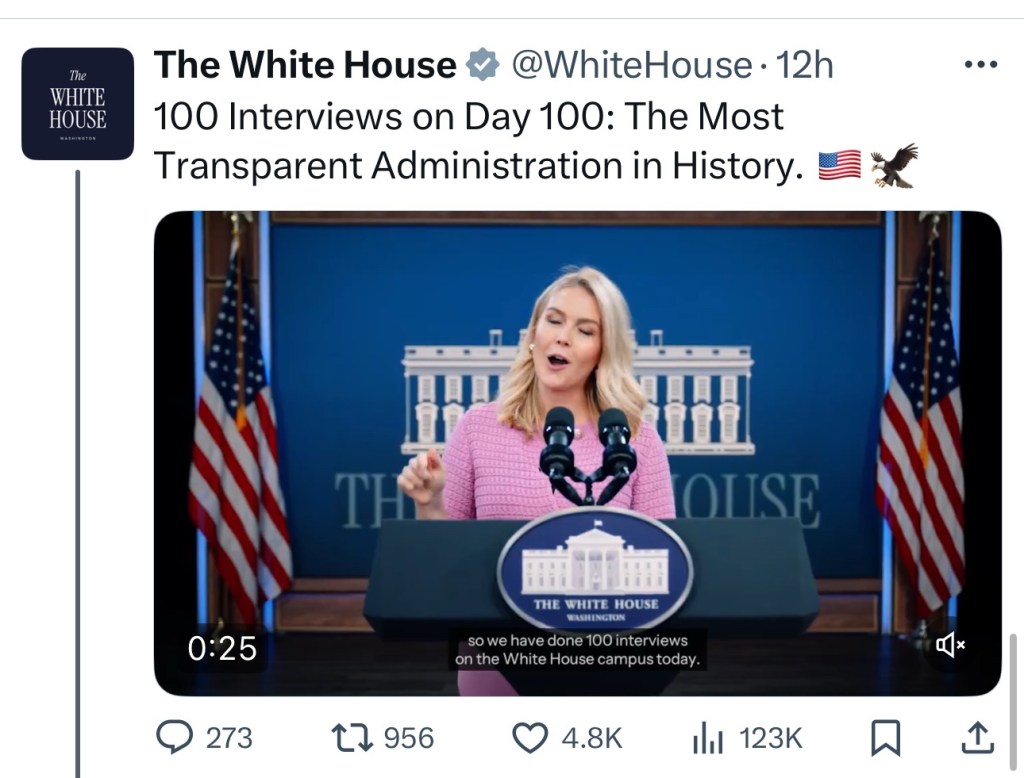
Propaganda on state social media

The record shows the Press Secretary’s claim that they are the “most transparent White House in history” to be false.

Interviews with dozens of friendly influencers doesn’t make a White House historicallly transparent.

Disclosing open data, reports, and discussions an administration do not have to post helps.

Forcing staff to sign nondisclosure agreements… doesn’t. Nondisclosure agreements in the Trump White House were an unconstitutional restraint on the free expression of public servants. NDAs alone invalidated historic claims of transparency.

If this White House is using NDAs, renewed claims of historic transparency are even more ludicrous.

The “most transparent administration in history” would honor the Presidential Records Act and fire a National Security Advisor who set records to auto-delete in a Signal chat, not tolerate lawlessness.

Why the Open Government Partnership is failing to have a positive impact in the United States

On Monday morning, I read Daniel Schuman’s excellent newsletter focused on the First Branch of the United States government, which included a section that collected several notable developments in the open government space. These updates include: 

  1. The launch of the General Services Administration (GSA) Open Government Secretariat’s new website. This website replaces the now defunct page at open.usa.gov — which not to be confused with the GSA’s old and degraded open government website at GSA.gov/open which is required under the Open Government Directive. This new website does not list public meetings that were held prior to 2021 in its public engagement section, neatly memory-holing what occurred under the Trump and Obama administrations. (There will continue to be readouts available about that history on this website, however, for as long as it stays online.) I was interviewed about this new open government website for the GSA; I’m sorry to report that it does not include many of the government-wide resources and initiatives I’d requested. Instead, it’s primarily focused on compliance with the Open Government Partnership’s requirements to maintain an online repository of commitments, as is the Secretariat itself. Daniel has curated a useful set of links related to open government that’s more up to date than the GSA page,
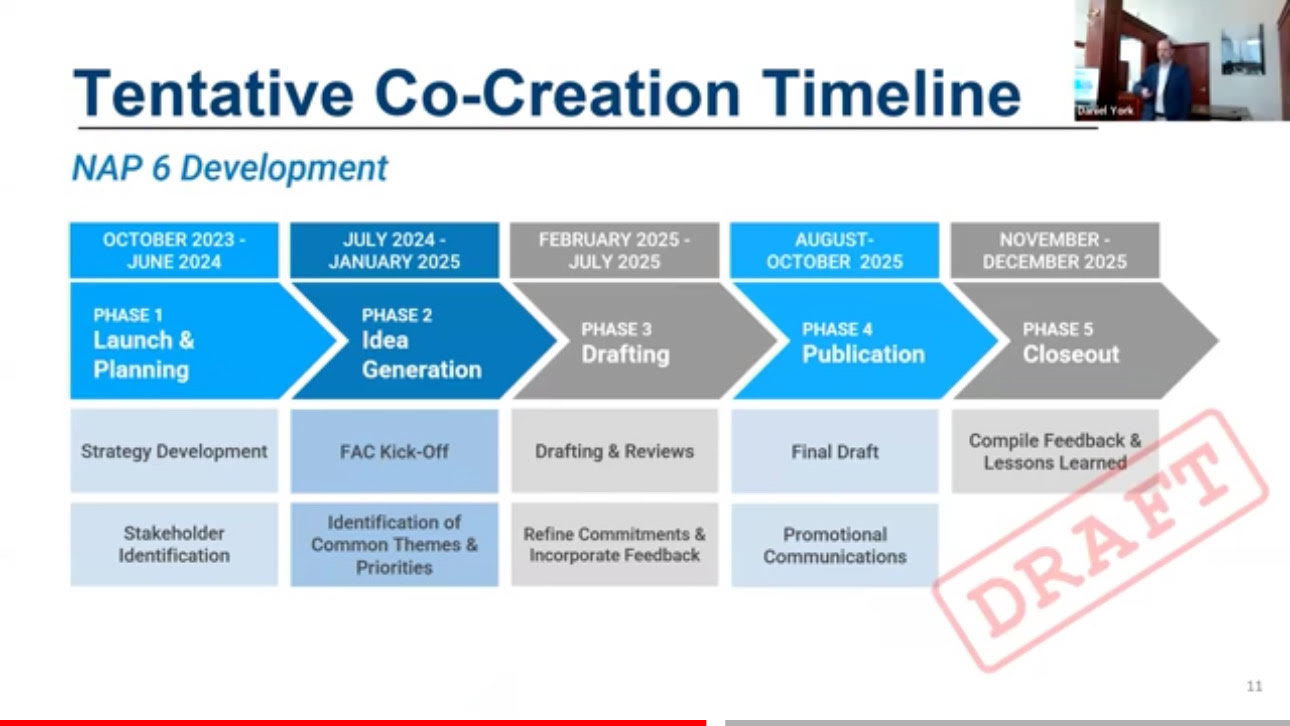
  2. The GSA’s formal Request for Comment on the 6th National Action Plan for Open Government in the Federal Register, with the statement that “the United States Federal Government is initiating the co-creation process for its 6th U.S. Open Government National Action Plan” and seeks feedback by November 16th.
  3. The membership of the new Open Government Federal Advisory Committee, which Daniel now chairs. Speaking at at the iirst meeting of the FOIA Advisory Committee for the 2024-2026 term, Alina Semo, director of the Office of Government Information Services, said that the first public meeting of this new OG FAC will be in October – I believe on the 23rd. That has not been publicly announced, yet.

Generally speaking, this is all good news. I want to highlight a specific issue, however, which is crucial to understanding why the Open Government has not had the positive effects in the United States that people in other nations participating in the global multi-stakeholder initiative have seen: Neither Congress nor the judicial branch has ever been involved. 

Daniel has framed the Secretariat’s efforts as an “executive branch” plan, which isn’t inaccurate within the scope of the mission that has been defined for them by GSA leadership — and presumably this White House:

But saying that OGP is only about the executive branch of the federal government in the United States reflects also a specific design and governance choice that the Obama White House made. That choice has undermined the impact, influence, and relevance of the Partnership in the United States ever since, given that neither the Trump administration nor Biden administration took any action to change it.

I raised this issue in April at the Transparency Caucus briefing in Congress. Jump ahead to 54:30, where I ask if U.S participation in the Open Government Partnership is “doomed” unless we see a President engaging the American people about it and Congress involved.

There are other factors that have led to the ongoing failure of OGP in the United States. The Open Government Partnership commissioned research in 2020 that explored that question and called on the U.S. government to “seize the moment” in spring of 2021, which I participated in. 

Unfortunately, as with the recommendations for how the United States could lead by example that I made in June 2023, few of the policy or process recommendations were adopted by the Biden administration.

Neither Trump nor Biden ever called on all Americans to participate on air, online, or on the world stage using the bully pulpit, online or off. Championship sports teams and athletes have gotten far more presidential recognition – and thus public attention – than open government has since 2016. (Before, too, if we’re being honest, but former President Obama’s participation in a UN event in New York City in 2015 with other world leaders elevated this work far more than anyone since.)

Neither White House ever effectively engaged the American public, press, or media companies about OGP. They never formed partnerships with tech companies or non-government organizations that work on or deploy civic technologies like pol.is, while resetting the official defaults for public communications from the administration to opacity, “on background.”

The Biden White House ignored coalition letters and refused to co-create commitments, revise them, or add new ones based on our priorities.

Instead of “standing with the people demanding transparency” and accountability from our government – as President Biden called on everyone to do in December 2021, presumably including his own administration – the White House has mostly maintained strategic silence, leaving it to an extraordinary public servant – GSA Administrator Robin Carnahan – to gamely lead these efforts without top-down air cover.

The cumulative outcome of leadership, design, and governance choices over the last decade has meant that OGP’s platform or processes have not been a useful platform to reverse low trust and faith in U.S. government, despite the vigorous efforts of civil servants who remained engaged or scrubbed in, in hopes of helping keep it alive in other nations where the visibility was helpful to members of civil society there. 

More than three years on, the future of OGP in the USA still depends on White House leadership — but it will be the next administration that co-creates that future or abandons it — unless President Biden decides to make open governance a priority in the last months of his term with the executive actions we’ve been calling for since he won election in November 2020.   

I look forward to reading more responses to the GSA RFI that explore why OGP hasn’t worked in the USA, which the federal government and philanthropic community can apply to making this work meaningful in the future. No one involved wants to spend more time on an approach to open government that’s flailing.

Now that the GSA has officially kicked off the co-creation process, nongovernmental organizations, the press, and the American public will all need to decide whether legitimizing OGP through our participation is worth or not it in 2025.

The first step is in highlighting why OGP has failed to deliver the results domestically that former President Obama’s “signature good governance” initiative has provided internationally.

If the next President is not willing to reify OGP through their personal participation, making clear that policy, programs, and legislative reforms are on the table, and then acts to expand OGP’s remit to Congress and the courts, set your expectations for impact in the United States accordingly.

In 2021, We the People need a Public Chair to ask the White House public questions and pose petitions

Today, the White House Press Secretary Jen Psaki said that the White House is open to bringing back the “Skype seat” again and to taking questions from it. Psaki noted she took Q’s on Twitter — she then replied to … Continue reading

Why Twitter and Facebook were right to ban President Trump

An overwhelming majority of tech experts surveyed by the Washington Post said that social media companies were correct to suspend former President Donald J. Trump’s accounts after the failed putsch at the U.S. Capitol in January 6, 2021. That includes … Continue reading

Department of Justice Quietly Answers Senate Questions on FOIA Regression

During Sunshine Week in March 2019, members of the Senate Judiciary sent a letter to the Justice Department’s Office of Information Policy (OIP) that asked for information about the state of the Freedom of Information Act, noting a lack of … Continue reading

GREAT Act News: Open Federal Grant Data Is The Default In The USA

Congress has quietly made an open, license-free identifier for the recipients of federal grants the default option for agencies in the United States. While truly open grant data is not mandatory, every agency must now decide whether to use non-proprietary … Continue reading