Samantha Power: Transparency has gone global

Innovations in democratic governance have been and likely always will be a global phenomenon. Samantha Power, senior director and special assistant for multilateral affairs and human rights at the White house, highlighted the ways in which platforms and initiatives for transparency in other countries are growing on the White House blog yesterday.

While “Sunshine Week” may be an American invention, the momentum for greater transparency and accountability in government is a global phenomenon. In countries around the world, governments and civil society groups are taking new and creative steps to ensure that government delivers for citizens and to strengthen democratic accountability.

From Kenya to Brazil to France to Australia, new laws and platforms are giving citizens new means to ask for, demand or simply create greater government transparency. As Power observed, open government is taking root in India, where the passage of India’s Right to Information Act and new digital platforms have the potential to change the dynamic between citizens and the immense bureaucracy.

Power listed a series of global transparency efforts, often empowered by technology, that serve as other useful examples of “innovations in democratic governance” on every continent

  • El Salvador and Liberia recently passed progressive freedom of information laws, joining more than 80 countries with legislation in place, up from only 13 in 1990;
  • A few weeks ago in Paris, six new countries from Europe, Africa, Central Asia, and the Middle East met the high standards of the Extractive Industries Transparency Initiative (EITI), empowering citizens with unprecedented information about payments made for the extraction of natural resources;
  • Brazil and South Africa are pioneering innovative tools to promote budget transparency and foster citizen engagement in budget decision-making, along with tens of other countries that are making budget proposals and processes open to public input and scrutiny;
  • Civil society groups are developing mechanisms to enable citizens to keep track of what happens in legislatures and parliaments, including impressive web portals such as votainteligente.cl in Chile and mzalendo.com in Kenya; and
  • Experiments in citizen engagement in Tanzania, Indonesia, and the Philippines, are demonstrating that citizen efforts to monitor the disbursement of government funds for education, health, and other basic services, actually decrease the likelihood of corruption and drive better performance in service delivery.

There’s a long road ahead for open government here in the United States. While improving collaboration and transparency through open government will continue to be difficult nuts to crack, it looks like “Uncle Sam” could stand to learn a thing or two from the efforts and successes of other countries on transparency. Addressing FOIA reform and better mobile access to information are two places to start.

For more on how open government can have a global impact, click on over to this exclusive interview with Samantha Power on national security, transparency and open government.

National Archives hosts Open Government R&D Summit

Whether the White House can foster innovation through open government is up for debate. Last December, the President’s Council of Advisers on Science and Technology (PCAST) emphasized the importance of establishing an R&D agenda for open government in a report.

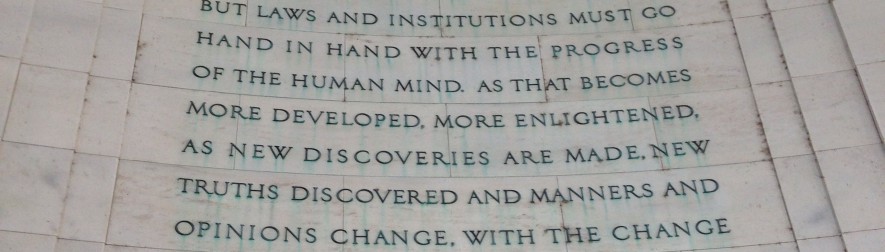
This week in Washington, D.C., the National Archives is hosting an Open Government Research and Development Summit. Collaborative innovation in open government is a notion that goes back to Thomas Jefferson. Whether open models for science can lead to better outcomes in research in the 21st Century is the question of the day. You can follow the liveblog of the event below.

Day 2 Liveblog

Day 1 Liveblog

For more details, here are the organizing notes:

The summit will set the foundation for a robust R&D agenda that ensures the benefits of open government are widely realized, with emphasis on how open government can spur economic growth and improve the lives of everyday Americans. This will be the first opportunity for researchers, scholars, and open government professionals to begin a discussion that will continue at academic centers throughout the country over the next few years.”

Government innovators will talk about openness in the context of education, health, and economic policy, and international open government. Speakers include Aneesh Chopra, U.S. Chief Technology Officer, Todd Park, Chief Technology Officer of the U.S. Department of Health and Human Services (HHS), and David Ferriero, Archivist of the United States.

Panelists made up of scholars, activists, and present and former policymakers will then discuss the important research questions that researchers must grapple with in order to ensure lasting success in the open government space. Panels will discuss issues such as how to safely release data without creating mosaic effects. Panelists include Jim Hendler (Rensselaer Polytechnic Institute), Noshir Contractor (Northwestern University), Archon Fung (Harvard University), Chris Vein (U.S. Deputy Chief Technology Officer), Beth Noveck (New York Law School), and Susan Crawford (Yeshiva University).

The National Archives and Records Administration (NARA) and Networking and Information Technology Research and Development (NITRD) are hosting this summit, with support from the MacArthur Foundation.

Workshop agenda: click here
Participant Information Packet: click here

Video of federal chief technology officer Aneesh Chopra is embedded below. [Editor’s Note: Apparently the way that iPhone 4 accelerometer interacted with the video meant that the video didn’t shift to landscape mode after the shift. Apologies to viewers, who may find this one better to listen to, unless you prefer to put the laptop or screen on edge.]

Part II:

OMB Watch finds progress on open government, long road ahead

As Sunshine Week comes to a close in Washington, OpenTheGovernment.org is hosting an event at the Center for American Progress on the Road forward for open government. Here’s the context for the event:

Two years ago President Obama committed his Administration “to creating an unprecedented level of openness in Government.” Toward this end, the Administration has issued policy changes: a new Memorandum on Freedom of Information Act and Attorney General Guidelines, a new Executive Order (EO) on Classified National Security Information, and a new EO on Controlled Unclassified Information. To help meet the goal of embedding openness in the government, the Administration also has taken steps to make information more available and usable by the public, including setting up Data.gov andrequiring agencies to draw up plans to hard-wire openness into the way the government operates. Agencies have taken up the challenge, but more needs to be done.

Transparency experts from inside and outside of the federal government government are focusing upon how initiatives are being put into practice and what the next steps will be. You can watch the event live online at CAP or at OpenTheGovernment.org.

OMBWatch is presenting findings from a new report on assessing progress towards a 21st century right to know, embedded below:

We’re sorry, your browser doesn’t support IFrames. You can still visit this item., however.
Enlarge this document in a new window or tab
Powered by YUDU


The first panel, with David S. Ferriero, Archivist of the United StatesSteven P. Croley, Special Assistant to the President for Justice and Regulatory Policy, White House Domestic Policy Council, and Gary Bass, Executive Director, OMB Watch, is focused upon the policy aspects of the Obama administration’s Open Government Initiative.

The second panel is focused upon the role technology plays in the way people get and use information, how the government is trying to fill that need, and the strengths and limitations of the Administration’s approach. Panelists include Jennifer LaFleur, Director of Computer-Assisted Reporting at ProPublica ; Tom Lee, Director of Sunlight Labs at the Sunlight Foundation; and Sheila Krumholz, Executive Director of the Center for Responsive Politics, and Todd Park, Chief Technology Officer, U.S. Department of Health and Human Services.

The US CIO goes to the white board to describe good government

Earlier this week, United States CIO Vivek Kundra turned to the White House whiteboard to talk about sunshine, savings and service. If you’re unfamiliar with Kundra, he’s the man who has proposed and now is entrusted with implementing sweeping federal IT reform. One of the tools he’s been applying to the task is the so-called IT dashboard, which helps the White House Office of Management and Budget, where he serves to track IT spending. He claims to have reduced federal IT spending by some $3 billion dollars over the past two years with increased tracking and scrutiny.The federal CIO explains more about the results from that work, below.

http://www.whitehouse.gov/sites/all/modules/swftools/shared/flash_media_player/player5x2.swf

UPDATE: As open data consultant Dan Morgan pointed out, however, the Government Accountability Office reported that while OMB has made improvements to its dashboard, “further work is needed by agencies and OMB to ensure data accuracy.”

…inaccuracies can be attributed to weaknesses in how agencies report data to the Dashboard, such as providing erroneous data submissions, as well as limitations in how OMB calculates the ratings. Until the selected agencies and OMB resolve these issues, ratings will continue to often be inaccurate and may not reflect current program performance. GAO is recommending that selected agencies take steps to improve the accuracy and reliability of Dashboard information and OMB improve how it rates investments relative to current performance and schedule variance. Agencies generally concurred with the recommendations; OMB did not concur with the first recommendation but concurred with the second. GAO maintains that until OMB implements both, performance may continue to be inaccurately represented on the Dashboard.

One question left unanswered: Is /good the new /open? Decide for yourself at the newGood Government” section at WhiteHouse.gov.

Improving open government oversight through FOIA reform

The Freedom of Information Act is one of the primary levers by which journalists, government watchdogs and other organizations can hold the United States government accountable. Today in Washington, the U.S. House of Representatives Committee on Oversight and Government Reform held a hearing on “The Freedom of Information Act: Crowd-Sourcing Government Oversight.
Full House Oversight and Reform Committee

The testimony of the witnesses made it clear that major issues persist with the cost, mechanism and compliance with FOIA requests made to government agencies.

Public information should be online in real time, said Representative Darrell Issa (R-CA) (@DarrellIssa), chairman of the committee.

His prepared statement provided context for the focus of the hearing:

The Freedom of Information Act (“FOIA”) is one of the most important tools for government transparency and accountability. It permits the private-sector, the media, watchdog groups, and the general public to scrutinize the activities of federal agencies – from the telephone logs and email correspondence of federal employees to internal memoranda, transcripts, and meeting minutes.

Minus a few specific exemptions designed to protect narrowly-defined privacy concerns, national security and law enforcement matters, claims of executive privilege and trade secrets, information about the government’s work is required by law to be publicly accessible. Indeed, every federal agency, commission, department and corporation – as well as the White House itself – falls under FOIA’s expansive authority.

Representative Elijah Cummings (D-MD) defended the record of the Obama administration on open government and quoted President James Madison in his opening statement:

A popular government without popular information or the means of acquiring it, is but a prologue to a farce, or a tragedy, or perhaps both. Knowledge will forever govern ignorance, , and a people who mean to be their own governors, must arm themselve with the power knowledge gives.”

Rep. Cummings introduced a new bill today, entitled the “Transparency and Openness in Government Act.” (As of the time this post went live, it was not in Thomas.gov yet.) According to Rep. Cummings, the bill would make federal commissions more transparent, increase access to records, ensure government email records were preserved and improve GAO access to govt records. The legislation includes five bills that passed the House during the 111th Congress:

  • The Federal Advisory Committee Act requires agencies to disclose more information about advisory committees and closes existing loopholes;
  • The Presidential Records Act increases public access to White House records by establishing statutory procedures prior to FOIA releases;
  • The Presidential Libraries Donation Reform Act mandates greater public disclosure of library donor information;
  • The Electronic Message Preservation Act modernizesthe Federal Records Act and the Presidential Records Act to ensure that White House and agency e-mail records are preserved;
  • The GAO Improvement Act strengthens the authority of the Government Accountability Office to access agency records.

Transparency shouldn’t be a partisan issue, emphasized Cummings.

Miriam Nisbit of OGIS

The committee heard from a distinguished panel of witnesses, including Miriam Nesbit, the director of the Office of Government Information Services (OGIS) at the National Archives and Records Administration. OGIS opened in September 2009 and acts as an ombudsman for FOIA request. “OGIS encourages a more collaborative, accessible FOIA for everyone,” said Nisbet.

While both witnesses and congressmen recognized that the Department of Justice launched FOIA.gov at the outset of Sunshine Week, “there is the awkward fact the Justice Department’s own FOIA backlog has not been reduced in the past year,” observed Daniel Metcalfe, executive director of Collaboration on Government Secrecy.

The costs of FOIA are part of that story. “In 2010, agencies reported nearly $400 million to process FOIA requests,” testified Rick Blum of SunshineInGovernment.org.

There’s also the issue of agencies and officials claimed exemptions to requests. Blum noted that for Sunshine Week, ProPublica created a searchable database of FOIA exemptions.

These claimed exemptions extend to the White House. Tom Fitton of Judicial Watch challenged the Secret Services’ contention that visitor logs are not subject to FOIA.

While the Project of Government Oversight’s Angela Canterbury gave the administration credit for proactive information release at USASpending.gov, Data.gov, Recovery.gov and FOIA.gov, she acknowledged that “if FOIA is the yardstick for openness, then we haven’t gotten very far yet.”

The issue lies is in the default towards secrecy versus openness. “Too often, overt secrecy has not only impaired the promise of FOIA but also has put the American people at risk,” said Canterbury.

That said, Daniel Metcalfe did offer recognition of President Obama’s elevation of open government in his administration, including a speech at the United Nations where openness was highlighted in an “unprecedented” way.

The written testimony of the witnesses is linked below. Video of the hearing will be available through the tireless efforts of citizen archivist Carl Malamud at House.Resource.org later in the week.

At the @NASATweetup, @Astro_Wheels shares the view from space

http://storify.com/digiphile/nasa-tweetup-with-astrowheels-shares-the-view-from.js

The Smithsonian goes virtual at SXSWi

In the face of adversity, Gov 2.0 will find a way. This morning, the Smithsonian’s director of Web and new media strategy, Michael Peter Edson, was unable to attend the Innovating and Developing with Libraries, Museums, and Archives panel at SXSW Interactive, 2011. Instead of leaving a hole in the program, he created a video about his work, below, and tweeted out links to the Smithsonian Commons, the Smithsonian Web and New Media Strategy and a presentation on prototyping. Enjoy.

Michael Edson: Prototyping the Smithsonian Commons

:

Making open government data visualizations that matter

Every month, more open government data is available online. Local governments are becoming data suppliers. Open healthcare data is spurring better decisions. There’s a tremendous amount of activity in open data – but there’s a long road ahead for open government. At the SXSW Interactive Festival in Austin, Texas, Jeremiah Akin and Michael Castellon made a case for “why visualizing government data makes taxpayers happy.”

The expectation of transparency is creating demand for government agencies to develop new ways to communicate complex data and trends to the public in easy-to-access and easy-to-understand formats.

Some agencies are turning to Google Maps and KML data to visualize raw information online and on mobile devices. Delivering data in more easily understandable formats not only boosts trust and confidence between government agencies and their publics, but also streamlines workloads among Data, Web, Editorial, and Customer Service teams.

The two men talked about how the Texas Comptroller is using public-facing maps to communicate with the public, including to the rapidly increasing numbers of citizens accessing government websites from mobile devices.

The utility of open government data can be quite concrete, as when live tsunami data is used to help save lives. It can also help people to understand more about the virtual lines in their towns and cities. In Texas, ClaimItTexas.org shows unclaimed property in Lone Star State.

Mobile transparency

The Texas Transparency Map is also available for touchscreen mobile devices and for tablets. That’s no accident: Akin said that mobile traffic to the site up four-fold since lat year.

“We’re seeing a lot more mobile access,” he said. “If we want to make it available on multiple devices, we need to create in a way that can be displayed.” That insight is a crucial one, and reverberates far beyond the government sphere. By choosing to develop non-native Web applications written in HTML5, Javascript and JSON, this cohort of Texas government avoided “Shiny App Syndrome.” Next steps include support for street level detail, Google Fusion tables, and geolocation.

Putting open government data to work

“Open government data has been used for a long time,” said Akin, citing the use of census data in newspapers. A new class of new media journalism is putting data to use in innovative ways, pointed out Castellon. “The Texas Tribune is one of the leaders in data visualization,” he said, which helps citizens to make sense of government data.

The key here, emphasized Akin, is that is not just enough to simply dump data. You need ways to visualize it and make it meaningful as information. “There’s a lot of resistance – people have been there, and that’s not how they’ve done things,” he said. “If you make a visualization that makes someone’s job easier pretty soon they start coming back to you.

With better data visualizations and more information, Castellon posited that more problem solving can take place. “When you release data, especiallly with science, education or research, there are stories embedded in that data,” he said.

In this narrative, it’s up to governments to release better, clean data in consumable formats and the evolving art of data journalism to make stories from it that give citizens, businesses and elected officials insight into the complexities of modern life.

Visualizing the future of programmable cities

Technology is fueling new visions for the future of cities. Today at the South by Southwest Interactive festival, a panel considered “Web Mashup Platforms and Future Programmable Cities. NYC chief digital officer Rachel Sterne (@RachelSterne) joined Christine Outram (@cityinnovation), Vlad Trifa (@vladounet) and Dominique Guinard (@domguinard) in exploring how open data, mobile platforms and citizen engagement will shape what comes next in urban life.

Below, visual notes by OgilvyNotes and ImageThink capture the conversation.

n Web Mashup Platforms and Future Programmable Cities

For more on how cities are embracing new platforms and technologies, learn about citizensourcing smarter government in New York City.

[Hat Tip: Rachel Sterne]

Open government scrutinized before the House Oversight Committee

This morning, the Oversight Committee in the United States House of Representatives held a hearing on the Obama administration’s open government efforts. The “Transparency Through Technology: Evaluating Federal Open-Government Initiatives hearing was streamed live online at oversight.house.gov.

House Oversight Chairman Darrell Issa (R-CA) asked his Twitter followers before the hearing a simple question “Have you tried to get facts on how gov’t spends your $ on USASpending.gov?” He received no answers.

The oversight committee did, however, hear extensive testimony from government IT executives and open government watchdogs. As Representative Issa probes how agencies balance their books, such insight will be crucial, particularly with respect to improving accountability mechanism and data. Poor data has been a reoccurring theme in these assessments over the years. Whether the federal government can effectively and pervasively apply open data principles appears itself to be open question.

The first half of the hearing featured testimony from Dr. Danny Harris, chief information officer for the Department of Education, Chris Smith, chief information officer for the Department of Agriculture, Jerry Brito, senior research fellow at the Mercatus Center at George Mason University and Ellen Miller, co-founder and executive director of the Sunlight Foundation.

Alice Lipowicz of Federal Computer Week tweeted out a few data points from the hearing.

  • A Sunlight Foundation audit found that the USDA spent $12.7B on school lunches but only reported $250,000 on USASpending.gov
  • According to Brito, “half of 3000 datasets on Data.gov are on EPA toxic releases, with only 200 to 300 datasets are on fed gov activity.” Lipowicz also tweeted that Brito testified that federal agencies need outside auditors and “ought to report ‘earnings’ similar to private sector.”
  • USDA CIO Chris Smith said that the agency did not report school lunch payments below $25,000 to USASpending.gov; will report in FY2012

In her testimony before the House committee on clearspending, Miller reiterated the position of the Sunlight Foundation that the efforts of the administration to make government spending data open, accurate and available have been insufficient, particularly when the data is wrong.

The Sunlight Foundation has been excited about the new promises of data transparency, but sometimes the results are nowhere near the accuracy and completeness necessary for the data to be useful for the public.

Sunlight’s Clearspending analysis found that nearly $1.3 trillion of federal spending as reported on USASpending.gov was inaccurate. While there have been some improvements, little to no progress has been made to address the fundamental flaws in the data quality. Correcting the very complicated system of federal reporting for government spending is an enormous task. It has to be done because without it there is no hope for accountability.

Miller made several recommendations to the committee to improve the situation, including:

  • unique identifiers for government contracts and grants
  • publicly available hierarchical identifiers for recipients to follow interconnected entities
  • timely bulk access to all data.

Her remarks ultimately reflect the assessment that she made at last year’s Gov 2.0 Summit, where she made it clear that open government remains in beta. Our interview is below:

Tracking the progress of the Open Government Directive requires better data, more auditors and improved performance metrics. That said, this looks like the year when many of the projects at agencies will move forward towards implementation.

Last month, the U.S. moved forward into the pilot phase of an open source model for health data systems as the fruits of the Direct Project came to Minnesota and Rhode Island. The Direct Project allows for the secure transmission of health care data over a network. Some observers have dubbed it the Health Internet, and the technology has the potential to save government hundreds of millions of dollars, along with supporting the growth of new electronic health records systems .Open source and open government have also come together to create OpenStack, an open cloud computing platform that’s a collaboration between NASA, Rackspace, Cisco and a growing group of partners.

It’s too early to judge the overall effort open government as ultimately a success or failure. That said, the administration clearly needs to do more. In 2011, the open question is whether “We the people” will use these new participatory platforms to help government work better.

Video of the hearing will be posted here when available. Testimony from today’s hearing is linked to PDFs below.

Dr. Danny Harris

Chris Smith

Jerry Brito

Ellen Miller

The Honorable Danny Werfel

Note: Video of the hearing was provided through the efforts of citizen archivist Carl Malamud at house.resource.org, the open government video website that he set up in collaboration with Speaker Boehner and Congressman Issa. While the open government efforts of the federal government have a long way to go, in this particular regard, a public-private collaboration is making the proceedings of the House Oversight committee available to the world online.