

G8: the Internet has become the public arena for our time

President Barack Obama and other world leaders walk to the first working session at the G8 summit in Deauville, France, May 26, 2011. Pictured, from left are: European Commission President Jose Manuel Barroso; President Obama; French President Nicolas Sarkozy; Canadian Prime Minister Stephen Harper; Japanese Prime Minister Naoto Kan; German Chancellor Angela Merkel; and British Prime Minister David Cameron. May 26, 2011. (Official White House Photo by Official White House Photo by Lawrence Jackson)

President Barack Obama and other world leaders walk to the first working session at the G8 summit in Deauville, France, May 26, 2011. Pictured, from left are: European Commission President Jose Manuel Barroso; President Obama; French President Nicolas Sarkozy; Canadian Prime Minister Stephen Harper; Japanese Prime Minister Naoto Kan; German Chancellor Angela Merkel; and British Prime Minister David Cameron. May 26, 2011. (Official White House Photo by Official White House Photo by Lawrence Jackson)

At this year’s meeting of the “Group of 8” (G8) nations in France, a declaration about the Arab Spring included a “Deauville Partnership” with the people of the Middle East to support the growth of “democratic, open societies and inclusive economic modernisation.”

For the first time, the 2011 G-8 Summit included discussion of the Internet as a top-level issue, alongside the ongoing conflict in Libya, economic growth, nuclear safety, climate change, foreign aid and national security.

The G8 released an official communique that pledging renewed commitment for freedom and democracy that included a substantial section on the Internet. The communique included this summary of the principles discussed:

We discussed new issues such as the Internet which are essential to our societies, economies and growth. For citizens, the Internet is a unique information and education tool, and thus helps to promote freedom, democracy and human rights. The Internet facilitates new forms of business and promotes efficiency, competitiveness, and economic growth. Governments, the private sector, users, and other stakeholders all have a role to play in creating an environment in which the Internet can flourish in a balanced manner. In Deauville in 2011, for the first time at Leaders’ level, we agreed, in the presence of some leaders of the Internet economy, on a number of key principles, including freedom, respect for privacy and intellectual property, multi-stakeholder governance, cyber-security, and protection from crime, that underpin a strong and flourishing Internet. The “e-G8” event held in Paris on 24 and 25 May was a useful contribution to these debates.

That eG8 showed that online innovation and freedom of expression still need strong defenders. Some of the concerns will be assuaged in this communique.

While the body of the communique is comprised of high level principles and does not contain specific prescriptions, it does not specifically reference to international human rights laws or a “freedom to connect,” an exception that supporters of free expression like Article 19 have criticized as unsufficient. In addition, paragraph 15, below, renews a “commitment to ensuring effective action against violations of intellectual property rights in the digital arena, including action that addresses present and future infringements” that may obliquely refer to the Anti-Counterfeiting Trade Agreement, or “ACTA,” that the Electronic Frontier Foundation and others have expressed concerns about as it has moved through drafting stages.

That said, there is much in the official communique about the Internet that celebrates its power and choices that have driven its growth, including:

  • “The openness, transparency and freedom of the Internet have been key to its development and success. These principles, together with those of non-discrimination and fair competition, must continue to be an essential force behind its development.”
  • “The Internet has become the public arena for our time, a lever of economic development and an instrument for political liberty and emancipation. Freedom of opinion, expression, information, assembly and association must be safeguarded on the Internet as elsewhere. Arbitrary or indiscriminate censorship or restrictions on access to the Internet are inconsistent with States’ international obligations and are clearly unacceptable. Furthermore, they impede economic and social growth.

Coming on a week when Iran vowed to unplug the Internet, disconnecting Iranian citizens from the rest of the world, holding up those principles is both timely and notable. The full section of the communique regarding the Internet follows.

II. INTERNET

4. All over the world, the Internet has become essential to our societies, economies and their growth.

5. For citizens, the Internet is a unique information and education resource and thus can be a helpful tool to promote freedom, democracy and human rights.

6. For business, the Internet has become an essential and irreplaceable tool for the conduct of commerce and development of relations with consumers. The Internet is a driver of innovation, improves efficiency, and thus contributes to growth and employment.

7. For governments, the Internet is a tool for a more efficient administration, for the provision of services to the public and businesses, and for enhancing their relations with citizens and ensuring respect for and promotion of human rights.

8. The Internet has become a major driver for the global economy, its growth and innovation.

9. The openness, transparency and freedom of the Internet have been key to its development and success. These principles, together with those of non-discrimination and fair competition, must continue to be an essential force behind its development.

10. Their implementation must be included in a broader framework: that of respect for the rule of law, human rights and fundamental freedoms, the protection of intellectual property rights, which inspire life in every democratic society for the benefit of all citizens. We strongly believe that freedom and security, transparency and respect for confidentiality, as well as the exercise of individual rights and responsibility have to be achieved simultaneously. Both the framework and principles must receive the same protection, with the same guarantees, on the Internet as everywhere else.

11. The Internet has become the public arena for our time, a lever of economic development and an instrument for political liberty and emancipation. Freedom of opinion, expression, information, assembly and association must be safeguarded on the Internet as elsewhere. Arbitrary or indiscriminate censorship or restrictions on access to the Internet are inconsistent with States’ international obligations and are clearly unacceptable. Furthermore, they impede economic and social growth.

12. The Internet and its future development, fostered by private sector initiatives and investments, require a favourable, transparent, stable and predictable environment, based on the framework and principles referred to above. In this respect, action from all governments is needed through national policies, but also through the promotion of international cooperation.

13. We commit to encourage the use of the Internet as a tool to advance human rights and democratic participation throughout the world.

14. The global digital economy has served as a powerful economic driver and engine of growth and innovation. Broadband Internet access is an essential infrastructure for participation in today’s economy. In order for our countries to benefit fully from the digital economy, we need to seize emerging opportunities, such as cloud computing, social networking and citizen publications, which are driving innovation and enabling growth in our societies. As we adopt more innovative Internet-based services, we face challenges in promoting interoperability and convergence among our public policies on issues such as the protection of personal data, net neutrality, transborder data flow, ICT security, and intellectual property.

15. With regard to the protection of intellectual property, in particular copyright, trademarks, trade secrets and patents, we recognize the need to have national laws and frameworks for improved enforcement. We are thus renewing our commitment to ensuring effective action against violations of intellectual property rights in the digital arena, including action that addresses present and future infringements. We recognize that the effective implementation of intellectual property rules requires suitable international cooperation of relevant stakeholders, including with the private sector. We are committed to identifying ways of facilitating greater access and openness to knowledge, education and culture, including by encouraging continued innovation in legal on line trade in goods and content, that are respectful of intellectual property rights.

16. The effective protection of personal data and individual privacy on the Internet is essential to earn users’ trust. It is a matter for all stakeholders: the users who need to be better aware of their responsibility when placing personal data on the Internet, the service providers who store and process this data, and governments and regulators who must ensure the effectiveness of this protection. We encourage the development of common approaches taking into account national legal frameworks, based on fundamental rights and that protect personal data, whilst allowing the legal transfer of data.

17. The security of networks and services on the Internet is a multi-stakeholder issue. It requires coordination between governments, regional and international organizations, the private sector, civil society and the G8’s own work in the Roma-Lyon group, to prevent, deter and punish the use of ICTs for terrorist and criminal purposes. Special attention must be paid to all forms of attacks against the integrity of infrastructure, networks and services, including attacks caused by the proliferation of malware and the activities of botnets through the Internet. In this regard, we recognize that promoting users’ awareness is of crucial importance and that enhanced international cooperation is needed in order to protect critical resources, ICTs and other related infrastructure. The fact that the Internet can potentially be used for purposes that are inconsistent with the objectives of peace and security, and may adversely affect the integrity of critical systems, remains a matter of concern. Governments have a role to play, informed by a full range of stakeholders, in helping to develop norms of behaviour and common approaches in the use of cyberspace. On all these issues, we are determined to provide the appropriate follow-up in all relevant fora.

18. We call upon all stakeholders to combat the use of Internet for trafficking in children and for their sexual exploitation. We will also work towards developing an environment in which children can safely use the Internet by improving children’s Internet literacy including risk awareness, and encouraging adequate parental controls consistent with the freedom of expression.

19. We recognize the importance of enhanced access to the Internet for developing countries. Important progress has been achieved since the Okinawa Summit and we pay tribute to the efforts made by developing countries in this regard as well as the various stakeholders, governments, the private sector and NGOs, which provide resources, expertise and innovation. We encourage initiatives, in partnership with the private sector, on the use of the Internet with a development purpose, particularly for education and healthcare.

20. As we support the multi-stakeholder model of Internet governance, we call upon all stakeholders to contribute to enhanced cooperation within and between all international fora dealing with the governance of the Internet. In this regard, flexibility and transparency have to be maintained in order to adapt to the fast pace of technological and business developments and uses. Governments have a key role to play in this model.

21. We welcome the meeting of the e-G8 Forum which took place in Paris on 24 and 25 May, on the eve of our Summit and reaffirm our commitment to the kinds of multi-stakeholder efforts that have been essential to the evolution of the Internet economy to date. The innovative format of the e-G8 Forum allowed participation of a number of stakeholders of the Internet in a discussion on fundamental goals and issues for citizens, business, and governments. Its free and fruitful debate is a contribution for all relevant fora on current and future challenges.

22. We look forward to the forthcoming opportunities to strengthen international cooperation in all these areas, including the Internet Governance Forum scheduled next September in Nairobi and other relevant UN events, the OECD High Level Meeting on “The Internet Economy: Generating Innovation and Growth” scheduled next June in Paris, the London International Cyber Conference scheduled next November, and the Avignon Conference on Copyright scheduled next November, as positive steps in taking this important issue forward.

Episode 4 of Gov 2.0 TV: Open Government News and the eG8

At At the eG8, 20th century ideas clashed with the 21st century economy. The inaugural eG8 forum, held in Paris before the G-8 summit of global leaders, showed that online innovation and freedom of expression still need strong defenders. As Nancy Scola reported at techPresident, at the at the eG8, civil society groups restaked their claim to the ‘Net.

I talked with Walter Schwabe of FusedLogic.tv about the eG8 in this week’s episode of Gov 2.0 TV, along with the news of cuts to U.S. federal open government websites. Federal CIO Vivek Kundra will shutter FedSpace and keep Data.gov up.

President Sarkozy at the eG8 Summit [VIDEO]

Today, the eG8 is considering the future of the Internet and society in Paris, in advance of the G-8 Summit. President Nicolas Sarkozy opened the summit after an introduction by Maurice Lévy, Chairman & CEO, Publicis Groupe, holding up the power of the Internet but emphasizing the role of the state in providing security, privacy and protection for intellectual property. Video is embedded below:

The moment that many may remember from the question and answer period that followed was when professor Jeff Jarvis asked President Sarkozy whether he’d take a “Hippocratic oath” to “first, do no harm” when making policy choices that affect the Internet.

Related coverage at the Guardian: Sarkozy opens eG8 Summit

With a new road map, New York City aims to be the nation’s premier digital city

Today, New York City released its strategy to use technology to improve productivity, save money, attract startups and upgrade the services it provides to citizens. That’s a tall order, but then New Yorkers have rarely been know to think small or dream moderately.

“We want New York City to be the nation’s premier digital city – in how local government interacts with New Yorkers, in how New Yorkers have access to and capitalize on new technologies, and in how our tech and digital media sectors evolve, grow businesses and create jobs,” Mayor Michael Bloomberg said in a statement. His office released an official statement digital roadmap at MikeBloomberg.com. “NYC’s #digitalroadmap has 4 goals: access, open government, citizen engagement & expanding NYC’s digital job growth,” tweeted Bloomberg after the announcement.

Nick Judd secured an advance copy of NYC’s road map to the digital city over at techPresident, which I’ve embedded below, and has this analysis of some of the important bytes.

There are no explicit plans in the report for increasing the number of available datasets — such as more detailed city budget data — but do include an “apps wishlist” to streamline the process of requesting more data.

Implementing the recommendations in the report will in large part be the responsibility of city Department of Information Technology and Telecommunications Commissioner Carole Post, who is already in the process of pushing internally for updated city IT.

Archived video of today’s announcement by Mayor Bloomberg and NYC chief digital officer Rachel Sterne (which was, appropriately, livestreamed online) is embedded below.

Watch live streaming video from nycgov at livestream.com

While some media outlets will focus on NYC embracing Twitter, Facebook and Foursquare as digital partners, a notable aspect of today’s news that may fly under the radar may be that NYC.gov will be adding APIs for Open311, its open data mine and other Web efforts. Those are the open government pillars that will support New York City’s effort to architect a city as a platform. For more on how New York City is citizensourcing smarter government, head on over to Radar.

Social media will play a role in the months ahead. When Adam Sharp, Twitter’s government guy, tweeted out the Wall Street Journal above, he highlighted a feature that melds social media with old school mobile technology: the use of “Fast Follow,” a function that goes back to Twitter’s earliest days.

“New Yorkers who want to follow @nycgov by SMS can text “follow nycgov” to 40404. No @Twitter acct or computer needed,” tweeted Sharp.

That means that every resident with a phone call can receive updates from the city’s official account. It will be interesting to see if city government advertises that to its residents over the coming months, particularly in areas where Internet penetration rates are lower.

Anil Dash, native New Yorker, blogger and entrepreneur, highlighted something important in the plan that transcended any particular initiative, technology or policy: it captures New York City government thinking about the Web as a public space.

It’s an extraordinary document, and as someone who loves the web, civic engagement, public infrastructure and New York City, it feels like a momentous accomplishment, even though it marks the beginning of a years-long process, not just the end of a months-long one.

But the single biggest lesson I got from the 65-page, 11.8mb PDF is a simple one: The greatest city in the world can take shared public spaces online as seriously as it takes its public spaces in the physical world.

As you’d expect, there’s a press release about the Digital Road Map, but more reassuringly, the document demonstrates the idea of the web as public space throughout, making the idea explicit on page 43:

Maintaining digital ‘public spaces’ such as nyc.gov or 311 Online is equally important as maintaining physical public spaces like Prospect Park or the New York Public Library. Both digital and physical should be welcoming, accessible, cared for, and easy to navigate. Both must provide value to New Yorkers. And for both, regular stewardship and improvements are a necessity.

New York City’s road map for a digital city plan is embedded below. You also can download the digital city roadmap as a PDF.

NYC ODC 90day Report 5-15C(function() { var scribd = document.createElement(“script”); scribd.type = “text/javascript”; scribd.async = true; scribd.src = “http://www.scribd.com/javascripts/embed_code/inject.js”; var s = document.getElementsByTagName(“script”)[0]; s.parentNode.insertBefore(scribd, s); })();

UPDATE: There are some concerns about what happens next out there in the community. New York City resident and director of the CUNY Mapping Service at the Graduate Center of the City University of New York (CUNY) Steven Romalewski also listened in on the announcement and blogged his concerns about ‘open data fatigue“:

I always worry when I see the city touting its technology efforts without also including local Community Boards, neighborhood groups, business advocates, urban planners, other elected officials, etc. who rely on access to public data so they can hold government accountable and do their jobs better. In my view, these groups need the data moreso than app developers. That is why open data efforts and policies are so important.

But the city seems more focused on apps than on community. I understand the economic development appeal of fostering startups. But the open data movement long predated apps.  I highlighted this in my post last year (see the “Misplaced Priorities” section).

Apps are great (I use them constantly, and I’ve even developed one myself). And kudos to the city and its agencies for responding to app developers and making data more open so the developers can do great things with the data (things even the city might not do).

I just hope the latest announcements by the city will result in more real and lasting efforts to make data easier to access than the latest check-in craze. The Mayor already expressed some hesitation to making data accessible when a reporter asked him about CrashStat. CrashStat is a great example of my point — it wasn’t created to be an “app” per se; it’s an effort by a local nonprofit group to use public data to educate the public and hold government agencies more accountable about traffic injuries and fatalities. But the Mayor said he didn’t even know what CrashStat was, while making excuses about not making data available if it’s not in electronic format, or needs to be vetted, or is “sensitive”.  Blah blah blah – we’ve heard all that before and it undermines my confidence in the city’s pronouncements that more data will really be made open.

Gov 2.0 gets applied in Oklahoma [#Gov20a]

In the Gov 2.0a conference going on today and tomorrow in Oklahoma, the “a” stands for “applied,” as in implementing technology, processes and people strategy to make government work better. There should be some video going up later, along with pictures from Adriel Hampton and a blog post or three from from the attendees. Until that goes online, the tweetstream has told the best tale of what’s been happening at the conference. I used Storify to chronicle the story online.

http://storify.com/digiphile/gov20a-gov-20-goes-to-oklahoma.js[View the story “Gov20a: Gov 2.0 Goes to Oklahoma” on Storify]

Todd Park and Tim O’Reilly on collaboration and healthcare [VIDEO]

What if open health data were to be harnessed to spur better healthcare decisions and catalyze the extension or creation of new businesses? That potential future exists now, in the present.

Todd Park, chief technology officer of the Department of Heath and Human Services, has been working to unlock innovation through open health data for over a year now. On many levels, the effort is the best story in federal open data. In the video below, he talks with my publisher, Tim O’Reilly, about collaboration and innovation in the healthcare system.

PHARM FRESH: Todd Park and Tim O’Reilly Discuss How Collaboration Leads To Healthcare Innovation from Zemoga on Vimeo.

The next big event in this space on June 9 at the NIH. If you’re interested in what’s next for open health data, track this event closely.

[Hat tip: PharmFresh]

Open Government Camp: Sunlight’s tools for transparency

So this one time, at Transparency Camp

I’m still thinking through all of the things I learned at the Sunlight Foundation’s annual unconference last weekend. My top level takeaway was the large number of international campers solidified that transparency has gone global. At an operational level, I thought that the Sunlight Foundation used the combination of Internet and mobile technology to organize better than any of the previous unconferences I’ve attended. They raised the bar for interactivity with a new mobile app, integrated displays and livestreaming.

Putting the tools together to bring off a big camp is a lot harder than listing them, but by sharing the tools for transparency that the organizers used, Scott Stadum did the open government community a mitzvah. While that mobile app required development time and expertise, the vast majority of these tools are free on the Web.

Here’s a quick rundown of the tools that were used during Transparency Camp 2011:

Great stuff.

Stadum did forget one tool, even as he used it: the Sunlight Foundation’s blog.

From where I sit, a well designed and maintained blog continues to be extremely useful as the hub for organizing, particularly in a Web application ecosystem that supports the kind of diversity in platforms listed above. Sunlight does a great job with that, and in using it as a platform to track news that matter, like open government data.

Thanks again to the organizers, sponsors, hosts and, most of all, the attendees of Transparency Camp, who taught me a lot about open government over the course of two days.

Taking stock of global freedom of expression on World Press Freedom Day

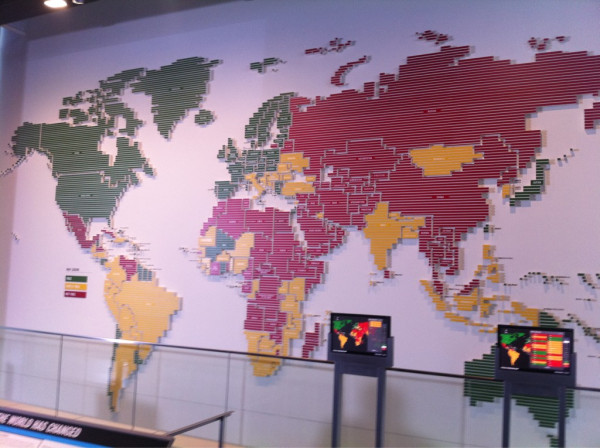
In 2010, only 1 in 6 people lives in countries with a free press, according to a new report on press freedom from Freedom House. There is a long road ahead to establishing and protecting freedom of expression for humanity.

This week, defenders of free expression are celebrating the progress of press freedom and recognizing the challenges that persist globally on World Press Freedom Day 2011. This is the 20th anniversary of the Windhoek Declaration that helped to establish UNESCO’s World Press Freedom Day. The United States is hosting this year’s World Press Freedom Day in Washington, D.C. at the Newseum. You can watch the livestream below and follow the conversation on Twitter on the #wpfd hashtag, both of which are embedded below.

wpfd2011 on livestream.com. Broadcast Live Free

new TWTR.Widget({
version: 2,
type: ‘search’,
search: ‘#wpfd OR #pressfreedom’,
interval: 6000,
title: ‘What\’s happening on’,
subject: ‘World Press Freedom Day’,
width: ‘auto’,
height: 500,
theme: {
shell: {
background: ‘#004382’,
color: ‘#ffffff’
},
tweets: {
background: ‘#ffffff’,
color: ‘#444444’,
links: ‘#1985b5’
}
},
features: {
scrollbar: false,
loop: true,
live: true,
hashtags: true,
timestamp: true,
avatars: true,
toptweets: true,
behavior: ‘default’
}
}).render().start();

To learn more about global freedom of expression and and the organizations that protect journalists and support the collection and dissemination of news about our world, visit:

Kicking off Transparency Camp 2011 with 3 words [#tcamp11]

Today in Washington, Transparency Camp is back in session. As with every unconference, each attendee introduced him or herself with three words that describes what they do, what they care about or what they work on. The frequency of those words is shown in the Transparency Camp 2011 wordle below.

Transparency Camp 2011 Wordle

Transparency Camp 2011 Wordle

You can follow the conversation on Twitter on the #tcamp11 hashtag:

http://widgets.twimg.com/j/2/widget.js

new TWTR.Widget({
version: 2,
type: ‘search’,
search: ‘#tcamp11’,
interval: 6000,
title: ‘What\’s happening at’,
subject: ‘Transparency Camp 2011’,
width: ‘auto’,
height: 400,
theme: {
shell: {
background: ‘#000675’,
color: ‘#ffffff’
},
tweets: {
background: ‘#ffffff’,
color: ‘#444444’,
links: ‘#1985b5’
}
},
features: {
scrollbar: false,
loop: true,
live: true,
hashtags: true,
timestamp: true,
avatars: true,
toptweets: true,
behavior: ‘default’
}
}).render().start();

Some sessions will be livestreamed at TransparencyCamp.com. Sessions will be updated on a new mobile website at m.tcamp.us. Check back for a report from Transparency Camp 2011 tomorrow.

White House Office of Management and Budget hosts forum on federal IT reform

Last December, the White House proposed sweeping IT reforms. Today in Washington, the nation’s top IT executives will discuss progress on those proposals and assess the challenges that lie ahead. The livestream is embedded below:

http://www.whitehouse.gov/sites/default/modules/wh_multimedia/EOP_OVP_player.swf

This morning, President Obama issued an executive order streamlining service delivery and improving customer service.

Government managers must learn from what is working in the private sector and apply these best practices to deliver services better, faster, and at lower cost. Such best practices include increasingly popular lower-cost, self-service options accessed by the Internet or mobile phone and improved processes that deliver services faster and more responsively, reducing the overall need for customer inquiries and complaints. The Federal Government has a responsibility to streamline and make more efficient its service delivery to better serve the public.”

The White House Office of Management and Budget’s Jeff Zients, the national chief performance officer, will talk about productivity and efficiency enabled by information technology. As the Washington Post reported, Zients will unveil a new customer service initiative this afternoon as well.

According to Politico’s Morning Tech, federal “CIO Vivek Kundra will offer an update on the administration’s IT plans; Deputy Energy Secy Daniel Poneman will focus his remarks on cloud use and adoption; Deputy USDA Secy Kathleen Merrigan will chat about data centers; VA’s Roger Baker will discuss the administration’s plans to eliminate or revise underperforming IT projects and DHS CIO Richard Spires will outline efforts to set up IT best practices.”

More to come as the event goes forward.

Editor’s Note: The White House livestream went down about 18 minutes in and then went on and off. Unfortunately, as this correspondent did not attend in person, other first accounts will have to capture much of what occurred.