Fauxpen data, open data and bridging the data divide

My Ignite talk from the Strata Conference in NYC is online.

Comments welcome, as ever.

Update: In the context of fauxpen data, beware “openwashing:” Simply opening up data is not a replacement for a Constitution that enforces a rule of law, free and fair elections, an effective judiciary, decent schools, basic regulatory bodies or civil society — particularly if the data does not relate to meaningful aspects of society. Adopting open data and digital government reforms is not quite the same thing as good government, although they certainly can be and are related, in some cases.

If a country launches an open data platform but deprecates freedom of the press or assembly, questions freedom of information laws or restricts the ability of government scientists to speak to the public, is it adopting “open government” — or doing something else?

This is the ambiguity of open government and open data that Harlan Yu and David Robinson wrote about in 2012. Expect it to be the subject of more “takedowns” in the 2013.

Code for America Summit showcases civic innovation [LIVEBLOG]

What began as an idea just over two years ago is now a reality: a citizen corps of designers and programmers who committed to a year-long fellowship to Code for America. Today in San Francisco, the inaugural Code for America Summit will highlight the year past, look to the year ahead and convene a conversation around four core topics that will be familiar to people who have been following the story of Gov 2.0: citizen participation, data-driven decision making, co-Creation and co-stewardship, government as a platform. The SPUR Center is packed with civic innovators from all around the country and buzzing with energy. My liveblog is below.

Day 2

Code for America Summit (Day 2)

Day 1

Code for America Summit

Chicagobuildings.org maps vacant and abandoned buildings using open government data

One of the minds behind the Look at Cook open government data visualization app is at it again. Derek Eder wrote in this week to share another Web app he just launched (ChicagoBuildings.org) and a reminder about what’s happening in Chicago in this space.

This Web app takes 311 reports about vacant and abandoned buildings from the Chicago and visualizes them onto a searchable map. “It’s specifically set up to pull data from Chicago’s data portal,” said Eder, linking to the 311 service requests of vacant and abandoned buildings dataset.

Eder shared more about how mapping Chicago’s vacant buildings in a blog post earlier this week. The results are unsurprising: there are many more vacant buildings in areas with high poverty rates.

Eder said that the app could be used by other cities, depending on how they store or format their data. The code for
Chicago Buildings is on Github. On that front, he says that Chicago “isn’t using Open 311 yet, so this site isn’t either. That being said, it wouldn’t be too hard to hook up the same interface to a different data source.” Code for America will help Chicago to implement Open311 in 2012. Eder shared that he wrote a script that converts Socrata to Google Fusion Tables that could be modified for this purpose.

ChicagoBuildings.org is one of a growing number of civic applications that have come out of Chicago’s open government initiative. As Eder made sure to point out, his app is a finalist in the Apps for Metro Chicago contest, along with 9 other apps, including iFindItChicago and Techno Finder.

In the video below, Elizabeth Park, the creator of IFindit Chicago, talks about how she was inspired to build the team that created an Android app to help homeless and lower income citizens find resources like as shelters, medical clinics,and food pantries.

Voting for the winners ends this Friday, October 14th, so check out the community round entries and weigh in.

As a reminder: If you have open government news to share, you can always find me at @digiphile on Twitter, where I share my email address, alex@oreilly.com.

How should Regulations.gov be using social media?

The Internet offers new opportunities to involve the public in regulatory rulemaking, including industry, media, nonprofits and citizens. A new social layer for the Web has shifted what’s possible in open government forward again, both hosting and enabling conversations. Below, one of those conversations is captured using the social media curation tool, Storify.

http://storify.com/digiphile/how-should-regulationsgov-be-using-social-media.js[View the story “How should Regulations.gov be using social media?” on Storify]

White House and House GOP turns to the Web to discuss jobs

It’s a tale of two parties, two social networks, live events and high stakes: creating jobs in an American economy still struggling to come out of recession. Would the American Jobs Act, introduced by President Obama earlier this month, make a difference? Can the White House or Congress do anything to create jobs, aside from directly hiring more government workers for infrastructure projects or similar initiatives? The American people will have the opportunity to hear from both sides of the aisle today and judge themselves, starting at 2 PM EST when the president will participate in a town hall hosted at LinkedIn in California.

UPDATE: Archived video from President Obama’s LinkedIn townhall is embedded below:

Notably, there will still be a live chat on Facebook at a LinkedIn townhall, along with a public “backchannel” at the #meetopportunity hashtag on Twitter.

This is the second time that the White House experiments with LinkedIn for questions, following a forum earlier this year with tech CEOs and federal CTO Aneesh Chopra. The questions are pulled from a “putting America back to work forum on LinkedIn.com. As I’ve observed before, the platform isn’t ideal for ideation and moderation of questions but LinkedIn is unquestionably targeted towards employment.

Personally, I’d like to see CEO Jeff Weiner crunch the big data the social network has collected about job openings and the skills and degrees that high school and college grads currently have. Programs and policies oriented towards matching the two would be an interesting direction.

UPDATE: Here are the questions that were asked:

UPDATE: Below is a “storified” tweetstream from the event:

[<a href=”http://storify.com/deborapetersen/obama-at-linkedin” target=”blank”>View the story “Obama and Linkedin” on Storify]</a>
 

House GOP Leaders discuss technology, transparency and jobs

At 6 PM EST, the leaders of the Republican caucus in the U.S. House of Representatives will also host an online townhall, though they’ll be doing it on Facebook Live. The event will feature House Majority Leader Eric Cantor of Virginia, Majority Whip Kevin McCarthy of California and Budget Committee Chairman Paul Ryan of Wisconsin. Facebook COO Sheryl Sandberg will moderate.

Prior to today’s event, the House GOP leaders participated in a discussion about the role social media and technology now plays in government with Politico’s senior White House correspondent, Mike Allen. Video is below:

In the interview, the House GOP’s “Young Guns” spoke at length about the role that new social and mobile technology plays in the work of Congress and government, touching upon many subjects that will be of interest to the open government community.

Such interest is hardly new — the new GOP majority came into the House with promises to embrace innovation and transparency— but given the importance of open government, it’s a useful reminder that open government is a bipartisan issue.

If you have thoughts or comments on either of the town halls or the discussion above, please share them in the comments.

UPDATE: The archived video of this congressional “Facehall” is embedded below:

UPDATE: A Storify of my own tweets during the event is embedded below:

[<a href=”http://storify.com/digiphile/house-gop-leaders-join-sheryl-sandberg-for-faceboo” target=”blank”>View the story “House GOP leaders join Sheryl Sandberg for Facebook townhall” on Storify]</a>

The Internet will ask (some of) the questions in the Fox News/Google Republican debate

On September 22, the Republican candidates for president will be in Orlando, Florida for the next debate. Unlike the last debate, where moderators from NBC and Politico chose the questions, Google-Fox News debate will use Google Moderator and YouTube to bubble up questions from the Internet. Questions can be submitted as text or video through the Fox News YouTube channel. The deadline is September 21st. The video embedded below introduces the concept:

Fox News anchor Brett Baer explains the process below and encourages people to submit questions “creatively” — which means that former Massachusetts governor Mitt Romney could potentially be confronted by a YouTube snowman of the sort he didn’t care much for in 2007.

For good or ill, that kind of question in that kind of costume is likely to be part of the warp and weft of presidential politics in the 21st century. President Obama’s Twitter townhall” featured several questions from people with quirky account names or avatars. Bringing YouTube into the discussion will allow even more self expression and, while Fox News has the ability not to broadcast a video, millions of connected Americans can go watch the videos themselves if they choose. At the moment, the top-rated questions are substantive ones:

Baltimore empowers citizens to act as sensors with new mobile apps, open 311

This past weekend, citizens acted as important sensors as Hurricane Irene washed up the East Coast of the United States, sharing crisis data as the storm moved through their communities and damage reports in its wake.

Baltimore has embraced the open 311 standard with a new 311 API and take a major step forward towards a collaborative approach to reporting issues with the launch of new mobile applications for the iPhone and Android  devices.

“The new 311 Mobile App allows citizens to have real-time collaboration with their government,” said Mayor Rawlings-Blake in a prepared statement. “If you see a pothole, graffiti, or a broken streetlight, you can see it, shoot it, and send it to us — we have an app for that!”

As Philip Ashlock highlighted at Civic Commons in a post on open 311 in Baltimore, the city has a long history with 311:

The City of Baltimore has a long history of leading the way with 311. In 1996, they were the first city to deploy the 311 short code and unified call center, and in 1999, the city launched CitiStat, pioneering the use of statistics based performance management. Now both of these innovations can be amplified by a much more open and collaborative relationship between Baltimoreans and their government through Open311.

Ashlock highlighted another key detail about the integration of the standard by Motorola, which was crucial in DC and San Francisco, the first cities in the U.S. to embrace the Open311 standard.

The launch of Baltimore’s Open311 apps and API was aided by the fact that they were able to leverage the Open311 compliant solutions provided by Motorola CSR and Connected Bits. Baltimore CIO Rico Singleton went as far as to say that their choice of software solutions was influenced by the interoperability provided by the standard.

There are a limited number of citizens who have the time, expertise, passion and education to go clean up public data. There are quite a few more who will report issues in the neighborhoods they live in or work near and share what they see. This kind of mobile networked accountability is going to be a big deal in Africa, Asia and South America very soon. We’ve been seeing early versions of it emerge already during disasters, man-made and otherwise.

With the launch of more mobile applications that connect citizens to existing systems for accountability, city governments are empowering citizens to act as sensors, connecting the real world to the Internet and creating positive feedback loops. That’s good news for Baltimore and beyond.

MySociety launches FixMyTransport to solve transit problems with microactivism

Over in the United Kingdom, MySociety had launched FixMyTransport, a Web application to help citizens solve persistent public transit issues.

According to Tom Steinberg, FixMyTransport is the biggest project for MySociety since they launched WhatDoTheyKnow in 2008.

“This is a huge accomplishment — a nationwide UK system for individuals to document and report problems with any kind of public transportation system,” wrote CivicCommons executive director Andrew McLaughlin this morning. “MySociety has figured out how to route every kind of report to the responsible agency (or even person) — “the service works everywhere in Great Britain, our database has over 300,000 stops and routes for train, tube, tram, bus, coach and ferry.” Great design and interface. Congratulations, +Tom Steinberg and team!”

“We’ve never before launched a site that took so much work to build, or that contained so much data,” writes Steinberg at the MySociety blog, where he explained more about what it’s for. (The emphasis below is mine.)

FixMyTransport has two goals – one in your face, and the other more subtle.

The first goal, as the site’s name suggests, is to help people get common public transport problems resolved. We’re talking broken ticket machines, gates that should be open and stations without stair-free access. We’ll help by dramatically lowering the barrier to working out who’s responsible, and getting a problem report sent to them – a task that would have been impossible without the help of volunteers who gathered a huge number of operator email addresses for us. Consequently the service works everywhere in Great Britain, our database has over 300,000 stops and routes for train, tube, tram, bus, coach and ferry.

The second goal – the subtle one – is to see if it is possible to use the internet to coax non-activist, non-political people into their first taste of micro-activism. Whilst the site intentionally doesn’t contain any language about campaigning or democracy, we encourage and provide tools to facilitate the gathering of supporters, the emailing of local media, the posting of photos of problems, and the general application of pressure where it is needed. We also make problem reports and correspondence between operators and users public, which we have frequently seen create positive pressure when used on sister sites FixMyStreet and WhatDoTheyKnow.

Steinburg goes much deeper into the thinking and process behind FixMyTransport over at Radar today, where he writes about how to create sustainable open data projects with purpose:

I’m not saying it is impossible to hack brilliant things without piles of VC gold. But if you are going to hack something really, genuinely valuable in just a couple of weeks, and you want it to thrive and survive in the real Internet, you need to have an idea that is as simple as it is brilliant. Matthew Somerville’s accessible Traintimes fits into this category, as does FlyOnTime.us, E.ggtimer.com and doodle.ch. But ideas like this are super rare — they’re so simple and powerful that really polished sites can be built and sustained on volunteer-level time contributions. I salute the geniuses who gave us the four sites I just mentioned. They make me feel small and stupid.

If your civic hack idea is more complicated than this, then you should really go hunting for funding before you set about coding. Because the Internet is a savagely competitive place, and if your site isn’t pretty spanking, nobody is going to come except the robots and spammers.

To be clear — FixMyTransport is not an example of a super-simple genius idea. I wish it were. Rather it’s our response to the questions “What’s missing in the civic web?” and “What’s still too hard to get done online?”

As we say here on the Internet, go read the whole thing. If you’re interested in working on stuff making stuff that matters to citizens and make the world a better place, instead of, say, getting them to click on ads, you’ll be glad you did.

As NYC.gov buckles, city government pivots to the Internet to share Hurricane #Irene resources

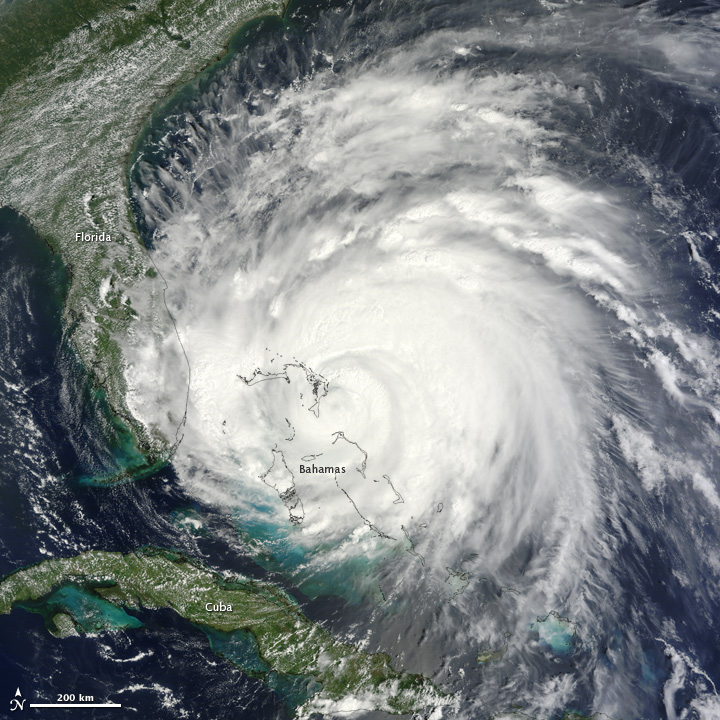
Tens of millions of citizens in the United States are watching as Hurricane Irene churns up the East Coast. If you’re in the path of the immense storm, today is a critical day to prepare. Visit Ready.gov for relevant resources. Unfortunately for citizens in my home state, New York City is right in the path of Hurricane Irene. As many New Yorkers look for information online, however, we’re watching NYC.gov is buckling under demand. For part of Friday morning, NYC.gov would not resolve. The outage is providing a real-time experiment in how a megalopolis with millions of citizens provides information during a natural disaster.

As the Village Voice reported, NYC is evacuating the most vulnerable and putting out advisories but city websites are down. As a result, we’re watching how city government is forced to pivot to the Internet and commercial websites, including social media, to get information out.

Dropbox is hosting a Hurricane #Irene Evacuation PDF (It’s not completely clear if city government uploaded the PDF or not, when this post was published). NYC chief digital officer Rachel Sterne and the official NYC.gov Twitter account have acknowledged and apologized for the outage and pointed citizens to docstoc.com for the official evacuation map:

NYC Hurricane Evacuation Map
http://viewer.docstoc.com/
// http://i.docstoccdn.com/js/check-flash.jsNotably, Mayor Bloomberg’s staff has uploaded the New York City Hurricane Evacuation Zones PDF to his personal website, MikeBloomberg.com, and tweeted it out. We’re in unexplored territory here, in terms of a mayor sharing information this way, but in the context of incoming weather, it’s hard to fault the move, though it’s likely inevitable.. [Ed: As Nick Clark Judd pointed out in his excellent post on how governments are scrambling to deliver information to citizens looking for hurricane information online, Mayor Bloomberg has posted press releases and other information to his website several times before.]

What is clear, amidst growing concerns of a multi-billion dollar disaster, is that the New York City government’s website hosting strategy needs to be revisited. According to Provide Security, NYC servers are hosted in a data center in Brooklyn. Spikes in demand are precisely what cloud computing offers to the private sector and, increasingly, to federal government. As hurricane clouds gather, it’s probably past time for New York government to get familiar into cloudbursting or move quickly implementing internal architectures that include a private cloud, through Nebula or something similar, to handle the load. In the context of disasters, surge capacity for government websites is no longer a “nice-to-have” — it’s a must-have.

UPDATE: Civic technologist Philip Ashlock is mirroring NYC Irene data & links on Amazon Web Services (AWS). Even though NYC didn’t move critical resources to the cloud itself, a member of New York City’s technology community stepped up to help the city and citizens in a crisis. That’s Gov 2.0 in action:

Maps

NYC.gov Hurricane Evacuation Zone Finder
OASIS Map (more info)
ArcGIS Map
hurricane_map_english.pdf 

Raw Data

googleearth_hurricane_zone.kmz 
Shapefiles: OEM_HurricaneEvacCenters_001.zip
Shapefiles: OEM_HurricaneEvacZones_001.zip

Hurricane resources from the Feds

The federal government is providing information on Hurricane Irene at Hurricanes.gov and sharing news and advisories in real-time on the radio, television, mobile devices and online using social media channels. A curated list from the Federal Emergency Management Agency (@FEMA) is embedded below:http://widgets.twimg.com/j/2/widget.js
//

If you use Twitter, a key follow this weekend is FEMA Administrator Craig Fugate, who tweets at @CraigAtFEMA. This morning, Fugate tweeted out a link to new digital tools, including a FEMA Android app and text shortcodes. If you’re at risk, this information is for you. Shayne Adamski, senior manager for digital engagement, blogged the details:

In the new FEMA App, you’ll be able to:

  • Check off the items you have in your family’s emergency kit,
  • Enter your family emergency meeting locations,
  • Review safety tips on what to do before, during and after a disaster,
  • View a map of shelters and disaster recovery centers across the U.S., and
  • Read our latest blog posts.

When we built the app, we kept the disaster survivor in mind, making sure much of the information would be available even if cell phone service isn’t, so you’ll be able to access the important information on how to safe after a disaster, as well as your family emergency meeting locations.

So as Administrator Fugate said, you can download our app today in the Android market, and look for FEMA App for Blackberry version 6 devices and iPhones in the coming weeks.

FEMA Text Messages 

A new and separate service from the new app, our text message updates will allow cell phone users to receive text message updates from FEMA.

  • Text PREPARE to 43362 (4FEMA) to sign up to receive monthly disaster safety tips
  • Text SHELTER + your ZIP code to 43362 (4FEMA) to find the nearest shelter in your area (example: shelter 12345)
    (For availability of shelters and services, contact your local emergency management agency.)
  • Text DRC + your ZIP code to 44362 (4FEMA) to find the nearest disaster recovery center in your area (for example, if you lived in Annandale, Virginia with a Zip Code of 22003, you’d text DRC 22003).

We’re excited to provide these two new ways you can access information on your mobile device, in addition to our already existing mobile site – m.fema.gov. Stay tuned to our blog, Facebook and Twitter channels as we roll out our app to the remaining smartphone operating systems and make enhancements to our text messages program.

So download the app or text PREPARE to 44362, and then leave us a comment and let us know what you think. We encourage you to tell a family member, friend, or neighbor as well, so they can have disaster safety information always at their fingertips.

[Image Credit: NASA Earth Observatory]