President Sarkozy at the eG8 Summit [VIDEO]

Today, the eG8 is considering the future of the Internet and society in Paris, in advance of the G-8 Summit. President Nicolas Sarkozy opened the summit after an introduction by Maurice Lévy, Chairman & CEO, Publicis Groupe, holding up the power of the Internet but emphasizing the role of the state in providing security, privacy and protection for intellectual property. Video is embedded below:

The moment that many may remember from the question and answer period that followed was when professor Jeff Jarvis asked President Sarkozy whether he’d take a “Hippocratic oath” to “first, do no harm” when making policy choices that affect the Internet.

Related coverage at the Guardian: Sarkozy opens eG8 Summit

Architecting a city as a platform [VIDEO]

The 21st century metropolis can be a platform for citizens, government and business to build upon. The vision of New York City as a data platform has been getting some traction of late as the Big Apple’s first chief digital officer, Rachel Sterne, makes the rounds on the conference circuit. In the video below, Sterne gives a talk the recent PSFK Conference where she highlights various digital initiatives that NYC has rolled out.

PSFK CONFERENCE NYC 2011: Rachel Sterne from Piers Fawkes on Vimeo.

During her talk, Sterne talks about “The Daily Pothole,” how NYC is tumbling, QR code technology on building permits, a NYC 311 app and using Twitter, amongst other themes.

For more on how New York City is citizensourcing smarter government, head on over to Radar.

[Hat tip: PSFK]

Todd Park and Tim O’Reilly on collaboration and healthcare [VIDEO]

What if open health data were to be harnessed to spur better healthcare decisions and catalyze the extension or creation of new businesses? That potential future exists now, in the present.

Todd Park, chief technology officer of the Department of Heath and Human Services, has been working to unlock innovation through open health data for over a year now. On many levels, the effort is the best story in federal open data. In the video below, he talks with my publisher, Tim O’Reilly, about collaboration and innovation in the healthcare system.

PHARM FRESH: Todd Park and Tim O’Reilly Discuss How Collaboration Leads To Healthcare Innovation from Zemoga on Vimeo.

The next big event in this space on June 9 at the NIH. If you’re interested in what’s next for open health data, track this event closely.

[Hat tip: PharmFresh]

A little sweat never hurt nobody

The White House partnered with superstar musician Beyoncé Knowles and the National Association of Broadcasters on a “flash workout” that’s actually fun. First Lady Michelle Obama is using it as part of her Lets Move! campaign against child obesity.

The official dance video with Beyoncé and wide selection of teens is, in this thirtysomething correspondent’s opinion, both fun and well edited.

It says something about 2011 that the First Lady of the United States went out and danced around a bit herself.

My favorite video, by far, however, is when Beyoncé showed up and surprised students at PS/MS 161 Don Pedro Albizu Campus in New York City.

I can’t help but wish more celebrities donated their time, passion and interest to inspiring kids to get up and move more. Well played.

Taking stock of global freedom of expression on World Press Freedom Day

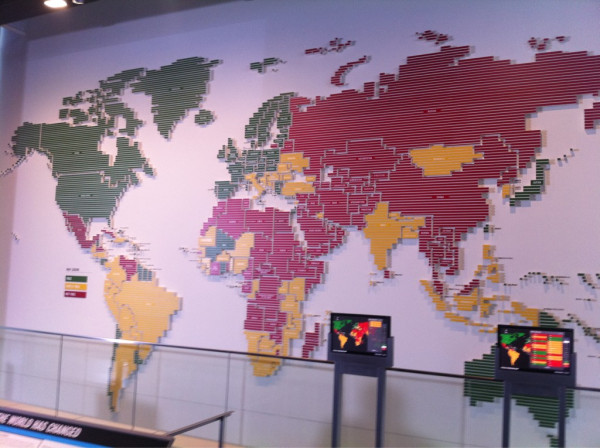
In 2010, only 1 in 6 people lives in countries with a free press, according to a new report on press freedom from Freedom House. There is a long road ahead to establishing and protecting freedom of expression for humanity.

This week, defenders of free expression are celebrating the progress of press freedom and recognizing the challenges that persist globally on World Press Freedom Day 2011. This is the 20th anniversary of the Windhoek Declaration that helped to establish UNESCO’s World Press Freedom Day. The United States is hosting this year’s World Press Freedom Day in Washington, D.C. at the Newseum. You can watch the livestream below and follow the conversation on Twitter on the #wpfd hashtag, both of which are embedded below.

wpfd2011 on livestream.com. Broadcast Live Free

new TWTR.Widget({
version: 2,
type: ‘search’,
search: ‘#wpfd OR #pressfreedom’,
interval: 6000,
title: ‘What\’s happening on’,
subject: ‘World Press Freedom Day’,
width: ‘auto’,
height: 500,
theme: {
shell: {
background: ‘#004382’,
color: ‘#ffffff’
},
tweets: {
background: ‘#ffffff’,
color: ‘#444444’,
links: ‘#1985b5’
}
},
features: {
scrollbar: false,
loop: true,
live: true,
hashtags: true,
timestamp: true,
avatars: true,
toptweets: true,
behavior: ‘default’
}
}).render().start();

To learn more about global freedom of expression and and the organizations that protect journalists and support the collection and dissemination of news about our world, visit:

What is open government data? What is it good for? [FILM]

Open government data broadly refers to public sector records that have been made available to citizens. For a canonical resource on what makes such releases truly “open,” consult the 8 principles of open government data. Today, the Open Knowledge Foundation has released a terrific new short film entitled “#opendata” that offers expert perspectives on what open government data is and how it can be useful to society.

#opendata from Open Knowledge Foundation on Vimeo.

For more information, visit OpenGovernmentData.org. The film has already been translated into Czech, Spanish, Hungarian and Chinese. If you’d like to volunteer to translate it into another language, the makers of the film are actively seeking help.

In the broader context, The Economist‘s support for open government data remains salient today: “Public access to government figures is certain to release economic value and encourage entrepreneurship. That has already happened with weather data and with America’s GPS satellite-navigation system that was opened for full commercial use a decade ago. And many firms make a good living out of searching for or repackaging patent filings.”

In the United States, the open data story in healthcare is particularly compelling, from new mobile apps that spur better health decisions to data spurring changes in care at the Veterans Administration.

As Clive Thompson reported at Wired this month, public sector data can help fuel jobs, “shoving more public data into the commons could kick-start billions in economic activity.” In the transportation sector, for instance, transit data is open government fuel for economic growth.

Thompson focused on the story of Brightscope, where government data drives the innovation economy. “That’s because all that information becomes incredibly valuable in the hands of clever entrepreneurs,” wrote Thompson. “Pick any area of public life and you can imagine dozens of startups fueled by public data. I bet millions of parents would shell out a few bucks for an app that cleverly parsed school ratings, teacher news, test results, and the like.”
 

NYC deputy major Stephen Goldsmith on urban innovation in the Big Apple

I spoke with New York City deputy Mayor Steven Goldsmith (@s_goldsmith) about citizensourcing smarter government in New York City earlier this year. The following interview with CSPAN is worth watching for those interested in further insight into his perspective on urban governance in the 21st century.

John Wonderlich on the aspirations and limitations of open data initiatives

New abilities given to citizens and open government watchdogs through the lens of technology means sunlight can be applied to government transparency in powerful ways. This past weekend, John Wonderlich, policy director for the Sunlight Foundation, spoke about open data and transparency at the slashroots ./roots/DEV in Jamaica. His keynote is embedded below.

./roots/Dev Conference 2011 – Keynote Day 2 Pt 1/2 from slashroots on Vimeo.

Todd Park on unleashing the power of open data to improve health

What if open health data were to be harnessed to spur better healthcare decisions and catalyze the extension or creation of new businesses? That potential future exists now, in the present. Todd Park, chief technology officer of the Department of Heath and Human Services, has been working to unlock innovation through open health data for over a year now. On many levels, the effort is the best story in federal open data. Park tells it himself in the video below, recorded yesterday at the Mutter Museum in Philadelphia.

Over at e-patients.net, Pew Internet researcher Susannah Fox asked how community organizations can tap into the health data and development trend that Park has been working hard to ignite. She shared several resources (including a few from this correspondent) and highlighted the teams who competed in a health developer challenge tour that culminated at the recent Health 2.0 conference.

Check out this article about HealthData.gov including footage of Park talking about the “health data eco-system” at the code-a-thon (and actually, the video also features local health hacker Alan Viars sitting there at the right).

Here are 3 blog posts about last year’s event, including mine:

Making Health Data Sing (Even If It’s A Familiar Song)

Community Health Data Initiative: vast amounts of health data, freed for innovators to mash up!

Making community health information as useful as weather data: Open health data from Health and Human Services is driving more than 20 new apps.

The next big event in this space on June 9 at the NIH. If you’re interested in what’s next for open health data, track this event closely.

Vint Cerf talks to the CFR about Internet freedom and foreign policy

In a new video interview from the Council on Foreign Relations (CFR), Google’s Internet evangelist, Vint Cerf talks with CFR’s Hagit Bachrach about the future of the Internet and what that could mean for international development and foreign policy. He spoke about the importance of an “Internet without borders” last year.

Earlier in the month, Cerf spoke with USAID’s Alex O. Dehgan about technology as a tool for foreign policy, discussing the ability of science and information technology to connect political leaders, diplomats and innovators around the globe.

Last year, Cerf made it clear that he believed that governments shouldn’t control the Web, at least with respect to the governance of ICANN, the organization that has responsibility for the Internet domain system. In the wake of the Internet shutdown in Egypt and ongoing online censorship around the globe, that perspective has gained more prominence.