Threatening legacy, Senator Jay Rockefeller stands alone holding back historic FOIA reform in the USA

15542551330_098542fd36_b

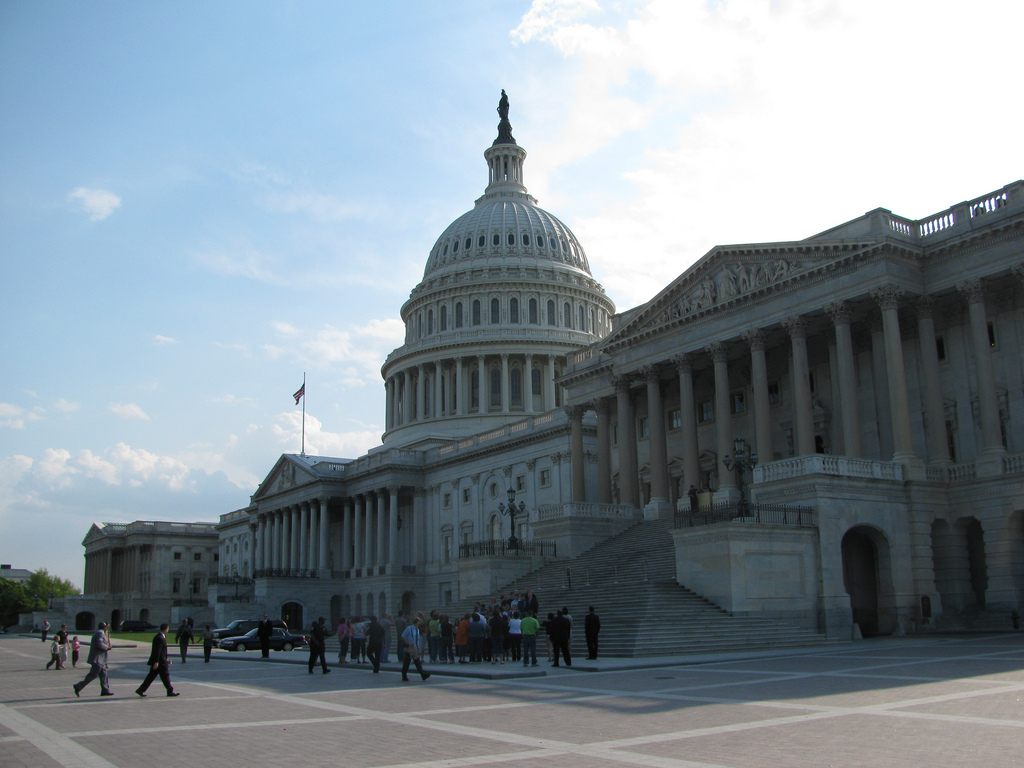
Multiple sources have confirmed that retiring U.S. Senator Jay Rockefeller (D-WV) has put a hold on the FOIA Improvement Act, the bill that would enact historic reforms to the Freedom of Information Act, the core open government law in the United States of America that gives every citizen the right to information about their government. While the senator may wish to tout his legacy of service online, if he does not release his hold by Monday, the bill will be dead, and the responsibility for that failure will lie squarely upon his shoulders.

Without naming Senator Rockefeller specifically, Senator Patrick Leahy (D-VT), the chairman of the Senate Judiciary Committee, issued the following statement into the Congressional Record last night:

The Freedom of Information Act is one of our Nation’s most important laws. James Madison said the people “must arm themselves with the power knowledge gives.” For nearly 50 years, FOIA has given Americans a way to access government information ensuring their right to know what their government doing. The FOIA Improvement Act advances this fundamental democratic principle. It is why I urge all Senators to support the FOIA Improvement Act of 2014, without delay. This legislation builds on what the President laid out in his historic executive order in 2009 by requiring Federal agencies to adopt a “Presumption of Openness” when considering the release of government information under FOIA. Prioritizing the people’s interest in what their government is doing, our bill will reduce the overuse of exemptions to withhold information where there is no foreseeable harm. It will make information available for public inspection and frequently requested documents available online. It will provide the Office of Government Information Services (OGIS), with additional independence and authority to carry out its work. I believe this legislation reaffirms the fundamental premise of FOIA, that government information belongs to all Americans. Supporting these commonsense reforms will help open the government to the 300 million Americans it serves. The bill is supported by more than 70 public interest groups that advocate for government transparency. The Sunshine in Government Initiative, said the Leahy-Cornyn bill “strengthens government transparency by limiting the ability of agencies to hide decades old documents from the public.” At the Judiciary Committee’s business meeting to consider this legislation, which was reported to the full Senate with unanimous support, Ranking Member Grassley said the FOIA Improvement Act “opens wide the curtains and provides more sunlight on the Federal government.” Senator Cornyn, my partner for many years on government transparency, noted our bipartisan efforts “to open up the government and make it more consumer and customer friendly.” I thank both Senators for their work on this legislation. We often talk about the need for government transparency, and many also note how rare it is that Democrats and Republicans can come together on any legislation. We have accomplished both with the FOIA Improvement Act. It was drafted in a bipartisan fashion after a long and thoughtful process of consultation. This week, we can pass this bill in the Senate and send it over to the House, where I am confident that it will pass, and send it to the President to sign before the end of the year. There is no reason to delay this legislation, which has broad support from a range of stakeholders, costs very little to implement and will improve access to government for all Americans. I urge the Senate to pass the FOIA Improvement Act now, without delay.

In his farewell address, Senator Rockefeller bemoaned the “hyper-partisan politics” in today’s Washington, offering memories of the Senate where compromises led to good policy.

Respectfully, Mr. Rockefeller, to opine thus and then block a bipartisan bill that passed the U.S. House of Representatives unanimously, 410-0, before it was amended, introduced by Senator Leahy and Senator John Cornyn (R-TX), and then unanimously passed by the Senate Judiciary Committee is nothing less than rank hypocrisy.

It’s hard to believe that Senator Rockefeller wants to be known for blocking open government reform at a time of historic lows in trust in government and abysmal public perceptions of the U.S, but that’s exactly what will happen if he doesn’t release this hold.

Update: on Friday night, Senator Rockefeller made the following statement on the FOIA Improvement Act, confirming the hold:

“I have a long record of support for open government and the FOIA process. I am concerned that provisions in this bill will have the unintended consequence of harming our ability to enforce the many important federal laws that protect American consumers from financial fraud and other abuses. According to experts across the federal government, these provisions would make it harder for federal agency attorneys to prepare their cases, and they would potentially give defendants new ways to obstruct and delay investigations into their conduct. I hope there is a way to address these concerns and pass the bill.”

In response, David Plazas, editorial board chair of the Tennessean, maintained that Senator Rockefeller should lift his hold.

“The bill specifically states that all records are presumed to be open unless there’s a law that would exempt it,” he wrote. “Clearly, the concerns raised in the senator’s statement should be assuaged. That House members voted unanimously for the companion bill and that a bipartisan group of senators are backing it has us questioning the real motives behind this hold.”

So do I, for the same reason. For 509 other members of Congress, these concerns were not enough to halt progress of much-needed reforms. It’s not clear which provisions the Senator is referring to, or what experts across the federal government he is referring to, because this short statement, issued at 6:30 PM on Friday after a full day of advocates, journalists and citizens asking for an explanation, doesn’t explain.

Currently, these same federal agencies are failing to comply with FOIA requests, overusing exemptions and delaying responses for years. Vague concerns about delaying investigations or harming enforcement of financial fraud, perhaps referring to actions by federal attorneys at the Federal Trade Commission or Securities and Exchange Commission, don’t hold water when balanced against the documented resistance to the public’s right to know what’s being done in their name. Raising these issues at this point in the legislative calendar very well may scuttle the bill, which would still need to go back to the House and then to the White House. If that’s the outcome, Senator Rockefeller’s “long record of support for open government and the FOIA process” will be forever cast into shadow.

Patrice McDermott, executive director of OpenTheGovernment.org, made the following statement:

“We encourage Senator Rockefeller to reconsider his hold on the bipartisan FOIA Improvement Act, S. 2520, and release the bill as soon as possible. The benefits of this critical reform bill far outweigh any nebulous concerns about unintended consequences, all of which can be addressed by the Senate as they pass the bill. S. 2520 was passed unanimously by the Judiciary Committee and is set to be taken up by the House as soon as it clears the Senate. It is also widely supported by a range of groups that cross the political spectrum and represent a wide range of interests. Senator Rockefeller shuld not remain the sole holdout that stops our ability to make the federal government more open and accountable.”

Update: On Friday, The Hill (accurately!) reported that Senator Rockefeller is being blamed for blocking the Freedom of Information reform bill. Roll Call covered the fact that Senator Rockefeller opposes the FOIA bill, advancing the story in reporting that his objections were as a surprise to Senator Leahy:

“Yesterday was the first we have heard of these concerns,” a Leahy aide said. “The FOIA Improvement Act, which was introduced in June, was approved unanimously by the Judiciary Committee on November 20. It has the support of more than 70 government transparency groups and is the result of months of consultation with the administration and a wide range of stakeholders.”

If wanted FOIA reform to address his concerns, why didn’t he raise them earlier? As always, apply Occam’s Razor: the most likely explanation is that he knew putting a hold on it this late in the legislative calendar would keep it from passing. What might motivate that action?

As reporter C.J. Ciaramella noted in his FOIA newsletter, FreedomInfo.org reported that Senator Rockefeller’s “doubts were identified by one bill supporter as being stimulated by the Federal Trade Commission, an independent agency. An advocate for the bill said the FTC was concerned about the administrative burden and judicial review of the foreseeable harm standard.”

The emerging consensus among the open government advocates in DC that I’ve talked to over the past 24 hours is that the FTC was actively lobbying against this bill, and appears to have found a receptive ear. Neither the FTC or Rockefeller’s is taking questions. As Ciaramella ironically observed, “it’s pretty cool that the federal agency and U.S. Senator who are single-handedly holding up a transparency bill that has the support of 99 other Senators won’t answer questions about it.”

Update: Josh Gerstein, writing about the Senate standoff over the FOIA bill, reported more on the concerns that led Senator Rockefeller to put the hold on it:

…sources said the agencies’ concerns are that the legislation would allow companies to pierce the attorney-client and attorney work-product privileges, potentially giving targets of enforcement actions a roadmap detailing what kind or level of misconduct will trigger action and what kind is likely to be ignored.

“The bill would statutorily require government law enforcement agencies to withhold documents from a FOIA request only if they first establish that ‘the agency reasonably foresees that disclosure would harm an interest protected by’ the exemption invoked,” said a Rockefeller aide who asked not to be named. “Consequently, the bill could expose law enforcement agencies to needless litigation and drain their already limited resources in defending FOIA decisions that have long been invoked for legitimate law enforcement purposes.”

“The chairman believes this new foreseeable harm standard would likely have a chilling effect on internal communications and deliberations and could limit internal debating on law enforcement strategy, deter agency employees from providing candid advice, and lower the overall quality of the government decision-making process – all which are absolutely vital to effective law enforcement,” the aide added.

Since news of Senator Rockefeller’s hold on the bill first broke on Friday, dozens of people on Twitter and Facebook have been asking @SenRockefeller to release the hold.

Tweets are almost certainly not going to be enough. If this is an issue that concerns you or (if you’re in the media, your listeners, readers or viewers, since FOIA applies to everyone), Senator Rockefeller’s office is in at 531 Hart Senate Office Building, Washington, DC 20510. The office number is (202) 224-6472, the fax is (202) 224-7665, and the email is senator@rockefeller.senate.gov. Unfortunately, the DC phone continues to go to voicemail and there’s no guarantee that your email will be read. Concerns citizens or reporters looking for answers can also call the senator’s satellite offices in Beckley, WV (304-253-9704), Charleston (304-347-5372), Fairmont (304-367-0122), or Martinsburg (304 262-9285) or contact other U.S. Senators and ask them about the hold.)

https://twitter.com/openGavin/status/540650243713277952

https://twitter.com/openGavin/status/540650316081795072

https://twitter.com/morisy/status/540699157795975169

This post has been updated over time.

White House asks for public participation to improve draft principles for public participation

6792552077_24fec36849_o

If a government commits to developing “best practices & metrics for public participation,” one way to demonstrate that commitment is to then post a draft version of those practices and metrics for public consideration and seek public comment. Today, the White House took the first step on that journey when it asked the public to help shape public participation in the 21st century in a decidedly 21st century way: by posting a blog post on WhiteHouse.gov and publishing a draft of a new U.S. Public Participation Playbook on Madison, an open source platform specifically built for collaboration between government and citizens:

Developing a U.S. Public Participation Playbook has been an open government priority, and was included in both the first and second U.S. Open Government National Action Plans as part of the United States effort to increase public integrity in government programs. This resource reflects the commitment of the government and civic partners to measurably improve participation programs, and is designed using the same inclusive principles that it champions.

More than 30 Federal leaders from across diverse missions in public service have collaborated on draft best practices, or “plays,” lead by the General Services Administration’s inter-agency SocialGov Community. The playbook is not limited to digital participation, and is designed to address needs from the full spectrum of public participation programs.

The plays are structured to provide best practices, tangible examples, and suggested performance metrics for government activities that already exist or are under development. Some categories included in the plays include encouraging community development and outreach, empowering participants through public/private partnerships, using data to drive decisions, and designing for inclusiveness and accessibility.

In developing this new resource, the team has been reaching out to more than a dozen civil society organizations and stakeholders, asking them to contribute as the Playbook is created. The team would like your input as well!

Many of the dynamics that have led to news sites turning off online comments apply to governments trying to crowdsource policy or laws. Given those risks, why post this relatively rough draft online now?

“In order to create the strongest public participation resource for agencies, we didn’t just want to open it for comment after the fact — we wanted collaboration and openness in the DNA of the project itself,” said Justin Herman, the social media lead at the GSA who co-authored the blog post, in an interview. “This approach empowers contributors to understand different sides of each play from their creation, and makes participation more meaningful for all.”

As noted in the White House blog post, this effort isn’t happening in a vacuum or a starting point: the White House and the community of practice at the General Services Administration (GSA) have already seeded the document with ideas and reached out to members of civil society.

Whether this newest effort at crowdsourcing a policy results in a better playbook will rest in part upon whether its owners are willing and able to engage the public regarding it. Two tweets are a start, but only that:

What happens next is much less clear: will White House officials and GSA staff participate in conversations on the document? Will conversations spiral out into partisan rancor or be diverted by online trolls, just in it of the lulz? Will a skeptical, angry and distrustful public even show up to participate? Have the feds learned anything from their mistakes in crowdsourcing comments online?

“We knew from the beginning that we wanted the U.S. Public Participation Playbook to truly reflect that engagement in government has advanced in recent years, and participation can and should result in improved services,” said Herman. “We did a lot of research at first, everything from case studies in government to feedback from experts in the field. We don’t just want a resource that people see the value in — we want a resource they can see themselves in, and our experiences in advancing public participation. We’re also approaching development very flexibly and have a team that embraces that approach, which helps immensely.”

Embracing Madison online

It’s worth noting that the collaborative drafting tool the GSA and the White House have chosen has an interesting pedigree. The tool was originally designed to crowdsource legislative markup and introduced at the first Congressional hackathon. Madison was subsequently used to crowdsource multiple bills by Congressman Darrell Issa‘s office before being spun out to be run and improved a separate Open Gov Foundation. As I noted in last week’s column on networked activism, people interested in the next generation of civic software should keep an eye on the growth of Madison, which recently received a huge grant from the Knight Foundation. While there may be a partisan gulf between Congressman Issa and the White House, the adoption of this tool and a collaborative approach to improving this draft playbook shows that there’s some congruence when it comes to adopting strategies for networked governance.

“The goal was to make this process as inclusive as possible and using a platform like Madison is just one way that we’re welcoming the civil society groups like the OpenGov Foundation to participate,” said Herman. “It’s an example of how we’re not just writing about more responsive services, we’re making the development itself a responsive process. We also are accepting contributions through Google Doc, Word, and in-person meetings, so there are multiple paths to participation.”

Madison is just shy of 3 years old, according to Seamus Kraft, the executive director of the Open Government Foundation, but it’s already been completely rewritten. It now has Hypothes.is and Annotator built into the tool itself and uses the Laravel framework. After originally launching in a closed form, Madison is now open source software.

“It’s grown in a pretty steady line, particularly as we’ve started linking up with partner cities and really understanding what our mission principle means when we say inside and outside of government,” he said, in a phone interview today. “Where are our users today? Where are we starting from? When we were on the Hill, it had to happen and happen fast. We were building for ourselves inside government, and we were already connected to the outside users shut out of the process. Now we’re unpacking that, as we’re understanding what has to happen on the backend for drafting or internal collaboration to happen.”

Over the past 2 years, Kraft said that his team has learned about huge potential upside for helping governments at all levels to address inefficiencies in how government manages its documents on the inside, which the public never sees.

“By making that more streamlined, more efficient, with data formats and schemas to accompany it, we will make government more collaborative,” he said. “Where Madison gets really powerful and really cool is when it’s connected to a presentation environment, like the State Decoded, or to a drafting environment.”

When asked about the challenges of managing or moderating public conversations online, particularly given an increasingly politically polarized electorate and Congress, Kraft was diplomatic.

On the one hand, he said that the utility of crowdsourced contributions by and large increases with more identity information provided. (Madison uses OAuth to enable people to choose what identities to use.) When asked how governments should use Madison to encourage meaningful participation online, avoiding gaming and astroturfing, Kraft immediately allowed that doesn’t have any exact answers, but he has ideas.

“There are a number of ways municipal participation has happened,” he said. “There are different types, different flavors, and different data sets in which incentives differ significantly. What we’ve found, what we’ve learned, is that what drives the most meaningful participation is when the people that we’ve elected or appointed, in our cities, country, states or federal government, take a step by opening themselves up for collaborative opportunities like this. That first step is a cultural shift, which is the coin of the realm towards driving participation. When tested it, we found the best, most meaningful participation was on a draft bill. If you remember the OPEN Act, putting “draft” on it signaled a cultural change, a change in how legislation presented to the public. By doing that, Congressmen and Senators took a step towards their constituents. By
keeping it up for a month for feedback and saying we’re not moving forward until we get your input, they changed the conversation. You can see it here with GSA: that cultural shift is the most meaningful thing, in terms of encouraging meaningful participation.”

That’s a cultural shift embodied by Herman, who is a constant presence online and a driving force involved in various efforts to get federal government staffers to use social media to listen, collaborate and engage, not just broadcast press releases optimized for new media. When we talked, he specifically connects effective public participation and civic engagement with the mission of public servants.

“Engagement, responsiveness, inclusiveness: these are foundations of the public services so many of us proudly work to build every day,” he said. “They are not talking points, as when we look at emergency management, education services, veterans programs and more, we see how public participation can directly lead to improvement in the lives of people. It’s not just important that we help agencies do this better, it’s our responsibility. We hope that organizations from across fields and backgrounds take a look and see what they can contribute, and that all citizens may use this to better understand the importance of their informed participation.”

[Photo Credit: Pete Souza, White House on Flickr]

This post has been updated with additional comments.

President Obama announces forthcoming action on immigration using Facebook

President Barack Obama shared the news that he would address the nation tomorrow night regarding an executive actions he would take on immigration on Facebook before embedding the video on The White House blog and tweeting a link to it.

Even in late 2014, when the use of social media has become part of the warp and weft of American society and political discourse, seeing the president “go direct” to the people online, not through media, on an issue of this magnitude is worth noting. Over the past year, the Committee to Protect Journalists have hammered the Obama administration on transparency and White House photographers have criticized restrictions on access. Even tough critics of the administration’s record on access for photos or transparency, however, acknowledge the role social media and the Internet has now taken on in getting the words of the president out to the people he serves.

On that count, the fact that the “big four” broadcast TV networks in the U.S., CBS, Fox, NBC and ABC, are not airing the speech is noteworthy, as is that fact that Telemundo and Univision will carry it live.

People that want to listen over the Internet will be able to do so at whitehouse.gov/live or radio.

For more on the news, read the Washington Post’s report on the context that surrounds the executive action and a short history from the past 70 years of actions other presidents have taken on immigration, all of which should be considered in the context of the time, Congress and their longterm efficacy.

17 million tax transcripts downloaded through IRS website, reducing offline requests by 40%

irs-transcriptAccording to a post on the White House blog, 17 million tax transcripts have been downloaded over the Internet since the feature launched in January 2014. The interesting outcome is that, according to the post, offline requests are down by 40%.

There was no clear return on the investment provided on what providing this online service saved taxpayers, but if we assume there are processing costs involved with sending transcripts through the mail and that, once online, the Internet service scales, that’s a good result, as is enabling instant electronic access to something that used to take 5-10 business days to arrive in print form.

Of note: it looks like Americans can expect more online services from the IRS in the near future, according to the the authors of the White House blog post, U.S. Deputy Chief Technology Officer Nick Sinai and Rajive Mathur, director of Online Services at the Internal Revenue Service:

“Building on the initial success of Get Transcript, there are more exciting improvements to IRS services in the pipeline. For instance, millions of taxpayers contact the IRS every year to ask about their tax status, whether their filing was received, if their refund was processed, or if their payment posted. In the future, taxpayers will be able to answer these types of questions independently by signing in to a mobile-friendly, personalized online account to conduct transactions and see all of their tax information in one place. Users will be able to view account history and balance, make payments or see payment status, or even authorize their tax preparer to view or make changes to their tax return. This will also include the ability to download personal tax information in an easy to use and machine-readable format so that taxpayers can share with trusted recipients if desired.”

Promising. I hope that the leadership of the IRS explores how the agency could act as a platform to enable more, much-needed innovation around personal data access and digital services in the years to come, enabling a modern ecosystem of tax software based on a standardized application programming interface.

Improving online self-service could have an enormous impact upon every single American taxpayer, from saving tax dollars on the government side to saving time and gray hairs year round in offices and kitchen tables. Per Sinai and Mathur, the IRS currently receives over 80 million phone calls per year, sends out almost 200 million paper notices every year, receives over 50 million unique visitors to its website each month during filing season.

More context and FAQ on how to download your tax transcript here.

In strong endorsement of net neutrality, President Obama says FCC should reclassify broadband Internet providers under Title II

As a candidate, Senator Barack Obama said on November 14, 2007 that “I will take a back seat to no one in my commitment to network neutrality, because once providers start to privilege some applications or websites over others, then the smaller voices get squeezed out and we all lose. The Internet is perhaps the most open network in history, and we have to keep it that way.” Over the past six years, however, his voice has often been missing from the debate over how the providers of broadband Internet service should be regulated. This morning, however, President, Barack Obama came out much more strongly in favor of net neutrality.

In his statement (video embedded above, text linked) the president outlined 4 “bright line rules” that he wants the Federal Communications Commission to adopt for how consumer broadband Internet providers should behave (no blocking, no throttling, no paid prioritization, more transparency) and a rationale for how they should be regulated.

On that count, the biggest news comes further down in President Obama’s statement: “…the time has come for the FCC to recognize that broadband service is of the same importance and must carry the same obligations as so many of the other vital services do. To do that, I believe the FCC should reclassify consumer broadband service under Title II of the Telecommunications Act — while at the same time forbearing from rate regulation and other provisions less relevant to broadband services.”

That position is unquestionably a big win for activists, who are thrilled about the news this morning. If you’re unclear about what “forbearance” means, beyond the dictionary meaning of “holding back,” here’s a good article by Nancy Scola and and here’s a much longer post, by Harold Feld, which has more on the topic, and why it’s contentious among telecom lawyers and policy wonks. Should this plan actually make into Open Internet rules and be voted in, how forbearance is handled what Stacey Higgenbotham suggested watching in her excellent analysis of this net neutrality proposal.” They have the patience and lobbying muscle to ensure that in the process of forbearing them from certain practices that are irrelevant for a broadband era, they can get concessions that may make Title II less onerous for them,” she wrote.

Forbearing from rate regulation, or artificially controlling the price for a set level of service, would address one of the most significant objections to Title II that have been raised by American telecommunications companies. Other countries, like Argentina, are going a different route.

That didn’t stop Verizon from warning that reclassification under Title II would cause “great harm to an open Internet, competition and innovation. The National Cable and Telecommunications Agency released a statement that (former FCC chairman) CEO Michael Powell was “stunned” by the president’s statement on net neutrality and that the matter belongs in Congress.

“There is no substantive justification for this overreach, and no acknowledgment that it is unlawful to prohibit paid prioritization under Title II,” he said. “We will fight vigorously against efforts to impose this backwards policy.”

In a tweeted statement that was subsequently posted to Comcast’s blog, David L. Cohen, an executive vice president at Comcast Corporation, similarly said that President Obama’s policy stance would “jeopardize this engine for job creation and investment as well as the innovation cycle that the Internet has generated” and suggested that reclassification this was a matter for Congress to decide:

To attempt to impose a full-blown Title II regime now, when the classification of cable broadband has always been as an information service, would reverse nearly a decade of precedent, including findings by the Supreme Court that this classification was proper. This would be a radical reversal that would harm investment and innovation, as today’s immediate stock market reaction demonstrates. And such a radical reversal of consistent contrary precedent should be taken up by the Congress.

The other key detail in the policy position on net neutrality the White House published today was picked up over at the Verge: President Obama asked the FCC to apply these rules to mobile broadband internet providers as well. In his statement, he said that “the rules also have to reflect the way people use the Internet today, which increasingly means on a mobile device. I believe the FCC should make these rules fully applicable to mobile broadband as well, while recognizing the special challenges that come with managing wireless networks.”

As the president also noted, that “the FCC is an independent agency, and ultimately this decision is theirs alone,” but there’s no question that the President of the United States has put his thumb on the scale here, finally, and that it will put some pressure on the two Democratic commissioners, along with the man he nominated to lead the FCC, chairman Tom Wheeler.

Here’s the statement released by Wheeler this morning, in response to the President’s position:

The President’s statement is an important and welcome addition to the record of the Open Internet proceeding. Like the President, I believe that the Internet must remain an open platform for free expression, innovation, and economic growth. We both oppose Internet fast lanes. The Internet must not advantage some to the detriment of others. We cannot allow broadband networks to cut special deals to prioritize Internet traffic and harm consumers, competition and innovation.

As an independent regulatory agency we will incorporate the President’s submission into the record of the Open Internet proceeding. We welcome comment on it and how it proposes to use Title II of the Communications Act.

In January, a federal court struck down rules that prevented Internet Service Providers from blocking and discriminating against online content. In May, the Commission sought comment on how to best reinstate these rules to protect consumers and innovators online while remaining within the parameters of the legal roadmap the court established. The goal was simple: to reach the outcomes sought by the 2010 rules. We sought comment on using Section 706 of the Telecommunications Act, as discussed by the court to protect what the court described as the “virtuous circle” of innovation that fosters broadband deployment and protects consumers.

The purpose of the Commission’s Notice of Proposed Rulemaking proposal was to elicit comments. In the past several months, we’ve heard from millions of Americans from across the country. From the beginning I have pledged to finally bring to an end the years-long quest for rules that are upheld in court. In May we sought comment on both Section 706 and Title II and I promised that in this process all options would be on the table in order to identify the best legal approach to keeping the Internet open. That includes both the Section 706 option and the Title II reclassification. Recently, the Commission staff began exploring “hybrid” approaches, proposed by some members of Congress and leading advocates of net neutrality, which would combine the use of both Title II and Section 706.

The more deeply we examined the issues around the various legal options, the more it has become plain that there is more work to do. The reclassification and hybrid approaches before us raise substantive legal questions. We found we would need more time to examine these to ensure that whatever approach is taken, it can withstand any legal challenges it may face. For instance, whether in the context of a hybrid or reclassification approach, Title II brings with it policy issues that run the gamut from privacy to universal service to the ability of federal agencies to protect consumers, as well as legal issues ranging from the ability of Title II to cover mobile services to the concept of applying forbearance on services under Title II.

I am grateful for the input of the President and look forward to continuing to receive input from all stakeholders, including the public, members of Congress of both parties, including the leadership of the Senate and House committees, and my fellow commissioners. Ten years have passed since the Commission started down the road towards enforceable Open Internet rules. We must take the time to get the job done correctly, once and for all, in order to successfully protect consumers and innovators online.

Whether this very public position by the White House leads the FCC to act any differently will be open to debate over the next month, as the deadline to get rules made and circulated to the commissioners before the last open meeting on December 11th grows near. It certainly gives them more political cover.

If the FCC does reclassify, expect the incoming 114th Congress and Republican majority to seek to shape that regulatory choice, perhaps by legislation, and that regulatory wrangling over net neutrality to end up in the courts. Again. (Conservatives concerned about the impact of applying Title II to the Internet may find this post by James Heaney of considerable interest.) Speaker of the House John Boehner was unequivocal in a statement released in response to President Obama’s position, asserting that “net neutrality hurts private-sector job creation“:

“It’s disappointing, but not surprising, that the Obama administration continues to disregard the people’s will and push for more mandates on our economy. An open, vibrant Internet is essential to a growing economy, and net neutrality is a textbook example of the kind of Washington regulations that destroy innovation and entrepreneurship. Federal bureaucrats should not be in the business of regulating the Internet – not now, not ever. In the new Congress, Republicans will continue our efforts to stop this misguided scheme to regulate the Internet, and we’ll work to encourage private-sector job creation, starting with many of the House-passed jobs bills that the outgoing Senate majority ignored.”

Evidence for the Speaker’s assertion regarding the impact of net neutrality laws on jobs is scant, as Carl Brooks, an IT analyst with 451 Research, noted: “Connection markets are robust and competitive in [the European Union] for business; for consumers, prices are dramatically lower.” (The European Parliament enacted a strong net neutrality law earlier this year.) “Net neutrality in the EU is explicit policy to encourage competition [and] benefit consumers on the backs of state telecom,” he went on.

Regardless of the political outcome in Congress, close observers of the FCC expect the rules to be delayed until 2015. What the American people get for a holiday present online is — reclassification or some form of tiered services — remains, for now, something only St. Nick knows.

This post has been updated with more statements, links, media and analysis.

FEC hires innovative startup to help bring U.S. Senate into 21st Century

IMG_1992.JPG In a win for democracy & open government, the Federal Election Commission has signed a contract with Captricity to convert paper campaign contribution disclosure filings by U.S. Senators into data.

Alert readers may recall my story on the startup two years ago, when they launched a better way of converting forms into data using Amazon Mechanical Turk, machine learning, and an innovative use of crowdsourcing.

More recently, they were involved in the OpenFDA project.

Great news.

Update: Derek Willis, one of the best data-driven campaign finance reporters around, did not agree with the headline of this post:

We’ll have to choose to disagree on this count. Converting these paper records has the potential to put more pressure on Senators to upgrade from paper disclosures and to demonstrate the value of digitizing campaign finance data, in terms of more access to insights, analysis and increased velocity of analyses.

It’s true that the Senate itself hasn’t been magically upgraded, reformed or shifted, but in my view making this aspect of funding more open will lead to more media and members of the public becoming aware and understanding how money is being spent, by whom, and given to whom, which could in turn create more accountability.

I don’t expect this kind of transparency to disinfect the Senate, per se, but it could lead to some discomfort as data-driven bleach seeps into some cracks.

Thoughts on the future of the US CIO, from capabilities to goals

vanroekel

This weekend, ZDNet columnist Mike Krigsman asked me what I thought of the tenure of United States chief information officer Steven VanRoekel and, more broadly, what I thought of the role and meaning of the position in general. Here’s VanRoekel’s statement to the press via Federal News Radio:

“When taking the job of U.S. chief information officer, my goal was to help move federal IT forward into the 21st Century and to bring technology and innovation to bear to improve IT effectiveness and efficiency. I am proud of the work and the legacy we will leave behind, from launching PortfolioStat to drive a new approach to IT management, the government’s landmark open data policy to drive economic value, the work we did to shape the mobile ecosystem and cloud computing, and the culmination of our work in the launch of the new Digital Service, we have made incredible strides that will benefit Americans today and into the future,” VanRoekel said in a statement. “So it is with that same spirit of bringing innovation and technology to bear to solve our most difficult problems, that I am excited to join USAID’s leadership to help stop the Ebola outbreak. Technology is not the solution to this extremely difficult task but it will be a part of the solution and I look forward to partnering with our federal agencies, non-profit organizations and private sector tech communities to help accelerate this effort.”

Here’s the part of what I told Krigsman that ended up being published, with added hyperlinks for context:

As US CIO, Steven VanRoekel was a champion of many initiatives that improved how technology supports the mission of the United States government. He launched an ambitious digital government strategy that moved further towards making open data the default in government, the launch of the U.S. Digital Service, 18F, and the successful Presidential Innovation Fellows program, and improved management of some $80 billion dollars in annual federal technology spending through PortfolioStat.

As was true for his predecessor, he was unable to create fundamental changes in the system he inherited. Individual agencies still have accountability for how money is spent and how projects are managed. The nation continues to see too many government IT projects that are over-budget, don’t work well, and use contractors with a core competency in getting contracts rather than building what is needed.

The U.S. has been unable or unwilling to reorganize and fundamentally reform how the federal government supports its missions using technology, including its relationship to incumbent vendors who fall short of efficient delivery using cutting-edge tech. The 113th Congress has had opportunities to craft legislative vehicles to improve procurement and the power of agency CIOs but has yet to pass FITARA or RFP-IT. In addition, too many projects still look like traditional enterprise software rather than consumer-facing tools, so we have a long way to go to achieve the objectives of the digital playbook VanRoekel introduced.

There are great projects, public servants and pockets of innovation through the federal government, but culture, hiring, procurement, and human resources remain serious barriers that continue to result in IT failures. The next U.S. CIO must be a leader in all respects, leading by example, inspiring, and having political skill. It’s a difficult job and one for which it is hard to attract world-class talent.

We need a fundamental shift in the system rather than significant tweaks, in areas such as open source and using the new Digital Service as a tool to drive change. The next US CIO must have experience managing multi-billion dollar budgets and be willing to pull the plug on wasteful or mismanaged projects that serve the needs of three years ago, not the future.

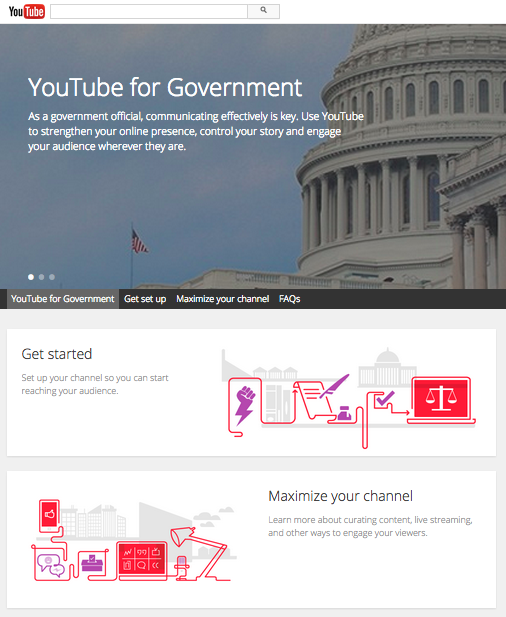
Google hopes Mr. Smith will use “YouTube for Government” to Hangout more online

Screen Shot 2014-09-21 at 5.09.39 PM

Google launched a “Google for Government” guide today, positioning it as a “a one-stop shop where government officials can learn how to get the most out of YouTube as a communication tool.” In a post on the Google Politics blog, Brandon Feldman recounts the use of YouTube by government, linking to examples from State of the Unionlegislative hearingsexplainer videos and Hangouts and asserting that “YouTube has become an important platform where citizens engage with their governments and elected officials.”

Putting aside the question of whether there’s two-way engagement going on or not in the comment sections on political videos on YouTube, which have been historically among the most toxic online, the guide will be useful to anyone looking for best practices on livestreaming or setting up a channel, playlists and other features.  As I’ve found, it’s quite easy to livestream a Hangout, save the recording to YouTube and share it afterwards.

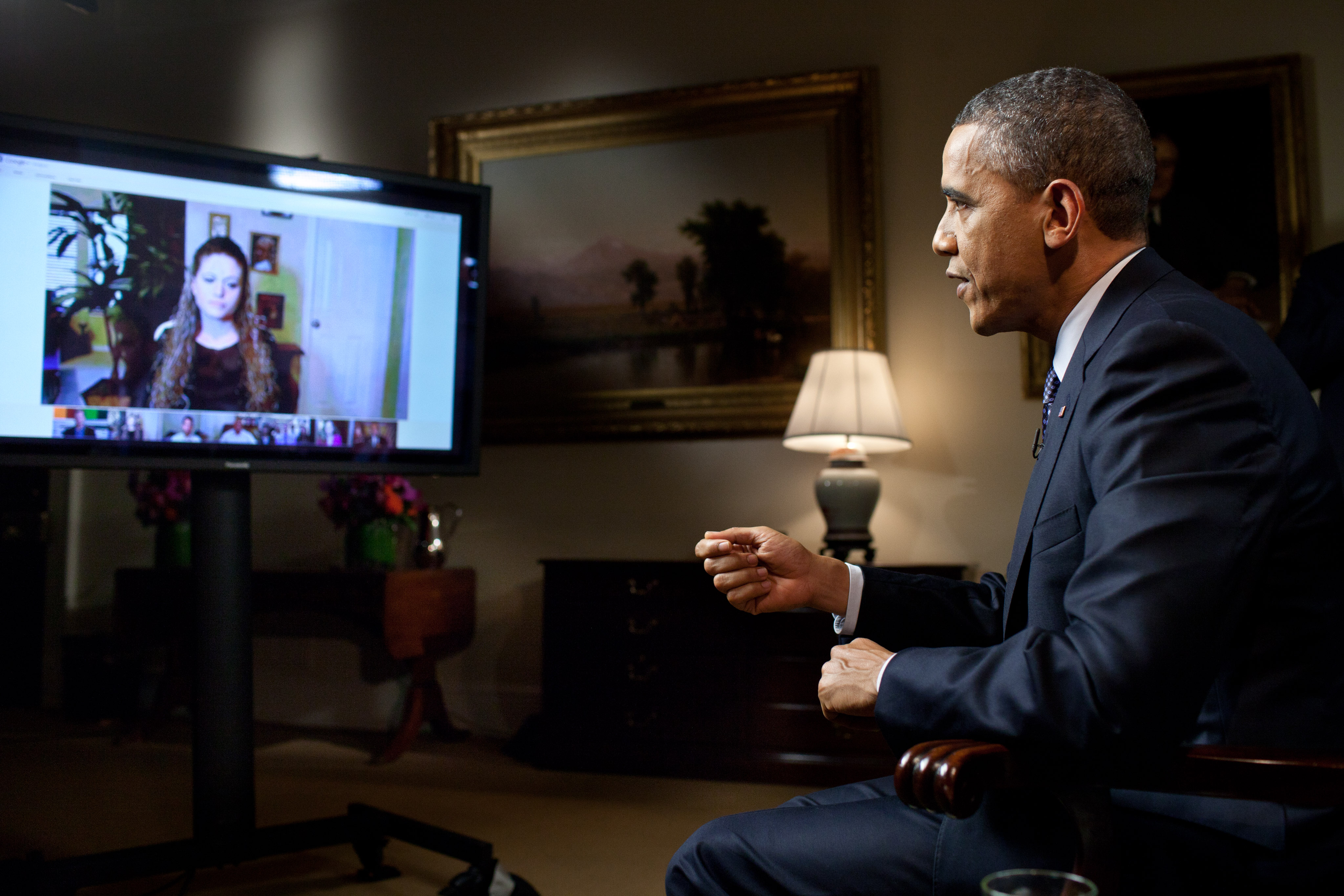
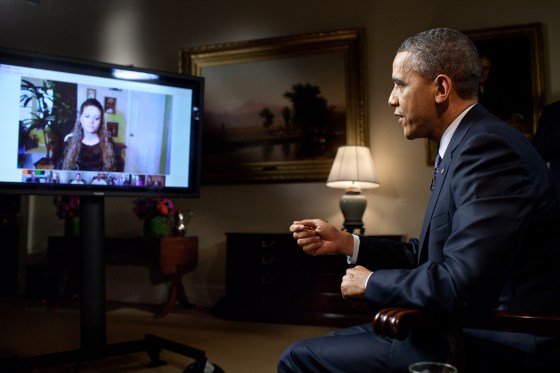
The guide does include a section on “engaging your community” through Google Hangouts, a venue that I still believe has tremendous potential for Presidents and other elected leaders to receive real questions from citizens, escaping the bubble of media and access journalism.

Here’s hoping more representatives use this new technology to listen to their constituents, not just use it as a cheaper way to broadcast their speeches. That’s the wish Google Feldman expressed: “If you’re a government official, whether you are looking for an answer to a quick question or need a full training on YouTube best practices, we hope this resource will help you engage in a rich dialogue with your constituents and increase transparency within your community.”

In a win for open government advocacy, DC removes flaws in its municipal open data policy

Update:

dcgov_logoIt’s a good day for open government in the District of Columbia. Today, DC’s Office of the Chief Technology Officer (OCTO) has updated the Terms and Conditions for DC.gov and the city’s new open data platform, addressing some of the concerns that the Sunlight Foundation and Code for DC expressed about the new open data policy introduced in July. The updated terms and conditions rolling out onto the city’s digital civic architecture this afternoon. “Today’s changes are really focused on aligning DC.Gov’s Terms and Conditions of Use with the new open data and transparency policy released this summer,” explained Mike Rupert, the communications director for OCTO,” in an interview. “The site’s T&C hadn’t been updated in many years,” according to Rupert. The new T&C will apply to DC.gov, the open data platform and other city websites. “It is encouraging that DC is taking steps toward considering feedback and improving its Terms and Conditions, but there is still room for improvement in the broader scope of DC’s policies,”said Alisha Green, a policy associate with Sunlight Foundation’s local policy team.  “We hope those implementing DC’s new open data policy will actively seek stakeholder input to improve upon what the policy requires. The strength of the policy will be in its implementation, and we hope DC will take every opportunity to make that process as open, collaborative and impactful as possible.” So, OCTO both heard and welcomed the feedback from open government advocates regarding the policy and agreed that the policy implications of the terms and conditions were problematic. Certain elements of the previous Terms and Conditions of Use (Indemnity, Limitation of Liability) could have chilled the understanding of the public’s right to access and have been eliminated,” said Rupert. Those were the sections that prompted civic hacker Josh Tauberer to wonder whether he needed a lawyer to hack in DC are simply gone, specifically that Indemnity and Liability Section. Other sections, however, still remain. The revised policy I obtained before the updated terms and conditions went online differs in a couple of ways from the one that just that went online. First, the Registration section remains, as does the Conduct section, although DC eliminated the 11 specific examples. That said, it’s better, and that’s a win. District officials remain cautious about how and where reuse might occur, they’re going to at least let the data flow without a deeply flawed policy prescription. “While we want to be mindful of and address the potential for harm to or misuse of District government information and data, the Terms and Conditions of Use should promote the new open data and transparency philosophy in a more positive manner,” said Rupert. Sharp-eyed readers of the new policy, however, will note that DC’s open data and online information has now been released to the public under a Creative Commons license, specifically Attribution 3.0 United States. That means that anyone who uses DC’s open data is welcome to “Share — copy and redistribute the material in any medium or format and Adapt — remix, transform, and build upon the material — for any purpose, even commercially,” as long as they provide “Attribution — You must give appropriate credit, provide a link to the license, and indicate if changes were made. You may do so in any reasonable manner, but not in any way that suggests the licensor endorses you or your use.” When asked about the CC license choice, Rupert said that “The new copyright language from Creative Commons – which as you is know is becoming the international standard – better states the overriding principle of the public’s right to web content and data. ” That did not sit entirely well with open government advocates who hold that making open data license free is a best practice. Asked for comment, Tauberer emailed the following statement in a response to the draft of the revision, welcoming the District’s responsiveness but questioning the premise of the District of Columbia having any “terms and conditions” for the public using open government data at all.

The new terms drop the most egregious problems, but these terms still don’t count as “open.” Should I expect a lawsuit if I don’t tip my hat and credit the mayor every time I use the data we taxpayers paid to create? Until the attribution requirement is dropped, I will recommend that District residents get District data through Freedom of Information Act requests. It might take longer, but it will be on the people’s terms, not the mayor’s. It’s not that the District shouldn’t get credit, but the District shouldn’t demand it and hold civil and possibly criminal penalties over our heads to get it. For instance, yesterday Data.gov turned their attribution requirement into a suggestion. That’s the right way to encourage innovation. All that said, I appreciate their responsiveness to our feedback. Tim from DC GIS spent time at Code for DC to talk about it a few weeks ago, and I appreciated that. It is a step in the right direction, albeit one deaf to our repeated explanation that “open” does not mean “terms of use.

The good news is that DC’s OCTO is listening and has committed to being responsive to future concerns about how it’s handling DC’s online presences and policies. “Several of your questions allude to the overall open data policy and we will definitely be reaching out to you and all other interested stakeholders as we begin implement various elements of that policy,” said Rupert.

Update: On October 29th, DC updated its Terms and Conditions again, further improving them. Tauberer commented on the changes to the open data policy on his blog. In his view, the update represents a step forward and a step back:

In a new update to the terms posted today, which followed additional conversations with OCTO, there were two more great improvements. These terms were finally dropped:

  • agreeing to follow all “rules”, a very ambiguous term
  • the requirement to attribute the data to the District in all uses of the data (it’s now merely a suggestion)

The removal of these two requirements, in combination with the two removed in September, makes this a very important step forward.

One of my original concerns remains, however, and that is that the District has not granted anyone a copyright license to use District datasets. Data per se isn’t protected by copyright law, but the way a dataset is presented may be. The District has claimed copyright over its things before, and it remains risky to use District datasets without a copyright license. Both the September update and today’s update attempted to address this concern but each created more confusion that there was before.

Although today’s update mentions the CC0 public domain dedication, which would be the correct way to make the District data available, it also explicitly says that the District retains copyright:

  • The terms say, at the top, that they “apply only to . . . non-copyrightable information.” The whole point is that we need a license to use the aspects of the datasets that are copyrighted by the District.
  • Later on, the terms read: “Any copyrighted or trademarked content included on these Sites retains that copyright or trademark protection.” Again, this says that the District retains copyright.
  • And: “You must secure permission for reuse of copyrighted … content,” which, as written (but probably not intended), seems to say that to the extent the District datasets are copyrighted, data users must seek permission to use it first. (Among other problems, like side-stepping “fair use” in copyright law.)

With respect to the copyright question, the new terms document is a step backward because it may confuse data users into thinking the datasets have been dedicated to the public domain when in fact they haven’t been.

This post has been updated with comments from Tauberer and the Sunlight Foundation.

USA to create official open source policy

IMG_1256.JPG
Uncle Sam is getting more serious about releasing the code for software developed for the people to the people. In one of the new commitments for the second U.S. National Action Plan released today at the United Nations during President Barack Obama’s remarks at the Open Government Partnership event, the White House announced that the United States of America would create an open source policy for software developed by the federal government. Here’s the key paragraph of the document:

“Adopt an open source software policy. Using and contributing back to open source software can fuel innovation, lower costs, and benefit the public. No later than December 31, 2015, the Administration will work through the Federal agencies to develop an open source software policy that, together with the Digital Services Playbook, will support improved access to custom software code developed for the Federal government.”

You can read the entire series of new commitments here.