As I wrote in December, one of the big unanswered questions about the Stop Online Piracy Act and its companion bill in the Senate, the PROTECT IP Act, is whether Internet companies would directly engage hundreds of millions of users to advocate against the bill for them in Washington, in the way that Tumblr did last November. To date, Facebook and Google have not committed to doing so.
Today, Twitter CEO Dick Costolo indicated to me that the California-based social media company that he leads will not being ‘shutting down’ on Wednesday — but that it would also continue to be ‘very active.’ The Guardian has picked up on our exchange, publishing a story that focused upon mischaracterized Costolo’s response to a question about Twitter shutting down as him calling Wikipedia’s SOPA protest as ‘silly.’ What Costolo made clear later when Wales asked him about the story, however, is that he was referring to Twitter making such a choice, not Wikipedia.
Following is a storify of the relevant tweets, along with some context for them.
My sense is that, of all of the major social media players — which in 2012 now include Google, Facebook, LinkedIn, Yahoo, Tumblr and MySpace, amongst others — Twitter has been one of the leaders in the technology community for sticking up for its users where it can, particularly with respect to the matter of fighting to make Twitter subpoena from the U.S. Justice Department regarding user data public.
Whether or not Twitter ultimately decides to “shut down” or “black out,” Twitter’s general counsel, Alex Macgillivray deserves all due credit for that decision and others, along with the lucid blog post that explained how SOPA would affect ordinary, non-infringing users.
For a fuller explanation of why these issues stuff matters, I highly recommend reading “Consent of the Networked,” a new must-read book on Internet freedom by former CNN journalist and co-founder of Global Voices Rebecca MacKinnon. These sorts of decisions and precedents are deeply important in the 21st century, when much of what people think of as speech in the new public square is hosted upon the servers of private services like Twitter, Facebook and Google.
This post has been updated to clarify Costolo’s position, with respect to how the Guardian framed his initial response.
How governments deal with social media has been a focal point of friction, fantasy and fierce real-time discussion around the globe in 2011. Tonight in Washington, the first “Congressional hackathon” convened Members of the House of Representatives, staffers, media, developers and citizens at the Capitol Building in Washington to talk about how social media, open government and technology could make the “people’s house” work better for those it represents. I embedded a Storify below that collects tweets and pictures from the event, plan to file a full report at Radar tomorrow and will share video when it becomes available.
In his remarks, House Minority Whip Steny Hoyer addressed how social media is affected Congress and his caucus and open government in the Executive branch. He also cited the growth of open data in cities as a model that Congress should consider for the future of Thomas.gov:
“For Congress, there is still a lot of work to be done, and we have a duty to make the legislative process as open and accessible as possible. One thing we could do is make thomas.gov – where people go to research legislation from current and previous Congresses – easier to use, and accessible by social media. Imagine if a bill in Congress could tweet its own status.
“The data available on thomas.gov should be expanded and made easily accessible by third party systems. Once this happens, developers, like many of you here today, could use legislative data in innovative ways. This will usher in new public-private partnerships that will empower new entrepreneurs who will, in turn, yield benefits to the public sector. One successful example is how cities have made public transit data accessible so developers can use it in apps and websites. The end result has been commuters saving time everyday and seeing more punctual trains and buses as a result of the transparency. Legislative data is far more complex, but the same principles apply. If we make the information available, I am confident that smart people like you will use it in inventive ways.”
If Hoyer and the House leadership would like to see that happen, several attendees at the hackathon suggested to me that Congress could take a specific action: collaborate with the Senate and send the Library of Congress a letter instructing it to provide bulk legislative data access to THOMAS.gov in structured formats so that the developers, designers and citizens around the nation can co-create a better civic experience for everyone.
Here’s the story of the rest of the event, as told in tweets and pictures:
Android….in….space! This morning, Will Marshall of NASA showed the Android Open Conference plans for a sub-$10,000 Nexus One “phonesat.” Given that the cost of satellites usually measure in the tens or hundreds of millions or so, that’s a rather spectacular cost savings.
Marshall says that this will be the fastest processor to govern a satellite. For reference, Mars Explorer used a 33MHz processor. It sends signals back via amateur radio packet system, rather than ground tracking. The launch video is embedded below:
Great anecdote: when a launch failed, the entire payload fell without parachute into desert. The data was left intact.
William launching 3 Android phonesats in December, in space for 3 weeks. As O’Reilly Media’s Gina Blaber pointed out, they’re “iterating Silicon Valley-style.”
For more, check out the short documentary below about the PhoneSat suborbital test launch in the Black Rock desert:
You can follow @NASA_Phonesat on Twitter — there’s no official website yet – and, according to Marshall, eventually check out code on Github, where NASA is open sourcing some software behind it. (And yes, that’s a big deal.)
Two weeks ago at the Strata Conference in NYC, I donned a headset, grabbed a tablet worth of questions and headed to the podium to talk with the chairman of the U.S. House Committee on Oversight and Government Reform about data and open government.
Congressman Darrell Issa (R-CA) joined me via remote webcast from chambers in Washington, D.C. Our crack video team is working on an improved version of this video in which you’ll see my side of the broadcast, along with a boost in audio. Until then, the video that the House Oversight digital team uploaded to YouTube will suffice — and I don’t want to wait to share this story any longer in the meantime, particularly as interest builds behind the principle subject of our conversation, a proposed bill to standardize financial reporting data standards in the federal government and create single database for financial spending.
Daniel Schuman listened in and summarized our conversation on open government data over at the Sunlight Foundation’s blog:
The Chairman focused his remarks on the DATA Act, the bipartisan legislation he introduced that would transform how government tracks federal spending and identifies waste, fraud, and abuse.
He emphasized the importance of making government data available online in real time so that innovative minds can immediately make use the information to build their own businesses. Business, in turn, would help the government identify program mismanagement and data quality problems. The Chairman specifically singled out Vice President Biden as a supporter of efforts to find a common solution to make data available in a systematic way.
…Chairman Issa explained that the private sector must step up as advocates for greater openness because they will benefit from building and using the tools made possible by greater transparency. He added when government drives down the cost of obtaining information, private individuals will derive value from the analysis of data, not its ownership.
“In a cost estimate dated Sept. 16, the CBO attributes $325 million of the estimated total to requirements in the bill regarding the collecting and reporting of financial information. The DATA Act would require federal agencies, and most government contractors and grant award winners to adopt XBRL as a financial data reporting mechanism.”
Left unsaid in the CBO estimate is what the impact of this kind of transparency on the federal government’s finances might be, in terms of savings. House Oversight staff have estimated annual savings from standards and centralized spending database that would more than offset that outlay, including:
$41 million in funds recovered from questionable recipients
$63 million in funds withheld from questionable recipients
$5 billion in savings recommended by inspectors general
unknown savings resulting from better internal spending control and better oversight by Congressional appropriators.
The DATA Act, which would expand the role of the Recovery Accountability and Transparency Board to track all federal spending and make all of the information available to the public, has bipartisan support in the Senate from Senator Mark Warner (D-VA), who has introduced a companion bill there.
Given the White House’s embrace of the mantle of open government on President’s first day in office, the executive branch has gathered a lot of the press, attention, praise, scrutiny and criticism in this area.
That looks to be changing, and for the better. As Clay Johnson pointed out at the beginning of 2011, any competition between the White House and Congress on open government is likely to be a win for the American people.
Jim Harper, director of information policy studies at the Cato Foundation and webmaster of WashingtonWatch.com, wrote then that the GOP can eclipse Obama on transparency. “House Republicans can quickly outshine Obama and the Democratic Senate,” he opined. “It all depends on how they implement the watch phrase of their amendment package: “publicly available in electronic form.”
The GOP House leadership must make sure that this translates into real-time posting of bills, amendments and steps in the legislative process, in formats the Internet can work with. It’s not about documents anymore. It’s about data. Today’s Internet needs the data in these documents.
There are no technical impediments to a fully transparent Congress. Computers can handle this. The challenges, however, are institutional and practical.”
Johnson identified the moment in history as an important inflection point, and one that, if the White House rose to the challenge, could legitimately be seen as an open government win for the American people and a smarter, more accountable government.
The White House may hold the considerable advantages of the bully pulpit and the largest followings of any federal entity or politician on Twitter, for now, but that has to be balanced against the considerable new media prowess that the GOP has built up over their Democratic counterparts in Congress, where Republicans hold an edge on social media.
While some projects or choices continue to cast questions on commitment in the rank and file to open government principles, with the GOP bending new House rules, there’s progress to report. The leadership of the House of Representatives has supported the creation of open, online video archives, like House.Resource.org. The House revamped its floor feed recently, adding live XML. And House leadership has recently venerated the role of technology in making Congress more transparent, engaged and accountable.
Rep. Issa, in particularly, appears to have taken on open government as a cause and, for the moment, its rhetoric. He even tweets using the #opengov hashtag. When it comes to the legislature, “the American people have a right to all the data from Congress. They have a right,” he said at a recent forum on Congressional transparency, as reported by Diana Lopez.
Government secrecy and transparency are, in theory, non-partisan issues. In practice, they are often used a political bludgeons against an opposing party, particularly by a partisan minority, and then discarded once power is gained. For government transparency to outlast a given White House or Congress, laws and regulatory changes have to happen.
Open government has to be “baked in” to culture, practices, regulations, technology, business practices and public expectations. Needless to say, that’s going to take a while, but it looks like both the administration and some members of Congress are willing to keep trying.
As these efforts go forward, it will be up to the media, businesses, nonprofits, watchdogs and, of course, citizens to hold them accountable for actions taken, not just rhetoric.
What’s the future of the DATA Act?
I’m writing a feature article about the bill, this conversation, context for government performance data and whether open government and transparency will have any legs in the upcoming presidential campaign.
If you have any questions that are unanswered after watching the conversation, comments about the use of XBRL or perspective on the proposed law’s future in Congress, please ring in in the comments or find me at alex[at]oreilly.com.
The Internet offers new opportunities to involve the public in regulatory rulemaking, including industry, media, nonprofits and citizens. A new social layer for the Web has shifted what’s possible in open government forward again, both hosting and enabling conversations. Below, one of those conversations is captured using the social media curation tool, Storify.
It’s a tale of two parties, two social networks, live events and high stakes: creating jobs in an American economy still struggling to come out of recession. Would the American Jobs Act, introduced by President Obama earlier this month, make a difference? Can the White House or Congress do anything to create jobs, aside from directly hiring more government workers for infrastructure projects or similar initiatives? The American people will have the opportunity to hear from both sides of the aisle today and judge themselves, starting at 2 PM EST when the president will participate in a town hall hosted at LinkedIn in California.
Notably, there will still be a live chat on Facebook at a LinkedIn townhall, along with a public “backchannel” at the #meetopportunity hashtag on Twitter.
This is the second time that the White House experiments with LinkedIn for questions, following a forum earlier this year with tech CEOs and federal CTO Aneesh Chopra. The questions are pulled from a “putting America back to work forum on LinkedIn.com. As I’ve observed before, the platform isn’t ideal for ideation and moderation of questions but LinkedIn is unquestionably targeted towards employment.
Personally, I’d like to see CEO Jeff Weiner crunch the big data the social network has collected about job openings and the skills and degrees that high school and college grads currently have. Programs and policies oriented towards matching the two would be an interesting direction.
House GOP Leaders discuss technology, transparency and jobs
At 6 PM EST, the leaders of the Republican caucus in the U.S. House of Representatives will also host an online townhall, though they’ll be doing it on Facebook Live. The event will feature House Majority Leader Eric Cantor of Virginia, Majority Whip Kevin McCarthy of California and Budget Committee Chairman Paul Ryan of Wisconsin. Facebook COO Sheryl Sandberg will moderate.
Prior to today’s event, the House GOP leaders participated in a discussion about the role social media and technology now plays in government with Politico’s senior White House correspondent, Mike Allen. Video is below:
In the interview, the House GOP’s “Young Guns” spoke at length about the role that new social and mobile technology plays in the work of Congress and government, touching upon many subjects that will be of interest to the open government community.
Such interest is hardly new — the new GOP majority came into the House with promises to embrace innovation and transparency— but given the importance of open government, it’s a useful reminder that open government is a bipartisan issue.
If you have thoughts or comments on either of the town halls or the discussion above, please share them in the comments.
UPDATE: The archived video of this congressional “Facehall” is embedded below:
UPDATE: A Storify of my own tweets during the event is embedded below:
Earlier today, Vivek Kundra, the first CIO of the United States, visited the Online News Association. Here’s a Storify of the tweetstream from his talk by Cristina F. Pereda.
Today at the Social Good Summit, Dr. Raj Shah, the administrator of the United States Agency for International Development (USAID) will launch a new public engagement effort to raise awareness about the devastating famine in the Horn of Africa. USAID is calling it the “FWD campaign” and it includes some interesting uses of open data, mapping and citizen engagement. USAID launched USAID.gov/FWD today and a text to donate initiative up and running in time to be amplified by the reach of Mashable’s Social Good Summit. You can txt “GIVE’ to 777444 to donate $10.
FWD stands for “Famine, War, Drought,” the unfortunate combination that lies behind the crisis in the Horn of Africa. “It also stands for our call to action,” writes in Haley Van Dyck, director of digital strategy at USAID, with an eye to getting people involved in raising awareness and “forwarding” the campaign on to friends, family and colleagues. Each of the components of the page includes the options to share on Twitter, Facebook or “FWD” on to people using email.
“Frankly, it’s the first foray the agency is taking into open government, open data, and citizen engagement online,” said Van Dyck. “We recognize there is a lot more to do on this front, but are happy to start moving the ball forward. This campaign is different than anything USAID has done in the past. It is based on informing, engaging, and connecting with the American people to partner with us on these dire but solvable problems. We want to change not only the way USAID communicates with the American public, but also the way we share information.”
Van Dyck was particularly excited about the interactive maps that USAID has built and embedded on the FWD site. The agency built the maps with open source mapping tools and published the data sets they used to make these maps on data.gov.
The combination of publishing maps and the open data that drives them simultaneously online is significantly evolved for any government agency and will serve as a worthy bar for other efforts in the future to meet. They’ve done that by migrating their data to an open, machine-readable format. In the past, we released our data in inaccessible formats – mostly PDFs — that are often unable to be used effectively, wrote Van Dyck.
“USAID is one of the premiere data collectors in the international development space,” wrote Van Dyck. “We want to start making that data open, making that data sharable, and using that data to tell stories about the crisis and the work we are doing on the ground in an interactive way.”
Tonight, Denice W. Ross, director of applications for the city of New Orleans, tweeted the news that “NOLA” had soft launched an open data site. There’s not a lot of data there yet but it’s a great start. Data.NOLA.gov is beautifully designed and based upon the Socrata platform, which will give the embryonic site room to grow.
As Ross shared, New Orleans’ new open data site starts its life online with data on parcels, streets, building permits, council districts and census data. The site also has data on post-Hurricane damage assessment that some plucky civic developer or data journalist will likely mash up to good effect.
For those unfamiliar, open government data broadly refers to public sector records that have been made available to citizens. Putting up an open government data platform online is not in of itself a guarantor of more open government, responsive government or good government — but it can be a enabler for all those things, in partnership with public officials, nonprofits, developers, media and citizens.
I first encountered Ross last year, at the Gov 2.0 Expo in Washington. Ross, who was then affiliated with the Greater New Orleans Community Data Center, gave a terrific talk about “An App We Can Trust: Lessons Learned in Post-Katrina New Orleans.” I’ve embedded it below.
UPDATE: As Leando Oliva shared, today was also the release of the sixth New Orleans Index. According to the Brooking Institute, the Greater New Orleans Community Data Center took on the publication of this index as a solo effort:
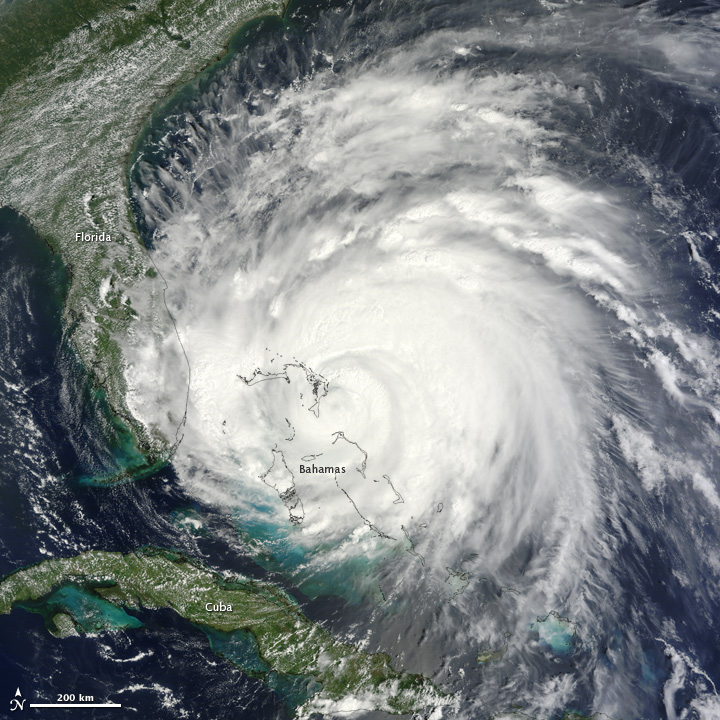
Tens of millions of citizens in the United States are watching as Hurricane Irene churns up the East Coast. If you’re in the path of the immense storm, today is a critical day to prepare. Visit Ready.gov for relevant resources. Unfortunately for citizens in my home state, New York City is right in the path of Hurricane Irene. As many New Yorkers look for information online, however, we’re watching NYC.gov is buckling under demand. For part of Friday morning, NYC.gov would not resolve. The outage is providing a real-time experiment in how a megalopolis with millions of citizens provides information during a natural disaster.
As the Village Voice reported, NYC is evacuating the most vulnerable and putting out advisories but city websites are down. As a result, we’re watching how city government is forced to pivot to the Internet and commercial websites, including social media, to get information out.
Dropbox is hosting a Hurricane #Irene Evacuation PDF (It’s not completely clear if city government uploaded the PDF or not, when this post was published). NYC chief digital officer Rachel Sterne and the official NYC.gov Twitter account have acknowledged and apologized for the outage and pointed citizens to docstoc.com for the official evacuation map:
What is clear, amidst growing concerns of a multi-billion dollar disaster, is that the New York City government’s website hosting strategy needs to be revisited. According to Provide Security, NYC servers are hosted in a data center in Brooklyn. Spikes in demand are precisely what cloud computing offers to the private sector and, increasingly, to federal government. As hurricane clouds gather, it’s probably past time for New York government to get familiar into cloudbursting or move quickly implementing internal architectures that include a private cloud, through Nebula or something similar, to handle the load. In the context of disasters, surge capacity for government websites is no longer a “nice-to-have” — it’s a must-have.
UPDATE: Civic technologist Philip Ashlock is mirroring NYC Irene data & links on Amazon Web Services (AWS). Even though NYC didn’t move critical resources to the cloud itself, a member of New York City’s technology community stepped up to help the city and citizens in a crisis. That’s Gov 2.0 in action:
The federal government is providing information on Hurricane Irene at Hurricanes.gov and sharing news and advisories in real-time on the radio, television, mobile devices and online using social media channels. A curated list from the Federal Emergency Management Agency (@FEMA) is embedded below:http://widgets.twimg.com/j/2/widget.js
//
If you use Twitter, a key follow this weekend is FEMA Administrator Craig Fugate, who tweets at @CraigAtFEMA. This morning, Fugate tweeted out a link to new digital tools, including a FEMA Android app and text shortcodes. If you’re at risk, this information is for you. Shayne Adamski, senior manager for digital engagement, blogged the details:
In the new FEMA App, you’ll be able to:
Check off the items you have in your family’s emergency kit,
Enter your family emergency meeting locations,
Review safety tips on what to do before, during and after a disaster,
View a map of shelters and disaster recovery centers across the U.S., and
Read our latest blog posts.
When we built the app, we kept the disaster survivor in mind, making sure much of the information would be available even if cell phone service isn’t, so you’ll be able to access the important information on how to safe after a disaster, as well as your family emergency meeting locations.
So as Administrator Fugate said, you can download our app today in the Android market, and look for FEMA App for Blackberry version 6 devices and iPhones in the coming weeks.
FEMA Text Messages
A new and separate service from the new app, our text message updates will allow cell phone users to receive text message updates from FEMA.
Text PREPARE to 43362 (4FEMA) to sign up to receive monthly disaster safety tips
Text SHELTER + your ZIP code to 43362 (4FEMA) to find the nearest shelter in your area (example: shelter 12345)
(For availability of shelters and services, contact your local emergency management agency.)
Text DRC + your ZIP code to 44362 (4FEMA) to find the nearest disaster recovery center in your area (for example, if you lived in Annandale, Virginia with a Zip Code of 22003, you’d text DRC 22003).
We’re excited to provide these two new ways you can access information on your mobile device, in addition to our already existing mobile site – m.fema.gov. Stay tuned to our blog, Facebook and Twitter channels as we roll out our app to the remaining smartphone operating systems and make enhancements to our text messages program.
So download the app or text PREPARE to 44362, and then leave us a comment and let us know what you think. We encourage you to tell a family member, friend, or neighbor as well, so they can have disaster safety information always at their fingertips.


 E Pluribus Unum