Threatening legacy, Senator Jay Rockefeller stands alone holding back historic FOIA reform in the USA

15542551330_098542fd36_b

Multiple sources have confirmed that retiring U.S. Senator Jay Rockefeller (D-WV) has put a hold on the FOIA Improvement Act, the bill that would enact historic reforms to the Freedom of Information Act, the core open government law in the United States of America that gives every citizen the right to information about their government. While the senator may wish to tout his legacy of service online, if he does not release his hold by Monday, the bill will be dead, and the responsibility for that failure will lie squarely upon his shoulders.

Without naming Senator Rockefeller specifically, Senator Patrick Leahy (D-VT), the chairman of the Senate Judiciary Committee, issued the following statement into the Congressional Record last night:

The Freedom of Information Act is one of our Nation’s most important laws. James Madison said the people “must arm themselves with the power knowledge gives.” For nearly 50 years, FOIA has given Americans a way to access government information ensuring their right to know what their government doing. The FOIA Improvement Act advances this fundamental democratic principle. It is why I urge all Senators to support the FOIA Improvement Act of 2014, without delay. This legislation builds on what the President laid out in his historic executive order in 2009 by requiring Federal agencies to adopt a “Presumption of Openness” when considering the release of government information under FOIA. Prioritizing the people’s interest in what their government is doing, our bill will reduce the overuse of exemptions to withhold information where there is no foreseeable harm. It will make information available for public inspection and frequently requested documents available online. It will provide the Office of Government Information Services (OGIS), with additional independence and authority to carry out its work. I believe this legislation reaffirms the fundamental premise of FOIA, that government information belongs to all Americans. Supporting these commonsense reforms will help open the government to the 300 million Americans it serves. The bill is supported by more than 70 public interest groups that advocate for government transparency. The Sunshine in Government Initiative, said the Leahy-Cornyn bill “strengthens government transparency by limiting the ability of agencies to hide decades old documents from the public.” At the Judiciary Committee’s business meeting to consider this legislation, which was reported to the full Senate with unanimous support, Ranking Member Grassley said the FOIA Improvement Act “opens wide the curtains and provides more sunlight on the Federal government.” Senator Cornyn, my partner for many years on government transparency, noted our bipartisan efforts “to open up the government and make it more consumer and customer friendly.” I thank both Senators for their work on this legislation. We often talk about the need for government transparency, and many also note how rare it is that Democrats and Republicans can come together on any legislation. We have accomplished both with the FOIA Improvement Act. It was drafted in a bipartisan fashion after a long and thoughtful process of consultation. This week, we can pass this bill in the Senate and send it over to the House, where I am confident that it will pass, and send it to the President to sign before the end of the year. There is no reason to delay this legislation, which has broad support from a range of stakeholders, costs very little to implement and will improve access to government for all Americans. I urge the Senate to pass the FOIA Improvement Act now, without delay.

In his farewell address, Senator Rockefeller bemoaned the “hyper-partisan politics” in today’s Washington, offering memories of the Senate where compromises led to good policy.

Respectfully, Mr. Rockefeller, to opine thus and then block a bipartisan bill that passed the U.S. House of Representatives unanimously, 410-0, before it was amended, introduced by Senator Leahy and Senator John Cornyn (R-TX), and then unanimously passed by the Senate Judiciary Committee is nothing less than rank hypocrisy.

It’s hard to believe that Senator Rockefeller wants to be known for blocking open government reform at a time of historic lows in trust in government and abysmal public perceptions of the U.S, but that’s exactly what will happen if he doesn’t release this hold.

Update: on Friday night, Senator Rockefeller made the following statement on the FOIA Improvement Act, confirming the hold:

“I have a long record of support for open government and the FOIA process. I am concerned that provisions in this bill will have the unintended consequence of harming our ability to enforce the many important federal laws that protect American consumers from financial fraud and other abuses. According to experts across the federal government, these provisions would make it harder for federal agency attorneys to prepare their cases, and they would potentially give defendants new ways to obstruct and delay investigations into their conduct. I hope there is a way to address these concerns and pass the bill.”

In response, David Plazas, editorial board chair of the Tennessean, maintained that Senator Rockefeller should lift his hold.

“The bill specifically states that all records are presumed to be open unless there’s a law that would exempt it,” he wrote. “Clearly, the concerns raised in the senator’s statement should be assuaged. That House members voted unanimously for the companion bill and that a bipartisan group of senators are backing it has us questioning the real motives behind this hold.”

So do I, for the same reason. For 509 other members of Congress, these concerns were not enough to halt progress of much-needed reforms. It’s not clear which provisions the Senator is referring to, or what experts across the federal government he is referring to, because this short statement, issued at 6:30 PM on Friday after a full day of advocates, journalists and citizens asking for an explanation, doesn’t explain.

Currently, these same federal agencies are failing to comply with FOIA requests, overusing exemptions and delaying responses for years. Vague concerns about delaying investigations or harming enforcement of financial fraud, perhaps referring to actions by federal attorneys at the Federal Trade Commission or Securities and Exchange Commission, don’t hold water when balanced against the documented resistance to the public’s right to know what’s being done in their name. Raising these issues at this point in the legislative calendar very well may scuttle the bill, which would still need to go back to the House and then to the White House. If that’s the outcome, Senator Rockefeller’s “long record of support for open government and the FOIA process” will be forever cast into shadow.

Patrice McDermott, executive director of OpenTheGovernment.org, made the following statement:

“We encourage Senator Rockefeller to reconsider his hold on the bipartisan FOIA Improvement Act, S. 2520, and release the bill as soon as possible. The benefits of this critical reform bill far outweigh any nebulous concerns about unintended consequences, all of which can be addressed by the Senate as they pass the bill. S. 2520 was passed unanimously by the Judiciary Committee and is set to be taken up by the House as soon as it clears the Senate. It is also widely supported by a range of groups that cross the political spectrum and represent a wide range of interests. Senator Rockefeller shuld not remain the sole holdout that stops our ability to make the federal government more open and accountable.”

Update: On Friday, The Hill (accurately!) reported that Senator Rockefeller is being blamed for blocking the Freedom of Information reform bill. Roll Call covered the fact that Senator Rockefeller opposes the FOIA bill, advancing the story in reporting that his objections were as a surprise to Senator Leahy:

“Yesterday was the first we have heard of these concerns,” a Leahy aide said. “The FOIA Improvement Act, which was introduced in June, was approved unanimously by the Judiciary Committee on November 20. It has the support of more than 70 government transparency groups and is the result of months of consultation with the administration and a wide range of stakeholders.”

If wanted FOIA reform to address his concerns, why didn’t he raise them earlier? As always, apply Occam’s Razor: the most likely explanation is that he knew putting a hold on it this late in the legislative calendar would keep it from passing. What might motivate that action?

As reporter C.J. Ciaramella noted in his FOIA newsletter, FreedomInfo.org reported that Senator Rockefeller’s “doubts were identified by one bill supporter as being stimulated by the Federal Trade Commission, an independent agency. An advocate for the bill said the FTC was concerned about the administrative burden and judicial review of the foreseeable harm standard.”

The emerging consensus among the open government advocates in DC that I’ve talked to over the past 24 hours is that the FTC was actively lobbying against this bill, and appears to have found a receptive ear. Neither the FTC or Rockefeller’s is taking questions. As Ciaramella ironically observed, “it’s pretty cool that the federal agency and U.S. Senator who are single-handedly holding up a transparency bill that has the support of 99 other Senators won’t answer questions about it.”

Update: Josh Gerstein, writing about the Senate standoff over the FOIA bill, reported more on the concerns that led Senator Rockefeller to put the hold on it:

…sources said the agencies’ concerns are that the legislation would allow companies to pierce the attorney-client and attorney work-product privileges, potentially giving targets of enforcement actions a roadmap detailing what kind or level of misconduct will trigger action and what kind is likely to be ignored.

“The bill would statutorily require government law enforcement agencies to withhold documents from a FOIA request only if they first establish that ‘the agency reasonably foresees that disclosure would harm an interest protected by’ the exemption invoked,” said a Rockefeller aide who asked not to be named. “Consequently, the bill could expose law enforcement agencies to needless litigation and drain their already limited resources in defending FOIA decisions that have long been invoked for legitimate law enforcement purposes.”

“The chairman believes this new foreseeable harm standard would likely have a chilling effect on internal communications and deliberations and could limit internal debating on law enforcement strategy, deter agency employees from providing candid advice, and lower the overall quality of the government decision-making process – all which are absolutely vital to effective law enforcement,” the aide added.

Since news of Senator Rockefeller’s hold on the bill first broke on Friday, dozens of people on Twitter and Facebook have been asking @SenRockefeller to release the hold.

Tweets are almost certainly not going to be enough. If this is an issue that concerns you or (if you’re in the media, your listeners, readers or viewers, since FOIA applies to everyone), Senator Rockefeller’s office is in at 531 Hart Senate Office Building, Washington, DC 20510. The office number is (202) 224-6472, the fax is (202) 224-7665, and the email is senator@rockefeller.senate.gov. Unfortunately, the DC phone continues to go to voicemail and there’s no guarantee that your email will be read. Concerns citizens or reporters looking for answers can also call the senator’s satellite offices in Beckley, WV (304-253-9704), Charleston (304-347-5372), Fairmont (304-367-0122), or Martinsburg (304 262-9285) or contact other U.S. Senators and ask them about the hold.)

https://twitter.com/openGavin/status/540650243713277952

https://twitter.com/openGavin/status/540650316081795072

https://twitter.com/morisy/status/540699157795975169

This post has been updated over time.

President Obama announces forthcoming action on immigration using Facebook

President Barack Obama shared the news that he would address the nation tomorrow night regarding an executive actions he would take on immigration on Facebook before embedding the video on The White House blog and tweeting a link to it.

Even in late 2014, when the use of social media has become part of the warp and weft of American society and political discourse, seeing the president “go direct” to the people online, not through media, on an issue of this magnitude is worth noting. Over the past year, the Committee to Protect Journalists have hammered the Obama administration on transparency and White House photographers have criticized restrictions on access. Even tough critics of the administration’s record on access for photos or transparency, however, acknowledge the role social media and the Internet has now taken on in getting the words of the president out to the people he serves.

On that count, the fact that the “big four” broadcast TV networks in the U.S., CBS, Fox, NBC and ABC, are not airing the speech is noteworthy, as is that fact that Telemundo and Univision will carry it live.

People that want to listen over the Internet will be able to do so at whitehouse.gov/live or radio.

For more on the news, read the Washington Post’s report on the context that surrounds the executive action and a short history from the past 70 years of actions other presidents have taken on immigration, all of which should be considered in the context of the time, Congress and their longterm efficacy.

17 million tax transcripts downloaded through IRS website, reducing offline requests by 40%

irs-transcriptAccording to a post on the White House blog, 17 million tax transcripts have been downloaded over the Internet since the feature launched in January 2014. The interesting outcome is that, according to the post, offline requests are down by 40%.

There was no clear return on the investment provided on what providing this online service saved taxpayers, but if we assume there are processing costs involved with sending transcripts through the mail and that, once online, the Internet service scales, that’s a good result, as is enabling instant electronic access to something that used to take 5-10 business days to arrive in print form.

Of note: it looks like Americans can expect more online services from the IRS in the near future, according to the the authors of the White House blog post, U.S. Deputy Chief Technology Officer Nick Sinai and Rajive Mathur, director of Online Services at the Internal Revenue Service:

“Building on the initial success of Get Transcript, there are more exciting improvements to IRS services in the pipeline. For instance, millions of taxpayers contact the IRS every year to ask about their tax status, whether their filing was received, if their refund was processed, or if their payment posted. In the future, taxpayers will be able to answer these types of questions independently by signing in to a mobile-friendly, personalized online account to conduct transactions and see all of their tax information in one place. Users will be able to view account history and balance, make payments or see payment status, or even authorize their tax preparer to view or make changes to their tax return. This will also include the ability to download personal tax information in an easy to use and machine-readable format so that taxpayers can share with trusted recipients if desired.”

Promising. I hope that the leadership of the IRS explores how the agency could act as a platform to enable more, much-needed innovation around personal data access and digital services in the years to come, enabling a modern ecosystem of tax software based on a standardized application programming interface.

Improving online self-service could have an enormous impact upon every single American taxpayer, from saving tax dollars on the government side to saving time and gray hairs year round in offices and kitchen tables. Per Sinai and Mathur, the IRS currently receives over 80 million phone calls per year, sends out almost 200 million paper notices every year, receives over 50 million unique visitors to its website each month during filing season.

More context and FAQ on how to download your tax transcript here.

Thoughts on the future of the US CIO, from capabilities to goals

vanroekel

This weekend, ZDNet columnist Mike Krigsman asked me what I thought of the tenure of United States chief information officer Steven VanRoekel and, more broadly, what I thought of the role and meaning of the position in general. Here’s VanRoekel’s statement to the press via Federal News Radio:

“When taking the job of U.S. chief information officer, my goal was to help move federal IT forward into the 21st Century and to bring technology and innovation to bear to improve IT effectiveness and efficiency. I am proud of the work and the legacy we will leave behind, from launching PortfolioStat to drive a new approach to IT management, the government’s landmark open data policy to drive economic value, the work we did to shape the mobile ecosystem and cloud computing, and the culmination of our work in the launch of the new Digital Service, we have made incredible strides that will benefit Americans today and into the future,” VanRoekel said in a statement. “So it is with that same spirit of bringing innovation and technology to bear to solve our most difficult problems, that I am excited to join USAID’s leadership to help stop the Ebola outbreak. Technology is not the solution to this extremely difficult task but it will be a part of the solution and I look forward to partnering with our federal agencies, non-profit organizations and private sector tech communities to help accelerate this effort.”

Here’s the part of what I told Krigsman that ended up being published, with added hyperlinks for context:

As US CIO, Steven VanRoekel was a champion of many initiatives that improved how technology supports the mission of the United States government. He launched an ambitious digital government strategy that moved further towards making open data the default in government, the launch of the U.S. Digital Service, 18F, and the successful Presidential Innovation Fellows program, and improved management of some $80 billion dollars in annual federal technology spending through PortfolioStat.

As was true for his predecessor, he was unable to create fundamental changes in the system he inherited. Individual agencies still have accountability for how money is spent and how projects are managed. The nation continues to see too many government IT projects that are over-budget, don’t work well, and use contractors with a core competency in getting contracts rather than building what is needed.

The U.S. has been unable or unwilling to reorganize and fundamentally reform how the federal government supports its missions using technology, including its relationship to incumbent vendors who fall short of efficient delivery using cutting-edge tech. The 113th Congress has had opportunities to craft legislative vehicles to improve procurement and the power of agency CIOs but has yet to pass FITARA or RFP-IT. In addition, too many projects still look like traditional enterprise software rather than consumer-facing tools, so we have a long way to go to achieve the objectives of the digital playbook VanRoekel introduced.

There are great projects, public servants and pockets of innovation through the federal government, but culture, hiring, procurement, and human resources remain serious barriers that continue to result in IT failures. The next U.S. CIO must be a leader in all respects, leading by example, inspiring, and having political skill. It’s a difficult job and one for which it is hard to attract world-class talent.

We need a fundamental shift in the system rather than significant tweaks, in areas such as open source and using the new Digital Service as a tool to drive change. The next US CIO must have experience managing multi-billion dollar budgets and be willing to pull the plug on wasteful or mismanaged projects that serve the needs of three years ago, not the future.

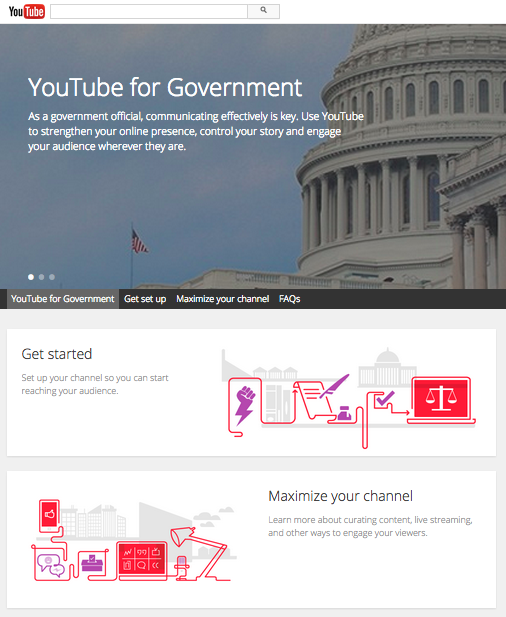
Google hopes Mr. Smith will use “YouTube for Government” to Hangout more online

Screen Shot 2014-09-21 at 5.09.39 PM

Google launched a “Google for Government” guide today, positioning it as a “a one-stop shop where government officials can learn how to get the most out of YouTube as a communication tool.” In a post on the Google Politics blog, Brandon Feldman recounts the use of YouTube by government, linking to examples from State of the Unionlegislative hearingsexplainer videos and Hangouts and asserting that “YouTube has become an important platform where citizens engage with their governments and elected officials.”

Putting aside the question of whether there’s two-way engagement going on or not in the comment sections on political videos on YouTube, which have been historically among the most toxic online, the guide will be useful to anyone looking for best practices on livestreaming or setting up a channel, playlists and other features.  As I’ve found, it’s quite easy to livestream a Hangout, save the recording to YouTube and share it afterwards.

The guide does include a section on “engaging your community” through Google Hangouts, a venue that I still believe has tremendous potential for Presidents and other elected leaders to receive real questions from citizens, escaping the bubble of media and access journalism.

Here’s hoping more representatives use this new technology to listen to their constituents, not just use it as a cheaper way to broadcast their speeches. That’s the wish Google Feldman expressed: “If you’re a government official, whether you are looking for an answer to a quick question or need a full training on YouTube best practices, we hope this resource will help you engage in a rich dialogue with your constituents and increase transparency within your community.”

In a win for open government advocacy, DC removes flaws in its municipal open data policy

Update:

dcgov_logoIt’s a good day for open government in the District of Columbia. Today, DC’s Office of the Chief Technology Officer (OCTO) has updated the Terms and Conditions for DC.gov and the city’s new open data platform, addressing some of the concerns that the Sunlight Foundation and Code for DC expressed about the new open data policy introduced in July. The updated terms and conditions rolling out onto the city’s digital civic architecture this afternoon. “Today’s changes are really focused on aligning DC.Gov’s Terms and Conditions of Use with the new open data and transparency policy released this summer,” explained Mike Rupert, the communications director for OCTO,” in an interview. “The site’s T&C hadn’t been updated in many years,” according to Rupert. The new T&C will apply to DC.gov, the open data platform and other city websites. “It is encouraging that DC is taking steps toward considering feedback and improving its Terms and Conditions, but there is still room for improvement in the broader scope of DC’s policies,”said Alisha Green, a policy associate with Sunlight Foundation’s local policy team.  “We hope those implementing DC’s new open data policy will actively seek stakeholder input to improve upon what the policy requires. The strength of the policy will be in its implementation, and we hope DC will take every opportunity to make that process as open, collaborative and impactful as possible.” So, OCTO both heard and welcomed the feedback from open government advocates regarding the policy and agreed that the policy implications of the terms and conditions were problematic. Certain elements of the previous Terms and Conditions of Use (Indemnity, Limitation of Liability) could have chilled the understanding of the public’s right to access and have been eliminated,” said Rupert. Those were the sections that prompted civic hacker Josh Tauberer to wonder whether he needed a lawyer to hack in DC are simply gone, specifically that Indemnity and Liability Section. Other sections, however, still remain. The revised policy I obtained before the updated terms and conditions went online differs in a couple of ways from the one that just that went online. First, the Registration section remains, as does the Conduct section, although DC eliminated the 11 specific examples. That said, it’s better, and that’s a win. District officials remain cautious about how and where reuse might occur, they’re going to at least let the data flow without a deeply flawed policy prescription. “While we want to be mindful of and address the potential for harm to or misuse of District government information and data, the Terms and Conditions of Use should promote the new open data and transparency philosophy in a more positive manner,” said Rupert. Sharp-eyed readers of the new policy, however, will note that DC’s open data and online information has now been released to the public under a Creative Commons license, specifically Attribution 3.0 United States. That means that anyone who uses DC’s open data is welcome to “Share — copy and redistribute the material in any medium or format and Adapt — remix, transform, and build upon the material — for any purpose, even commercially,” as long as they provide “Attribution — You must give appropriate credit, provide a link to the license, and indicate if changes were made. You may do so in any reasonable manner, but not in any way that suggests the licensor endorses you or your use.” When asked about the CC license choice, Rupert said that “The new copyright language from Creative Commons – which as you is know is becoming the international standard – better states the overriding principle of the public’s right to web content and data. ” That did not sit entirely well with open government advocates who hold that making open data license free is a best practice. Asked for comment, Tauberer emailed the following statement in a response to the draft of the revision, welcoming the District’s responsiveness but questioning the premise of the District of Columbia having any “terms and conditions” for the public using open government data at all.

The new terms drop the most egregious problems, but these terms still don’t count as “open.” Should I expect a lawsuit if I don’t tip my hat and credit the mayor every time I use the data we taxpayers paid to create? Until the attribution requirement is dropped, I will recommend that District residents get District data through Freedom of Information Act requests. It might take longer, but it will be on the people’s terms, not the mayor’s. It’s not that the District shouldn’t get credit, but the District shouldn’t demand it and hold civil and possibly criminal penalties over our heads to get it. For instance, yesterday Data.gov turned their attribution requirement into a suggestion. That’s the right way to encourage innovation. All that said, I appreciate their responsiveness to our feedback. Tim from DC GIS spent time at Code for DC to talk about it a few weeks ago, and I appreciated that. It is a step in the right direction, albeit one deaf to our repeated explanation that “open” does not mean “terms of use.

The good news is that DC’s OCTO is listening and has committed to being responsive to future concerns about how it’s handling DC’s online presences and policies. “Several of your questions allude to the overall open data policy and we will definitely be reaching out to you and all other interested stakeholders as we begin implement various elements of that policy,” said Rupert.

Update: On October 29th, DC updated its Terms and Conditions again, further improving them. Tauberer commented on the changes to the open data policy on his blog. In his view, the update represents a step forward and a step back:

In a new update to the terms posted today, which followed additional conversations with OCTO, there were two more great improvements. These terms were finally dropped:

  • agreeing to follow all “rules”, a very ambiguous term
  • the requirement to attribute the data to the District in all uses of the data (it’s now merely a suggestion)

The removal of these two requirements, in combination with the two removed in September, makes this a very important step forward.

One of my original concerns remains, however, and that is that the District has not granted anyone a copyright license to use District datasets. Data per se isn’t protected by copyright law, but the way a dataset is presented may be. The District has claimed copyright over its things before, and it remains risky to use District datasets without a copyright license. Both the September update and today’s update attempted to address this concern but each created more confusion that there was before.

Although today’s update mentions the CC0 public domain dedication, which would be the correct way to make the District data available, it also explicitly says that the District retains copyright:

  • The terms say, at the top, that they “apply only to . . . non-copyrightable information.” The whole point is that we need a license to use the aspects of the datasets that are copyrighted by the District.
  • Later on, the terms read: “Any copyrighted or trademarked content included on these Sites retains that copyright or trademark protection.” Again, this says that the District retains copyright.
  • And: “You must secure permission for reuse of copyrighted … content,” which, as written (but probably not intended), seems to say that to the extent the District datasets are copyrighted, data users must seek permission to use it first. (Among other problems, like side-stepping “fair use” in copyright law.)

With respect to the copyright question, the new terms document is a step backward because it may confuse data users into thinking the datasets have been dedicated to the public domain when in fact they haven’t been.

This post has been updated with comments from Tauberer and the Sunlight Foundation.

On its 3rd anniversary, opportunities and challenges for the Open Government Partnership

opgFrance1

In 2010, President Barack Obama spoke to the United Nations General Assembly about open government. “The common thread of progress is the principle that government is accountable to its citizens,” he said, “and the diversity in this room makes clear — no one country has all the answers, but all of us must answer to our own people.”

In all parts of the world, we see the promise of innovation to make government more open and accountable.  And now, we must build on that progress.  And when we gather back here next year, we should bring specific commitments to promote transparency; to fight corruption; to energize civic engagement; to leverage new technologies so that we strengthen the foundations of freedom in our own countries, while living up to the ideals that can light the world.

Open government, said Samantha Power, now the U.S. ambassador to the United Nations, could have a global impact.

In 2011, a historic Open Government Partnership launched in New York City, hailed as a fresh approach to parting the red tape by the Economist. “The partnership is really the first time that there is a multilateral platform to address these issues,” said Maria Otero, former under secretary of state for democracy and global affairs at the United States State Department. “The partnership could have focused on countries come in and present best practices and exchange ideas and then just go home.”

“The partnership is really focused on first having countries participate that have already demonstrated interest in this area and have already put in place a number of specific things and the material laid out, if you will, the minimum standards that are being requested. What the partnership really looks for is to provide a mechanism by which the countries can each develop their own national plans on ways to expand what they’re doing on transparency, accountability, and civic engagement, or to start new initiatives for them. That is really what is very different and important about this partnership, is that it is very action- and results-oriented.”

In 2012, the Open Government Partnership became a player on the world stage as it hosted a global gathering of national leaders and civil society an annual meeting in Brazil, with the responsibilities and challenges that accompany that role, including pushing participants to submit missing action plans and progress reports, not just letters of commitment.

In January 2013, Power hailed the Open Government Partnership (OGP) as President Obama’s signature governance initiative:

It’s not about the abstraction about ‘fighting corruption’ or ‘promoting transparency’ or ‘harnessing innovation’ — it’s about ‘are the kids getting the textbooks they’re supposed to get’ or does transparency provide a window into whether resources are going where they’re supposed to go and, to the degree to which that window exists, are citizens aware and benefiting from the data and that information such that they can hold their governments accountable. And then, does the government care that citizens care that those discrepancies exist?

In May 2013, a seminal event in the evolution of OGP occurred when Russia withdrew from the Open Government Partnership:

If the dominant binary of the 21st century is between open and closed, Russia looks more interested in opting towards more controllable, technocratic options that involve discretionary data releases instead of an independent judiciary or freedom of assembly or the press. One of the challenges of the Open Government Partnership has always been the criteria that a country had to pass to join and then continue to be a member. Russia’s inclusion in OGP instantly raised eyebrows, doubts and fears last April, given rampant corruption in the public sector and Russia’s terrible record on press freedom. “Russia’s withdrawal from the OGP is an important reminder that open government isn’t easy or politically simple,” said Nathaniel Heller, executive director of Global Integrity. “While we don’t yet fully understand why Russia is leaving OGP, it’s safe to assume that the powers that be in the Kremlin decided that it was untenable to give reformers elsewhere in the Russian government the freedom to advance the open government agenda within the bureaucracy.”

In November 2013, the world may have hit ‘peak open‘ at the OGP annual summit in London, despite the partnerships’ members facing default states of closed.

Swirling underneath the professional glitz of an international summit were strong undercurrents of concern about its impact upon governments reluctant to cede power, reveal corruption or risk embarrassment upon disclosure of simple incompetence. The OGP summit took place at a moment where 21st century technology-fueled optimism has splashed up against the foundations of institutions created in the previous century. While the use of the Internet as a platform for collective action has grown, so too have attendent concerns about privacy and surveillance, in the wake of disclosures by NSA contractor Edward Snowden, where the same technologies that accelerated revolutions across the Middle East and North Africa are being used to capture and track the people advocating for change.

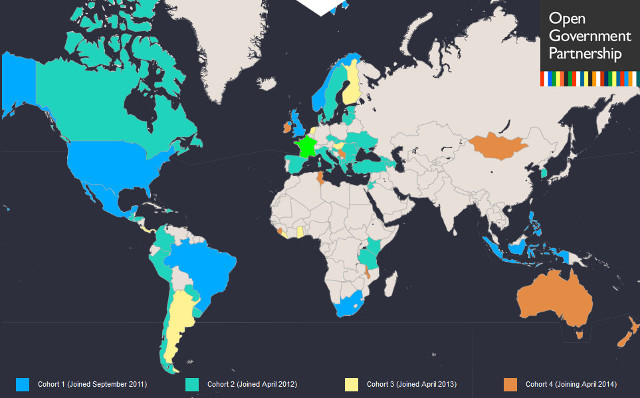
In 2014 the Open Government Partnership has matured and expanded, with France joining earlier in the year and Bosnia and Herzegovina bringing the total number of participating countries to 65 out of about 88 eligible countries worldwide. As OGP turns three, the partnership is celebrating the success of its expansion and looking ahead to its future, with a clearer mission and goals and ambitious four year strategy (PDF). The partnership is finally writing letters to countries that are not living up to their commitments, although the consequences for their continued participation if they do not comply remain to be seen.

The challenges and opportunities ahead for a partnership that provides a platform for civil society to hold government accountable are considerable, given the threats to civil society worldwide and the breathtaking changes brought about through technological innovation. Today, 10 national leaders will speak in New York City to mark OGP’s third anniversary. (I’ll be there to listen and share what I can.)

After the speeches end and the presidents and prime ministers return home, serious questions will remain regarding their willingness to put political capitol behind reforms and take tough stands to ensure that their governments actually open up. Digital government is not open government, just as not all open data supports democratic reforms.  As Mexico prepares to become lead co-chair of OGP, one element that didn’t make it into the challenges listed for the country is the state of press freedom in Mexico. As the Committee to Protect Journalists highlighted, open government is not sustainable without a free press. As long as the murders of journalists go unpunished in Mexico, the commitments and efforts of the Mexican national government will have to be taken in context.

Given this blog’s past stance that as press freedom goes, so too does open government, I’ve signed a petition urging the White House to explicitly support a right to report. Every other country that has committed to open government should do the same. Given OGP’s own challenges around the media and open government (PDF), I would also urge the partnership to make sure that press freedom and freedom of expression occupies a prominent place in its advocacy efforts in the years ahead.

Open government advocates: terms and conditions mean DC open data is fauxpen data

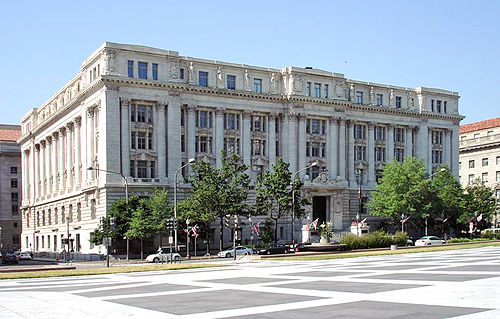
500px-WilsonbldgEarlier this summer, this blog covered the launch of District of Columbia’s executive order on open government, open data policy, open data platform and online FOIA portal. Last week, the Sunlight Foundation laid out what DC should have done differently with its open data policy.

“The evolution of open data policies since 2006 provides a chance for stakeholders to learn from and build on what’s been accomplished so far,” wrote policy associate Alisha Green. “This summer, a new executive directive from Mayor Vincent Gray’s office could have taken advantage of that opportunity for growth, It fell far short, however. The scope, level of detail, and enforceability of the policy seem to reveal a lack of seriousness about making a significant improvement on DC’s 2006 memorandum.”

Green says that DC’s robust legal, technology and advocacy community’s input should have helped shape more of the policy and that “the policy should have been passed through the legislative, not executive, process.” Opportunities, missed.

Yesterday, civic hacker and Govtrack.us founder Joshua Tauberer took the critique one step further, crying foul over the terms of use in the DC data catalog.

“The specter of a lawsuit hanging over the heads of civic hackers has a chilling effect on the creation of projects to benefit the public, even though they make use of public data released for that express purpose,” he wrote. “How does this happen? Through terms of service, terms of use, and copyright law.”

The bottom line, in Tauberer’s analysis, is that the District oF Columbia’s open data isn’t truly open. To put it another way, it’s fauxpen data.

“Giving up the right to take legal action and being required to follow extremely vague rules in order to use public data are not hallmarks of an open society,” writes Tauberer. “These terms are a threat that there will be a lawsuit, or even criminal prosecution, if civic hackers build apps that the District doesn’t approve of. It has been a long-standing tenant that open government data must be license-free in order to truly be open to use by the public. If there are capricious rules around the reuse of it, it’s not open government data. Period. Code for DC noted this specifically in our comments to the mayor last year. Data subject to terms of use isn’t open. The Mayor should update his order to direct that the city’s “open data” be made available a) without restriction and b) with an explicit dedication to the public domain.”

In the wake of these strong, constructive critiques, I posted an update in an online open government community wondering what the chances ar that DC public advocates, technologists, lawyers, wonks, librarians and citizens will go log on to the DC government’s open government platform, where the order is hosted, and suggest changes to the problematic policy? So far, few have.

The issue also hasn’t become a serious issue for the outgoing administration of Mayor Vincent Gray, or in the mayoral campaign between Muriel Bowser and David Catania, who both sit on the DC Council.

The issues section of Bowser’s website contains a positive but short, vague commitment to “improved government”: “DC needs a government that works for the people and is open to the people,” it reads. “Muriel will open our government so that DC residents have the ability to discuss their concerns and make suggestions of what we can do better.”

By way of contrast, Catania published a 128 page platform online that includes sections on “democracy for the District” and “accountable government.”(Open data advocates, take note: the document was published on Scribd, not as plaintext or HTML.) The platform includes paragraphs on improving access to government information, presenting information in user-friendly formats, eradicating corruption and rooting out wasteful spending.

Those are all worthy goals, but I wonder whether Catania knows that the city’s current policy and the executive order undermines the ability and incentives for journalists, NGOs, entrepreneurs and the District’s residents to apply the information he advocates disclosing for the purposes intended.

Last week, I asked Bowser and Catania how their administrations would approach open data in the District.

To date, I’ve heard no reply. I’ve also reached out to DC’s Office of Open Government. If I hear from any party, I’ll update this post.

Update: In answer to a question I posed, the Twitter account for DC.gov, which manages DC’s online presence and the open data platform in question as part of the Office of the Chief Technology Officer, indicated that “new terms and conditions [were] coming shortly.” No further details were offered.

“Internet Slowdown Day” sends over hundreds of thousands* of new comments on net neutrality to FCC

unnamed

Today, dozens of websites “slowed down” for a cause, collectively advocating against Open Internet rules proposed by the Federal Communications Commission. None of the participants in today’s “Internet Slowdown Day” actually delayed access to their websites: instead, they used code to add a layer to visitors’ Web browsers with one of the loading icons grimly familiar to anyone who’s ever waited for a long download or crufty operating system function to finish in an overlay and linked to BattleForThenet.com/September10, which encouraged visitors to sign a letter supporting net neutrality, or to use online tools to call Congress.

While many big tech companies didn’t participate, millions of visitors to Reddit, Tumblr, Netflix, Free Press, Reddit, Netflix, Mozilla, Kickstarter, Upworthy, Automattic, Digg, Vimeo, Boing Boing, Urban Dictionary, Foursquare, Cheezburger and the Sunlight Foundation saw the spinning icon, among others.

stop-slow-lanes

The effort appears to have made a difference: According to the FCC*, by 6 PM ET the agency saw 111,449 new public comments added to the already record-setting total, with some 41,173 filed into the 14-28 docket of the FCC’s website since and another 70,286 sent to the openinternet@fcc.gov inbox, setting a new high water mark of some 1,515,144 to date, with more yet to come. As reported by Mike Masnick, citing ThinkProgress, the Internet slowdown generated 1000 calls per minute to Congress. *Update: Fight for the Future claims that more than 740,000 comments were submitted through Battleforthenet.com and that the FCC hasn’t caught up. According to the nonprofit, “this happened during our last big push too when their site crashed. We are storing comments and will deliver all.”

“We sent 500K+ comments,” wrote Tiffaniy Cheng, co-founder of Fight for the Future, in an email. “They’re getting backlogged as the FCC can’t handle the amount of data. The FCC asked us to hold as they could not accept them and can’t handle all the load. So, they only just got to accepting them again.”

That means there have been at least 409,522 reply comments filed since July 18, with five days left in the reply comment period, with more than one quarter of them coming in a single day. (*If Fight for the Future’s total is correct, the number of reply comments filed passed 800,000, with the total nearing 2 million.) The FCC will host a public Open Internet roundtable discussion on September 16, the day after the period closes. According to an analysis of the first 800,000 public comments by the Sunlight Foundation, less than 1 percent of the submissions were clearly opposed to net neutrality.

These numbers are still dwarfed by the millions of calls and emails sent to Washington during the campaign to halt the Stop Online Piracy Act (SOPA) and PROTECT-IP Act in Congress in 2012, when Google and Wikipedia connected visitors to their websites to switchboards on Capitol Hill. They may also have less of an effect on an independent regulatory agency that has yet to chart a sustainable legal course in the storm of online criticism and intense lobbying by affected industries.

According to a FCC spokesman, the agency expected an increased volume of traffic due to the “slowdown.” Perhaps anticipating the interest, the @FCC’s first tweet today encouraged people to submit comments via email:

The total number of comments on the Open Internet proceeding is sure to grow in the remaining week, with the number of emails sent to the FCC’s dedicated inbox likely to go past a million. (Update: On Thursday morning, the FCC confirmed that a total of 632,328 comments filed to ECFS and 1,118,107 sent to openinternet@fcc.gov, for a cumulative total of 1,750,435.) In many ways, that outcome feels appropriate.

When the FCC’s 18 year-old online commenting system has groaned under a huge volume of online traffic, people have routed around the downed comment system and used the original killer app of the Internet: email, the “tremendous, decentralized, open platform on which new, innovative things can and have been built,” based upon the same kinds of open protocols that enabled the unprecedented growth of a wealth of networks to grow around the world.

Update: At the end of the day after the Internet Slowdown, the FCC still working to enter all of the new comments created the day before into their systems — and the agency decided to offer another way to file comments: using email attachments.

In fact, FCC asked for something unexpected, simple and smart: for comments to be submitted at bulk open data, as .csv files of no more than 9 MB each. While the FCC doesn’t refer specifically to the comments that Fight for the Future has collected, this option does offer an easy way to electronically transfer the comments through an established channel. In the future, perhaps this will become the default option for
filing bulk comments collected by advocates, at least until Congress funds a new online filing system or the agency finds a way to use Dropbox. It should certainly make releasing them online as structured data for third-party analysis much easier; if the FCC wanted to, if could publish them almost as quickly as the comments came in.

The agency’s chief information officer, David Bray, explained the additional option in a blog post:

The volume of public feedback in the Open Internet proceeding has been commensurate with the importance of the effort to preserve a free and open Internet.

The Commission is working to ensure that all comments are processed and that we have a full accounting of the number received as soon as possible. Most important, all of these comments will be considered as part of the rulemaking process. While our system is catching up with the surge of public comments, we are providing a third avenue for submitting feedback on the Open Internet proceeding.

In the Commission’s embrace of Open Data and a commitment to openness and transparency throughout the Open Internet proceedings, the FCC is making available a Common Separated Values (CSV) file for bulk upload of comments given the exceptional public interest. All comments will be received and recorded through the same process we are applying for the openinternet@fcc.gov emails.

Attached is a link to the CSV file template along with instructions. Once completed, the CSV file can be emailed to openinternet@fcc.gov where if it matches the template the individual comments will be filed for the public record with the Electronic Comment Filing System. When you email this file, please use the subject “CSV”. We encourage CSV files of 9MB or less via email.

The Commission welcomes the record-setting level of public input in this proceeding, and we want to do everything we can to make sure all voices are heard and reflected in the public record.

A reply to an anonymous sexist comment about women, business and leadership

The Women of ENIAC

The “Women of ENIAC.” For their history, read “Programming the ENIAC” and “When Computers Were Women.”

My reply to an anonymous commenter on my recent column about the next US CTO deserved to be edited and posted separately: while the percentage of women in leadership roles at at Fortune 500 companies remains small, recent research from management science leaves little doubt about the effectiveness of their leadership. According to at least one analysis from the American Psychological Society, people generally do not doubt the leadership abilities of women.

The primary reason Megan Smith is the new United States chief technology officer is because she’s immensely capable, and has proved it over the decades since she graduated from MIT. The nation is fortunate that someone of her talents has chosen to enter public service.

I hope Smith inspires other young women to pursue careers in technology, shine, and then apply their talents on behalf of their fellow citizens. Including women matters for the future of technology and society.

(Thanks to Chris Brogan for reminding me of why highlighting a comment can be valuable.)