Congressional bills could cripple FOIA requests for feedlot data from the EPA

UPDATE: The final version of the Farm Bill that passed both houses of Congress did not contain this amendment.

On the one hand, the White House is committing (again) to modernizing the administration of the Freedom of Information Act  and touting a new effort to open up agricultural data:

On the other, there are now multiple efforts to bar access to agricultural information sprouting on Capitol Hill. Open government advocates successfully stalled an amendment on farm bill secrecy this spring. The amendment is back, in multiple places.

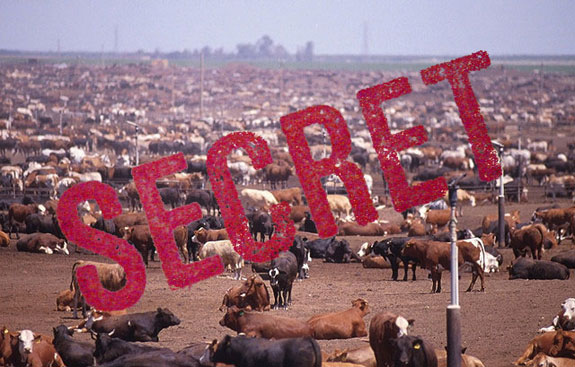
The Farm Bill poses a great threat to the public’s right to know about agricultural and livestock operations.
farm-bill-foia-575

OpentheGovernment.org is warning that multiple bills could limit the EPA from releasing data relevant to the public interest:

The Senators who proposed the Farm Bill amendment, Senators Grassley and Donnelly, recently introduced an identical bill, and similar language appears in the House-passed version of the Farm Bill (Sec. 450) and the House Appropriations Committee’s version of the 2014 Interior spending bill (Sec. 11325). The sponsors say the language is intended to address the EPA’s release of information related to Concentrated Animal Feeding Operations (CAFOs) to environmental groups earlier this year. After hearing concerns about the amount of private information included in the release, EPA requested the groups return the original information (which the groups did) and committed to redacting all private information from similar releases in the future.

The language some Members of Congress are trying to make a part of the law goes well beyond the stated objectives. Rather than appropriately protecting private information, the language cuts off all public access to any information the EPA has collected on any owner, operator, or employee of a livestock operation (the language in the House-passed farm bill is even broader — barring the release of information on agricultural operations as well as livestock operations). In other words, the language would not just prevent the EPA from releasing private information about a local farmer with a few pigs or heads of cattle, it would broadly shield the information of corporate operations. The language also ignores the possible public interest in release of the information. If passed, the language would completely cut off access to information that is especially critical for people who live near or share waterways with CAFOs.

To be clear, these are not minor exceptions.

The authors of the Senate bill are “trying to create a huge hole in the FOIA by blocking the EPA from releasing any information it has collected on any owner, operator, or employee of a livestock operation,” writes Scott A. Hodes at the FOIA Blog.

“The language in the House-passed farm bill is even broader, barring the release of information on agricultural operations as well as livestock operations. …There may be a valid reason to not release information about small family farms, but the language in some of these proposals go way past that point and would create a huge Exemption 3 statute that blocks information that the public deserves to be known from being released via the FOIA.

According to OpenSecrets.org, the campaign committees and leadership PACs of the sponsors of the bill, Senator Charles Grassley and Senator Joe Donnelly, have received $458,750 and $104, 891 from agribusiness, respectively.

To date, S.1343 hasn’t garnered much attention in the press or online at POPVOX and OpenCongress. That’s unfortunate. While the repeated release of personally identifiable information in FOIA documents by the Environmental Protection Agency clearly merits Congressional attention and oversight, these amendments are a gross overreaction to the disclosures and stand to damage the public interest.

Given the importance of public access to information about agriculture, particularly the large feedlots that provide the majority of the beef Americans consume and attendant food safety issues, limiting broad disclosure from the EPA would be a huge step backwards for open government in the United States.

Update: More than 40 organizations have joined OpenTheGovernment.org to urge Congress not to include language that cuts off public access to this information, sending a letter (embedded below) to the committee.

As the letter points out, people who live near agricultural and livestock operations – particularly people who live near concentrated animal feeding operations (CAFOs) – need access to information about these operations in order to ensure their health and safety. The law already requires federal agencies, when responding to a Freedom of Information Act (FOIA) request for information about these operations, to protect personal privacy, including email addresses, phone numbers, and other similar information of non-government individuals. Indeed, after determining that it improperly released personal information related to CAFOs earlier this year, the Environmental Protection Agency (EPA) asked requesters who had received the information to return it to the agency. The requesters complied.

Beyond being unnecessary to protect personal privacy, language included in the House-passed version of the Farm Bill is exceedingly broad and vague. Because it does not define the terms “owners” or “operators,” it would extend FOIA’s personal privacy protections to corporate farms. In FEC vs. ATT, the Supreme Court found that Congress never intended to extend the FOIA’s personal privacy protections to corporations, and Congress must not do so now.

[Image Credit: POGO]

2013 Code for America Summit convenes civic innovators in San Francisco [LIVEBLOG]

cfa-2013-theater
Hello from San Francisco! I’ll be liveblogging from the 2013 Code for America Summit for the next 2 days. You can tune in here.

Readers should also be aware of an important disclosure: Code for America paid for the costs of my travel to and from San Francisco and has further engaged me to produce paid analysis of the themes extant at the event. Part of our agreement, however, was that the organization would have no editorial control or discretion with respect to what I write about the event, organization, partners or constituents.

Digging in open data dirt, Climate Corporation finds nearly $1 billion in acquisition

“Like the weather information, the data on soils was free for the taking. The hard and expensive part is turning the data into a product.”-Quentin Hardy, in 2011, in a blog post about “big data in the dirt.”

soil-type-graphic_wide-7a4e4709ff8554fc2abafaa342589fccf0524189-s6-c30

The Climate Corporation, acquired by Monsanto for $930 million dollars on Wednesday, was founded using 30 years of government data from the National Weather Service, 60 years of crop yield data and 14 terabytes of information on soil types for every two square miles for the United States from the Department of Agriculture, per David Friedberg, chief executive of the Climate Corporation.

Howsabout that for government “data as infrastructure” and platform for businesses?

As it happens, not everyone is thrilled to hear about that angle or the acquirer. At VentureBeat, Rebecca Grant takes the opportunity to knock “the world’s most evil corporation for the effects of Monsanto’s genetically modified crops, and, writing for Salon, Andrew Leonard takes the position that the Climate Corporation’s use of government data constitutes a huge “taxpayer ripoff.”

Most observers, however, are more bullish. Hamish MacKenzie hails the acquisition as confirmation that “software is eating the world,” signifying an inflection point in data analysis transforming industries far away from Silicon Valley. Liz Gannes also highlighted the application of data-driven analysis to an offline industry. Ashlee Vance focused on the value of Climate Corporation’s approach to scoring risk for insurance in agribusiness. Stacey Higginbotham posits that the acquisition could be a boon to startups that specialize in creating data on soil and climate through sensors.

[Image Credit: Climate Corporation, via NPR]

City of Los Angeles launches open data pilot and survey

Upon election, I wondered whether Mayor-Elect Eric Garcetti would reboot Los Angeles city government for the 21st century. After 4 months, there are several promising green shoots to report.

First, Mayor Garcetti vowed to modernize city government in the City of Angels, posting agency performance statistics online and reviewing all departments. Now, the City of Los Angeles has launched its own open data pilot project using ESRI’s ArcGIS platform.

laskyline_logo_final_7_1

For veterans of such efforts, a portal to mapping data may not be particularly exciting or useful, but it’s a start. Notably, the city has put up an online survey where people can request other kind of city data and suggest changes or improvements to the pilot website.

Here’s a few suggestions:

1) Study how the cities of Chicago and New York cleaned, published and used data, including market demand.

2) Talk to the data desk at the Los Angeles Times. If you want your city’s performance data to be used by media for accountability and transparency, address their concerns.

3) Make a list of every single request for data made by journalists in Los Angeles under the California Records ActRelease the data and proactively publish that type of data going forward.

4) If your goal is economic outcomes from open data, review all requests for city data from businesses and prioritize release of those data sets. Engage startups and venture capitalists who are consuming open data and ask about quality, formats and frequency of release.

5) Check out New York City’s gorgeous new open data site and the ongoing release of more data sets. Set those free, too.

6) Check out the new NYC.gov, Utah.gov and gov.uk in the United Kingdom for ideas, principles and models. Of note: the use of open standards, citizen-centricity, adaptive Web design, powerful search, focus on modern design aesthetic.

Good luck, LA!

Does privatizing government services require FOIA reform to sustain open government?

I read an editorial on “open government” in the United Kingdom by Nick Cohen today, in which he argues that Prime Minister David Cameron is taking “Britain from daylight into darkness. Cohen connects privatization to the rise of corporate secrecy … Continue reading

Hedge fund use of government data for business intelligence shows where the value is

money vortexThis week, I read and shared a notable Wall Street Journal article on the value of government data in that bears highlighting: hedge funds are paying for market intelligence using open government laws as an acquisition vehicle.

Here’s a key excerpt from the story: “Finance professionals have been pulling every lever they can these days to extract information from the government. Many have discovered that the biggest lever of all is the one available to everyone—the Freedom of Information Act—conceived by advocates of open government to shine light on how officials make decisions. FOIA is part of an array of techniques sophisticated investors are using to try to obtain potentially market-moving information about products, legislation, regulation and government economic statistics.”

What’s left unclear by the reporting here is if there’s 1) strong interest in data and 2) deep pocketed hedge funds or well-financed startups are paying for it, why aren’t agencies releasing it proactively?

Notably, the relevant law provides for this, as the WSJ reported:

“The only way investors can get most reports is to send an open-records request to the FDA. Under a 1996 law, when the agency gets frequent requests for the same records—generally more than three—it has to make them public on its website. But there isn’t any specific deadline for doing so, says Christopher Kelly, an FDA spokesman. That means first requesters can get records days or even months before they are posted online.”

Tracking inbound FOIA requests from industry and responding to this market indicator as a means of valuing  “high value data” is a strategy that has been glaringly obvious for years. Unfortunately, it’s an area in which the Obama administration’s open data policies look to have failed over the last 4 years, at least as viewed through the prism of this article.

If data sets that are requested multiple times are not being proactively posted on Data.gov and tracked there, there’s a disconnect between what the market for government data is and the perception by officials. As the Obama administration and agencies prepare to roll out enterprise data inventories later fall as part of the open data policies, here’s hoping agency CIOs are also taking steps to track who’s paying for data and which data sets are requested.

If one of the express goals of the federal governments is to find an economic return on investment on data releases, agencies should focus on open data with business value. It’s just common sense.

[Image Credit: Open Knowledge Foundation, Follow the Money]

U.S. House of Representatives publishes U.S. Code as open government data

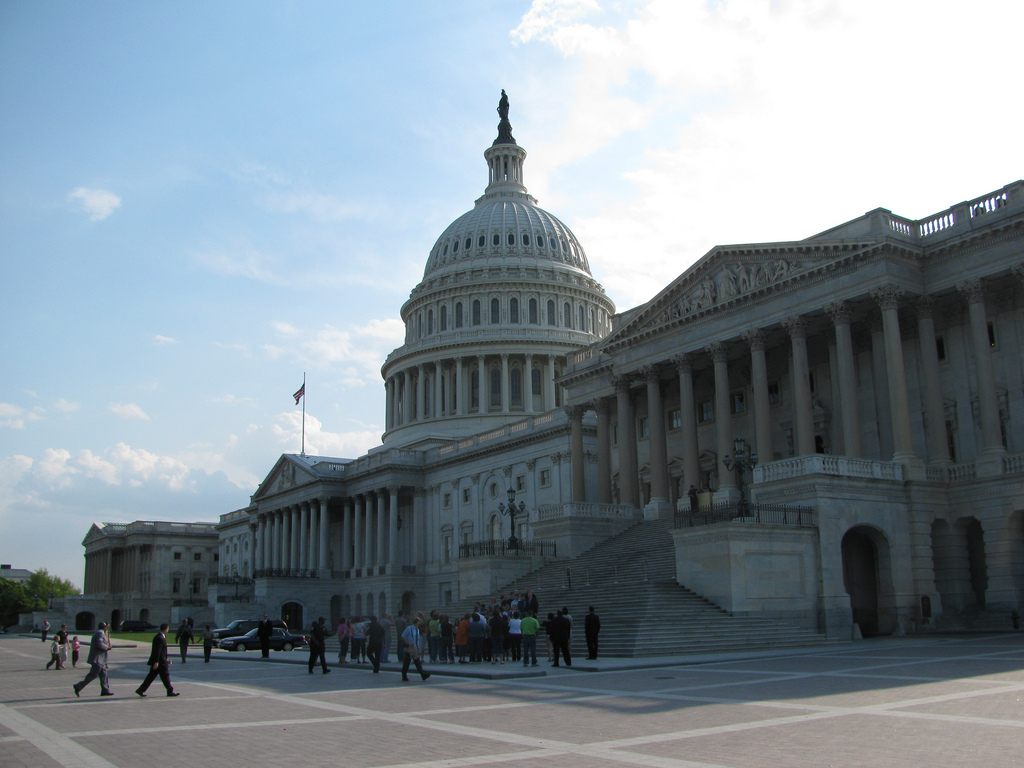
us capitol

Three years on, Republicans in Congress continue to follow through on promises to embrace innovation and transparency in the legislative process. Today, the United States House of Representatives has made the United States Code available in bulk Extensible Markup Language (XML).

“Providing free and open access to the U.S. Code in XML is another win for open government,” said Speaker John Boehner and Majority Leader Eric Cantor, in a statement posted to Speaker.gov. “And we want to thank the Office of Law Revision Counsel for all of their work to make this project a reality. Whether it’s our ‘read the bill’ reforms, streaming debates and committee hearings live online, or providing unprecedented access to legislative data, we’re keeping our pledge to make Congress more transparent and accountable to the people we serve.”

House Democratic leaders praised the House of Representatives Office of the Law Revision Counsel (OLRC) for the release of the U.S. Code in XML, demonstrating strong bipartisan support for such measures.

“OLRC has taken an important step towards making our federal laws more open and transparent,” said Whip Steny H. Hoyer, in a statement.

“Congress has a duty to publish our collective body of enacted federal laws in the most modern and accessible way possible, which today means publishing our laws online in a structured, digital format. I congratulate the OLRC for completing this significant accomplishment. This is another accomplishment of the Legislative Branch Bulk Data Task Force. The Task Force was created in a bipartisan effort during last year’s budget process. I want to thank Reps. Mike Honda and Mike Quigley for their leadership in this area, and Speaker Boehner and Leader Cantor for making this task force bipartisan. I also want to commend the dedicated civil servants who are leading the effort from the non-partisan legislative branch agencies, like OLRC, who work diligently behind the scenes – too often without recognition – to keep Congress working and moving forward.”

The reaction from open government advocates was strongly positive.

“Today’s announcement is another milestone in the House of Representatives efforts to modernize how legislative information is made available to the American people,” said Daniel Schuman, policy director at Citizens for Responsibility and Ethics in Washington (CREW). “The release of the US Code in Bulk XML is the culmination of several years of work, and complements the House’s efforts to publish House floor and committee data online, in real time, and in machine readable formats. Still awaiting resolution – and the focus of the transparency community’s continuing efforts — is the bulk release of legislative status information.” (More from Schuman at the CREW blog.)

“I think they did an outstanding job,” commented Eric Mill, a developer at the Sunlight Foundation. “Historically, the U.S. Code has been extremely difficult to reliably and accurately use as data. These new XML files are sensibly designed, thoroughly documented, and easy to use.”

The data has already been ingested into open government websites.

“Just this morning, Josh Tauberer updated our public domain U.S. Code parser to make use of the new XML version of the US Code,” said Mill. “The XML version’s consistent design meant we could fix bugs and inaccuracies that will contribute directly to improving the quality of GovTrack’s and Sunlight’s work, and enables more new features going forward that weren’t possible before. The public will definitely benefit from the vastly more reliable understanding of our nation’s laws that today’s XML release enables.” (More from Tom Lee at the Sunlight Labs blog.)

Jim Harper, Director of Information Policy Studies at the Cato Institute, similarly applauded the release.

“This is great progress toward better public oversight of government,” he said. “Having the U.S. Code in XML can allow websites, apps, and information services to weave together richer stories about how the law applies and how Congress is thinking about changing it.”

Harper also contrasted the open government efforts of the Obama administration, which has focused more upon the release of open government data relevant to services, with that of the House of Representatives. While the executive and legislative branches are by definition apples and oranges, the comparison has value.

“Last year, we reported that House Republicans had the transparency edge on Senate Democrats and the Obama administration,” he said. “(House Democrats support the Republican leadership’s efforts.) The release of the U.S. Code in XML joins projects like docs.house.gov and beta.congress.gov in producing actual forward motion on transparency in Congress’s deliberations, management, and results.

For over a year, I’ve been pointing out that there is no machine-readable federal government organization chart. Having one is elemental transparency, and there’s some chance that the Obama administration will materialize with the Federal Program Inventory. But we don’t know yet if agency and program identifiers will be published. The Obama administration could catch up or overtake House Republicans with a little effort in this area. Here’s hoping they do.”

This article has been updated with additional statements over time.

Intelligence executive David Bray to become new FCC CIO

david-bray-flack-jacketDavid Bray, a seasoned national intelligence executive (CV), will be the next chief information officer of the Federal Communications Commission. He’s expected to finish his work in the intelligence community at the Office of the Director for National Intelligence and commence work at the FCC in August.

“As the next FCC CIO, I look forward [to] aiding the FCC’s strong workforce in pioneering new IT solutions for spectrum auctions, next-gen cybersecurity, mobile workforce options, real-time enterprise analytics, enhanced open data, and several other vital public-private initiatives,” wrote Bray, in an email sent to staff and partners Monday night.

Bray holds a a PhD in information systems, a MSPH in public health informatics, and a BSCI in computer science and biology from Emory University, alongside a visiting associateship from the University of Oxford’s Oxford Internet Institute, and two post-doctoral associateships with MIT’s Center for Collective Intelligence and the Harvard Kennedy School. He also has served as a visiting associate with the National Defense University. Bray’s career also includes deployments to Afghanistan, projects at the Department of Energy and work at the Center of Disease Control.

Bray will inherit many IT challenges from former FCC CIO Robert Naylor, who announced that he’d be stepping down in December 2012. His background in the intelligence community will serve him well, with respect to network security issues, but he’ll need to continue to transition an agency that has traditionally outsourced much of its technology to 21st century computing standards and approaches to building infrastructure and meeting increasing demand for services.

Bray’s past work in collective intelligence, informatics, public health and data science suggest that he’ll have no shortage of vision to bring to the role. His challenge, as is true for every federal CIO these days, will be to work within limited budgets and under intense scrutiny to deliver on the promise.

To get a sense of Bray, watch his talk on “21st century social institutions at a brunch for Emory University scholars, in 2013:

What is the return on investment (ROI) of open government?

Putting a dollar value on clean water, stable markets, the quality of schooling or access to the judiciary is no easy task. Each of these elements of society, however, are to some extent related to and enabled by open government.

If we think about how the fundamental democratic principles established centuries ago extend today purely in terms of the abstraction of transparency, the “business value” of open government isn’t always immediately clear, at least with respect to investment or outcomes.

Transparency and accountability are core to how we think about government of, by and for the people, where a polity elects representative government. When budgets are constrained, however, city managers, mayors, controllers and chief information officers question the value of every single spending decision. (Or at least they should.)

It’s that context, of course, that’s driving good, hard questions about the business case for open government. Tim Berners-Lee, the inventor of the World Wide Web, said in 2011, at the launch of the Open Government Partnership in New York City, said that increased transparency into a state’s finances and services directly relates to the willingness of the businesses and other nations to invest in a country.

That’s the kind of thinking that has driven the World Bank to open up its data, to give people access to more information about where spending is happening and what those funds are spent upon. While transparency into government budgets varies immensely around the world, from frequently updated portals to paper records filed in local county offices, technology has given states new opportunities to be more accountable — or to be held accountable, by civic media and the emerging practice of data journalism.

The challenges with releasing spending data, however, are manifold, from quality assurance to the (limited) costs of publishing to access to making it comprehensible to taxpayers through visualizations and calculators.

People in and outside of government are working to mitigate these issues, from using better visualization tools to adopting Web-based online platforms for publishing. The process of cleaning and preparing data to be published itself has returns for people inside of government who need access to it. According to the McKinsey Global Institute, on average, government workers spend 19% of their days simply looking for information.

In other words, opening information government to citizens also can mean it’s more available to government itself.

Organizing and establishing governance practices for data, even if some of it will never be published online, also has significant returns. Chicago chief data officer Brett Goldstein established probability curves for violent crime, explained John Tolva, the chief technology officer of the city of Chicago, when we talked in 2011. Since then, “we’re trying to do that elsewhere, uncovering cost savings, intervention points, and efficiencies,” he said.

“We have multiple phases for how we roll out data internally, starting with working with the business owner,” said Goldstein, in an interview. “We figure out how we’ll get it out of the transactional database. After that, we determine if it’s clean, if it’s verified, and if we can sign off on it technically.”

Tolva makes the business case for open data by identifying four areas that support investment, including an economic rationale.

  1. Trust
  2. Accountability of the work force
  3. Business building
  4. Urban analytics

After New York City moved to consolidate and clean its regulatory data, city officials were able to apply predictive data analytics to save lives and money. According to Mike Flowers, the chief analytics officer of NYC, the city achieved:

  • A five-fold return on the time of building inspectors looking for illegal apartments
  • An increase in the rate of detection for dangerous buildings that are highly likely to result in firefighter injury or death
  • The discovery of more than twice as many stores selling bootlegged cigarettes
  • A five-fold increase in the detection of business licenses being flipped

California’s recent budget woes coincided with unprecedented demand for government to be more and efficient online. The state connected citizens to e-services with social media. Both California Unemployment Office and the Department of Motor Vehicles were able to deliver better services online without additional cost.

“You can tweet @CA_EDD and get answers like how long until you get a check, where to go on the website or job fairs,” said Carolyn Lawson, the former deputy director for the technology services governance division in the eServices Office of California, in an interview. “I don’t think the creators of Twitter thought it would be a helpdesk for EDD.”

These kinds of efforts are far from the only places where there are clear returns for investments. A world away from big cities and states in the United States and urban data analytics, the World Bank found the ROI in open government through civic participation and mobile phones. Mobile participatory budgeting helped raise tax revenues in Congo, combining technology, public engagement and systems thinking to give citizens a voice in government.

“Beyond creating a more inclusive environment, the beauty of the project in South Kivu is that citizen participation translates into demonstrated and measurable results on mobilizing more public funds for services for the poor,” said Boris Weber, team leader for ICT4Gov at the World Bank Institute for Open Government, in an interview in Washington. “This makes a strong case when we ask ourselves where the return of investment of open government approaches is.”

This post originally appeared on LaserFiche.

Open data in beta: From Data.gov to alpha.data.gov to next.data.gov

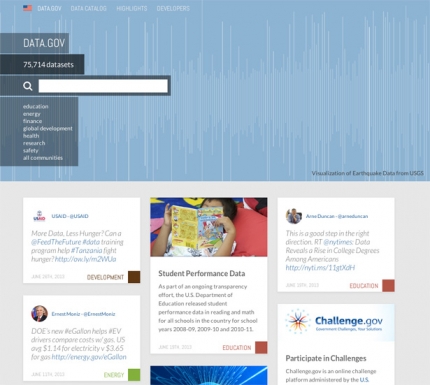
Writing at the White House blog, deputy US CTO Nick Sinai and Presidential Innovation Fellow Ryan Panchadsaram explain what’s new behind the next iteration of the federal open government data platform.

next-data-gov

The first incarnation of Data.gov and subsequent iterations haven’t excited the imagination of the nation. The next version, which employs open source technology like WordPress and CKAN, uses adaptive Web design and features improved search.

It also, critically, highlights how open data is fueling a new economy. If you read Slate, you already knew about how the future is shaping up, but this will provide more people with a reference. Great “next” step.

If you have opinions, questions or suggestions regarding the newest iteration, the Data.gov team is looking for feedback and Project Open Data is encouraging people to collaborate in the design process by creating pull requests on Github or commenting on Quora or Twitter.