What is the federal chief technology officer up to out in Silicon Valley? From afar, however, it’s looks like federal CTO Aneesh Chopra is stirring up awareness about open government and entrepreneurship in the venture capital community in California. He’s also traveling with Department of Health and Human Services (HHS) CTO Todd Park to add his compatriot’s considerable enthusiasm for innovation in healthcare information technology (HIT). Chopra’s slides follow:
During the event, I picked up some tweets coming out of a “D.C.-to-Silicon Valley” event and curated them using the Storify tool. It proved to be a bit unstable – apps in beta are fun! – but you’ll find a “living version” of the story embedded in the post below.
How does making government smarter relate to open government, e-government or “We government?”
As Sifry put it in the Huffington Post this week ,
At Personal Democracy Forum, we prefer the term “We-government,” the co-creating of new forms of collaboration and service that use technology, public data and the social web to address vital issues and solve public problems, that enables us to do more with less. It’s neither Right nor Left, not small government or big government, but effective do-it-ourselves-government.
What are the early success stories and challenges for an open government in beta? This morning in Washington, I dodged rain drops on my way to a Gov 2.0 panel moderated by Ogilvy Digital’s Rohit Bhargava to talk about that very topic, joining Personal Democracy Forum co-founder Micah Sifry; Mark Murray, deputy political director for NBC News; Ari Melber, correspondent and blogger for the Nation magazine and Politico; and Gwynne Kostin, Director at the Center for New Media and Citizen Engagement at the GSA.
The panel was livestreamed at Livestream.com and integrated with the Ogilvy’s 360 Digital Influence Facebook page for an online audience. Fast forward to about 30 minutes into the archive for the beginning of the event.
“We’re just beginning to see the government using the Web in a more porous, participatory way,” said Sifry, who saw no reason that government workers couldn’t get technology in the same way other citizens else can. “Really, government workers have mastered the telephone,” he said. “The can probably use Web 2.0 tools.”
Gov 2.0 Case Studies
While Sifry was critical of the White House’s embrace of Gov 2.0 and open government, he observed that at the agency level he’s seeing “a flowering of initiative.” That’s backed up by what I’ve seen on the ground and have reported on in numerous studies. For instance:
“There’s a movement to make sure that cities all put their data out in the same way,” said Sifry, as evidenced by the Open 311 initiative
Sifry also referenced the targeted crowdsourcing example of Peer-to-Patent, an open government innovation pioneered by White House deputy CTO Beth Noveck
The reboot of FCC.gov and rollout of APIs and developer engagement holds some promise.
“There is a civic surplus waiting to be tapped of people who want the country to succeed,” said Sifry. And, in fact, I reported on Harnessing the Civic Surplus for Open Government,” when Noveck spoke in Manor, Texas about all of these initiatives.
I’m shortchanging the comments of Melber, Kostin and Murray due to time, unfortunately, but the #Ogilvy360di tweetstream and archived livestream offer additional perspective. Both of the reporters provided ample insight into the hyper-charged world of national correspondents in Washington, where news and issues move almost as quickly as the polls. More of Kostin’s thoughts may also be fond at her blog, OnDotGov.
How can government to citizen communications be improved during emergencies? Earlier this year at the Gov 2.0 Expo, I talked to the founders of Civiguard, a technology company that’s working on leveraging mobile tech, GIS and social media to create a platform to address the challenge.
Embedded below is an interview with Shawna Pandya, CMO of CiviGuard, Inc.. Pandya’s background includes experience in both technological innovation and public service, with work on the neuroArm robotic arm for neurosurgery, a stint as the VP of Research for an inner-city free clinic for high-risk youth and published papers on telemedicine for the developing world.
[Photo by Senior Airman Joshua Strang, U.S. Air Force, via Wikipedia]
Now, scientists and policy makers will explore the potential for climate data services to inform citizens and government, enabling both to make better decisions for communities and businesses alike.
Can open government lead to greater awareness or action around the existential issue climate change? Posting open data online in of itself is not enough, although there’s no question that publishing scientific data where it can be publicly accessed, validated or stored is a huge step forward with respect to transparency.
Enter the Apps for Climate Action Contest, which challenged Canadian software developers to raise awareness and inspire action by using open data in Web and mobile applications. The open data itself came from the government of British Columbia, which created a catalogue of climate and greenhouse gas emission data at Data.gov.bc.ca.
The app allows organizations to compare against peers internally and externally, enabling businesses to monitor and compare benchmarks for carbon emissions continually rather than annually.
“The MathTappers: Carbon Choices App is designed to help students examine the effects of their personal choices on climate change. As students track their choices their impact is assessed in terms of annualized kg of CO2 equivalents generated.”
“VanTrash scrapes pickup schedules from City of Vancouver websites and combines it with GIS data from data.vancouver.ca. In turn, VanTrash exposes this scraped data in a clean RESTful API for other citizens to build and innovate on.” The idea here is that the app will help residents to remember to take their recycling, organic waste and other garbage out.
Will any of these apps make a difference in a global context? The jury is out on that count. Notably, several of the winners empower citizens with more lightweight access to information about local services or awareness of commodities usage. Canada may be one of the world leader’s in sheer volume of clean water but that doesn’t mean minimization of transport or use doesn’t make sense. I could certainly use a trash and recycling reminder here in Washington; maybe Octo Labs will work with a good developer if the data is available.
In the United States, using data as a climate change agent is part of the big idea behind Climate.gov, where public climate data from NOAA and NASA could spur better decisions and a more informed society.
Amidst varied hopes for open data and open government, enabling better data-driven decisions in both the private and public sector rank high. One of the existential challenges for humanity will be addressing climate change, particularly in countries where scientific resources are scant or even non-existent.
In February, the Obama administration proposed a climate service that would provide projections on climate change in much the same way that the National Ocean and Atmospheric Association (NOAA) provides weather information. Earlier this summer, the Center for Strategic and International Studies (CSIS) published new research, “Earth Observation for Climate Change,” and hosted a forum on leveraging climate data services to manage climate change. The video from the forum is embedded below:
Today, California announced the winners of its Apps for California challenge. As the summer comes to an end, there will indeed be an open government app for that in California. As I reported earlier this year at Radar, the app contest was targeted at catalyzing innovative uses of a refreshed Data.CA.gov, which included over 400 major data sources, including XLS, CSV and XML formats, and over 100 million records. The winners will be honored and given prizes at an awards gala hosted by Government Technology’s Best of the Web Competition on September 17, 2010.
Who are the Winners?
So who won and why? According to the Apps for California rules, each entry was judged according to the following criteria:
Providing value to California’s residents and businesses;
Demonstrating Innovation;
Promoting Collaboration and Government Efficiency; and
Ensuring Accessibility and Usability.
WIthout further ado, here are the five winners:
California Cage Fight (info page) allows residents to compare their counties with other California counties and the state as a whole, including population growth, per capita income, unemployment, new houses and more.
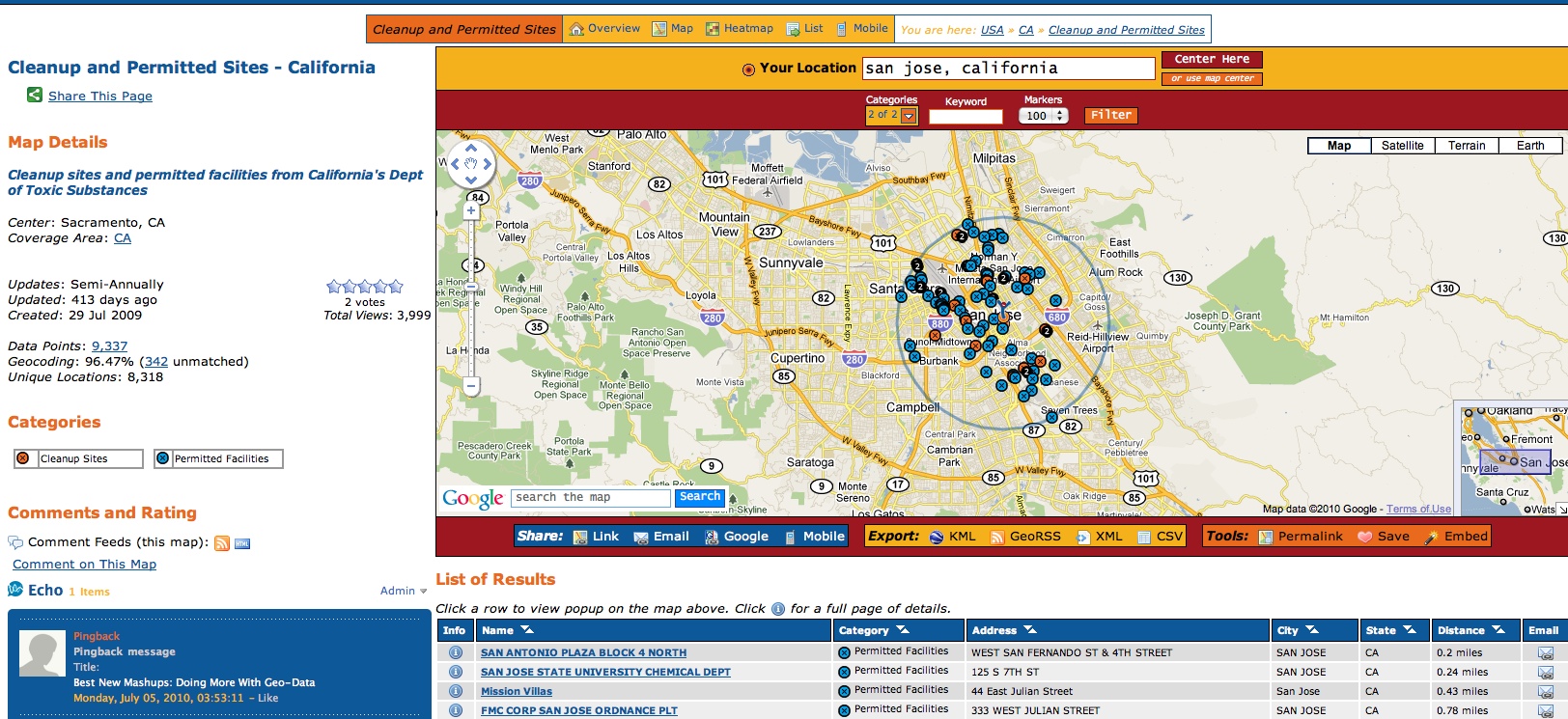
California Environment Report: Cleanup Sites and Permitted Facilities (info page) provide residents with an interactive map that includes heatmaps, a mobile version with geolocation, data feeds, and detail pages for every cleanup site and permitted dacility from the CA Department of Toxic Substances Control Datasets.
California View (info page) is a simple mapping tool that displays the locations of California state parks, fishing holes and boating facilities.
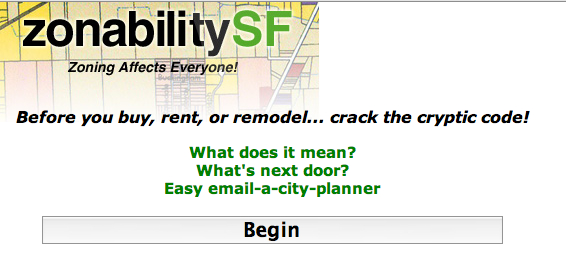
ZonabilitySF (info page) provides mobile access to San Francisco zoning ordinance information. This app includes geolocation, interactive zoning maps, resources about code and a mechanism to ask a city planner questions.
DataCalifornia (info page) provides a browser for California education, health and current legislation. The mashup allows users to “submit ideas on how the government should spend taxpayer money. Notably, it also has a constant stream of updates from schools, first responders and local politics. The site features Facebook integration, and a “Fix” button that should be familiar to SeeClickFix users.
People’s Choice Award
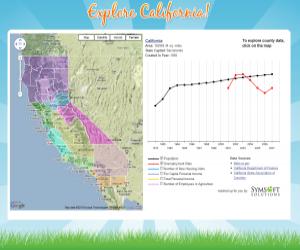
“Explore California” (info page) and the California Cage Fight mashups won the People’s Choice Awards. Explore California is similar to Data California, providing users with an interactive map and visualizations population, income, unemployment, new housing units, and other trends over time. Visitors can “compare and contrast the patterns of growth and decline in various categories and the relationships between them.”
What’s do Apps for California mean for Gov 2.0?
At review time, the winners seems like it might have the most potential to enable better outcomes for citizens to engage with government, given the tool. The zoning app could potentially be quite useful to builders or homeowners. And if you’re also an angler, the easy lookup of potential hotspots could be of interest, though old salts might not want the increased competition. A complete list of Apps for California finalists is available at CA.gov.
The contest was conducted by the Center for Digital Government in collaboration with the state of California, the city of Los Angeles, the county of Los Angeles, the city and county of San Francisco, Google, Microsoft and ProgrammableWeb.com. That collaboration featured some of the nation’s biggest tech companies partnering with public institutions to create mashups that of open public data that would provide more value to citizens.
Overall, the state saw over a dozen applications developed over the summer that might have taken it much longer to build internally, and at substantially great cost. Beyond stimulating that activity, however, the success or failure of the contest will likely be judged not upon the prices awarded or the number of apps built but rather whether these applications make the lives of citizens easier or provide more frictionless access to information. That’s a judgement that will only be rendered with time.
Earlier today, my newest Radar post explained what to expect as FCC.gov is poised for an overdue overhaul featured FCC managing director Steven VanRoekel on participation and building platforms. For the full perspective on what’s next in “FCC 2.0,” check out Radar. Our video interview is embedded below.
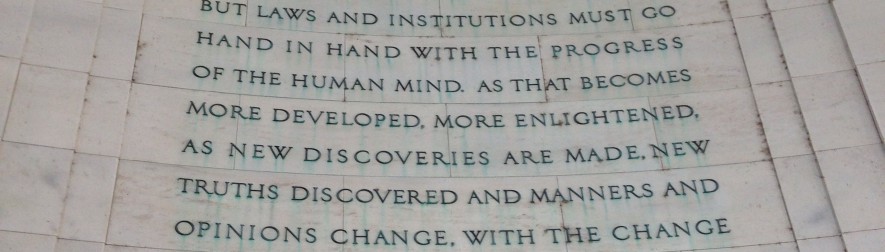
Could contests help us realize the vision of participatory democracy outlined by Thomas Jefferson, where citizens collaborate with government to solve the nation’s most difficult problems? The White House hopes so. As the Federal Times reported this morning, agencies are trying to crowdsource their way out of problems.
“Government does not have a monopoly on the best ideas,” as Vivek Kundra, the nation’s first federal chief information officer, has emphasized repeatedly. To deliver on the promise of innovation for “government as a platform,” as Tim O’Reilly has framed the concept of “government 2.0,” the White House will have to find ways to empower citizens to contribute to the formation and delivery of effective and efficient policy and services.
The idea of a contest to inspire technological innovation, however, is not a novel concept reliant on Web services, born from the fertile mind of a Silicon Valley entrepreneur. One of the most famous scientific achievements in nautical history was spurred by a grand challenge issued in the 18th Century. The issue of safe, long distance sea travel in the Age of Sail was of such great importance that the British government offered a cash award of £20,000 pounds to anyone who could invent a way of precisely determining a ship’s longitude. The Longitude Prize, enacted by the British Parliament in 1714, would be worth some £30 million pounds today, but even by that measure the value of the marine chronometer invented by British clockmaker John Harrison might be a deal.
What has inspired the use of the contests? “There are a number of sources,” said Thomas Kalil, deputy director for policy at OSTP. “The organization that gets the most credit for the renaissance in the use of prizes is the X Prize Foundation. The Ansari X Prize and its success was one of the things that got me excited about the potential of these challenges.” Kalil joined Tim O’Reilly and Lesa Mitchell from the Kauffman Foundation next week at the Gov 2.0 Summit to talk about turbocharging American innovation. Their conversation is embedded below:
The Applications of App Contests
“We created Apps for Democracy with Vivek Kundra and Office of the Chief Technology Officer back in 2008,” said Peter Corbett, CEO of Washington, D.C.-based iStrategy Labs. “[Kundra] said ‘Peter, we have all this open data–it’s probably the most comprehensive municipal open data catalog in the world–but it’s not really useful to anybody because it’s just raw data.”
What Corbett suggested to Kundra was to encourage citizen technologists to build Web applications and mobile services on top of that data. “Build on top of that catalog for fame — and a little bit of fortune.” Within two months, they had 47 Web, mobile and iPhone applications developed. Since then, that method and concept has spread throughout the world, said Corbett. The Department of Defense recently announced the winners of the Apps for Army contest, which could shape the future of defense acquisition.
Apps contests are not just a phenomenon in the United States, either: in Canada, an Apps for Climate Change contest just wrapped up. And in Africa, Apps for Africa is focused on leveraging the talent of local developers in Kenya, Uganda, Rwanda and Tanzania.
“There are ‘Apps for Democracy’ contests in Finland, in Australia and ones on the city level like Portland, New York and London,” said Corbett, highlighting the spread of the paradigm globally. Later this year, an Apps for Development contest will leverage an even bigger open data store soon too, explained Corbett, based upon the World Bank’s open data catalog.
A recent McKinsey article on the promise of innovation held by prize contests offered further instruction, noting that “most successful prize competitions place an equal emphasis on other elements, such as the broader change strategy, the competition itself, and post-award activities designed to enhance the impact of the prize.”
Kalil agreed with that assessment, observing that a strategy that specifies victory conditions is useful. “That’s why a clear goal, like ‘build a spaceship that can go up 200km, and then repeat that within two weeks,’ is helpful,” he said.
Will hardwiring prizes that leverage public sector investments provide a good return on the commitment of time, prize money and other resources?
“We’re finding that to be the case with the NASA Centennial Challenges Program,” said Kalil. “If NASA had had to pay for all of the capabilities created by the Lunar Lander Challenge, they would have had to put in far more money.”
Corbett said that for D.C., the city estimated the value of the first Apps for Democracy program was in excess of $2.3 million dollars, when compared to the traditional costs associated with procurement and development.
Other early results are also promising. “The government is still in early days with respect to its use of prizes,” said Kalil. “The agencies most involved have been NASA and its prizes. DARPA, particularly the DARPA Grand Challenge, have played an important role in advanced unmanned ground vehicles and robotics. The DARPA Network Challenge showed the power of social networks to gather information in a distributed way.”
Riley Crane, a MIT post-doctoral fellow, shares insights on crowdsourcing from his team’s success in the DARPA Network Challenge below. The interview came after his testimony at a recent Senate hearing on technological innovation and government.
The success or failure of these challenges and contests may ultimately rest upon the ability of the White House to draw the attention of innovators to the questions posed. Should we expect a live American Idol panel to judge the potential of ideas?
Kalil laughed: “That will depend on the competition.”
There are already dozens of challenges online at the new Challenge.gov today. Below, Bev Godwin from the General Services Administration talks about the new site:
Crowdsourcing innovation through social media
Contests aren’t the only platform that government entities are looking to in order to spur collaborative innovation. Another platform for communication will come from Expert Labs, a non-profit independent lab that is affiliated with the American Association for the Advancement of Science. The open source ThinkUp App being developed by award-winning author Gina Trapani will be used by the White House as a crowdsourcing platform for collecting feedback on grand challenges that are submitted on Twitter.
“This first attempt is about whether we can get people to push the button,” said Anil Dash, director of Expert Labs. “The next attempt will be about seeing if we can get them to contribute to something larger, like a collaborative document.”
Dash said that to be successful, people developing these tools need know what they want to achieve at the outset. “You have to have a purpose-built tool,” he said. “You have to tap into as large of a network as possible, and you need to clearly define the outcome you want.”
Will it be possible to draw attention to huge, difficult problems using social media and the Internet? “Look at the number of people that have watched Bill Gates’ TED talk on zero carbon,” said Dash. “You don’t need to get everyone in the world to agree. It’s a matter of activating the people who want to contribute. It’s about getting the doers to do.”
In the video below, you can learn more about Think Up App from Dash and Trapani’s talk at the recent Supernova Hub conference.
Can state governments deliver more services with constrained budgets? How can social media and collaborative software be used to engage citizens and lead to better policy decisions or investments? Can open government lead to better e-government?
That’s a reciprocal relationship I wondered about earlier this year, when I visited the Social Security Administration.
Thinking about that topic brought me back to the a day earlier this year when I interviewed Carolyn Lawson about precisely these issues. Lawson is the Deputy Director, Technology Services Governance Division, Director of the eServices Office of the state of California.
Our interview is embedded below. Following is a longer discussion into the ways that California government agencies are using social media to connect citizens to e-services.
Earlier in the day, I’d reported on her talk at the Gov 2.0 Expo.
“What we have to do is open up the conversation about what it means to be a public servant,” said Lawson, kicking off the Expo’s first session. In “Navigating the Maze, Lawson offered guidance, perspective, case studies and, appropriate to the topic of social media in government, lively give and take between the audience and presenter. Lawson explored the many ways that the state of California has employed e-services and online engagement strategies, along with a simple driver: cost.
“Our workforce is furloughed three times a month,” said Lawson. “It’s really painful. Our exploding population really needs services.”
The reality of California’s budget woes come at a time when the expectation for government to be responsive online has never been higher. “Immediate access to data has become a cultural expectation,” she said.“The expectation is there now that government will be open, honest and will communicate.”
Lawson described how both the California Unemployment Office and the Department of Motor Vehicles have used social media and online platforms to deliver better services without additional cost.
“You can tweet @CA_EDD and get answers like how long until you get a check, where to go on the website or job fairs,” said Lawson. “I don’t think the creators of Twitter thought it would be a helpdesk for EDD.” That social response is paired by e-government services that enable workers to file for unemployment online. Lawson said that online applications for unemployment went up by about 1.8 million from the previous year. “What would have happened if we’d blocked that?”
California is using other online platforms and technologies to deliver services that have been affected by budget woes. California couldn’t afford to offer driver training in schools, explained Lawson. “Something had to be cut. What the DMV did, since they already had YouTube videos, is to create an entire curriculum.” The California DMV YouTube channel provides the means for every high school to watch training videos like the one below without additional cost:
“We were thinking of this a culturally relevant tool, not as a forum for expression” said Lawson. “These videos have more than nine million views. If we weren’t government, they’d be calling that viral. It’s all about being where people are.”
And, on that count, the @CA_DMV has developed an iPhone app, DMV Now.
Lawson strongly defended both the importance of the role that social media engagement plays for the California state government and its utility. “Technology is not driving Web 2.0, Twitter or Facebook.,” she said. “People are driving these services. And blocking Web 2.0 isn’t going to solve your problems.”
She made the analogy to the conversations about the telephone in the workplace in the early 20th century, or email in the 1990s. “What we do as a government when we cut off the ability to communicate through the Web 2.0 world is to remove our ability to be culturally relevant,” she said.
Adopting social software or connection technology usage that emphasize protocol over common sense can be problematic as well.
“One of the things that kills government’s ability to use social media is speaking to employees in terms of thou shalt, thou shalt not,” said Lawson. She shared a public available wiki of government social media resource that offers some best practices and frameworks for discussion or practice.
Lawson observed that California itself is still evolving in how it uses social media. “We still have many departments blocking the governor’s Twitter,” she said, alluding to Governor @Schwarzenegger’s massively popular account. The challenge, as Lawson posed it, is to show how government use of social media combines with open data initiatives. “What are we afraid of? The consequences of transparent. We were really afraid of crowdsourcing ideas to improve California IT with Ideasalce. We got beat up – but we also got ideas. We’re the government: we’re going to get beat up. You can’t take it personally.”
Lawson broadly described a cultural shift going towards open government brought about by the Obama admin, though she recognized that many efforts had gone on before. “This is being pushed through by Obama’s transparency initiatives,” she said. “It used to be revolutionary for public documents to be available in a municipal building to people walking in. No more.”
So how should an organization tackle objections that put social media age into a technology issue, rather than a management challenge? “That’s where I have my ‘activity or accomplish’ conversation,” said Lawson. “Is this that conversation about the telephone in 1920s? Or is it something that we need to do to protect our data and information? You have to get people engaged in the conversation. That took us more than a year. If you can relate behavior to behavior to technology, that’s where you have a win.”
The bottom line is that nobody has this all figured out yet, said Lawson. “You just have to work your way through it.”
Does government “get social media?” As always, it depends which government you are talking about. This morning, Gartner analyst Andrea DiMaio posted about when government doesn’t get social media, in the context of new guidance on the use of social media in federal workplaces. Specifically:
On July 27, the US Office of Special Counsel published a document with Frequently Asked Questions Regarding Social Media and the Hatch Act. The Hatch Act of 1939 is a US federal law preventing federal employees from engaging in partisan political activities.
The FAQ looks at how to comply with the act when engaging on social media, with particular reference, but not limited, to Facebook and Twitter.
The basic advice is that if a federal employee accesses social media from a federal workplace and during working hours, while on duty, then the provisions of the act would apply.
The OSC memo doesn’t mean that government as a whole “doesn’t get social media,” of course. Have you followed @NASA recently? It does show that the lawyers there haven’t quite caught up to the always-on, mobile workforce. After my discussions with people in government, I’ve taken away a sense that many of the government employees themselves are quite aware of those risks and are being careful. Some will make mistakes. Some already have.
Other people have expressed frustration with this update of an old law (1935) for the social networking age. As I’ve read through the coverage, the extension on restrictions for government employees on the job didn’t strike me as unreasonable, at least with respect to previous technology. Would a government employee use a work email account to send out political messages? Or would she make calls in support of a party? Or post banners for a political party or rally on the office bulletin board? Would he loudly exclaim in a meeting in excitement that a favored candidate won a primary?
Likely not.
DiMaio’s analysis is sound, where he recognizes the permanent blurring of the boundaries between work and play, particularly for elected officials, high profile private sector officials and (of course) entertainment figures stalked by the tabloids.
On the latter count, however, the recent Supreme Court decision regarding electronic privacy over government-issued communications gear (the infamous ‘sexting’ case) re-affirmed that it does indeed matter where an update, txt or email is sent from. Any major enterprise can and does place expectations for behavior for the use of its IT equipment in the workplace, or off, particularly with respect to pornography, streaming video, P2P applications or social media. Many CIOs still choose to block public access to such platforms, for a variety of reasons. That’s changing slowly, not least because of smartphone access, but also because many organizations are shifting to risk management as opposed to risk avoidance to address social media and compliance.
I must, however, be blunt in my disagreement with his statement that “time and place are irrelevant on social media.” The growth of geolocation and location-based social networking, like Foursquare, Gowalla and now Facebook Places imply otherwise. Those services are ALL about time and place. Twitter too, in large part, in terms of its real-time ebb and flow around events, particularly disasters or breaking news. The utility of geolocation in social media was especially evident in discussions earlier this month in Washington, where the Emergency Social Data Summit highlighted the role of social media during crises.
Even a layman, without the toolset of a digital forensics team to track down IP addresses, could see where a federal employee might be if geolocation is turned on.
DiMaio is right that a tweet, update, like or link shared on a government employee’ social media about a partisan topic would be an issue, regardless of where ever and whenever it was made. As we feel our way through the meaning of the hyper-charged media environment of the moment, that’s a good lesson to take away. Be careful mixing politics and Facebook.


 E Pluribus Unum