MySociety launches FixMyTransport to solve transit problems with microactivism

Over in the United Kingdom, MySociety had launched FixMyTransport, a Web application to help citizens solve persistent public transit issues.

According to Tom Steinberg, FixMyTransport is the biggest project for MySociety since they launched WhatDoTheyKnow in 2008.

“This is a huge accomplishment — a nationwide UK system for individuals to document and report problems with any kind of public transportation system,” wrote CivicCommons executive director Andrew McLaughlin this morning. “MySociety has figured out how to route every kind of report to the responsible agency (or even person) — “the service works everywhere in Great Britain, our database has over 300,000 stops and routes for train, tube, tram, bus, coach and ferry.” Great design and interface. Congratulations, +Tom Steinberg and team!”

“We’ve never before launched a site that took so much work to build, or that contained so much data,” writes Steinberg at the MySociety blog, where he explained more about what it’s for. (The emphasis below is mine.)

FixMyTransport has two goals – one in your face, and the other more subtle.

The first goal, as the site’s name suggests, is to help people get common public transport problems resolved. We’re talking broken ticket machines, gates that should be open and stations without stair-free access. We’ll help by dramatically lowering the barrier to working out who’s responsible, and getting a problem report sent to them – a task that would have been impossible without the help of volunteers who gathered a huge number of operator email addresses for us. Consequently the service works everywhere in Great Britain, our database has over 300,000 stops and routes for train, tube, tram, bus, coach and ferry.

The second goal – the subtle one – is to see if it is possible to use the internet to coax non-activist, non-political people into their first taste of micro-activism. Whilst the site intentionally doesn’t contain any language about campaigning or democracy, we encourage and provide tools to facilitate the gathering of supporters, the emailing of local media, the posting of photos of problems, and the general application of pressure where it is needed. We also make problem reports and correspondence between operators and users public, which we have frequently seen create positive pressure when used on sister sites FixMyStreet and WhatDoTheyKnow.

Steinburg goes much deeper into the thinking and process behind FixMyTransport over at Radar today, where he writes about how to create sustainable open data projects with purpose:

I’m not saying it is impossible to hack brilliant things without piles of VC gold. But if you are going to hack something really, genuinely valuable in just a couple of weeks, and you want it to thrive and survive in the real Internet, you need to have an idea that is as simple as it is brilliant. Matthew Somerville’s accessible Traintimes fits into this category, as does FlyOnTime.us, E.ggtimer.com and doodle.ch. But ideas like this are super rare — they’re so simple and powerful that really polished sites can be built and sustained on volunteer-level time contributions. I salute the geniuses who gave us the four sites I just mentioned. They make me feel small and stupid.

If your civic hack idea is more complicated than this, then you should really go hunting for funding before you set about coding. Because the Internet is a savagely competitive place, and if your site isn’t pretty spanking, nobody is going to come except the robots and spammers.

To be clear — FixMyTransport is not an example of a super-simple genius idea. I wish it were. Rather it’s our response to the questions “What’s missing in the civic web?” and “What’s still too hard to get done online?”

As we say here on the Internet, go read the whole thing. If you’re interested in working on stuff making stuff that matters to citizens and make the world a better place, instead of, say, getting them to click on ads, you’ll be glad you did.

New Orleans launches open government data site

Tonight, Denice W. Ross, director of applications for the city of New Orleans, tweeted the news that “NOLA” had soft launched an open data site. There’s not a lot of data there yet but it’s a great start. Data.NOLA.gov is beautifully designed and based upon the Socrata platform, which will give the embryonic site room to grow.

As Ross shared, New Orleans’ new open data site starts its life online with data on parcels, streets, building permits, council districts and census data. The site also has data on post-Hurricane damage assessment that some plucky civic developer or data journalist will likely mash up to good effect.

For those unfamiliar, open government data broadly refers to public sector records that have been made available to citizens. Putting up an open government data platform online is not in of itself a guarantor of more open government, responsive government or good government — but it can be a enabler for all those things, in partnership with public officials, nonprofits, developers, media and citizens.

For a canonical resource on what makes such releases truly “open,” consult the 8 principles of open government data.

I first encountered Ross last year, at the Gov 2.0 Expo in Washington. Ross, who was then affiliated with the Greater New Orleans Community Data Center, gave a terrific talk about “An App We Can Trust: Lessons Learned in Post-Katrina New Orleans.” I’ve embedded it below.

UPDATE: As Leando Oliva shared, today was also the release of the sixth New Orleans Index. According to the Brooking Institute, the Greater New Orleans Community Data Center took on the publication of this index as a solo effort:

Download the Full Report » (PDF)
Download the Executive Summary » (PDF)
Download the Data Tables » (XLS)

As NYC.gov buckles, city government pivots to the Internet to share Hurricane #Irene resources

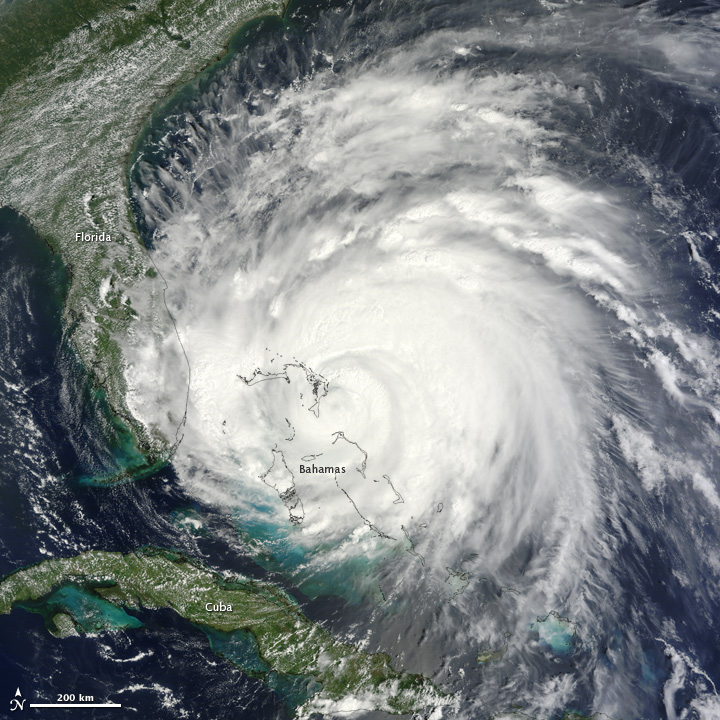
Tens of millions of citizens in the United States are watching as Hurricane Irene churns up the East Coast. If you’re in the path of the immense storm, today is a critical day to prepare. Visit Ready.gov for relevant resources. Unfortunately for citizens in my home state, New York City is right in the path of Hurricane Irene. As many New Yorkers look for information online, however, we’re watching NYC.gov is buckling under demand. For part of Friday morning, NYC.gov would not resolve. The outage is providing a real-time experiment in how a megalopolis with millions of citizens provides information during a natural disaster.

As the Village Voice reported, NYC is evacuating the most vulnerable and putting out advisories but city websites are down. As a result, we’re watching how city government is forced to pivot to the Internet and commercial websites, including social media, to get information out.

Dropbox is hosting a Hurricane #Irene Evacuation PDF (It’s not completely clear if city government uploaded the PDF or not, when this post was published). NYC chief digital officer Rachel Sterne and the official NYC.gov Twitter account have acknowledged and apologized for the outage and pointed citizens to docstoc.com for the official evacuation map:

NYC Hurricane Evacuation Map
http://viewer.docstoc.com/
// http://i.docstoccdn.com/js/check-flash.jsNotably, Mayor Bloomberg’s staff has uploaded the New York City Hurricane Evacuation Zones PDF to his personal website, MikeBloomberg.com, and tweeted it out. We’re in unexplored territory here, in terms of a mayor sharing information this way, but in the context of incoming weather, it’s hard to fault the move, though it’s likely inevitable.. [Ed: As Nick Clark Judd pointed out in his excellent post on how governments are scrambling to deliver information to citizens looking for hurricane information online, Mayor Bloomberg has posted press releases and other information to his website several times before.]

What is clear, amidst growing concerns of a multi-billion dollar disaster, is that the New York City government’s website hosting strategy needs to be revisited. According to Provide Security, NYC servers are hosted in a data center in Brooklyn. Spikes in demand are precisely what cloud computing offers to the private sector and, increasingly, to federal government. As hurricane clouds gather, it’s probably past time for New York government to get familiar into cloudbursting or move quickly implementing internal architectures that include a private cloud, through Nebula or something similar, to handle the load. In the context of disasters, surge capacity for government websites is no longer a “nice-to-have” — it’s a must-have.

UPDATE: Civic technologist Philip Ashlock is mirroring NYC Irene data & links on Amazon Web Services (AWS). Even though NYC didn’t move critical resources to the cloud itself, a member of New York City’s technology community stepped up to help the city and citizens in a crisis. That’s Gov 2.0 in action:

Maps

NYC.gov Hurricane Evacuation Zone Finder
OASIS Map (more info)
ArcGIS Map
hurricane_map_english.pdf 

Raw Data

googleearth_hurricane_zone.kmz 
Shapefiles: OEM_HurricaneEvacCenters_001.zip
Shapefiles: OEM_HurricaneEvacZones_001.zip

Hurricane resources from the Feds

The federal government is providing information on Hurricane Irene at Hurricanes.gov and sharing news and advisories in real-time on the radio, television, mobile devices and online using social media channels. A curated list from the Federal Emergency Management Agency (@FEMA) is embedded below:http://widgets.twimg.com/j/2/widget.js
//

If you use Twitter, a key follow this weekend is FEMA Administrator Craig Fugate, who tweets at @CraigAtFEMA. This morning, Fugate tweeted out a link to new digital tools, including a FEMA Android app and text shortcodes. If you’re at risk, this information is for you. Shayne Adamski, senior manager for digital engagement, blogged the details:

In the new FEMA App, you’ll be able to:

  • Check off the items you have in your family’s emergency kit,
  • Enter your family emergency meeting locations,
  • Review safety tips on what to do before, during and after a disaster,
  • View a map of shelters and disaster recovery centers across the U.S., and
  • Read our latest blog posts.

When we built the app, we kept the disaster survivor in mind, making sure much of the information would be available even if cell phone service isn’t, so you’ll be able to access the important information on how to safe after a disaster, as well as your family emergency meeting locations.

So as Administrator Fugate said, you can download our app today in the Android market, and look for FEMA App for Blackberry version 6 devices and iPhones in the coming weeks.

FEMA Text Messages 

A new and separate service from the new app, our text message updates will allow cell phone users to receive text message updates from FEMA.

  • Text PREPARE to 43362 (4FEMA) to sign up to receive monthly disaster safety tips
  • Text SHELTER + your ZIP code to 43362 (4FEMA) to find the nearest shelter in your area (example: shelter 12345)
    (For availability of shelters and services, contact your local emergency management agency.)
  • Text DRC + your ZIP code to 44362 (4FEMA) to find the nearest disaster recovery center in your area (for example, if you lived in Annandale, Virginia with a Zip Code of 22003, you’d text DRC 22003).

We’re excited to provide these two new ways you can access information on your mobile device, in addition to our already existing mobile site – m.fema.gov. Stay tuned to our blog, Facebook and Twitter channels as we roll out our app to the remaining smartphone operating systems and make enhancements to our text messages program.

So download the app or text PREPARE to 44362, and then leave us a comment and let us know what you think. We encourage you to tell a family member, friend, or neighbor as well, so they can have disaster safety information always at their fingertips.

[Image Credit: NASA Earth Observatory]

This (Social Network) We’ll Defend: US Army releases new social media handbook

File under “awesome” on a busy morning: receiving an email from the United States Army with a classification “UNCLASSIFIED” and caveats: NONE. Brittany Brown, social media manager for the U.S. Army Office of the Chief of Public Affairs, writes in to share the news that the @USArmy has released a revised social media handbook:

As a follow up to your Jan. 20 article entitled “Department of Defense: access to Internet-based capabilities is critical, despite risks,”, I am happy to announce that we just released a second edition of the U.S. Army Handbook.

The new edition of the U.S. Army Social Media Handbook includes an expanded operations security (OPSEC) section, a section about blogging and Army Strong Stories and a section discussing how to manage fake Facebook pages and social media imposters. In addition to the new sections, we’ve also included a quick reference guide for both Facebook and Twitter and a 10-page social media glossary.

Social Media Handbook 2011

View more documents from U.S. Army

The Army’s handbook has much in common with the US Navy social media handbook, although there’s no handy tagline for me to add on like “loose tweets sink fleets.” Both guides offer common sense advice that’s clearly worth repeating: don’t post geolocated updates about your unit’s movements or other information that could be of use to enemy combatants or criminals.

What Brown highlights out regarding guidance on imposter accounts, however, is significant. According to the guide, “the practice of impersonating soldiers for financial gain is significant.” The same phishing activity that targets the rest of the users on social networks is a problem for the military as well. Beyond that, there’s every reason to believe that impersonations are also a vector for gathering information that can be used to spear phish more sensitive intelligence. Caveat tweeter.

East Coast earthquake cements role of social media in government crisis communications

At approximately 1:51:04 ET today, a magnitude 5.8 earthquake 3.7 miles below Virginia rattled the east coast of the United States from South Carolina to Maine.

A 3D map of the earthquake from DC-based DevelopmentSeed, embedded below, visualizes the intensity of the tremblor.

Thankfully, today’s earthquake does not appear to have caused any deaths nor collapsed buildings or bridges, although the National Cathedral sustained what officials call “substantial earthquake damage.” Longer term earthquake damage in DC will take time to assess. Eric Wemple has a comprehensive assessment of earthquake coverage that includes links to more logistical details and assessments, if you’re interested.

A reminder to prepare

FEMA Administrator Craig Fugate talked directly to the public over the Internet, using his Twitter account, emphasizing that this quake is a reminder to get prepared.

He also highlighted a critical resource for an increasingly mobile citizenry, m.fema.gov/earthquake, and hurricanes.gov, which will be an important source of information as Hurricane Irene moves up the coast.

Additionally, Govfresh founder Luke Fretwell compiled an excellent short federal government primer to earthquake preparedness that’s full of more resources, including what to do before, during and after an earthquake

Key earthquake information can be found at Ready.gov and the FEMA, USGS and Centers for Disease Control Websites. USGS also provides a seven-step Protecting Your Family From Earthquakes safety guide (embed below).

Remember, prepare, plan and stay informed.

Social media fills a fault

seismic waves by xkcd

While both DC residents and people across the United States took the opportunity to joke about the quake using Twitter, a more sobering reality emerged as residents found themselves unable to make phone calls over overloaded cellphone networks: social networks offered an important alternate channel to connect with friends, family and coworkers. In the context of overloaded networks, the Department of Homeland Security offered earthquake advice: don’t call. In fact, DHS urged urged citizens to use social media to contact one another. The White House amplified that message:

RT @DHSJournal: Quake: Tell friends/family you are OK via text, email and social media (@twitter & facebook.com). Avoid calls.less than a minute ago via Twitter for BlackBerry® Favorite Retweet Reply


Citizens didn’t need much urging to turn to social networks after the quake. According to

Facebook hosts conversation with Red Cross on social media in emergencies

The day after the earthquake, in what turns out to be an unusually good scheduling choice, Facebook DC is hosting a conversation with the Red Cross on the use of social media in emergencies. As a new infographic from the Red Cross, embedded below, makes clear, the importance of emergency social data has grown over the past year.

Social Media in Emergencies//

According to a new national survey:

  • The Internet is now the third most popular way for people to gather emergency information, after television and local radio
  • Nearly a fourth of the online population would use social media to let family and friends know they are safe.
  • 80% of the general public surveyed believe emergency response organizations should monitor social media.
  • About one third of those polled via telephone said they would expect help to arrive within an hour.

The event will be livestreamed on Facebook DC’s page at 3 PM EDT, if you’re online and free to tune in.

Watch live streaming video from facebookdclive at livestream.com

More Americans Using Social Media and Technology in Emergencies//

New reports on citizen participation and rulemaking offer open government guidance

Earlier today, AmericaSpeaks released a new report, “Assessing Public Participation in an Open Government Era: A Review of Federal Agency Plans.” This represents the most comprehensive review of the public participation aspects of the federal open government initiative to date.

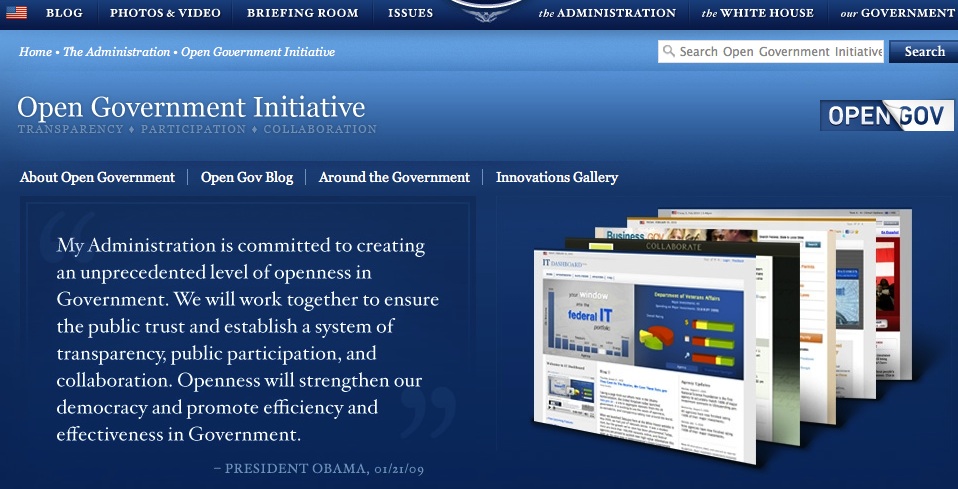
The Obama Administration’s Open Government Directive required Federal Agencies to publish Open Government Plans describing how they would become more transparent, participatory, and collaborative. Before this research, the public participation elements of the plans had not been subject to an in-depth analysis.  We reviewed the more than 1,000 pages contained in the plans of the 29 Agencies that were included in the White House Open Government Dashboard and compared them to the standards used often by practitioners in the field of public engagement that we believe are most important.

The report, embedded below, highlights best practices for public participation and suggests ways to enhance the role the public has in shaping federal policy, including implementing the ExpertNet open government platform.

Overall, the administration received mixed marks. While the AmericaSpeaks found that agencies “display an admirable willingness to experiment with new tools and techniques to involve citizens with their decision-making processes,” the “Open Government Initiative and most Federal Agency plans have failed to offer standards for what constitutes high-quality public participation.”

On the one hand, agencies are increasing the number of people devoted to public engagement and using a range of online and offline forums. On the other, “deliberative processes, in which citizens learn, express points of view, and have a chance to find common ground, are rarely incorporated.”

New guidance on rulemaking

Separately, University of Pennsylvania professor Cary Coglianese prepared a report to the Administrative Conference of the United States on the use of electronic media in the rulemaking process. Here’s the short version: agencies should use social media more, involve the millions of non-English speaking members of the public and significantly upgrade, streamline and optimize agency websites. For the long way, read on:

Federal Agency Use of Electronic Media in the Rulemaking Process//

American University to host EPA Apps for the Environment hackathon

If you’d like to get your civic hacker on, American University is hosting a hackathon for the Apps for Environment on Saturday, September 3rd. Register to make green apps here.

The pitch for the hackathon includes a “green from the beginning” detail that may catch the eye of sustainable energy advocates:

The hack-a-thon will be located in the spacious new Graduate Research Center adjoining the School of International Service building, which is itself a certified LEED Gold marvel of green technology innovation. With a sustainable design and “cradle-to cradle” philosophy for recycling and reusing building materials, participants will even power their devices with solar and wind offset power so their Apps for the Environment will be green from the first idea until the last line of code.

Come one, come all

The hackathon’s organizers emphasize that this event isn’t just about the District’s local civic coders: “Whether you’re a student at any school in computer science, journalism, a professional in the field, or just have an idea to share (which you can post here http://blog.epa.gov/data/ideasforappscomments/) please join us at the hack-a-thonT”

American University journalism professor David Johnson left a comment on the event page that expands that idea:

…even if you can’t code, you can have ideas. even if you don’t have ideas, you can help spread the word. even if you can’t come to DC or AU, you can join us on twitter, ustream, IRC, GitHub, and other online hangouts… we’ll be all over it. everyone can be a part of this. spread the word to campuses and dev shops. come hack with us.

Open data webinar

Last week, I moderated an EPA webinar on open data and the Apps for the Environment challenge from the D.C. headquarters of the U.S. Environmental Protection Agency.

If you’d like to learn more about Apps for the Environment (and hear a robust conversation about open data and apps contests!) watch the webinar and presentation embedded below.

Apps for the Environment Developer Webinar(function() { var scribd = document.createElement(“script”); scribd.type = “text/javascript”; scribd.async = true; scribd.src = “http://www.scribd.com/javascripts/embed_code/inject.js”; var s = document.getElementsByTagName(“script”)[0]; s.parentNode.insertBefore(scribd, s); })();

Hackathon coordinates

If you would like to participate in the AU hackathon, you can put your civic surplus to work from 9 AM to 6 PM at the location below:

Head on over to the event page on Facebook for more details and register to make green apps at Eventbrite.

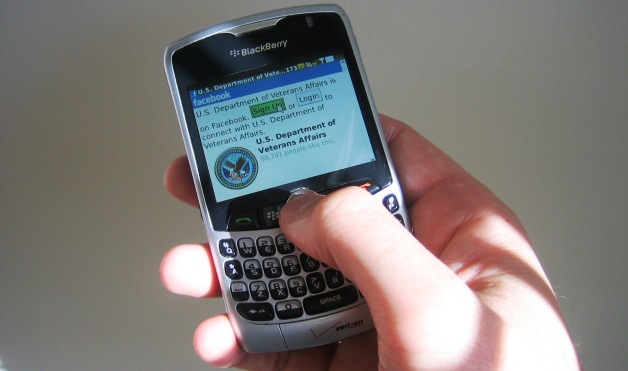
Department of Veterans Affairs releases progressive, structured social media policy

In 2011, it might feel a little late for federal agencies to be issuing social media policies. How governments use social media has shifted from a niche concern, debated by new media and policy wonks, to an issue that makes international headlines when global leaders alternately decry or celebrate the impact of connection technologies upon their countries.

Think again.

As anyone who has worked in a federal bureaucracy will tell you, squaring usage policies with rules, regulations and laws is a fundamental need if there’s going to be any progress towards 21st century governance.

“One of the biggest, long-standing complaints about VA is how it’s an opaque, monolithic bureaucracy that doesn’t respond to the needs of vets,” writes Brandon Friedman (@BrandonF), director of online communications for the U.S. Department of Veterans Affairs, in an email today. “We’re finally putting a human face on it. Everything we post on our blog or our main Facebook page or Twitter feed has a name attached to it. This shows even the largest, slow-moving federal agencies can make progress in becoming more agile and responsive.”

There’s also a matter of default for usage of these tools: open, versus closed. Consider that the emphasis below is the VA’s:

The use of Web-based collaboration tools such as social media tools is highly encouraged. Web-based collaboration is intended for information sharing within and outside of VA. To increase accountability, promote informed participation by the public, and create economic opportunity, the presumption shall be in favor of openness (to the extent permitted by law and subject to the exclusions noted in this Directive or other policy)

The entire policy, which has to be considered progressive for an organization with military DNA, is embedded below or available as a PDF. Given the stance that other federal agencies have taken recently on social media usage, this policy is not a watershed but is extremely important to over 300,000 VA employees and the millions veterans they serve. If access to Internet-based capabilities is critical at the Department of Defense, similar access for veterans is important.

Today’s announcement also serves as a reminder that the VA has come a long way in a short time, particularly in the context of an enormous government institution. “Less than two years ago, VA’s primary method of engagement with the public consisted of telephone calls and the USPS,” wrote Friedman. “Today, hundreds of thousands of veterans can get help navigating the bureaucracy via social media. We can also make a direct difference in peoples’ lives. One example I use concerns suicidal ideation on Facebook and Twitter. We’ve actually intervened in at least half a dozen instances where veterans have talked about killing themselves. We’ve been able to jump in and link them up with assistance. As we always say here, it’s about leveraging new technology to get the right information to the right veteran at the right time. For so long, many veterans have lost out on the benefits to which they’re entitled because they weren’t even aware of them—or they didn’t want to deal with a complex bureaucracy. Social media allows us to get them the information and to help ease the transition from the military into the VA system.”

It’s an important shift. Next up? Work to leverage technology better to reduce the backlog in veterans’ benefit applications and help vets who have returned from service abroad get back to work in a down economy.

Getting social with security and privacy

Embedded in this policy is are security and privacy provisions that instruct to the deputy assistant secretary for information security to issue an information protection policy, do a risk assessment, provide patching, training and a “Trusted Internet Connection” for the desktop images of VA users.

There is also instruction for the director of the VA privacy service to address policy concerns and to public affairs, granting “the authority to disapprove any outward-facing content on official VA blogs and social media sites which do not meet accepted standards of quality,” along with audits to ensure same.

For a deeper dive into what social media means to the military, read this talk on connection technologies and global organizations. It’s by U.S. Navy Chief of Naval Operations Roughead, a title which effectively makes him the “CEO” of that global enterprise. He talked about “burning the boats” as the Navy enters this operational space — an extremely powerful metaphor, given his occupation — but perhaps a fitting one, given that achieving and maintaining situational awareness in a changing information environment has become a strategic capability.

As the VA looks to support the considerable needs of the men and women who have served their country, it looks like social media will be a part of the plumbing that connects them together.

Department of Veterans Affairs Social Media Policy//

Carmi Levy: open government is about leveraging technology and citizens to do more with less

It looks like the dog days of August 2011 may be the month when the meme of a citizen-centric government gets some traction in the business world. Over on the finance section of Yahoo Canada, Carmi Levy writes that the future of government is citizen-focused.

Levy cites open government in British Columbia and initiatives in New Zealand, Toronto, and Lousiana as case studies for his thinking and then connects the dots with the big idea: that technology enables officials to empower citizens to work with government in new ways, driven by macrotrends towards open data, mobile connectivity, social media and austerity measures.

…governments are increasingly giving citizens free rein to do as they wish with previously inaccessible data. Costs are significantly reduced as big, conventional IT projects are replaced by more on-the-fly approaches to resource management. Timelines are also cut down to size thanks to the use of agile development methods and more collaborative models. Crowdsourcing also maximizes the use of newer technologies, thanks to home-based developers looking to market their prowess to a broader audience. This all translates into more bang for the public buck.

Proponents of open data initiatives claim they increase government efficiency and effectiveness by encouraging greater levels of citizen participation in the creation and delivery of public services. But in light of the just-completed U.S. deal to restructure its debt ceiling and begin trimming the federal budget, it’s difficult to ignore the cost side of the equation, as well.

As governments on both sides of the border find themselves increasingly pressured to deliver the same — or more — services for less, open data and so-called Government 2.0-based initiatives could hold the key to taxpayers having their cake and eating it, too. As government shrinks, citizens willingly take up the slack using rapidly evolving development and social media tools.

Open government isn’t just a philosophical concept designed to drive democracy.

It’s really about leveraging technology — and technologically enabled citizens — to do more with less. By throwing data out there and seeing what develops, governments can reduce spend and enable business in ways they simply wouldn’t be able to do if they functioned conventionally. They can leverage the motivations and skills of interested members of the public to create value that conventionally hired departmental resources have never been able to achieve; at least not at this level of efficiency.

Carmi Levy (@CarmiLevy)

It’s a bold vision, although perhaps a familiar one to those who have been following the narrative that runs through these open government stories. The notable connection is connecting this approach to the need that governments have now.

If open government is going to work better, however, citizens will have to become more civically engaged — and their governments will need to both listen to them and work with them.