For the first time in over a decade, the United States Department of Justice (DOJ) celebrated Sunshine Week with a blog post, instead of a public event. In past years, a high-ranking DOJ official — often the DOJ Chief FOIA Officer – would make a speech, followed by the Director of the Office of Information Policy (OIP).
The OIP director would make a presentation about the state of FOIA compliance across the executive branch, backed by data they’d collected from the annual reports agencies were required to submit.
And then the OIP Director would give out awards to the FOIA professionals across the executive branch, offering important public recognition for their service. (I know, because I have attended most of these events since 2016 at “Main Justice” in downtown DC.)
In 2026, there was no public ceremony or speeches, nor has OIP published and socialized open data that shows the state of agency compliance with the statutory obligation to respond to FOIA requests within 20 days that Congress has repeatedly mandated.
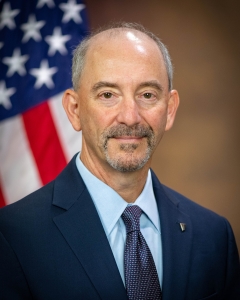
Instead, OIP published a short statement by Associate Attorney General Stanley E. Woodward, Chief FOIA Officer of the Department of Justice, atop a short blog post about Sunshine Week by Office of Information Policy Director Sean Glendening.
To be clear, we vigorously agree with AAG Woodward that “our FOIA professionals are the unsung heroes of democracy” and welcome the Department honoring their service. Unfortunately, the Department of Justice also made several false assertions in his short statement to the American people that require correction.
1) This is not “the most transparent Department of Justice in our nation’s history,” by any objective measure. Any subjective assessment that ignores the contempt the USAG has shown towards Congress and the free press or the stonewalling around the Epstein Files isn’t honest.
2) Prior administrations made real progress in “improving FOIA processes and prioritizing citizens’ access to information about their government” by proactively disclosing data online. This administration has not.
They’ve gutted FOIA offices, taken down public data and fired statistical officials, and stonewalled requestors, the direct result of which is more litigation and wasted taxpayer funds. It is downright Orwellian to state the inverse is true on a Department of Justice website during Sunshine Week. Doing so may even run afoul of the Information Quality Act, which requires officials to ensure “the quality, objectivity, utility, and integrity of information (including statistical information) disseminated by Federal agencies.”
3) The “ever-increasing burden” placed on FOIA professionals is the result of multiple administrations failing to invest far more in the FOIA, from modernization, increasing state capacity, carving out dedicated, secure alternatives for first-party records access to veterans and people seeking immigration records, to proactively disclosing records corporations are buying under the FOIA and other frequently requested records.
The need for systemic investment in improving the systemic problems that have made FOIA broken for people unwilling or unable to file lawsuits for access to information has been abundantly clear for decades. The American people can see this truth for themselves in the breadth and depth of recommendations made by the U.S. Freedom of Information Act Advisory Committee, or experience it by making a FOIA request through FOIA.gov.
As Nate Jones reported for the Washington Post, instead of “improving FOIA processes” as DOJ falsely claimed, this administration cut FOIA staff. That predictably has negatively affected the capacity of agencies to respond to requestors quickly – much less provide records responsive under the FOIA in a timely manner.
In his first public post about FOIA, the new OIP director did not recognize any of those facts, nor offer any thanks to the FOIA staff dismissed and honor their service — including his predecessor.
Instead, he and the AAG chose to try to create an “alternative fact” during a national celebration of public access to information.
Namely, they’re advancing a narrative in which “a small group of frequent requesters accounts for an increasing volume of both total and complex FOIA requests” – without showing any data to back up this claim. In this alternative narrative, this “forces agencies to divert a disproportionate share of limited resources away from the timely processing of simpler requests submitted by individual members of the public.”
Got it? Increased secrecy, censorship of open data, legacy systems, diminished state capacity, lax Congressional oversight, malign negligence by OMB, firing the AOTUS, and serial underfunding for decades aren’t at fault for the increasingly poor performance by FOIA offices. Instead, it’s a “small group of requestors” that’s “forcing” agencies to divert “limited resources.” That’s transparently misleading.
As it does every year, OIP quoted James Madison, who famously stated “[a] popular Government, without popular information, or the means of acquiring it, is but a Prologue to a Farce or a Tragedy; or, perhaps, both. Knowledge will forever govern ignorance: and a people who mean to be their own Governors, must arm themselves with the power which knowledge gives.”
That’s more true than ever in 2026.
Thank you to the dedicated FOIA professionals and everyone else in and outside of government who continues to arm the American with the self-knowledge required for self-governance – including about the true state of the administration of the Freedom of Information Act and public access to the public records we all pay for with our taxpayer dollars.
The official withdrawal of the United States from the Open Government Partnership (OGP) formalized what advocates, scholars, and watchdogs have been telling the American people from the last year: under President Trump, the executive branch of the United States government is no longer committed to government transparency, accountability, participation, and collaboration with the American people it serves. Official lies, corruption, and maladministration have become now the default, not the honesty, integrity, and trustworthy governance the public expects and deserves.
Instead of working with the American people to co-create new commitments to improve good governance, fix the broken Freedom of Information Act, open access to the public information our government holds in trust for all Americans, or invest in classification reforms, the Trump administration is simply walking away from the table.
In the letter of withdrawal, General Services Administration Administrator Scott Forst claimed that OGP “erodes sovereignty,” is “demonstrably ineffective,” has “divisive ideological agendas,” “wastes money,” and “degrades democratic integrity.” While some of this is false, it is accurate to state that OGP has been ineffective in the United States and that the most recent national action plan contained many commitments unrelated to open government.
This US government leaving OGP is no surprise, given the closure of the Federal Advisory Committee on Open Government that would have hosted this activity, dissolution of the Open Government Secretariat, lack of participation in OGP’s Summit, and illiberal claims about journalists and non-governmental organizations.
It is a confirmation, however, that this voluntary multi-stakeholder approach to improving government transparency and accountability in the executive branch is dead under this administration. In its place, Congress, the courts, the free press, watchdogs, and the American people will work together to make our government transparent and hold officials accountable for corruption under the rule of law.
A full statement on today’s news from the American Governance Institute follows:
Civil society groups had pressed U.S. to meet transparency commitments
January 28, 2026 — The United States has formally withdrawn from the Open Government Partnership (OGP), a voluntary international collaboration founded in 2011 by eight countries, including the United States, to advance government transparency, participation, and accountability in partnership with domestic civil society organizations.
In March 2025, eleven civil society organizations urged the Open Government Partnership to place the United States under review for “rolling back existing flagship commitments,” and calling for U.S. suspension if the administration failed to work with civil society to advance meaningful transparency commitments. A July 2025 letter renewed the request, citing accelerating attacks on government transparency, across anti-corruption efforts, civic space, fiscal openness, justice, and the foundation of open government.
A December 2025 OGP report found that “the second Trump administration revoked or replaced several executive orders that supported key commitments, including those related to equity, data transparency, and law enforcement accountability. It also disbanded the federal advisory committee in February 2025. These actions have undermined or halted the continuity and durability of reforms initiated during the action plan cycle.”
The U.S. government withdrawal statement, signed by General Services Administration Administrator Edward Forst, was replete with misstatements and omits the fact the first Trump administration participated in the Open Government Partnership. The statement takes no responsibility for its dismantling of the domestic Open Government Federal Advisory Committee. Nor does it note the administration’s increasing attacks on the press, the removal of data from government websites, the failure to collect and share information about government activities.
The following statement may be attributed to Daniel Schuman, executive director of the American Governance Institute and former chair of the Open Government Federal Advisory Committee:
“The Trump administration is not only the least transparent government in American history; its policies are antithetical to democracy, of which transparency is an essential element. Today’s withdrawal from the Open Government Partnership is yet another data point in a broader pattern of opacity by this administration.”
In a statement, Open Government Partnership CEO Aidan Eyakuze said, “Anyone who has followed developments over the last year will not be surprised by this decision of the US government. We recognize the impressive efforts of reformers in government and civil society who have advanced openness and accountability over the years.
In March 2025, a coalition of organizations and individuals who work on government transparency and accountability in the United States respectfully requested the Open Government Partnership (OGP) to immediately place the United States government under review for actions contrary to the principles and policies of the partnership.
The OGP Steering Committee declined to do so, citing lack of precedent in its letter, despite the USA repeatedly acting “contrary to process” in the design & implementation of the 4th & 5th U.S. National Action Plans from 2017 to 2023.
In a new letter transmitted today, Daniel Schuman, and Alexander B. Howard, founder of this very publication, filed an addendum identifying instances of the Trump administration violating the principles of the Open Government Partnership, as requested by the OGP Secretariat.
We once again respectfully requested the OGP Steering Committee formally trigger a response policy case regarding the United States’ departure from OGP values.
It is our view that the U.S. government should have remained under review after the Trump administration openwashed participation, submitted a weak, prebaked plan, and made a mockery of good governance during the pandemic in 2020.
The Biden administration’s failed consultation and similarly weak, prebaked plan did not right the ship of state over the past four years. Instead, the President directed public attention, news media reporting, state capacity, and global government participation to the “Summit for Democracy,” and deprived OGP domestically of all of them.
In effect, former President Biden and his advisors created a weaker multistakeholder initiative without a secretariat, steering committee, independent review mechanism, or policies for membership, co-creation, implementation, review, or suspension, which has now been relegated to history.
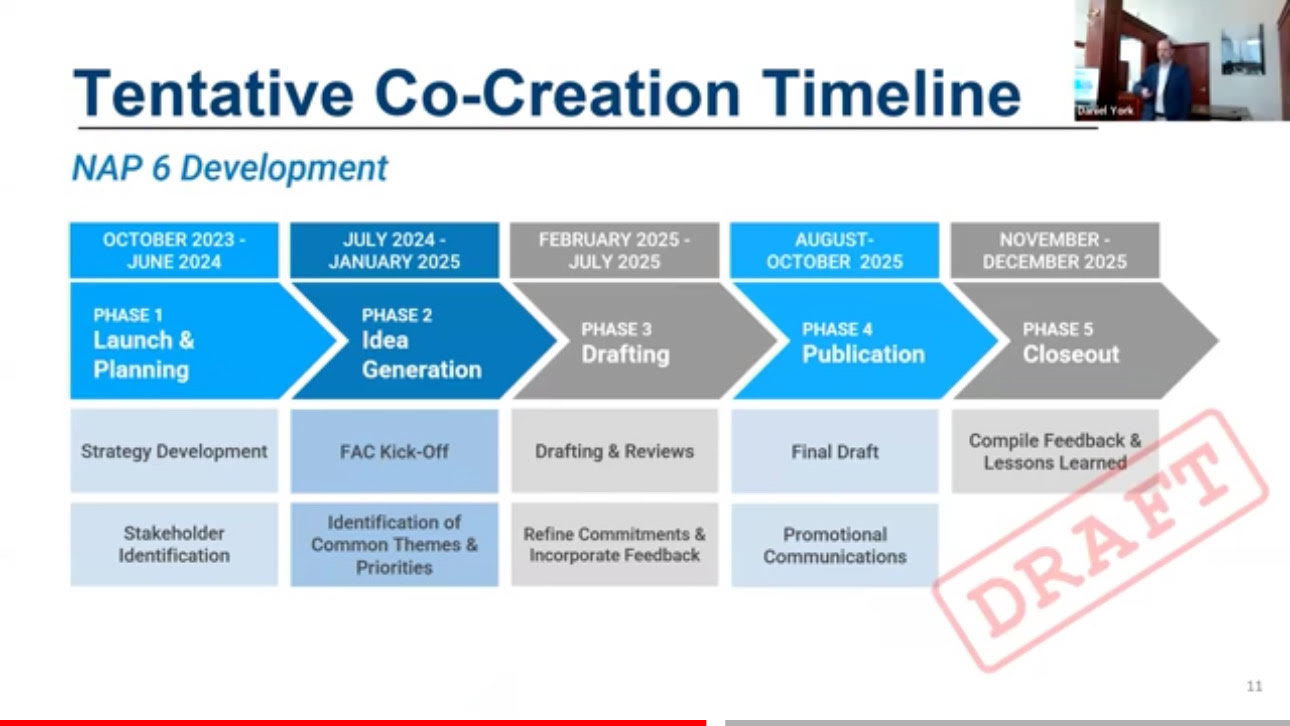
While the Open Government Secretariat and Open Government Advisory Committee were founded by the Biden administration in 2023 and 2024, to address serious deficiencies in process and outcomes, enabling a more robust co-creation process for the 6th NAP, both Secretariat and Advisory Committee were dissolved in 2025.
The GSA is now misrepresenting US government activity, falsely claiming on its website that there is a “current plan” and that staff are “leading reporting on existing commitments in existing national action plans” (none since 2024), “conducting engagement sessions with civic organizations and members of federal, state, and local governments” (none since 2024), and “actively collaborating with the public (no evidence).
The OGP Steering Committee should recognize that unprecedented actions in the USA require a more robust response than continued silence and inaction. Thank you to everyone who continues to serve in our union and around the world.
On June 10, 2025, the U.S. House Transparency Caucus hosted a discussion about current issues, promising proposals, and ongoing successes in government transparency in the Rayburn building.
Congressman Mike Quigley (D-IL-5), chair and founder of the Transparency Caucus, gave opening remarks about the importance of open government in American democracy, reflecting on his experiences in Chicago and Washington, DC.
The cost of corruption is dollars, but the real cost of corruption is the loss of public trust. That trust has been on steady decline for the last 20 years,” said Quigley. “If we can improve the openness in communication between the government and the people, we can build a government that works better for the people.”
Panel Participants: -Courtney Bublé (Moderator), Congress Reporter with Law360 -Lauren Harper, Daniel Ellsberg Chair on Government Secrecy with the Freedom of the Press Foundation -Demian Brady, Vice President of Research with the National Taxpayers Union Foundation -Jason Powell, Policy Director with the Citizens for Responsibility and Ethics in Washington (CREW)
“Another thing we need to pay attention to is the destruction of records and agencies discontinuing the practice of maintaining certain records,” said Harper. “You can not get a FOIA response if an agency has destroyed those documents. Or if it has opted to stop creating those records.”
Members of Congress “don’t lose their pensions until they’re finally convicted. That means many can sit in jail, and appeal, and still collect their taxpayer-funded pension,” said Brady. “The last piece of transparency we need for that is from the Office of Personnel Management, but they haven’t answered my emails since 2020.”
“Sunlight in government is essential to a functioning democracy,” said Powell. “As part of DOGE’s efforts to reshape the government, on April 1st the CDC’s entire FOIA office was suspended without prior notice or without a plan for how the statutorily required work would continue. The CDC is now not able to respond to new [FOIA] requests, existing requests, or make statutorily-required proactive disclosures.”
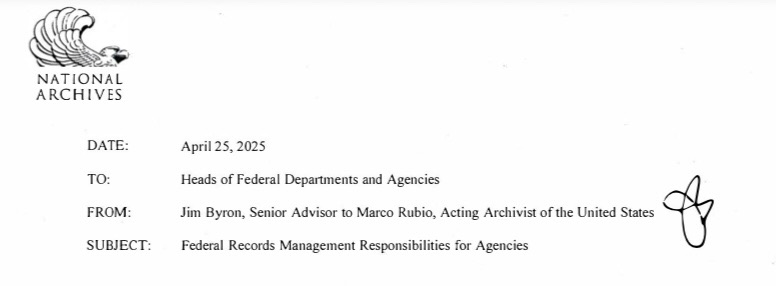
On April 25, 2025, the senior advisor to the acting Archivist of the United States (AOTUS) sent a memorandum to the heads of federal departments and agencies on the management responsibilities they have with respect to electronic messages that constitute public records.
In the memorandum (below), Jim Byron, Senior Advisor to Secretary Marco Rubio, Acting AOTUS, reminds agencies the obligation all officials have to memorialize official business conducted on a personal device or account by forwarding or copying an official account with the electronic correspondence.
Byron observes that “the use of the auto-delete function on digital messaging applications may prevent agency officials from meeting this critical obligation, possibly resulting in the permanent loss of federal records,” but this conflicts common sense.
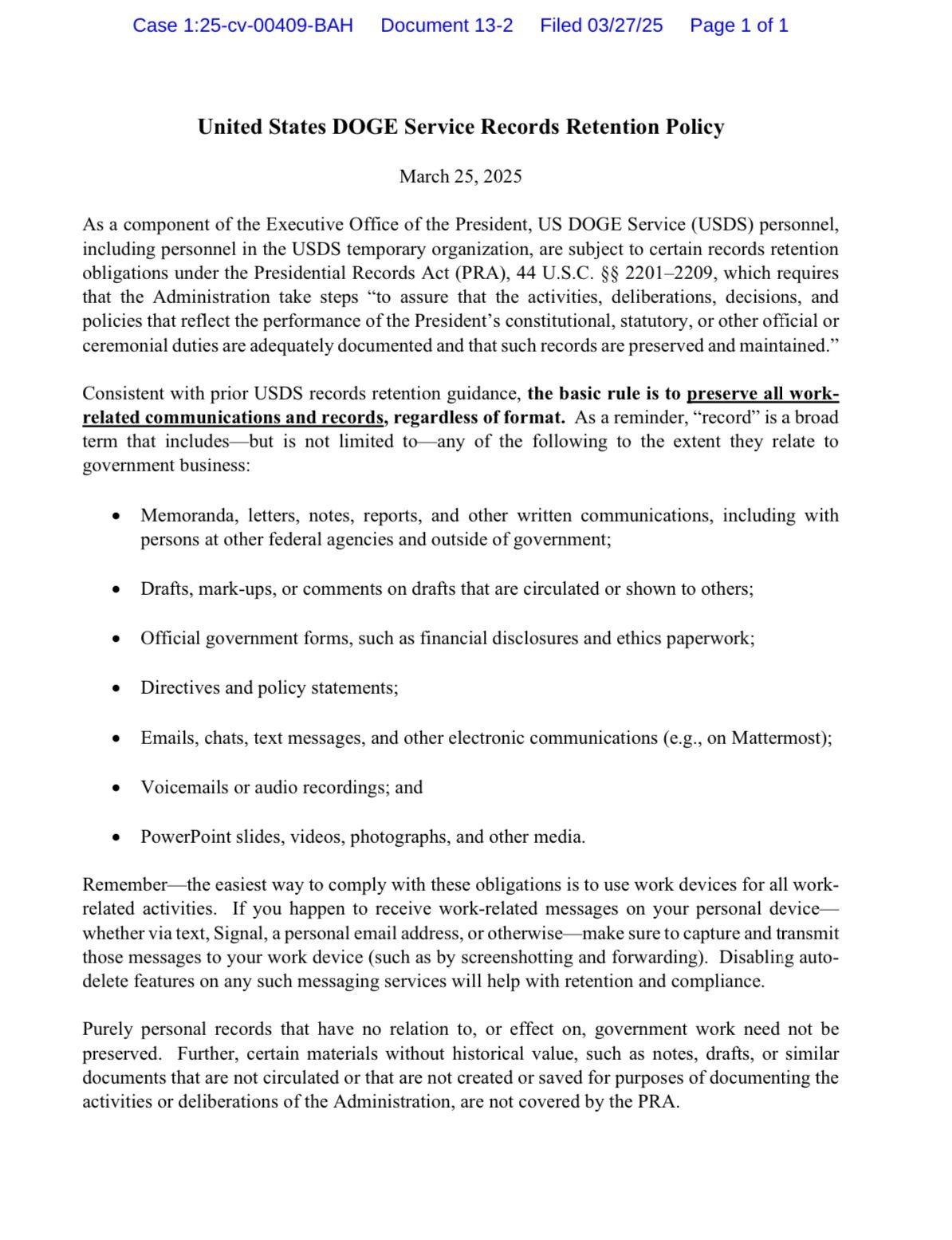
That policy emphasizes that “the basic rule is to preserve all work-related communications and records, regardless of format.”
Messages that constitute public business that are sent on personal devices and on Signal must be archived, which means any auto-delete feature in the app should be disabled, not enabled by default — including those in the chat Acting Archivist Rubio was on with the National Security Advisor.
Screenshot of NARA memo header
Federal Records Management Responsibilities for Agencies
Congratulations to all of you on your recent appointments to federal service.
I write to make you aware of resources that are available to you and your employees regarding records management in your agencies.
All federal employees create and manage records as an integral part of their responsibilities in performing agency missions. Federal records protect the rights and interests of the public, allow officials to be held accountable for their actions, and document our nation’s history. Also, good records management helps your agency operate more effectively and efficiently.
It is crucial agency heads work with their Senior Agency Official for Records Management and Agency Records Officers to communicate the importance of their records management responsibilities to all staff, including political appointees.
Together, federal agencies and the National Archives work toward government transparency, public engagement, and accountability by promoting our obligations under the Federal Records Act (FRA). The FRA, at 44 U.S.C. § 3101, charges you, as the agency head, with creating and preserving federal records containing adequate and proper documentation of the agency’s activities so that the legal and financial rights of the Government and individuals affected by the agency’s activities are protected.
The emergence of —and increasing reliance upon — new forms of electronic communication can make records management more challenging, but no less important. The FRA imposes strict requirements on the use of personal accounts to conduct agency business. If any agency employee uses a personal account to engage in official business, they must copy an official account or forward their message to an official account within 20 days. 44 U.S.C. § 2911.
The use of the auto-delete function on digital messaging applications may prevent agency officials from meeting this critical obligation, possibly resulting in the permanent loss of federal records.
It is thus vital that you ensure staff are properly trained on their FRA obligations. Agency heads must ensure that their records management programs provide effective control over the creation and maintenance of records, 44 U.S.C. § 3102, and safeguard against the removal or loss of records, 44 U.S.C. § 3105.
We encourage you to take prompt action to ensure that your recordkeeping policies are up-to-date, and that they adequately educate agency staff how to create, maintain, and dispose of federal records, especially when using third-party apps. Additional details about the appropriate maintenance of electronic records, including metadata retention requirements, can be located at 36 CFR Part 1236.
Questions related to FRA compliance may also arise when agencies transfer their functions to other agencies. Agencies must ensure that:
Paper and electronic records are properly identified and segregated from non-records, as those terms are defined by federal law;
Temporary paper and electronic records are only disposed of in accordance with a NARA-approved agency-specific or General Records Schedule; and
Paper and electronic records are transferred to another federal entity, inactive storage, or NARA only in accordance with the procedures outlined in 36 CFR Parts 123 | to 1235.
NARA will be issuing additional guidance and resources to assist agencies with fulfilling their records management responsibilities when consolidating and reorganizing.
Thank you for your attention to these matters. If you have any questions about your agency’s records management responsibilities or would like to discuss anything further, I invite you to contact William Fischer, Acting Chief Records Officer at NARA, at william.fischer@nara.gov.
cc
Senior Agency Officials for Records Management Agency Records Officers
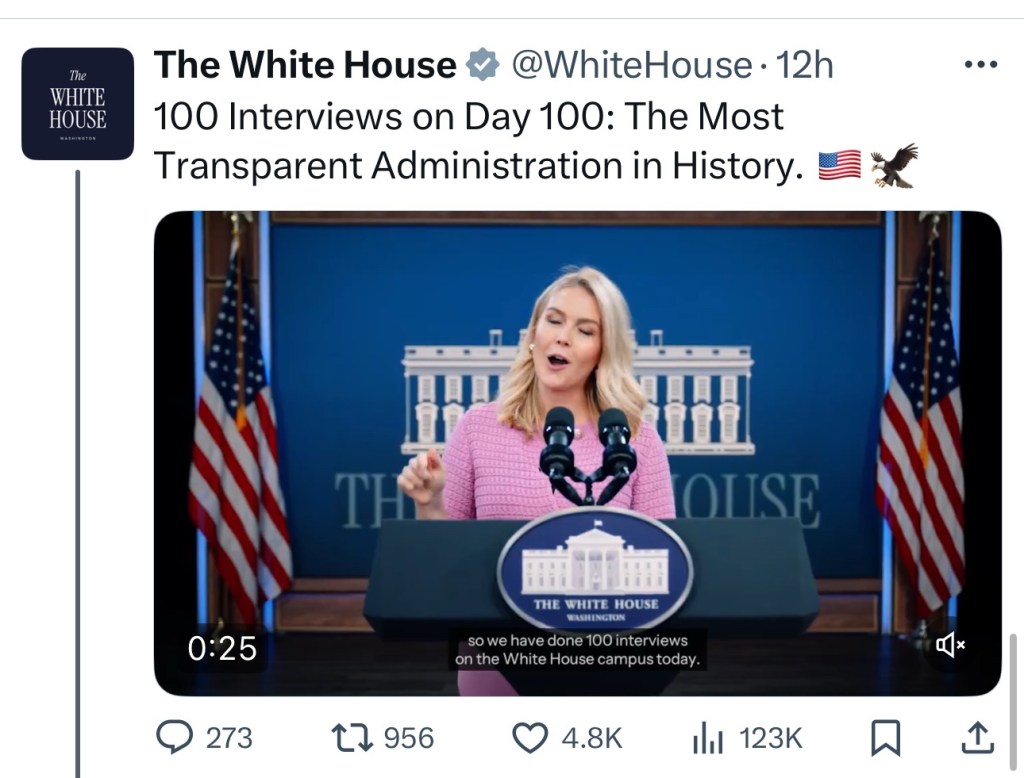
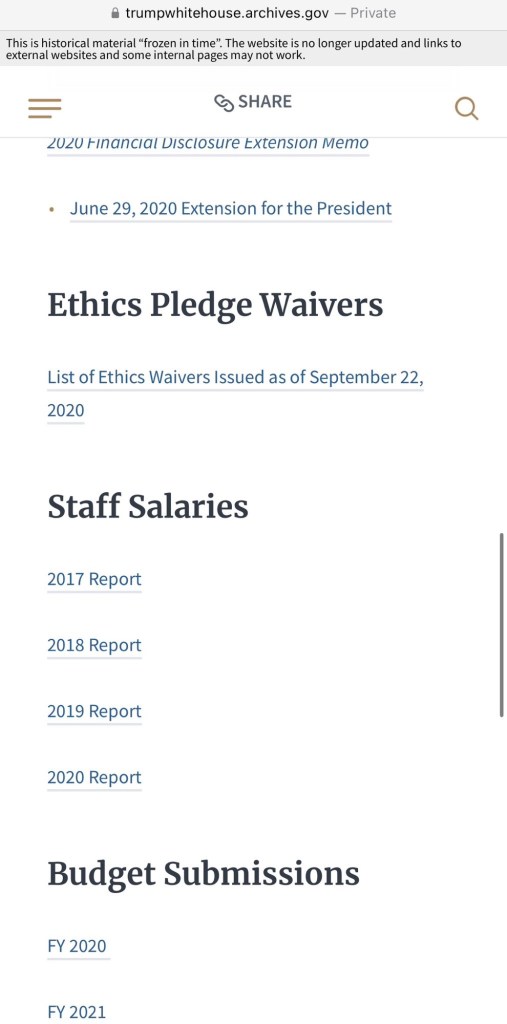
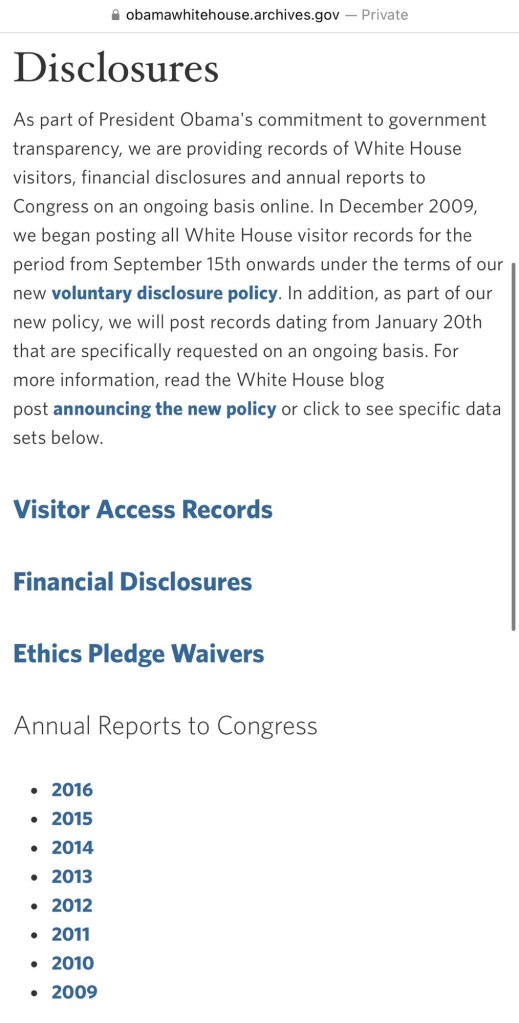
If this White House is using NDAs, renewed claims of historic transparency are even more ludicrous.
The “most transparent administration in history” would honor the Presidential Records Act and fire a National Security Advisor who set records to auto-delete in a Signal chat, not tolerate lawlessness.
Back in 2019, in response to a complaint filed by the Center for Biological Diversity under the Information Quality Act challenging the scientific integrity of government communications, the Environmental Protection Agency (EPA) claimed a blog post was not public information.
“The EPA Blog is an example of information that would not be considered disseminated by the EPA to the public,” argued an EPA staffer. “The guidelines do not apply to ephemeral information, as what is being offered is someone’s opinion rather than fact or EPA’s views,” he said.
That claim didn’t pass the smell test then, or now. In our view:
A public blog post published by a U.S. official on a federal website for public information clearly constitutes a public record.
A blog post is not ephemeral content, unlike an agency post on Snapchat, regardless of whether it had been published using a Web publishing software built for blogging, like WordPress, or another content management system, like Drupal.
Blog posts are subject to the Information Quality Act.
“From our review of what you forwarded, EPA appears to be speaking about whether a blog post is subject to the Information Quality Act, which is a fairly confusing law with more confusing guidance from OMB interpreting it. Whether or not something is subject to the Information Quality Act has nothing to do with the FRA, the definition of federal records, etc. That said, we agree with you on #1 and #2, but not necessarily with #3, which is really for OMB to explain.”
While OMB never explained, Brewer helped us to determine that in the view of the Chief Records Officer of the United States, blog posts are public records. That was exactly what we’d needed to know.
In the years since, Brewer continued to answer questions about public records when we visited the National Archives and Records Administration (NARA) to speak with the Archivist and staff, or in answer to my email. In 2024, he left NARA and began serving at the Department of Justice as the Director of the Office of Records Management Policy (ORMP) within the Justice Management Division.
I’ve reached out to the official designated as acting CROTUS last year with questions about any guidance NARA has offered to federal officials using Signal for public business on government-issued devices or personal smartphones but have not heard back.
In the interim, I went back into my email archives and found Brewer’s answers to questions I’d posed in December 2020 but found I had never published them here.
Given their relevance to the public debate to the scandal around the use of disappearing messages on Signal by the National Security Advisor, Vice President, Secretary of Defense, and Secretary of State – who is currently also acting Archivist – we are sharing them now.
We do so in hopes that all Americans will better understand the obligations that public servants have to uphold public trust by archiving public records when they conduct public business.
Our questions and his (evergreen) responses follow, edited for clarity.
You confirmed that a blog post on the EPA’s website was a public record. It seems straightforward to conclude that all content on a federal .gov website should generally be considered public record, with the exception of copyrighted material from a third party.
The standard I suggested to state, local, and national officials to adhere to while I was at the Sunlight Foundation resembles a first principle: if any update or interaction on social media or messaging service constitutes public business, then it should be memorialized. For instance, screenshots are how WhatsApp messages seem to be preserved in some agencies. Is this also where NARA stands?
CROTUS: “You stated, as a ‘first principle’, that “if any update or interaction constitutes public business, it should be memorialized.” This concept generally comports with the statutory provision under the Federal Records Act that requires agencies to ensure “adequate and proper documentation of the organization, functions, policies, decisions, procedures, and essential transactions of the agency and designed to furnish the information necessary to protect the legal and financial rights of the Government and of persons directly affected by the agency’s activities.” 44 U.S.C. 3101.
The challenge comes in how to implement records management requirements to the very fluid and dynamic nature of a complex government website.
With regard to the appropriate capture method for each record type, there are obviously many factors at play, including how long the record needs to be preserved and the available methods. However, I would note that in the letter to agency heads I shared with you, NARA stated: “Many apps, including WhatsApp, have electronic export capabilities, which should always be utilized. Screenshots should only be used as a last resort.”
You note that when content is on a .gov or other government domains, it should be designated as a record. We agree with this general notion, in the same way that emails on .gov accounts are presumed to be Federal records, but recognize that there can be exceptions.
Federal websites must go through the normal processes of scheduling and appraisal to determine appropriate retention periods, including those web pages that are permanent and would eventually be archived by NARA. Keep in mind that, depending on how agencies use their websites, the web version may not be the official recordkeeping copy (e.g., public version of a Secretary’s calendar), or the permanently valuable version for NARA preservation.”
We built upon that work with two bulletins covering social media records (NARA Bulletin 2014-02) and e-messaging (NARA Bulletin 2015-02) that provide more prescriptive guidance to agencies on managing these types of records. We also highlighted the management of social media and e-messaging records in a recent post on Records Express. Regarding the FDA matter, we currently have an open unauthorized disposition case for the FDA and Commissioner tweets.”
Should all official U.S. government accounts be frozen & memorialized on the platforms under @-name44, as with the @ObamaWhiteHouse? Spreadsheets shorn from platforms lose context, including public participation and meta data.
CROTUS: “This is an area of evolving practice. We have not issued specific Federal Records Act guidance to Federal agencies, with respect to preserving and renaming agency social media accounts. (NARA separately works with the White House on how best to manage and preserve social media accounts in accordance with the unique requirements of the Presidential Records Act.)
But, aside from the White House, we do not recommend that agencies use generic accounts like @SecState, because it is difficult to transition those accounts from one person to another. We instead recommend that the account be a unique combination of the name and position title, and that a new account be created for each new office holder.”
If a given platform or medium doesn’t allow archiving, like ephemeral messaging apps, should they be used for public business?
CROTUS: “In our experience with agencies, we have learned that trying to prohibit a practice that agencies use to carry out business is not the most effective path to compliance with record-keeping requirements, especially in cases where agencies receive messages from third parties or outside of government.
We do, however, expect agencies to issue policies and guidance, and deploy software or other tools if needed, to ensure the adequate and proper documentation of all official decisions, activities, transactions, etc.
This includes implementing procedures consistent with 44 U.S.C. 2911, which requires that electronic messages sent via personal accounts be copied to or forwarded to an official account within 20 days [after the original creation or transmission of the record].”
How should the U.S. government be treating posts on Signal?
To date, Congress has not passed an update to the Presidential Records Act or Federal Records Act that lays out specific expectations for how public officials across all three branches of government should use Signal, nor has the National Archives promoted specific guidance about this application.
End-to-end encrypted messaging apps like Signal are relatively new as a technology that’s commercially available to all Americans across the public and private sectors.
Should federal employees use encrypted apps for work, posts on them may be considered public records under the Freedom of Information Act and other public records laws.
As the comments from the former CROTUS drive home, the key issue is not the condition of encryption or which app or device records are created on. Rather, it is whether official government business has been conducted or not. If Signal was used for public business, then those public records should be memorialized.
Federal employees could use encrypted apps like Signal legally, if an agency CIO approved them, but as our editor told NextGov back in 2017, “if you are using a messaging platform—IM, collaborative chat, email, text messaging, Facebook Messenger, ephemeral messaging or encrypted applications—they are all subject to archiving requirements. If you conduct public business using any computing device, a record of messaging you exchange is something that should be archived, period.”
While there is no official public guidance from NARA, AOTUS, or CROTUS on the official use or Signal at present, Kyle Cheney reported that on Monday, March 25, 2025, the White House advised staff at the U.S. DOGE Service that work-related messages sent on personal devices and on Signal must be archived and that the auto-delete feature in the app should be disabled.
The policy emphasizes that “the basic rule is to preserve all work-related communications and records, regardless of format.”
Spot on.
We believe this basic rule applies to all federal agencies, as it’s in alignment with previous guidance from CROTUS and federal law on electronic messaging and collaboration platforms.
The acting Archivist of the United States, the President, and all of the Cabinet officials should now make it clear to the American people that they will uphold their oath to faithfully carry out those laws by preserving public records in the days and months to come. They should be saying they will hold accountable any officials who do not uphold public trust by intentionally using platforms or apps that destroy posts by default.
This must not become a partisan issue nor should it be further politicized. Public service is a public trust. Public records remain the backbone of an open government of, by, and for the People.
This afternoon, our editor texted the following letter in response to President Joe Biden’s text about federal disaster response on Monday. The letter was drafted after the White House posted a memorandum on fighting Hurricane Helene falsehoods with facts.
While the effort to use WhiteHouse.gov was worthy, the “opt-in texts” from POTUS referenced are woefully inadequate to the wicked challenge that lies and conspiracy theories pose for federal, state, and local agencies engaged in rescue and recovery operations.
We hope President Biden uses the National Wireless Emergency Alert System to text every American in the regions devasted by Hurricane Helene links to DisasterAssistance.gov, the FEMA app, and 80016213362.
It is legal to send a Presidential alert to “alert and warn the civilian population in areas endangered by natural disasters.” The President should do so to serve and protect the Americans who need trustworthy information and access to services.
E Pluribus Unum.
Dear President Biden,
Thank you for helping Americans affected by Hurricane Helene, President Biden. Could you please direct your team to surge connectivity & trustworthy information to everyone in the path of this disaster?
Your team is engaging Americans on social media, but I fear people without cell service or data can’t get info or access services.
The escalating impact of the information void that’s been left behind in the hurricane’s wake risks further damaging public trust in our democracy of, by, and for all of the American people. You’ve seen it and then spoken about the doubt, fear, and lies being used to divide our union as we begin casting our ballots in a historic election.
The White House communication team has put out a memo correcting the record and worked with FEMA to stand up a new website to debunk rumors about disaster response, as CISA did for rumors and conspiracies about election integrity in 2020, but it’s not enough.
Those efforts have run the same playbook that failed to combat a disinformation campaign that has successfully led tens of millions of Americans to hold false beliefs about the integrity of the election that sent you to the White House or the safety of the vaccines that have saved hundreds of millions of lives in the pandemic.
To beat the Authoritarian Playbook, you and your team need to come up with new plays from a democratic playbook that you co-create and run with federal, state and local governments agencies to reach the American people you seek to serve and protect.
First, get us all online. Partner with every American company who’s willing to work with the U.S. government to provide open Internet access to people in the disaster zones. Literally surge power and connectivity to all affected counties. Challenge American industry to deliver better hand-cranked & pedaled dynamos to charge batteries that can power radios & phones.
Second, wake the sleeping giant. FEMA is already working full-out with state and local agencies, but talk with governors and mayors about how more members of the National Guard and U.S. military assets could be deployed in ways that rebuild trust with affected communities who are being told that the U.S. government and other Americans “hate them” and aren’t helping them.
Take away poisonous talking points about humanitarian aid being sent to help people caught in wars and disasters aboard by further mobilizing first responders across our great nation to bring help, health, and hope to Appalachian foothills and rural coastlines.
Create a shared ethos of “showing your work” in these response efforts. Embrace community news, public broadcasting, and civic media to create a powerful shared narrative around collective facts, where trust is built by participation and collaboration.
Third, empower Americans to help one another and keep validating those efforts by standing with governors and mayors. Show patriotism has no party and partisanship has no place in disaster response. You know we will rise to the occasion if you ask us what we will do for our country and give us ways to serve. You’ve already stood up a climate corps and institutionalized digital government fellowships.
Call on Congress to fund the next generation of first responders who can not only help respond to the decades of natural disasters ahead but build resilience in the most marginalized communities who will be disproportionately affected by hurricanes, wildfires, & droughts that lie ahead.
Fourth, restore trust in the rule of law. Partisans are falsely claiming that you have weaponized federal law enforcement against your political enemies. Your considered decision not to comment on ongoing investigations has allowed public understanding of how a former president conspired to overturn the results of a free and fair election with lies and abuses of power.
Declassify and disclose what the United States government knows about the foreign entanglements of our politicians now, so that all Americans are armed with the self-knowledge a healthy democracy requires.
Decry corruption as a pernicious blight upon liberal democracy. Members of your own party have been convicted of bribery by foreign governments, or stand indicted.
Make it clear to Americans that while all of us are entitled to due process and the presumption of innocence, public service is a public trust. Patriotism knows no party.
Finally, come meet us where we are, online and offline. Years of advancing truth decay have left far too many Americans infected with viral lies, increasingly vulnerable to the weapons of mass doubt, denial, distraction, deception, & disinformation wielded by those who would weaken our union and undermine public trust and faith in democracy itself.
Go far beyond fact sheets and tweets. Use online and offline participatory forums hosted with leaders from across the spectrum of American society to combat the epidemic of loneliness, fear, and disillusion that we can see infecting minds, weakening hearts, and breaking spirits across our union.
Remember how President Franklin Delano Roosevelt’s fireside chats built trust during the Great Depression. Run that play with today’s emerging technologies, in partnership with public media.
As you know, the stakes are existential for our union. Every American will suffer if we do not find a way to help a house divided stand together after the last ballots are cast a month from today.
While we have not been able to solve the wicked challlenge of broken public trust these past three years, I’m certain that the months ahead are a historic opportunity to show the world that there is nothing the United States cannot do if we, the people, decided to do it together.
Thank you for all that you have done to protect and defend the Constitution over half a century of public service.
On Monday morning, I read Daniel Schuman’s excellent newsletter focused on the First Branch of the United States government, which included a section that collected several notable developments in the open government space. These updates include:
The launch of the General Services Administration (GSA) Open Government Secretariat’s new website. This website replaces the now defunct page at open.usa.gov — which not to be confused with the GSA’s old and degraded open government website at GSA.gov/open which is required under the Open Government Directive. This new website does not list public meetings that were held prior to 2021 in its public engagement section, neatly memory-holing what occurred under the Trump and Obama administrations. (There will continue to be readouts available about that history on this website, however, for as long as it stays online.) I was interviewed about this new open government website for the GSA; I’m sorry to report that it does not include many of the government-wide resources and initiatives I’d requested. Instead, it’s primarily focused on compliance with the Open Government Partnership’s requirements to maintain an online repository of commitments, as is the Secretariat itself. Daniel has curated a useful set of links related to open government that’s more up to date than the GSA page,
The membership of the new Open Government Federal Advisory Committee, which Daniel now chairs. Speaking at at the iirst meeting of the FOIA Advisory Committee for the 2024-2026 term, Alina Semo, director of the Office of Government Information Services, said that the first public meeting of this new OG FAC will be in October – I believe on the 23rd. That has not been publicly announced, yet.
Generally speaking, this is all good news. I want to highlight a specific issue, however, which is crucial to understanding why the Open Government has not had the positive effects in the United States that people in other nations participating in the global multi-stakeholder initiative have seen: Neither Congress nor the judicial branch has ever been involved.
Daniel has framed the Secretariat’s efforts as an “executive branch” plan, which isn’t inaccurate within the scope of the mission that has been defined for them by GSA leadership — and presumably this White House:
But saying that OGP is only about the executive branch of the federal government in the United States reflects also a specific design and governance choice that the Obama White House made. That choice has undermined the impact, influence, and relevance of the Partnership in the United States ever since, given that neither the Trump administration nor Biden administration took any action to change it.
I raised this issue in April at the Transparency Caucus briefing in Congress. Jump ahead to 54:30, where I ask if U.S participation in the Open Government Partnership is “doomed” unless we see a President engaging the American people about it and Congress involved.
There are other factors that have led to the ongoing failure of OGP in the United States. The Open Government Partnership commissioned research in 2020 that explored that question and called on the U.S. government to “seize the moment” in spring of 2021, which I participated in.
Neither Trump nor Biden ever called on all Americans to participate on air, online, or on the world stage using the bully pulpit, online or off. Championship sports teams and athletes have gotten far more presidential recognition – and thus public attention – than open government has since 2016. (Before, too, if we’re being honest, but former President Obama’s participation in a UN event in New York City in 2015 with other world leaders elevated this work far more than anyone since.)
Neither White House ever effectively engaged the American public, press, or media companies about OGP. They never formed partnerships with tech companies or non-government organizations that work on or deploy civic technologies like pol.is, while resetting the official defaults for public communications from the administration to opacity, “on background.”
The Biden White House ignored coalition letters and refused to co-create commitments, revise them, or add new ones based on our priorities.
Instead of “standing with the people demanding transparency” and accountability from our government – as President Biden called on everyone to do in December 2021, presumably including his own administration – the White House has mostly maintained strategic silence, leaving it to an extraordinary public servant – GSA Administrator Robin Carnahan – to gamely lead these efforts without top-down air cover.
The cumulative outcome of leadership, design, and governance choices over the last decade has meant that OGP’s platform or processes have not been a useful platform to reverse low trust and faith in U.S. government, despite the vigorous efforts of civil servants who remained engaged or scrubbed in, in hopes of helping keep it alive in other nations where the visibility was helpful to members of civil society there.
More than three years on, the future of OGP in the USA still depends on White House leadership — but it will be the next administration that co-creates that future or abandons it — unless President Biden decides to make open governance a priority in the last months of his term with the executive actions we’ve been calling for since he won election in November 2020.
I look forward to reading more responses to the GSA RFI that explore why OGP hasn’t worked in the USA, which the federal government and philanthropic community can apply to making this work meaningful in the future. No one involved wants to spend more time on an approach to open government that’s flailing.
Now that the GSA has officially kicked off the co-creation process, nongovernmental organizations, the press, and the American public will all need to decide whether legitimizing OGP through our participation is worth or not it in 2025.
If the next President is not willing to reify OGP through their personal participation, making clear that policy, programs, and legislative reforms are on the table, and then acts to expand OGP’s remit to Congress and the courts, set your expectations for impact in the United States accordingly.
There are reasons to be hopeful about open government as the United States as the new year begins, but also cause for grave concern. In December 2023, researchers at the Independent Review Mechanism (IRM) of the Open Government Partnership (OGP) confirmed what good governance advocates have said since 2017: the federal government is still not meeting the standards for open government domestically that the State Department and U.S. Agency for International Development (USAID) encourages other nations to adopt internationally.
Instead of standing with people demanding transparency from U.S. government, as President Biden encouraged other nations to do in December 2021, the White House refused to hold meetings in person in 2022 and 2023 and to incorporate the priorities of the (dwindling number of) good governance organizations and individuals willing to participate in voluntary multi-stakeholder processes after years of eroding trust and inaction.
Instead of seizing the moment and reviving the process with renewed leadership, the Biden administration starved OGP of attention, capacity, and relevance while creating a far weaker multi-stakeholder initiative, the Summit for Democracy.
The White House did not co-create a new “National Action Plan” for Open Government in 2022 with the American people and then announce it in a press conference, embrace accountability for the failures of the previous administration, and then use participation and collaboration to build back public trust.
Instead, the IRM found that the White House pre-drafted and then published a report full of vague, mostly pre-existing commitments – including many that were not relevant to government transparency and accountability – ignored expert feedback regarding opaque processes and flawed product, and then published yet another weak open government plan online over the holidays in December 2022.
This is unfortunately not novel. The OGP IRM has found the United States to have repeatedly acted contrary to process for years now. Nonetheless OGP restored the country to good standing after the Trump White House delivered a new plan in 2019 – despite ample cause for keeping a corrupt, secretive administration under review prior to a historic pandemic and attempted auto-coup.
After documenting the White House’s failures to engage the American public at scale, collaborate in choosing and drafting commitments on transparency and accountability, disclose comments, or provide a reasoned response for ignoring the consensus recommendations of good governance organizations, researchers at the Open Government Partnership Independent Review Mechanism recommended that the U.S. government collaborate with civil society to identify verifiable commitments with the most potential and refine them in 2024.
In their report, the IRM identified six “promising commitments” in a policy area that important to stakeholders or the national context which are verifiable, have an open government lens, and modest or substantial potential for results:
Commitment 1: Production, dissemination, and use of equitable data
Commitment 4: Public access to federally funded research
Commitment 8: Data for environmental justice Commitment 18: Government-wide anti-corruption strategy
Commitment 27: Access to government information through FOIA
Commitment 35: Effective and accountable policing and criminal justice
The good governance community also called on the US government to add new commitments to the 5th NAP in August, which the White House has so far declined to do — despite a mechanism that would allow it, as in the 3rd NAP.
Unfortunately, the White House has yet to acknowledge the (incredibly) constructive criticism from the researchers by revising selected commitments – much less added new ones, as the Obama White House did in 2016.
Instead, the administration invested a million dollars to fund an Open Government Secretariat within the General Services Administration to track progress on the commitments the White House chose and host a series of virtual seminars in 2023, complying with the bare minimum of the Open Government Partnership’s requirements for documenting implementation.
The Biden administration also has yet to respond formally to the “contrary to process” letter the Partnership sent in August or the letter a coalition of good governance groups sent to the President, bring senior officials to in-person roundtables in DC and around the nation, fix an opaque process, and heal badly broken relationships.
There continue to be good faith efforts across the agencies in the executive branch, from the National Archives to the General Services Administration, but strategic silence from the White House on open government has signaled to civil society and officials alike that this is not a priority.
If the President and his advisors see the value of investing political capitol, oversight capacity, and top-level leadership in open government across the federal government, change is possible. It’s crucial to provide dedicated civil servants with the air cover and capacity to do the work necessary to bring dormant or dissolved policies, programs, and partnerships back online to build resilience against headwinds for American democracy at home and abroad.
If the United States does not lead by the power of our example in 2024, our government will lose an opportunity to build trust in democratic governance through accountability and increase resilience against authoritarianism though transparency.

 E Pluribus Unum