SURVEY: 85% of American adults who use social media say people are “mostly kind” on the sites

A new survey report on “the tone of life on social networking sites” from the Pew Research Center’s Internet & American Life Project found that 85% of American adults who use social media say people are “mostly kind” on those sites:

These attitudes will naturally be of great interest to people who work in practices that span open government to education, in terms of practitioners considering the use of social media for public engagement, civic participation, and deliberative democracy, along with grist for digital ethnographers of both the amateur and professional variety.

More stats, excerpted from the report:

“A nationally representative phone survey of American adults finds that:

*85% of SNS-using adults say that their experience on the sites is that people are mostly kind, compared with 5% who say people they observe on the sites are mostly unkind and another 5% who say their answer depends on the situation.

*68% of SNS users said they had an experience that made them feel good about themselves.

*61% had experiences that made them feel closer to another person. (Many said they had both experiences.)

*39% of SNS-using adults say they frequently see acts of generosity by other SNS users and another 36% say they sometimes see others behaving generously and helpfully. By comparison, 18% of SNS-using adults say they see helpful behavior “only once in a while” and 5% say they never see generosity exhibited by others on social networking sites.”

FEMA administrator Craig Fugate [@CraigAtFEMA] on real-time awareness and social media [#TechAtState]

http://storify.com/digiphile/fema-administrator-craig-fugate-on-real-time-aware.js[View the story “FEMA administrator Craig Fugate on real-time awareness and social media” on Storify]

4 reasons #40dollars resonated more with citizens on Twitter than #1000days

Yesterday, David Copeland reported at ReadWriteWeb that the GOP tried to replicate the success of the White House’s #40dollars social media campaign on Twitter with their own #1000days effort. As the Chicago Tribune reported, the GOP campaign sought to highlight an inauspicious milestone for the U.S. Senate. 1,000 since it passed a budget. Democrats, who control the Senate, last approved a budget in 2009.

//platform.twitter.com/widgets.js

Writes Copeland, “It’s clear that the digitial [sic] media campaigns had different goals, and #1000days was primarily aimed at emphasizing a point that was notably absent in President Obama’s State of the Union address last night. But if social media as it pertains to politics is truly about connecting with voters and constituents, score one for the Democrats.”

//platform.twitter.com/widgets.js

In this particular case, I mostly agree. The GOP’s efforts at gop.gov/sotu this year constituted an unprecedented use of the Web and social media by an opposition party to respond to a State of the Union, with smart integration of Twitter and YouTube. Citizens asked questions on the #GOPSOTU hashtag and Members of Congress responded using YouTube. As the Daily Dot reported, the #1000days hashtag has failed to spread beyond the Beltway. From what I’ve seen, the four reasons why #1000days hasn’t resonated in the same way break down into structural, tactical, and strategic issues:

1) Structural issue: Reach. Based upon the statistics I’ve seen, the @WhiteHouse has much more reach than than any single other “governance” account on Twitter. The GOP caucus in Congress, former Massachusetts governor@MittRomney and the @Heritage Foundation do have, in aggregate, an even or greater number of engaged followers. That said, the @BarackObama campaign account, which amplified the #40dollars conversation, has far greater reach, if lower engagement. Both metrics matter, in terms of the ability to involving and focusing more citizens in a given conversation around a #hashtag at a given time.

2) Tactical issue: Timing. The #1000days campaign was launched during the #SOTU, when the attention of politically engaged Americans was fractured between paying attention to the President’s speech itself, watching online (3m+ visits to wh.gov/sotu), reading the media organizations competing to report or fact check on the speech online, watching the TV networks and, of course, talking to one another.

3) Strategic issue: Adaptability. Agreeing upon and passing a budget is a fundamental, basic issue for the operations of any business, organization or government entity. Congress and the Obama administration have cobbled together a series of continuing resolutions and omnibus bills to fund itself over the past 3 years. While many Americans have to make and live by budgets in their personal lives and businesses, however, the #1000days campaign may be both too abstract and too constrained to a single message. The question about #40dollars, by contrast, asked citizens what it means to them, which is concrete, personal and invites creative answers.

4) Tactical issue: Engagement and Amplification. As Copeland reports, “Ahead of last night’s State of the Union address, Sen. John McCain, R-Ariz., GOP presidential candidate Mitt Romney and other Republicans started tweeting using the hashtag #1000days to accent the amount of time since Senate Democrats passed a federal budget.”

On Tuesday night, the top tweets for a search of the #1000days hashtag come from @MittRomney and Republican politicians. Neither Romney nor @SenJohnMcCain had retweeted any followers who have used the hashtag. @SpeakerBoehner has primarily retweeted the @GOPconference or other members of his caucus. The Heritage Foundation has only retweeted its own staff. That pattern is replicated throughout other participating accounts.

The @WhiteHouse, in contrast, continued its practice of resharing tweets from Twitter users who joined the conversation, sharing the voices of citizens with one another, not just other politicians. There’s a good lesson in this successful use to of Twitter that should extend well beyond citizen engagement and open government circles. One campaign amplified the messages of the representatives, the other channeled the voices of constituents responding to their elected issues on on a given issue back through the accounts coordinating the effort.

As I pointed out last year in an article on social media, politics and influence, it’s of note that the operators of the @WhiteHouse Twitter account now routinely natively retweet other accounts participating in #WHchats. While some of these Tweets will leave followers without context for the Tweet, the White House appears to have shifted its online strategy to one of engagement versus the lower risk style broadcasting that most politicians adopt online. To date, many of the president’s political opponents have not followed suit.

The challenges of these four issues look validated by the results to date: some 6,000 tweets per hour for #40dollars at the height of the campaign, as Ed O’Keefe wrote at the Washington Post. Keefe, on a talk on Monday, given by Kori Schulman, White House deputy director for digital strategy, “by 5 p.m., #40dollars was trending worldwide, Schulman said, and the hashtag was generating about 6,000 tweets per hour. At the height of the push, WhiteHouse.gov received about 5,000 responses per hour to the question.” In total, Schulman said the #40dollars campaign “generated 70,000 tweets, 46,000 submissions via the White House Web site, 10,000 related Facebook posts and contributions from 126,000 users.”

By way of contrast, according to the numbers in Topsy, the #1000days campaign has generated 3,862 tweets in the past week.

Agree? Disagree? What am I missing here.

Laptops, smartphones and social media allowed in U.S. House press gallery

The C-SPAN coverage of the resignation of Rep. Gabrielle Giffords (D-AZ) and tributes to her in the United States House of Representatives included something new: the House-controlled cameras provided an unusual display of extra TV camera shots in the House chamber, including the Giffords family in the House gallery.

In general, the viewing public does not get to see what’s happening elsewhere in the House. “These additional angles added much to the public’s appreciation for this Congressional action,” said Howard Mortman, communications director for C-SPAN, “and might lead one to ask, why not permit such camera shots every day?”

Mortman also alerted me to another interesting development: According to a new Roll Call story, journalists now can bring their laptops into the press gallery and use them to report on what’s happening. Reporters have to ask to do it — and they’ll need to have fully charged laptop batteries — but Superintendent Jerry Gallegos told Roll Call that he will allow laptops in for special events.

“It won’t be something that at this point we’ll be doing on a daily basis, just because power is an issue out there,” he said. “But because the House changed their rules allowing BlackBerrys on the floor … it didn’t make sense for Members to be able to tweet and not be able to have reporters get the tweets.”

It’s not the first time computers have graced the gallery, Gallegos said. The decision to allow laptops goes back to then-Speaker Newt Gingrich (R-Ga.). But the gallery staff tired of arguing with testy writers about why plugging multiple power cords into limited outlets and running wires across the floor is a fire hazard.

“Early on, they weren’t going to be able to operate without plugging in,” he said. “It was very obvious that was going to create a safety hazard.”

Thankfully, battery technology has evolved since the 1990s and the House Chief Administrative Office equipped the chamber with Wi-Fi in August. So, Gallegos said, “It just seemed like now was the time.”

Even if the laptops run out of battery power or have connectivity issues, however, reporters will now have another option: Mortman tells me that iPhones, iPads, BlackBerrys and other smartphones will also be allowed into the press gallery of the U.S. House on a “trial basis.”

As a result, we should expect to see more livetweeting and Facebook updates from journalists on-site. That said, there’s a major caveat: Mortman said that the trial will be monitored to ensure that no photos or video are recorded.

Given the role that smartphones now play in the professional lives of journalists of all beats, political, tech or otherwise, the limitation on pictures and video is notable. There’s a good chance that the trial could be tested, as soon as a newsworthy event occurs off the C-SPAN camera. Late last year, during a debate over the payroll tax, House staff shut down C-SPAN cameras. Government staff acting to limit the capacity of a journalist to record a debate between elected representatives in the People’s House might raise valid First Amendment questions.

“One day, hopefully, the House (and U.S. Senate) will also allow in independent media TV cameras,” said Mortman.

Can Facebook predict the winner of the 2011 NH presidential primary?

Last week, looking at Twitter as a predictor the Iowa caucus results or building tools to do so felt like the shiny object of the moment in the tech blogosphere. Some were more over the top than others but the genre is well established: adapt the numbers of followers and fans a candidate has on Twitter and Facebook to the classic “horse race” coverage of political campaigns. Used that way, it feels like the latest in a long list of reasons to conjecture that political coverage is broken.

As Micah Sifry suggested at techPresident, however, you shouldn’t believe the social media hype.

“There are so many ways that such changes might NOT be indicative of anything, or indicative of the opposite, that it almost seems silly to list them. A candidate might gain followers because he’s entertaining to his opponents. She might gain followers because of something outrageous that she says. The same with retweets. As the saying used to go, “a link is not an endorsement.” At best, it’s a very low-level indication of interest, an invitation to start a relationship that campaigns need to convert into real support. Similarly, we shouldn’t take big numbers of followers or “likes” as proof that a candidate has a really engaged base. Over on the Huffington Post, Alan Rosenblatt demolishes the notion that Newt Gingrich 1.4 million Twitter followers means he’s popular among Republicans. For starters, half of those accounts aren’t even in the United States. Newt’s numbers are a sign of online longevity and notoriety, not much more. And who can forget when Herman Cain was topping the Facebook “buzz” charts?”

Today at techPresident, Nick Judd published a feature on Twitter obsession that went even deeper into the issue and how problematic trying to prognosticate about the campaigns using social media can be. It’s worth reading the whole thing but here’s the relevant bit:

“The thing about attaching numbers to people’s names is that it usually makes them want to make the number go up. Call it gamification if you want. The truth is that it’s human nature, and as more people pay attention to social media, it is creating a sort of downward behavioral spiral. Candidates wanting more points on the social media scoreboard are urging supporters to tweet and post to Facebook on their behalf — spreading borderline spam on social networks and doing nothing to make the campaign season less of a horse race when that doesn’t necessarily have to be the case. “

Judd suggests that instead, political reporters and tech journalists (and those of us who try to straddle those worlds, on some level) should be evaluating the success — or failure of campaigns based upon better metrics.

“…why not evaluate them in the public online sphere based on metrics that say more about their potential as a public official? Especially over the past two years, information of this type has become easier for programmers to get to. The unfinished bit is making a competition in which a candidate can ‘win the Internet’ by accumulating the most small-dollar donors, or by making the most in-state campaign stops of an hour or more in a week, or by staking out the most detailed position on oh, I don’t know, the future of American Internet infrastructure.”

I think Judd is offering political journalists a great way to differentiate themselves from the pack of stressed, overworked correspondents chasing the same story in the same place. As primary season goes into hyperdrive, I can’t help but hope that some take up his suggestion.

I’ve been thinking a lot about the intersection of social media and government over the past couple years. Governance has proven to be a genuine challenge, at least with respect to the current architectures for digital participation we have. That could well change, as the civic Web moves from idea to reality. To make the point in a succinct way, policy makers seeking to leverage technology in governance in the 21st century might do better to look to the wiki, not the tweet.

Campaigns, however, particularly well suited to quicksilver sociality of media, with its capacity to share links to viral videos, rapid responses or pithy quotes. There’s a reason that reporters of many stripes, political or not, watch Twitter carefully now: it tends to be where news breaks first.

All that being said, I saw some data tonight that made me wonder, yet again, about social media’s potential value as a leading indicator, getting out ahead of the polls that campaigns and the media traditionally use to gauge how the candidates are doing. While Twitter still has low penetration in the overall population of voters, a majority of Americans online are now on Facebook.

Earlier this evening, I got off the phone with Jan Rezab, CEO of Socialbakers, whose company has been crunching social data from Facebook around the GOP presidential candidates. They’ve been porting the data into an infographic on elections at socialbakers.com.

There are several ways to read the data, said Rezab, including the overall status of a candidate, where they’ve been gaining followers over a long period of time. If we look deeper, said Rezab, the best thing is geometrics, looking at fan gains, people talking about the candidates, how many people do they reach and what topic they talk about.

So here’s the interesting data point — and yes, I may well have buried the lede — social data from Facebook shows former Utah Governor John Huntsman is trending sharply upwards, much as former Pennsylvania Senator Rick Santorum did before Iowa. Hunstman gained 1182 fans yesterday and, as of 7 PM EST tonight, more than 2000 fans, a 69% increase. The same is also true of people talking about him on Facebook, with some 8800 people on the 8th and approximately 11,0000 today, a 25% increase.

That’s “quite huge growth,” said Rezab. “He’s the one that’s trending right now.”

Will growth be a leading indicator for Huntsman finishing 3rd or even 2nd? Hard to say. The gold standard for political calculus is Nate Silver at 538, who is now at the New York Times. Silver blogged today that “Huntsman has momentum but lacks time“:

“Two new polls out Sunday night showed a favorable trend for Mr. Huntsman. A Public Policy Polling survey, which had a very large sample size, gave him 16 percent of the vote, enough to challenge Ron Paul for second place. Another poll, by the University of New Hampshire, had Mr. Huntsman at 11 percent of the vote, although this was improved from his 7-percent standing earlier in the week.”

Will that be enough to keep him viable and in the race? It’s hard to know. I’ll refer readers back to Silver’s analysis of Huntsman’s prospects on that count.

Here’s one more thing to consider: relevant academic research. Responding to a question on Twitter about whether Facebook was was predictive, Girish J. “Jeff” Gulati, a politics professor at Bentley University, replied that the growth in Huntsman’s “likes” and “mentions” was not. Rather, “our 2008 data suggest it would be response to positive news coverage of his debate performance and gains in NH polls,” he replied. According to “Social Networks in Political Campaigns: Facebook and Congressional Elections 2006, 2008,” co-authored with Christine B. Williams, suggests a causal relationship is credibel, if not confirmed by their research data and methods:

Preliminary analysis of the Iowa and New Hampshire contests (Williams and Gulati, 2008) suggests that Facebook supporters matters even more than candidate visits and television ad buys, and together these indicators explain very high percentages of the variance in candidates‟ vote shares. The predictive power of the model for all New Hampshire voters was lower than for the model of all voters in the Iowa caucuses, however, and the regression coefficients for Facebook support were not statistically significant. The model for the youngest age cohort in New Hampshire was highly predictive, and there was a very strong and highly significant relationship between actual vote share and Facebook support among 18-24 year olds. Another approach would be to include as an independent variable the percentage voter turnout for 18 to 29 year olds in each state‟s nomination contest. If Facebook support is simply a surrogate for young people‟s heightened political engagement in the 2008 election, its independent effect would wash out.

If future research can confirm these findings and demonstrate a causal connection between online strategies and votes, then Facebook and other social networking sites will be an essential tool in enhancing the democratic process. These sites go beyond simply communicating the campaign‟s theme and information on how to make participating easier. Active engagement by the candidate and a well maintained site can make the candidate more accessible and seem more authentic. It also can encourage a more professional discussion among supporters. In addition to personalizing the candidate, Facebook puts a face on the candidate‟s other supporters and facilitates interpersonal connections around activities other than politics. And because Facebook organizes members by regional and organizational networks and gives greater access to profiles in one‟s own networks, offline meetings and connections are a real possibility. As membership in traditional civic associations declines, we see in these networks a new frontier for cultivating social capital, which candidates, elected officials and civic leaders can tap when they want to mobilize citizens for political action.

Will rapid changes on Facebook predict the winner of the 2011 NH presidential primary? There’s little doubt 2008 Facebook was a very different place, in terms of scale, functionality and integration into the lives of Americans online, than 2012 Facebook is today. Tens of millions of citizens have tablets and smartphones now and access Facebook from where ever they are. As we saw last Sunday, television networks and Facebook are increasingly integrating debates.

There’s “definitely a lot more going on Facebook and other social media this time around,” wrote Gulati in a follow up email. “In fact, every two years we see so much growth and change. I’ve been studying this since 2002. The beauty of studying this field is that there always exciting and you are never short of ideas for a new study. I still am sticking with my view that it is not a strong predictor of future success at the polls.”

Gulati listed three rationales for this assessment:

1. Much of social media strength is a function of longevity on Facebook and national visibility. “Gingrich, Romney, Paul, and Bachmann start out strong simply because they ran before and carry over their supporters or are members of Congress that are known nationwide,” wrote Gulati.

2. Some of the candidates who are stronger on social media are in that position because they are shut out of traditional sources. “Ron Paul and Buddy Roemer are cases in point,” wrote Gulati. “So my point is not to look at social media in isolation of other media.”

3. Social media isn’t integrated with the campaign. “From our interviews with Congressional candidates and staff in 2008 and 2010 (~150 interviews), we found that the staff really does not know what to do with these likes and followers,” wrote Gulati. “So even if a social media consultant is succeeding in growing the candidate’s online presence, it really does not go much past that. I think that as the number of followers grows, it actually will be harder for campaigns to truly engage with them because there are just too many. A similar problem was happening in Congress with regards to e-mail overload. I’m not sure if they really have resolved the problem.”

Gulati attributes rapid changes in likes or mentions to external events, which is makes sense. The one billion dollar question, is whether a social media following will lead to offline action, in this case results at the polls:

Of course, your post was referring to the change in supporters rather than actual numbers. I think clearly that indicates some buzz around the candidate. But I still see it as a reaction to external events as in 2008 rather than social media pushing overall numbers mostly because I haven’t seen any evidence that social media strength can move poll numbers or actual results. I think one reason that so many of us who study social media give social media such an elevated prominence because that’s all we see or what we see on a regular basis.”

Do you think the growth in user base and political involvement will lead other researchers to different conclusions? Or, as Sifry and Judd eloquently argued, should the idea or the practice of looking at politics from the perspective of a social prism alone simply be consigned to the “dustbin of twistory?”

Comments are open. And, even more important, the first votes of the presidential primary season will be cast as the eyes of the nation turn towards Dixville Notch .

How should Regulations.gov be using social media?

The Internet offers new opportunities to involve the public in regulatory rulemaking, including industry, media, nonprofits and citizens. A new social layer for the Web has shifted what’s possible in open government forward again, both hosting and enabling conversations. Below, one of those conversations is captured using the social media curation tool, Storify.

http://storify.com/digiphile/how-should-regulationsgov-be-using-social-media.js[View the story “How should Regulations.gov be using social media?” on Storify]

As NYC.gov buckles, city government pivots to the Internet to share Hurricane #Irene resources

Tens of millions of citizens in the United States are watching as Hurricane Irene churns up the East Coast. If you’re in the path of the immense storm, today is a critical day to prepare. Visit Ready.gov for relevant resources. Unfortunately for citizens in my home state, New York City is right in the path of Hurricane Irene. As many New Yorkers look for information online, however, we’re watching NYC.gov is buckling under demand. For part of Friday morning, NYC.gov would not resolve. The outage is providing a real-time experiment in how a megalopolis with millions of citizens provides information during a natural disaster.

As the Village Voice reported, NYC is evacuating the most vulnerable and putting out advisories but city websites are down. As a result, we’re watching how city government is forced to pivot to the Internet and commercial websites, including social media, to get information out.

Dropbox is hosting a Hurricane #Irene Evacuation PDF (It’s not completely clear if city government uploaded the PDF or not, when this post was published). NYC chief digital officer Rachel Sterne and the official NYC.gov Twitter account have acknowledged and apologized for the outage and pointed citizens to docstoc.com for the official evacuation map:

NYC Hurricane Evacuation Map
http://viewer.docstoc.com/
// http://i.docstoccdn.com/js/check-flash.jsNotably, Mayor Bloomberg’s staff has uploaded the New York City Hurricane Evacuation Zones PDF to his personal website, MikeBloomberg.com, and tweeted it out. We’re in unexplored territory here, in terms of a mayor sharing information this way, but in the context of incoming weather, it’s hard to fault the move, though it’s likely inevitable.. [Ed: As Nick Clark Judd pointed out in his excellent post on how governments are scrambling to deliver information to citizens looking for hurricane information online, Mayor Bloomberg has posted press releases and other information to his website several times before.]

What is clear, amidst growing concerns of a multi-billion dollar disaster, is that the New York City government’s website hosting strategy needs to be revisited. According to Provide Security, NYC servers are hosted in a data center in Brooklyn. Spikes in demand are precisely what cloud computing offers to the private sector and, increasingly, to federal government. As hurricane clouds gather, it’s probably past time for New York government to get familiar into cloudbursting or move quickly implementing internal architectures that include a private cloud, through Nebula or something similar, to handle the load. In the context of disasters, surge capacity for government websites is no longer a “nice-to-have” — it’s a must-have.

UPDATE: Civic technologist Philip Ashlock is mirroring NYC Irene data & links on Amazon Web Services (AWS). Even though NYC didn’t move critical resources to the cloud itself, a member of New York City’s technology community stepped up to help the city and citizens in a crisis. That’s Gov 2.0 in action:

Maps

NYC.gov Hurricane Evacuation Zone Finder
OASIS Map (more info)
ArcGIS Map
hurricane_map_english.pdf 

Raw Data

googleearth_hurricane_zone.kmz 
Shapefiles: OEM_HurricaneEvacCenters_001.zip
Shapefiles: OEM_HurricaneEvacZones_001.zip

Hurricane resources from the Feds

The federal government is providing information on Hurricane Irene at Hurricanes.gov and sharing news and advisories in real-time on the radio, television, mobile devices and online using social media channels. A curated list from the Federal Emergency Management Agency (@FEMA) is embedded below:http://widgets.twimg.com/j/2/widget.js
//

If you use Twitter, a key follow this weekend is FEMA Administrator Craig Fugate, who tweets at @CraigAtFEMA. This morning, Fugate tweeted out a link to new digital tools, including a FEMA Android app and text shortcodes. If you’re at risk, this information is for you. Shayne Adamski, senior manager for digital engagement, blogged the details:

In the new FEMA App, you’ll be able to:

  • Check off the items you have in your family’s emergency kit,
  • Enter your family emergency meeting locations,
  • Review safety tips on what to do before, during and after a disaster,
  • View a map of shelters and disaster recovery centers across the U.S., and
  • Read our latest blog posts.

When we built the app, we kept the disaster survivor in mind, making sure much of the information would be available even if cell phone service isn’t, so you’ll be able to access the important information on how to safe after a disaster, as well as your family emergency meeting locations.

So as Administrator Fugate said, you can download our app today in the Android market, and look for FEMA App for Blackberry version 6 devices and iPhones in the coming weeks.

FEMA Text Messages 

A new and separate service from the new app, our text message updates will allow cell phone users to receive text message updates from FEMA.

  • Text PREPARE to 43362 (4FEMA) to sign up to receive monthly disaster safety tips
  • Text SHELTER + your ZIP code to 43362 (4FEMA) to find the nearest shelter in your area (example: shelter 12345)
    (For availability of shelters and services, contact your local emergency management agency.)
  • Text DRC + your ZIP code to 44362 (4FEMA) to find the nearest disaster recovery center in your area (for example, if you lived in Annandale, Virginia with a Zip Code of 22003, you’d text DRC 22003).

We’re excited to provide these two new ways you can access information on your mobile device, in addition to our already existing mobile site – m.fema.gov. Stay tuned to our blog, Facebook and Twitter channels as we roll out our app to the remaining smartphone operating systems and make enhancements to our text messages program.

So download the app or text PREPARE to 44362, and then leave us a comment and let us know what you think. We encourage you to tell a family member, friend, or neighbor as well, so they can have disaster safety information always at their fingertips.

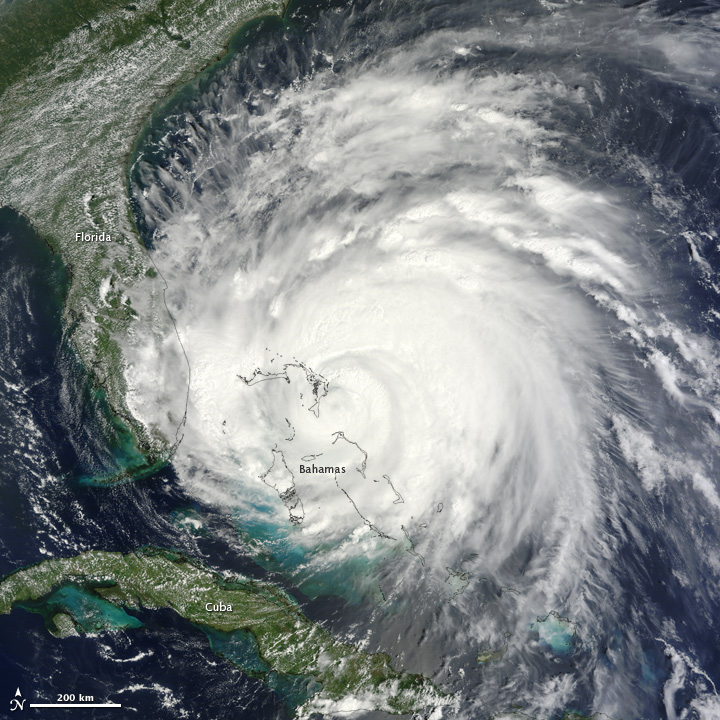
[Image Credit: NASA Earth Observatory]

This (Social Network) We’ll Defend: US Army releases new social media handbook

File under “awesome” on a busy morning: receiving an email from the United States Army with a classification “UNCLASSIFIED” and caveats: NONE. Brittany Brown, social media manager for the U.S. Army Office of the Chief of Public Affairs, writes in to share the news that the @USArmy has released a revised social media handbook:

As a follow up to your Jan. 20 article entitled “Department of Defense: access to Internet-based capabilities is critical, despite risks,”, I am happy to announce that we just released a second edition of the U.S. Army Handbook.

The new edition of the U.S. Army Social Media Handbook includes an expanded operations security (OPSEC) section, a section about blogging and Army Strong Stories and a section discussing how to manage fake Facebook pages and social media imposters. In addition to the new sections, we’ve also included a quick reference guide for both Facebook and Twitter and a 10-page social media glossary.

Social Media Handbook 2011

View more documents from U.S. Army

The Army’s handbook has much in common with the US Navy social media handbook, although there’s no handy tagline for me to add on like “loose tweets sink fleets.” Both guides offer common sense advice that’s clearly worth repeating: don’t post geolocated updates about your unit’s movements or other information that could be of use to enemy combatants or criminals.

What Brown highlights out regarding guidance on imposter accounts, however, is significant. According to the guide, “the practice of impersonating soldiers for financial gain is significant.” The same phishing activity that targets the rest of the users on social networks is a problem for the military as well. Beyond that, there’s every reason to believe that impersonations are also a vector for gathering information that can be used to spear phish more sensitive intelligence. Caveat tweeter.

East Coast earthquake cements role of social media in government crisis communications

At approximately 1:51:04 ET today, a magnitude 5.8 earthquake 3.7 miles below Virginia rattled the east coast of the United States from South Carolina to Maine.

A 3D map of the earthquake from DC-based DevelopmentSeed, embedded below, visualizes the intensity of the tremblor.

Thankfully, today’s earthquake does not appear to have caused any deaths nor collapsed buildings or bridges, although the National Cathedral sustained what officials call “substantial earthquake damage.” Longer term earthquake damage in DC will take time to assess. Eric Wemple has a comprehensive assessment of earthquake coverage that includes links to more logistical details and assessments, if you’re interested.

A reminder to prepare

FEMA Administrator Craig Fugate talked directly to the public over the Internet, using his Twitter account, emphasizing that this quake is a reminder to get prepared.

He also highlighted a critical resource for an increasingly mobile citizenry, m.fema.gov/earthquake, and hurricanes.gov, which will be an important source of information as Hurricane Irene moves up the coast.

Additionally, Govfresh founder Luke Fretwell compiled an excellent short federal government primer to earthquake preparedness that’s full of more resources, including what to do before, during and after an earthquake

Key earthquake information can be found at Ready.gov and the FEMA, USGS and Centers for Disease Control Websites. USGS also provides a seven-step Protecting Your Family From Earthquakes safety guide (embed below).

Remember, prepare, plan and stay informed.

Social media fills a fault

seismic waves by xkcd

While both DC residents and people across the United States took the opportunity to joke about the quake using Twitter, a more sobering reality emerged as residents found themselves unable to make phone calls over overloaded cellphone networks: social networks offered an important alternate channel to connect with friends, family and coworkers. In the context of overloaded networks, the Department of Homeland Security offered earthquake advice: don’t call. In fact, DHS urged urged citizens to use social media to contact one another. The White House amplified that message:

RT @DHSJournal: Quake: Tell friends/family you are OK via text, email and social media (@twitter & facebook.com). Avoid calls.less than a minute ago via Twitter for BlackBerry® Favorite Retweet Reply


Citizens didn’t need much urging to turn to social networks after the quake. According to

Facebook hosts conversation with Red Cross on social media in emergencies

The day after the earthquake, in what turns out to be an unusually good scheduling choice, Facebook DC is hosting a conversation with the Red Cross on the use of social media in emergencies. As a new infographic from the Red Cross, embedded below, makes clear, the importance of emergency social data has grown over the past year.

Social Media in Emergencies//

According to a new national survey:

  • The Internet is now the third most popular way for people to gather emergency information, after television and local radio
  • Nearly a fourth of the online population would use social media to let family and friends know they are safe.
  • 80% of the general public surveyed believe emergency response organizations should monitor social media.
  • About one third of those polled via telephone said they would expect help to arrive within an hour.

The event will be livestreamed on Facebook DC’s page at 3 PM EDT, if you’re online and free to tune in.

Watch live streaming video from facebookdclive at livestream.com

More Americans Using Social Media and Technology in Emergencies//