
This post contains an audio recording (above) of a public Zoom call held on July 20, 2023 to update Americans on select commitments in the 5th U.S. National Action Plan for Open Government, more than six months after the White House published the plan online at the end of December 2022.
Officials at the White House Office of Management and Budget (OMB) and the Office of Information and Regulatory Affairs (OIRA) presented on their work on commitments to make the voices of the public heard.
The first half of the forum discussed new guidance on broadening public engagement in the regulatory process issued on July 2019, followed by questions about developing a framework for engagement for use across the federal government. OMB requests feedback on the questions below to go to publicparticipation@omb.eop.gov.
- Should the Federal government adopt a common framework for participation and engagement? What might such a framework include?
- How would you design an ideal process to develop such a framework?
- What points in the process (e.g., outline, first draft, final draft) are most important for public engagement?
- What engagement formats or activities would be most effective for developing a Federal framework?
- What might the Federal government do to make it easier for people to participate?
Our view? OMB should go back to the future. Review the Public Participation Playbook the Obama White House developed with the public in 2015, as part of the US government’s efforts to open government. Then, working in collaboration with the Office of Public Engagement, host a series of open government roundtables with the nation’s leading authorities on civic engagement and public participation in 2023 and 2024 that inform guidance for the federal government.
Officials might review what approaches were effective in engaging Americans with public health information in the pandemic, voting information, and extreme weather — and which were not.
That work should be part of a new open government plans at OMB and OSTP that are hosted at whitehouse.gov/open, showing President Biden’s commitment to government transparency like whitehouse.gov/equity shows his administration’s commitment to equity.
Screenshots of the presentation follow. (Our apologies: we missed slide 3 and 9.)


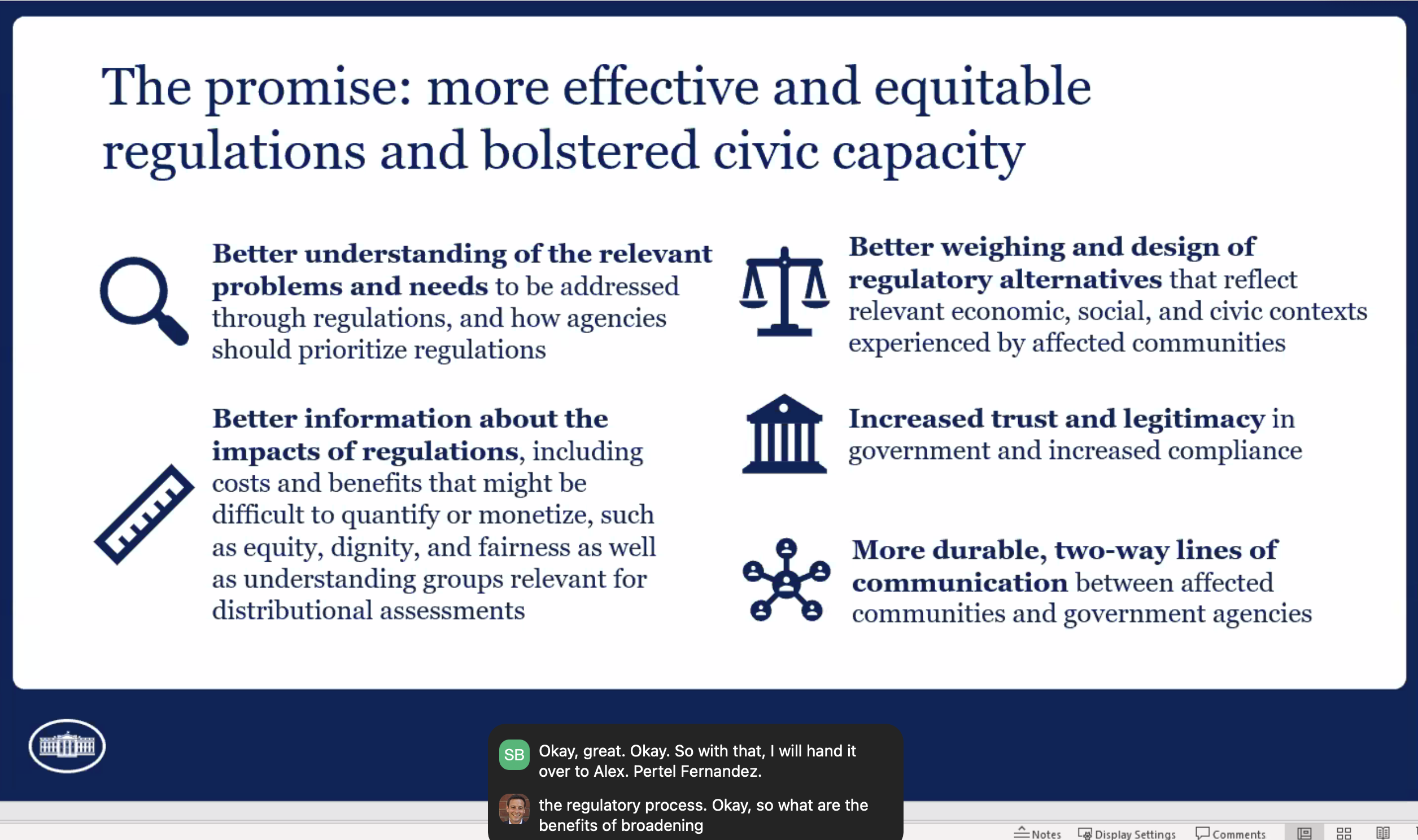
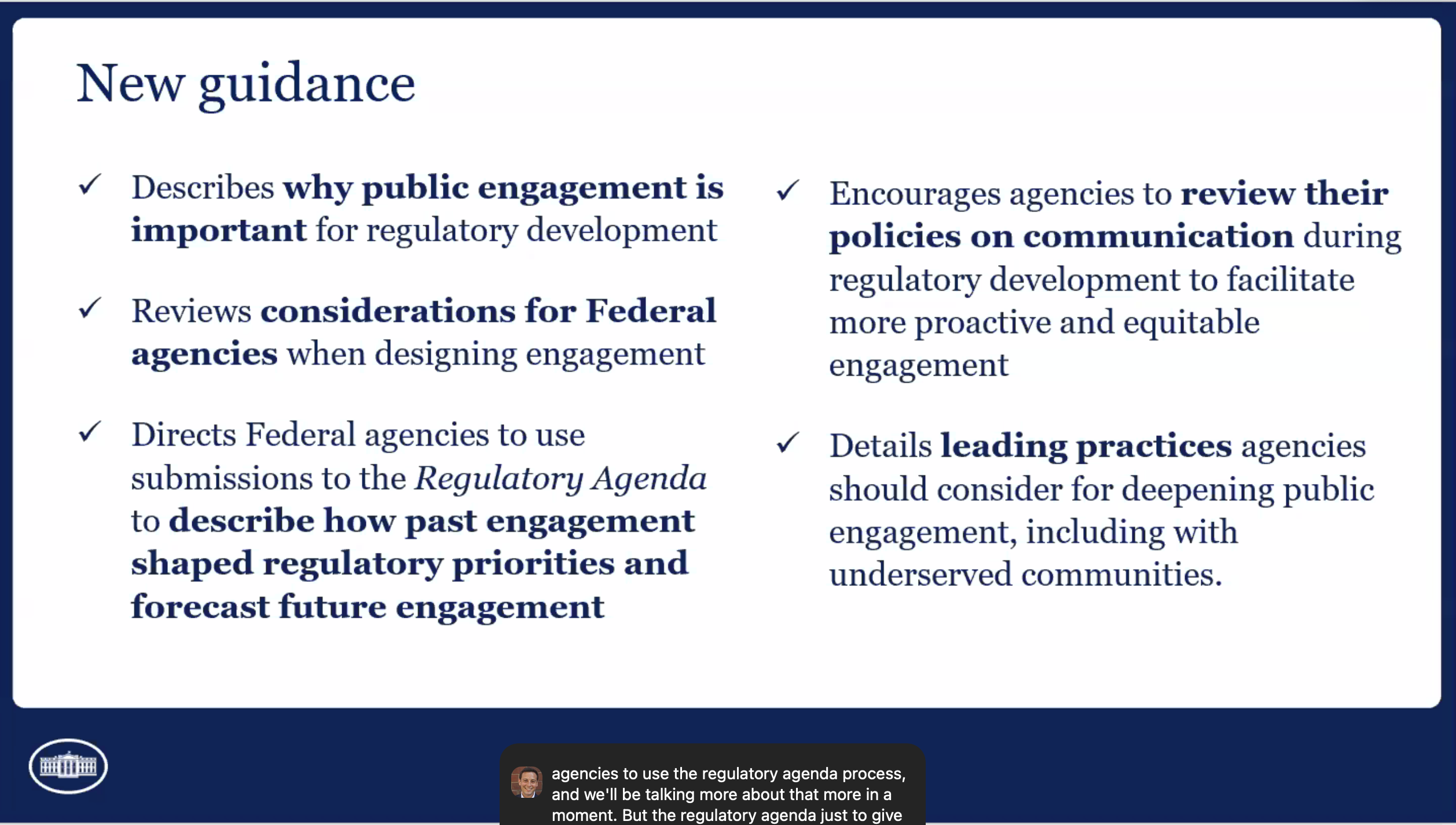
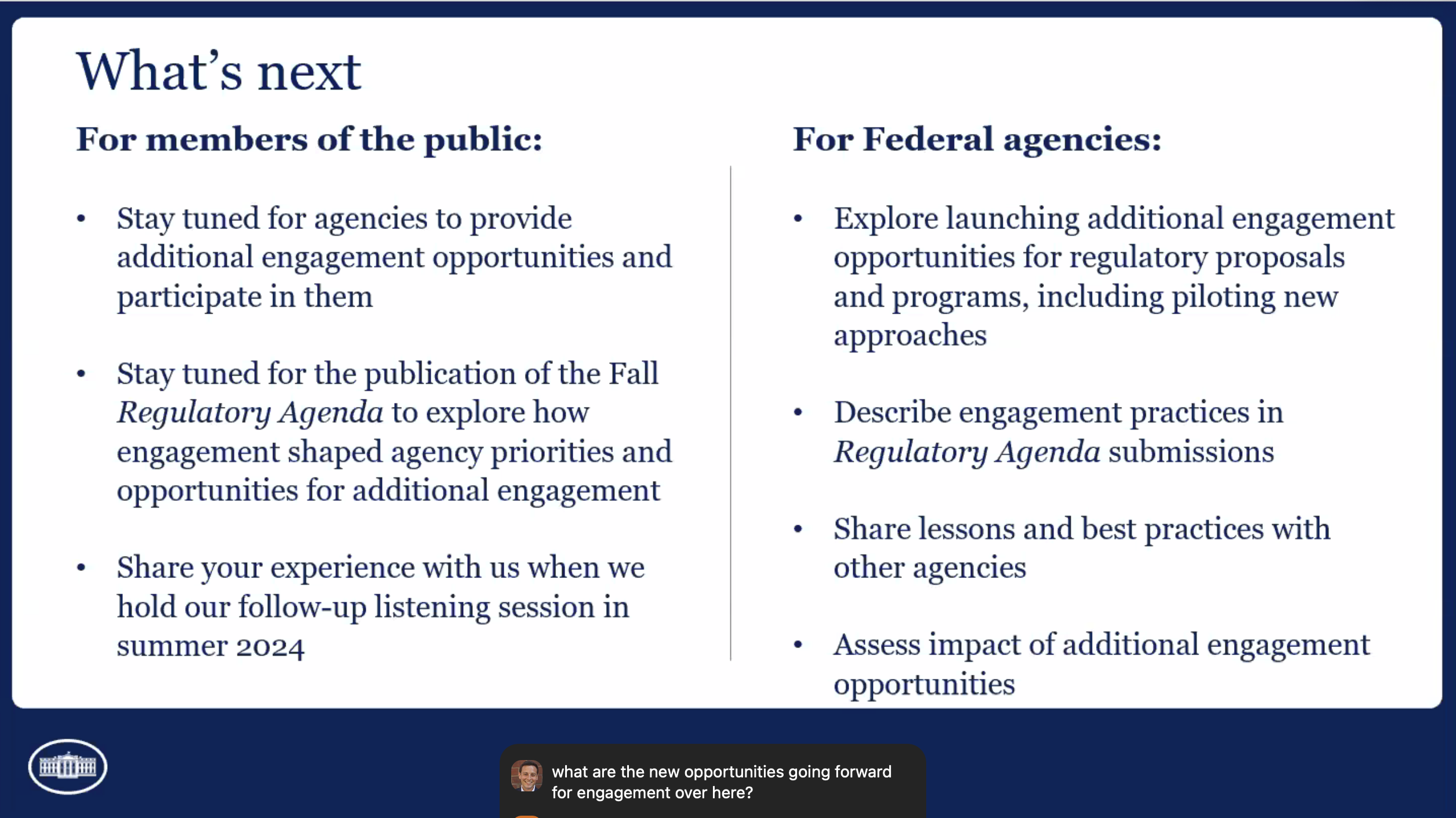
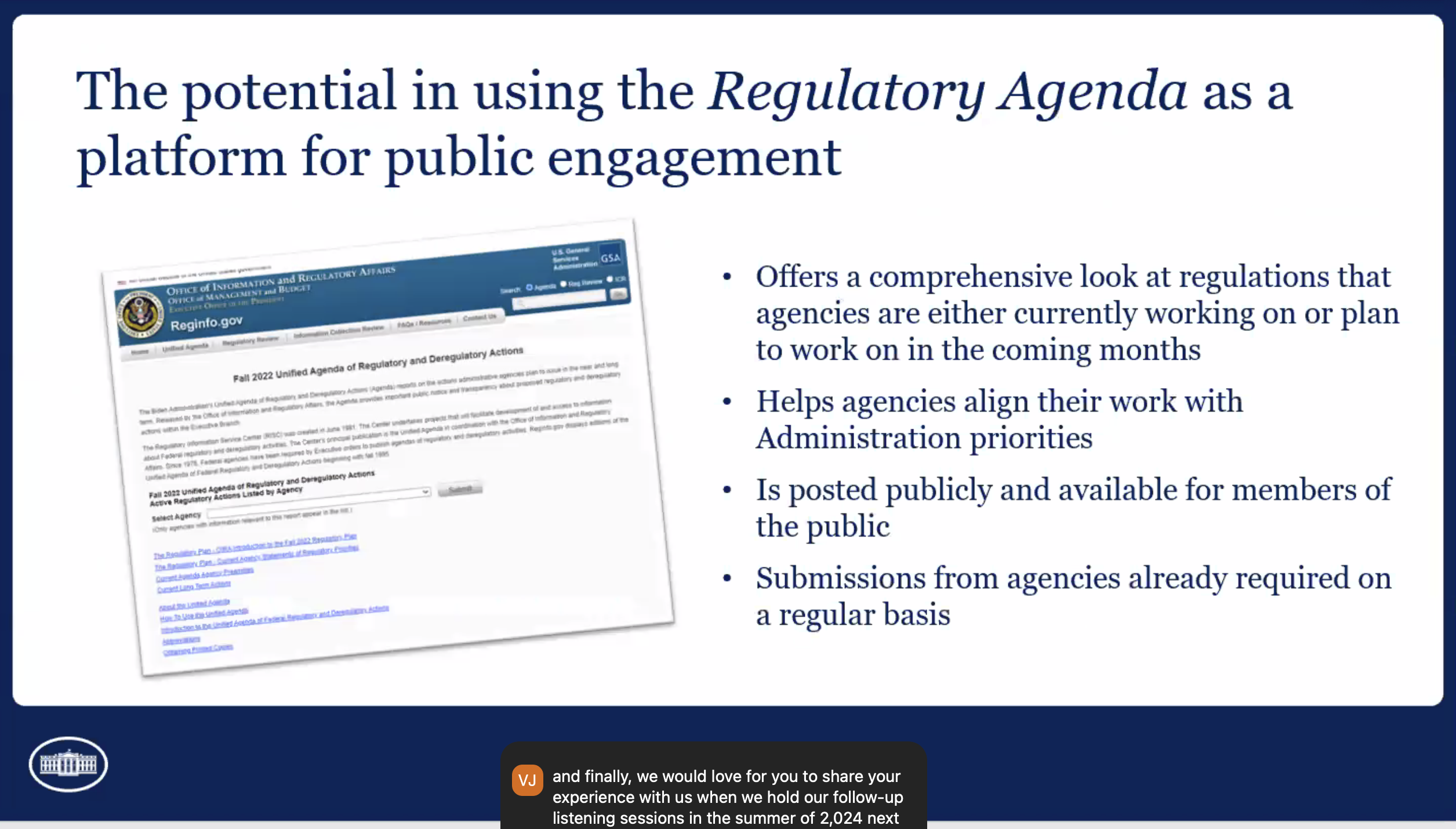
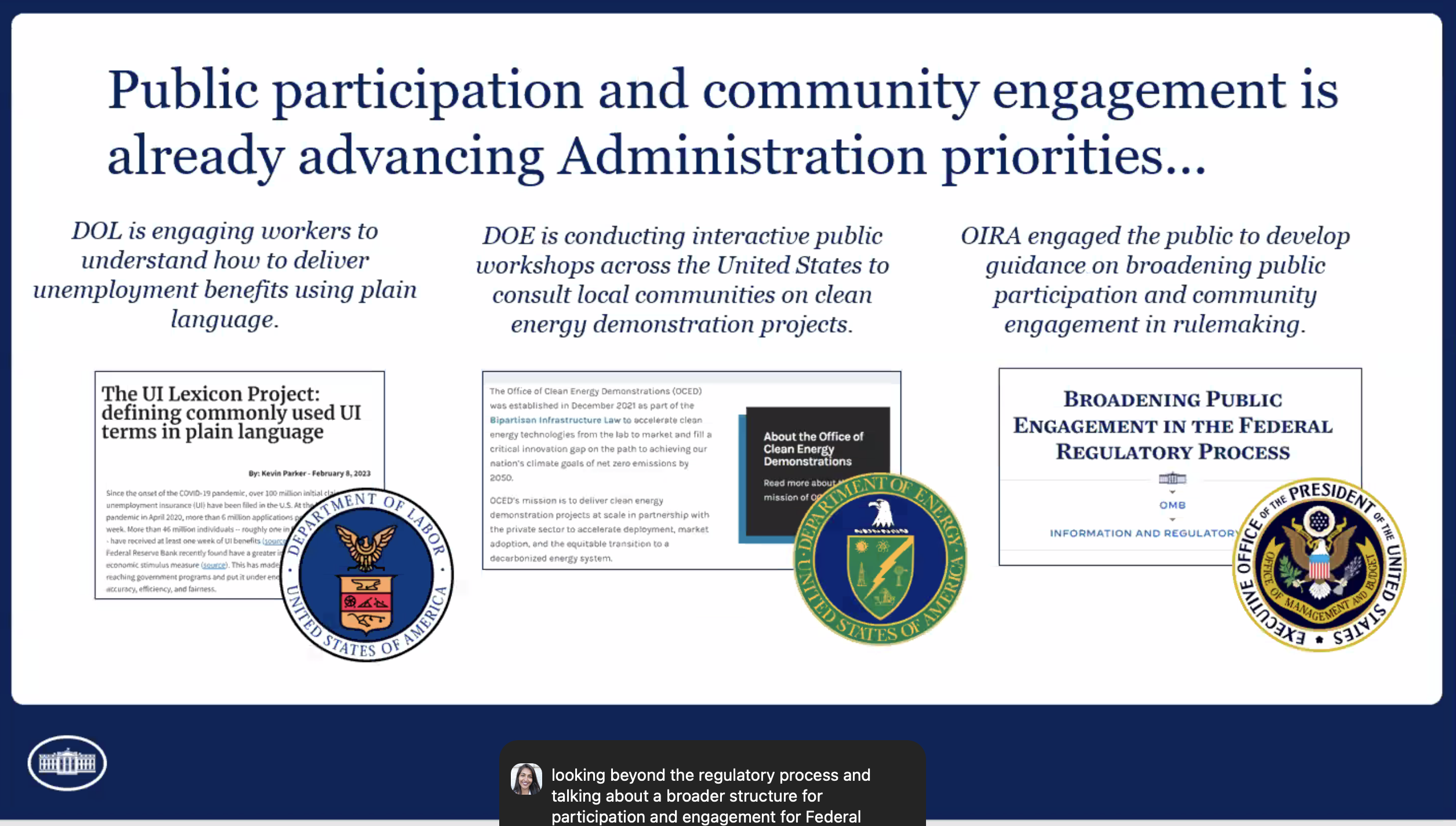
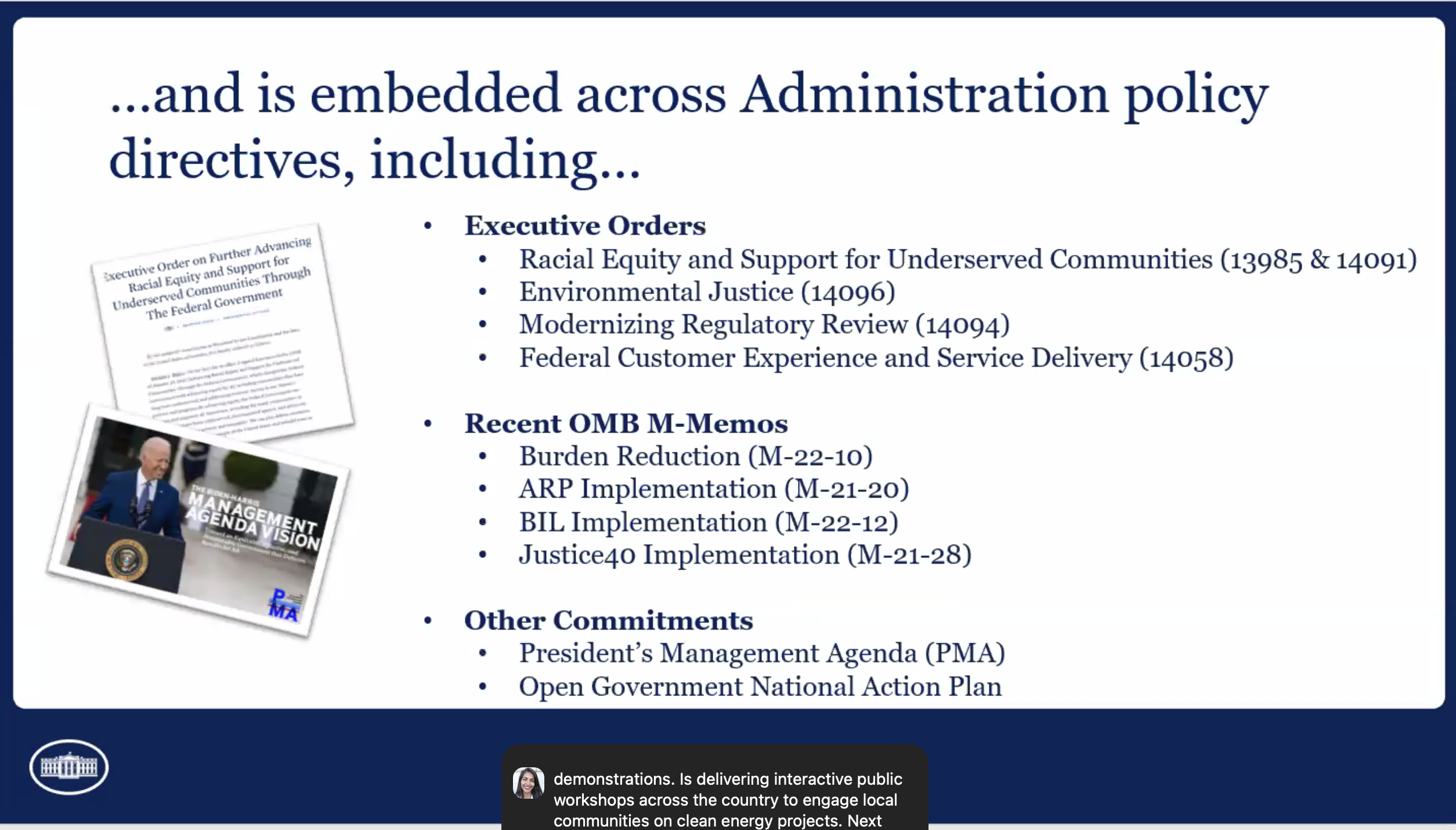
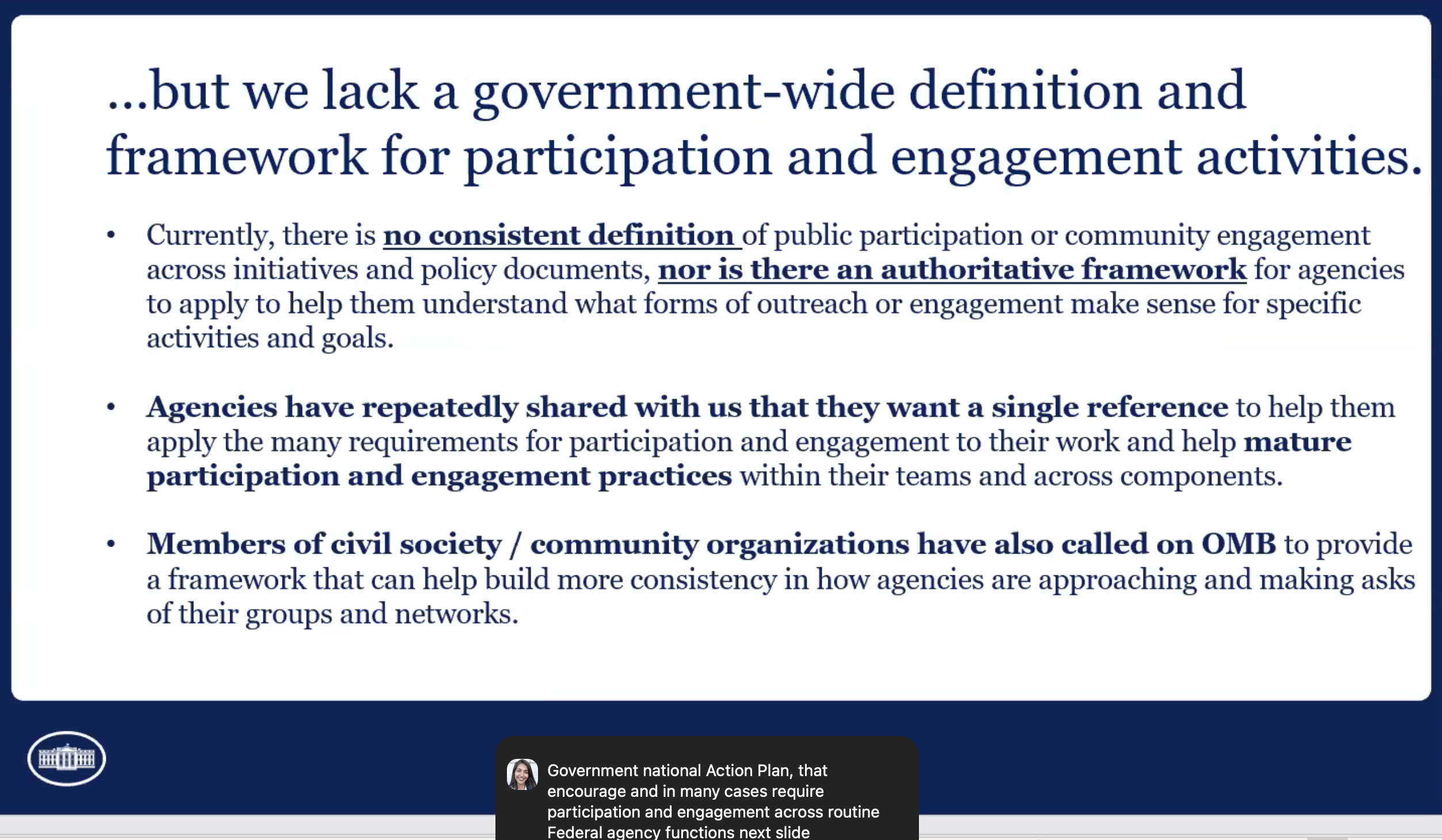
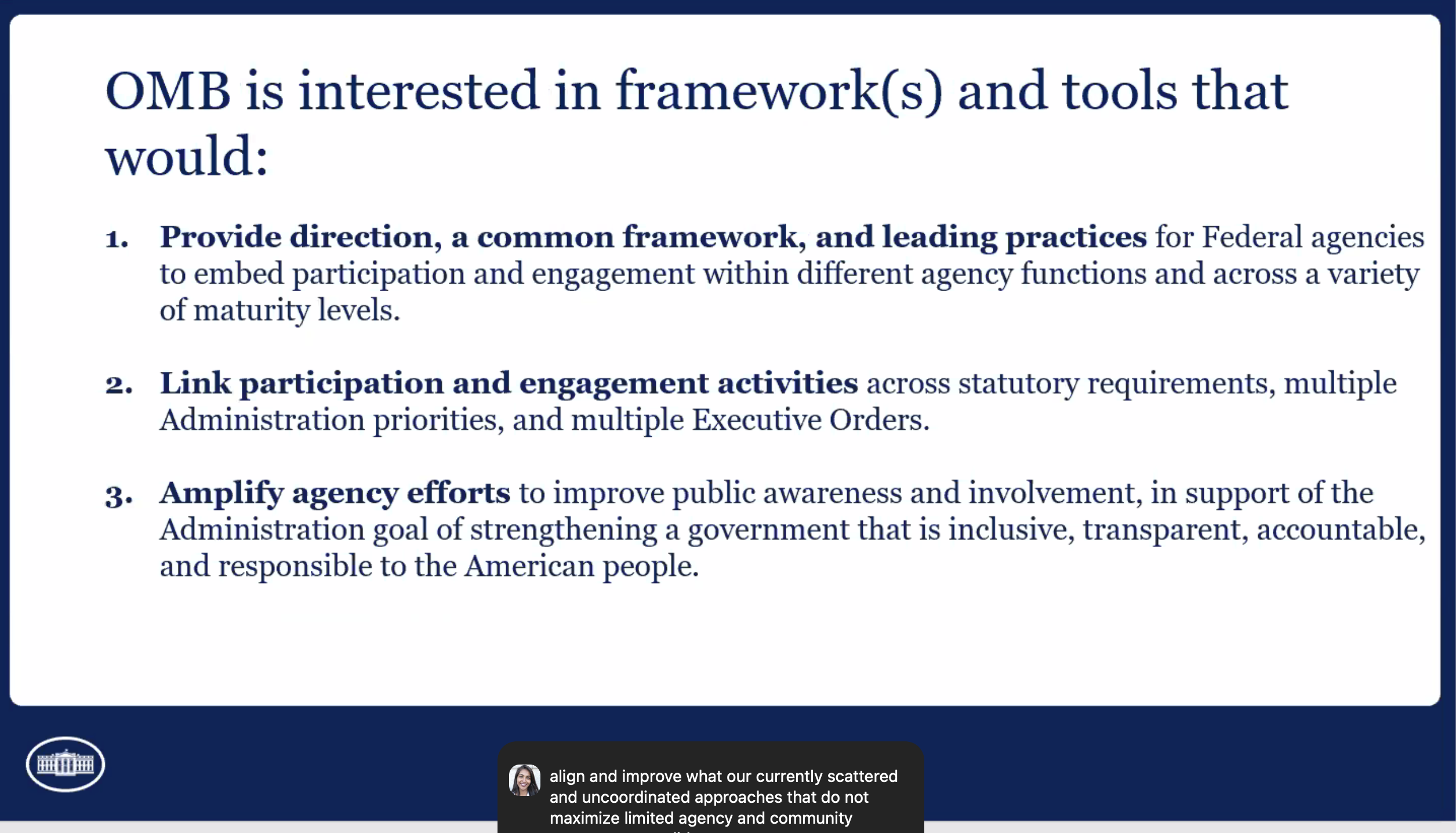
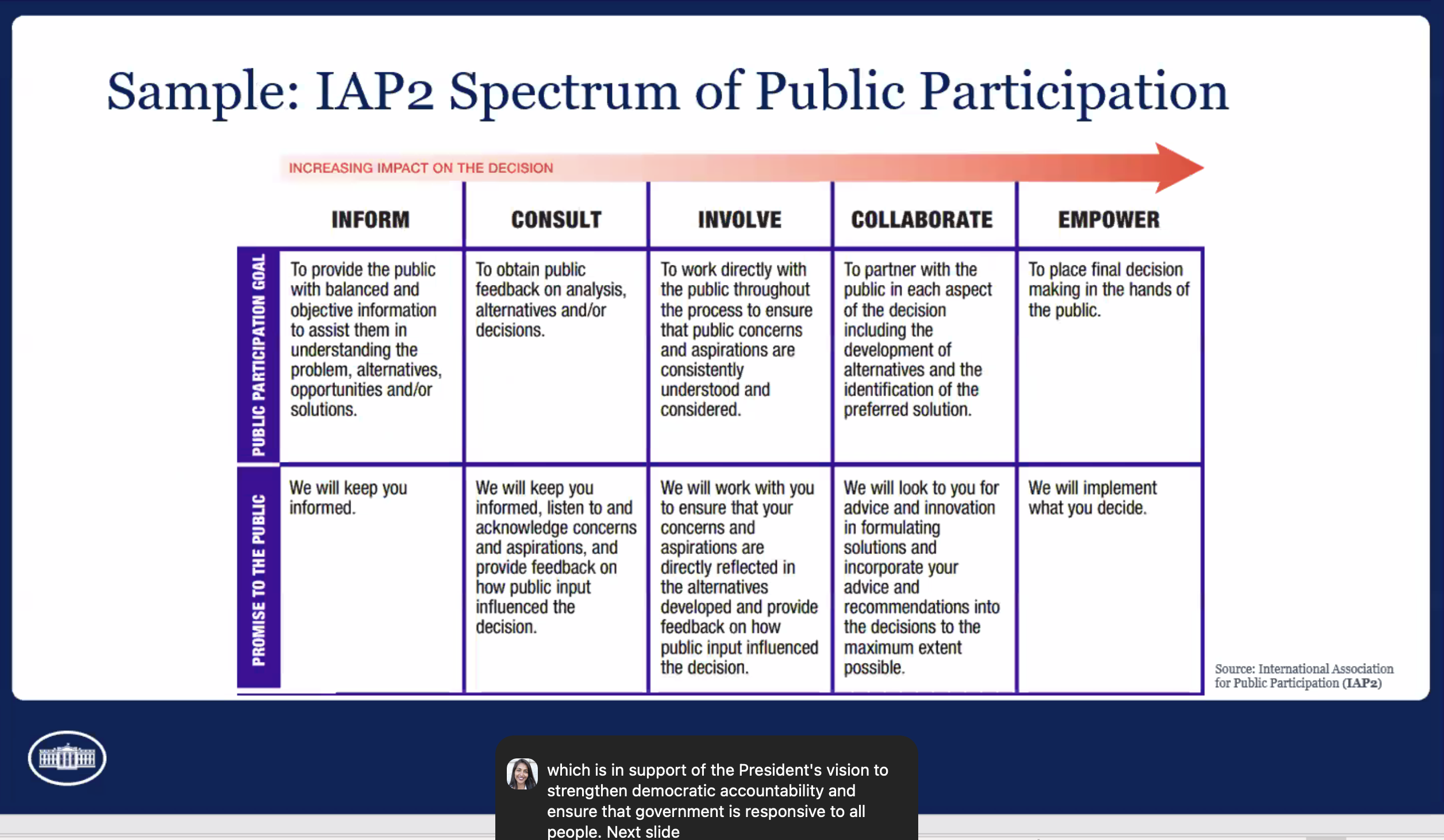
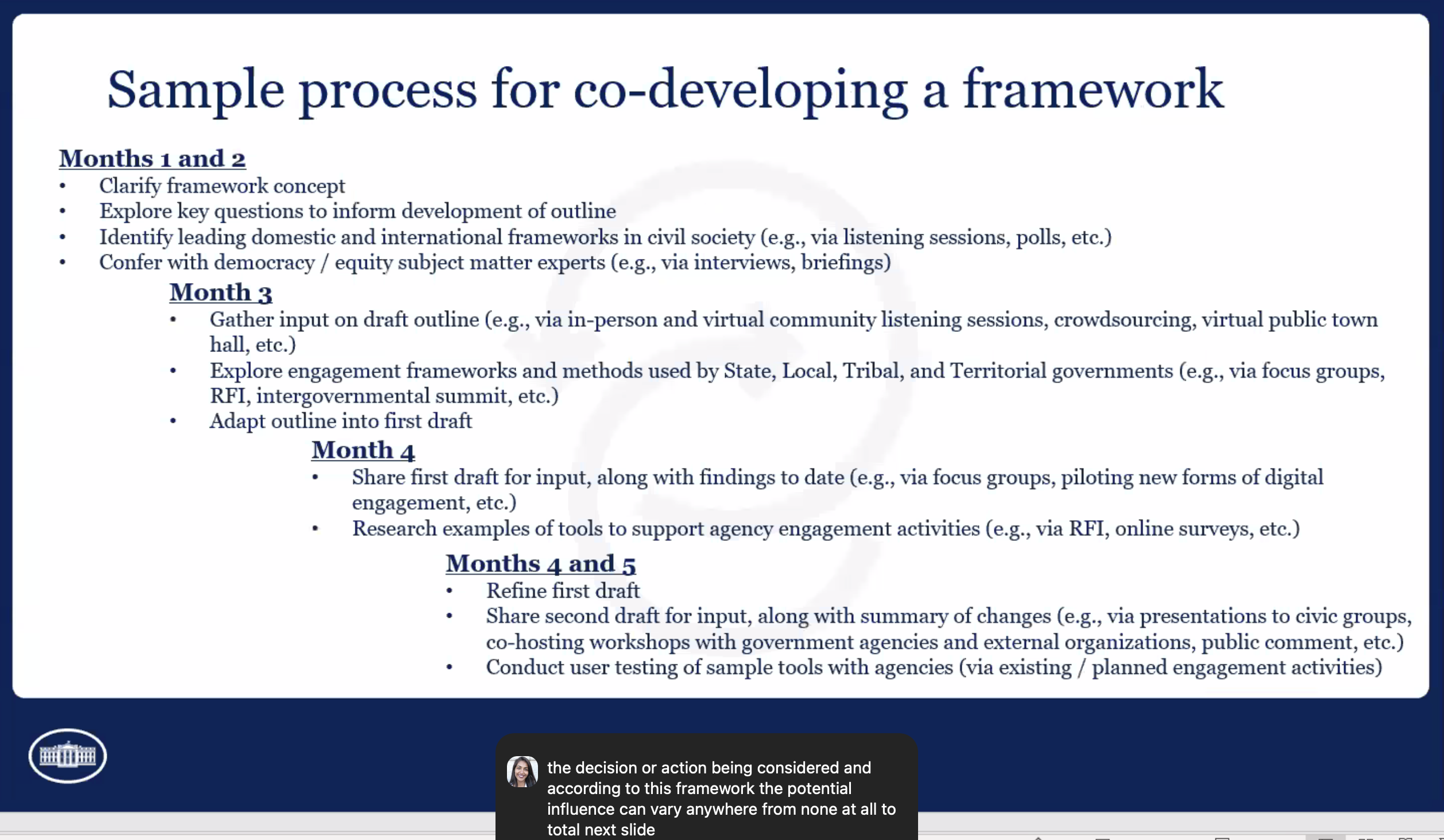
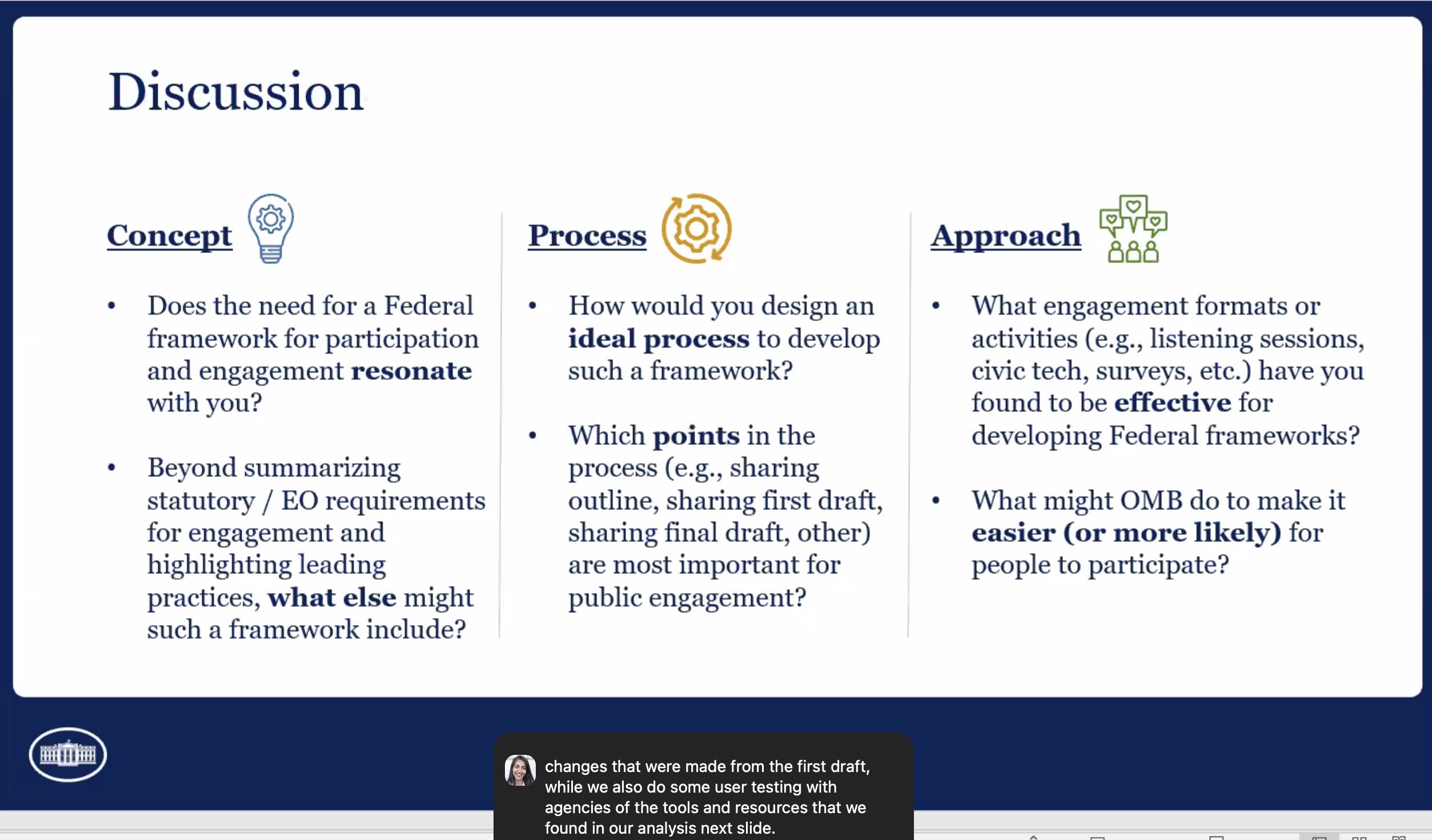
Should this White House publish slides or notes from this public session on its work implementing open government commitments, we will update this post.
(Officials said that the session was not recorded, so we are providing the above resources for the Americans who were unable to attend or who did not hear about this opportunity to engage with OMB and OIRA about broadening public engagement because this administration did not engage the public. As you’ll hear in the recording, the public participants in this listening session offered praise for the guidance and suggestions for improvement tempered with critiques of the opaque process, poor communications about the forum, and dissatisfaction at the lack of a cohesive way to track and understand this administration’s work on government transparency and accountability.)
 E Pluribus Unum
Thank you, Alex, for recording and making publicly accessible the White House forum on public participation. I found the recording crystal clear but not quite as loud as would have been most comfortable for my ears (I set my laptop volume to its maximums setting and could easily follow the recording but still wished for a bit more volume).
One substantive observation based on my years of following FCC rulemakings: The technical framing of FCC proceedings effectively restricts public participation to those who have substantial technical expertise. Furthermore, the technical framing masks decisions with massive economic consequences, including sometimes tens of billions of dollars’ worth of giveaways to industry. The telecom industry loves this type of framing of FCC decisions because it helps exclude the public and the press from the process. It seems to me that in comparison to the public participation issues the administration wants to address, requiring that technical proceedings raise economic issues, especially the cost to taxpayers, would do substantially more to incentivize meaningful public participation. I don’t think the FCC would be a credible source of such cost estimates because it is beholden to industry. So I’d suggest having an independent entity do it. We already have a pretty good process for doing this for Congressional statutes, notably the CBO (with a nice competing source from OMB). But there is nothing comparable for the FCC even when it is effectively giving away public assets worth orders of magnitude more than many CBO cost estimates. Note that the FCC does estimate the costs of its regulations for small businesses, just not the public. Alas, given that my federal rulemaking experience doesn’t extend beyond the FCC, I don’t know the extent to which this type of framing issue to exclude the public is a general problem in federal rulemaking.
Best,
Jim Snider, President
iSolon.org