White House asks for public participation to improve draft principles for public participation

6792552077_24fec36849_o

If a government commits to developing “best practices & metrics for public participation,” one way to demonstrate that commitment is to then post a draft version of those practices and metrics for public consideration and seek public comment. Today, the White House took the first step on that journey when it asked the public to help shape public participation in the 21st century in a decidedly 21st century way: by posting a blog post on WhiteHouse.gov and publishing a draft of a new U.S. Public Participation Playbook on Madison, an open source platform specifically built for collaboration between government and citizens:

Developing a U.S. Public Participation Playbook has been an open government priority, and was included in both the first and second U.S. Open Government National Action Plans as part of the United States effort to increase public integrity in government programs. This resource reflects the commitment of the government and civic partners to measurably improve participation programs, and is designed using the same inclusive principles that it champions.

More than 30 Federal leaders from across diverse missions in public service have collaborated on draft best practices, or “plays,” lead by the General Services Administration’s inter-agency SocialGov Community. The playbook is not limited to digital participation, and is designed to address needs from the full spectrum of public participation programs.

The plays are structured to provide best practices, tangible examples, and suggested performance metrics for government activities that already exist or are under development. Some categories included in the plays include encouraging community development and outreach, empowering participants through public/private partnerships, using data to drive decisions, and designing for inclusiveness and accessibility.

In developing this new resource, the team has been reaching out to more than a dozen civil society organizations and stakeholders, asking them to contribute as the Playbook is created. The team would like your input as well!

Many of the dynamics that have led to news sites turning off online comments apply to governments trying to crowdsource policy or laws. Given those risks, why post this relatively rough draft online now?

“In order to create the strongest public participation resource for agencies, we didn’t just want to open it for comment after the fact — we wanted collaboration and openness in the DNA of the project itself,” said Justin Herman, the social media lead at the GSA who co-authored the blog post, in an interview. “This approach empowers contributors to understand different sides of each play from their creation, and makes participation more meaningful for all.”

As noted in the White House blog post, this effort isn’t happening in a vacuum or a starting point: the White House and the community of practice at the General Services Administration (GSA) have already seeded the document with ideas and reached out to members of civil society.

Whether this newest effort at crowdsourcing a policy results in a better playbook will rest in part upon whether its owners are willing and able to engage the public regarding it. Two tweets are a start, but only that:

What happens next is much less clear: will White House officials and GSA staff participate in conversations on the document? Will conversations spiral out into partisan rancor or be diverted by online trolls, just in it of the lulz? Will a skeptical, angry and distrustful public even show up to participate? Have the feds learned anything from their mistakes in crowdsourcing comments online?

“We knew from the beginning that we wanted the U.S. Public Participation Playbook to truly reflect that engagement in government has advanced in recent years, and participation can and should result in improved services,” said Herman. “We did a lot of research at first, everything from case studies in government to feedback from experts in the field. We don’t just want a resource that people see the value in — we want a resource they can see themselves in, and our experiences in advancing public participation. We’re also approaching development very flexibly and have a team that embraces that approach, which helps immensely.”

Embracing Madison online

It’s worth noting that the collaborative drafting tool the GSA and the White House have chosen has an interesting pedigree. The tool was originally designed to crowdsource legislative markup and introduced at the first Congressional hackathon. Madison was subsequently used to crowdsource multiple bills by Congressman Darrell Issa‘s office before being spun out to be run and improved a separate Open Gov Foundation. As I noted in last week’s column on networked activism, people interested in the next generation of civic software should keep an eye on the growth of Madison, which recently received a huge grant from the Knight Foundation. While there may be a partisan gulf between Congressman Issa and the White House, the adoption of this tool and a collaborative approach to improving this draft playbook shows that there’s some congruence when it comes to adopting strategies for networked governance.

“The goal was to make this process as inclusive as possible and using a platform like Madison is just one way that we’re welcoming the civil society groups like the OpenGov Foundation to participate,” said Herman. “It’s an example of how we’re not just writing about more responsive services, we’re making the development itself a responsive process. We also are accepting contributions through Google Doc, Word, and in-person meetings, so there are multiple paths to participation.”

Madison is just shy of 3 years old, according to Seamus Kraft, the executive director of the Open Government Foundation, but it’s already been completely rewritten. It now has Hypothes.is and Annotator built into the tool itself and uses the Laravel framework. After originally launching in a closed form, Madison is now open source software.

“It’s grown in a pretty steady line, particularly as we’ve started linking up with partner cities and really understanding what our mission principle means when we say inside and outside of government,” he said, in a phone interview today. “Where are our users today? Where are we starting from? When we were on the Hill, it had to happen and happen fast. We were building for ourselves inside government, and we were already connected to the outside users shut out of the process. Now we’re unpacking that, as we’re understanding what has to happen on the backend for drafting or internal collaboration to happen.”

Over the past 2 years, Kraft said that his team has learned about huge potential upside for helping governments at all levels to address inefficiencies in how government manages its documents on the inside, which the public never sees.

“By making that more streamlined, more efficient, with data formats and schemas to accompany it, we will make government more collaborative,” he said. “Where Madison gets really powerful and really cool is when it’s connected to a presentation environment, like the State Decoded, or to a drafting environment.”

When asked about the challenges of managing or moderating public conversations online, particularly given an increasingly politically polarized electorate and Congress, Kraft was diplomatic.

On the one hand, he said that the utility of crowdsourced contributions by and large increases with more identity information provided. (Madison uses OAuth to enable people to choose what identities to use.) When asked how governments should use Madison to encourage meaningful participation online, avoiding gaming and astroturfing, Kraft immediately allowed that doesn’t have any exact answers, but he has ideas.

“There are a number of ways municipal participation has happened,” he said. “There are different types, different flavors, and different data sets in which incentives differ significantly. What we’ve found, what we’ve learned, is that what drives the most meaningful participation is when the people that we’ve elected or appointed, in our cities, country, states or federal government, take a step by opening themselves up for collaborative opportunities like this. That first step is a cultural shift, which is the coin of the realm towards driving participation. When tested it, we found the best, most meaningful participation was on a draft bill. If you remember the OPEN Act, putting “draft” on it signaled a cultural change, a change in how legislation presented to the public. By doing that, Congressmen and Senators took a step towards their constituents. By
keeping it up for a month for feedback and saying we’re not moving forward until we get your input, they changed the conversation. You can see it here with GSA: that cultural shift is the most meaningful thing, in terms of encouraging meaningful participation.”

That’s a cultural shift embodied by Herman, who is a constant presence online and a driving force involved in various efforts to get federal government staffers to use social media to listen, collaborate and engage, not just broadcast press releases optimized for new media. When we talked, he specifically connects effective public participation and civic engagement with the mission of public servants.

“Engagement, responsiveness, inclusiveness: these are foundations of the public services so many of us proudly work to build every day,” he said. “They are not talking points, as when we look at emergency management, education services, veterans programs and more, we see how public participation can directly lead to improvement in the lives of people. It’s not just important that we help agencies do this better, it’s our responsibility. We hope that organizations from across fields and backgrounds take a look and see what they can contribute, and that all citizens may use this to better understand the importance of their informed participation.”

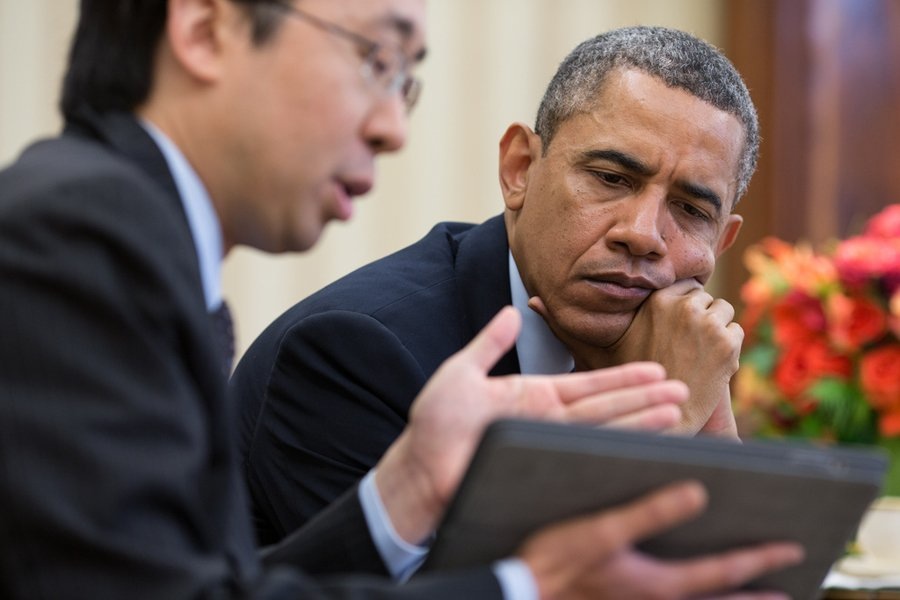
[Photo Credit: Pete Souza, White House on Flickr]

This post has been updated with additional comments.

FEC hires innovative startup to help bring U.S. Senate into 21st Century

IMG_1992.JPG In a win for democracy & open government, the Federal Election Commission has signed a contract with Captricity to convert paper campaign contribution disclosure filings by U.S. Senators into data.

Alert readers may recall my story on the startup two years ago, when they launched a better way of converting forms into data using Amazon Mechanical Turk, machine learning, and an innovative use of crowdsourcing.

More recently, they were involved in the OpenFDA project.

Great news.

Update: Derek Willis, one of the best data-driven campaign finance reporters around, did not agree with the headline of this post:

We’ll have to choose to disagree on this count. Converting these paper records has the potential to put more pressure on Senators to upgrade from paper disclosures and to demonstrate the value of digitizing campaign finance data, in terms of more access to insights, analysis and increased velocity of analyses.

It’s true that the Senate itself hasn’t been magically upgraded, reformed or shifted, but in my view making this aspect of funding more open will lead to more media and members of the public becoming aware and understanding how money is being spent, by whom, and given to whom, which could in turn create more accountability.

I don’t expect this kind of transparency to disinfect the Senate, per se, but it could lead to some discomfort as data-driven bleach seeps into some cracks.

USA to create official open source policy

IMG_1256.JPG
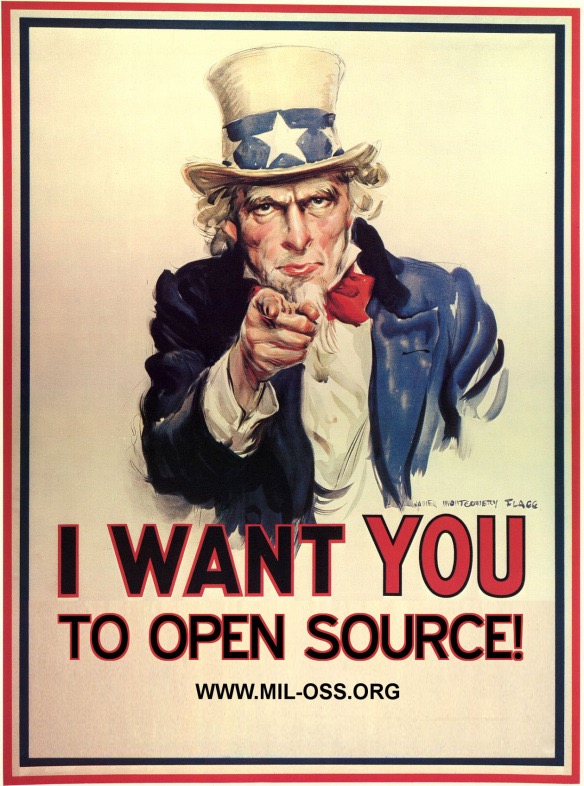
Uncle Sam is getting more serious about releasing the code for software developed for the people to the people. In one of the new commitments for the second U.S. National Action Plan released today at the United Nations during President Barack Obama’s remarks at the Open Government Partnership event, the White House announced that the United States of America would create an open source policy for software developed by the federal government. Here’s the key paragraph of the document:

“Adopt an open source software policy. Using and contributing back to open source software can fuel innovation, lower costs, and benefit the public. No later than December 31, 2015, the Administration will work through the Federal agencies to develop an open source software policy that, together with the Digital Services Playbook, will support improved access to custom software code developed for the Federal government.”

You can read the entire series of new commitments here.

Chris Gates will be the new president of the Sunlight Foundation

As reported by Politico, Chris Gates will be the next president of the Sunlight Foundation, the Washington, DC-based nonprofit that advocates for open government and creates tools that empower people to improve government transparency and accountability around the world.

“I couldn’t be more excited to join the team at Sunlight to help advance their work to bring more accountability and transparency to our politics and our government,” said Gates, in a statement. “For those of us who care deeply about the health of our democracy, these are perilous times. Our political system is swimming in anonymous money and influence, and our federal government is paralyzed and unable to respond to the challenges of our times. Our hope is that the new tools, data and information generated by Sunlight will help break through this impasse. We look forward to working with others in the reform field to fix a system that clearly isn’t working.”

Gates is currently the executive director of Philanthropy for Active Civic Engagement, part of the Council on Foundations. Previously, he served as president of America’s oldest good government organization, the National Civic League.

“Chris, who is a thought leader in the fields of democratic theory and practice and political and civic engagement, has, for the past decade, been a leading voice for strengthening democratic processes and structures and developing new approaches to both engagement and decision-making,” wrote Ellen Miller, co-founder and current president of the Sunlight Foundation, at the organization’s blog. “He and I have been colleagues for the past several years — we’ve worked together on numerous occasions — and I am truly thrilled that he will become Sunlight’s president.”

Miller went on to say that Gates will “bring a breadth of experience and style of leadership that will take us to new levels.” This fall, the Sunlight Foundation will undergo the biggest transition of leadership since its founding: last week, Sunlight Labs director Tom Lee announced that he was leaving to work at DC-based Mapbox, with James Turk stepping up to assume responsibility for the nonprofit’s powerful technology resources and development team. I look forward to seeing how both men build out the civic infrastructure, reporting group, and advocacy shop that Sunlight has established since the organization opened its doors in 2006.

[Image Credit: Sunlight Foundation]

US CTO Park to step down, move west to recruit for Uncle Sam

IMG_0507.JPG

United States chief technology officer Todd Park will be moving to California at the end of August, just in time to take his kids to the first day of school. He’ll be shifting from his current position in the Office of Science and Technology a Policy to a new role in the White House, recruiting technologists to join public service. The move was first reported in Fortune Magazine and then Reuters, among other outlets. Update: On August 28th, the White House confirmed that Park would continue serving in the administration in a new role in blog post on WhiteHouse.gov.

“From launching the Presidential Innovation Fellows program, to opening up troves of government data to the public, to helping spearhead the successful turnaround of HealthCare.gov, Todd has been, and will continue to be, a key member of my Administration,” said President Barack Obama, in a statement. “I thank Todd for his service as my Chief Technology Officer, and look forward to his continuing to help us deploy the best people and ideas from the tech community in service of the American people.”

“I’m deeply grateful for Todd’s tireless efforts as U.S. Chief Technology Officer to improve the way government works and to generate better outcomes for the American people,” added White House Office of Science and Technology Policy Director and Assistant to the President John Holdren. “We will miss him at the Office of Science and Technology Policy, but we’re fortunate Todd will continue to apply his considerable talents to the Obama Administration’s ongoing efforts to bring the country’s best technologists into the Federal Government.”

It will be interesting to see how Park approaches recruiting the nation’s technologists to serve in the new U.S. Digital Service and federal agencies in the coming months.

“It continues to be the greatest honor of my life to serve the President and the country that I love so very much,” stated Park, in the blog post. “I look forward to doing everything I can in my new role to help bring more and more of the best talent and best ideas from Silicon Valley and across the nation into government.”

For a wonderfully deep dive into what’s next for him, read Steven Levy’s masterfully reported feature (his last for Wired) on how Park is not done rebooting government just yet:

Park wants to move government IT into the open source, cloud-based, rapid-iteration environment that is second nature to the crowd considering his pitch tonight. The president has given reformers like him leave, he told them, “to blow everything the fuck up and make it radically better.” This means taking on big-pocketed federal contractors, risk-averse bureaucrats, and politicians who may rail at overruns but thrive on contributions from those benefiting from the waste. It also will require streamlined regulations from both the executive and legislative branches. But instead of picking fights, Park wants to win by showing potential foes the undeniable superiority of a modern approach. He needs these coders to make it happen, to form what he calls a Star Wars-style Rebel Alliance, a network of digital special forces teams. He can’t lure them with stock options, but he does offer a compelling opportunity: a chance to serve their country and improve the lives of millions of their fellow citizens.

“We’re looking for the best people on the planet,” he said. “We have a window of opportunity—right the fuck now—within this government, under this president, to make a huge difference.

“Drop everything,” he told them, “and help the United States of America!”

Who will be the new CTO?

The next US CTO will have big shoes to fill: Park has played key roles advising the president on policy, opening up government data and guiding the Presidential Innovation Fellows program and, when the president asked, rescuing Healthcare.gov, the federal online marketplace for health insurance. While it’s not clear who will replace Park yet, sources have confirmed to me that there will be another U.S. CTO in this administration. What isn’t clear is what role he (or she) might play, a question that Nancy Scola explored at The Switch for the Washington Post this week:

There’s a growing shift away from the idea, implicit in Obama’s pledge to create the U.S. CTO post back in 2007, that one person could alone do much of the work of fixing how the United States government thinks about IT. Call it the “great man” or “great woman” theory of civic innovation, perhaps, and it’s on the way out. The new U.S. Digital Service, the pod of technologists called 18F housed at the General Services Administration, the White House’s Presidential Innovation Fellows, even Park’s new outreach role in Silicon Valley — all are premised on the idea that the U.S. needs to recruit, identify, organize, and deploy simply more smart people who get technology.

An additional role for the third US CTO will be an example of the Obama administration’s commitment to more diverse approach to recruiting White House tech staffers in the second term. The men to hold the office were both the sons of immigrants: Aneesh Chopra is of Indian descent, and Park of Korean. As Colby Hochmuth reported for Federal Computer Week, the White House of Office and Science and Technology Policy achieved near-gender parity under Park.

If, as reported by Bloomberg News, Google X VP Megan Smith were to be chosen as the new US CTO, her inclusion as an openly gay woman, the first to hold the post, and the application of her considerable technological acumen to working on the nation’s toughest challenges would be an important part of Park’s legacy.

Update: On September 4th, the White House confirmed that Smith would be the next US CTO and former Twitter general counsel Alex Macgillvray would be a deputy US CTO.

[PHOTO CREDIT: Pete Souza]

This post has been updated with additional links, statements and analysis.

White House e-petition system hits 15 million users, 22 million signatures and 350,000 petitions

Last week, the White House took a victory lap  for a novel event in U.S. history, when a bill that had its genesis as an online petition to the United States government filed at WhiteHouse.gov became law after the 113th Congress actually managed to passed a bill.

In a blog post explaining how cell phone locking became legal, Ezra Mechaber, deputy director of email and petitions in the White House Office of Digital Strategy, noted that this outcome “marked the very first time a We the People petition led to a legislative fix.” Mechaber also highlighted continued growth for the national e-petition platform: 15 million users, 22 million signatures and 350,000 petitions since it was launched in 2011.

WeThePeople epetition statistics

Mechaber also mentioned two other things worth highlighting: “a simplified signing process that removes the need to create an account just to sign a petition”  and a Write API that will “eventually allow people to sign petitions using new technologies, and on sites other than WhiteHouse.gov.” If and when that API goes live, I expect user growth and activity to spike again. Imagine, for instance, if people could sign petitions from within news stories or though Change.org. Enabling petition creators to have more of a relationship with signatories would also address one of the principal critiques levied against the site’s function. Professor Dave Karpf:

Launching the online petition at We The People created the conditions for a formal response from the White House.  That was a plus.  We The People provided no help in amplifying the petitions through email and social media.  That was neutral in this case, since Reddit, EFF, Public Knowledge, and others were helping to amplify instead.  But the site left the petition-creators with no residual list for follow-up actions.  That’s a huge minus.

If the petition had been launched through a different site (like Change.org), then it would have been less likely to get a formal White House response, but more likely to facilitate the follow-up actions that Khanna/Howard, Wiens and Khanifar say are vital to eventual success.

The White House has not provided a timeline for when the beta API will become public. If they respond to my questions, I’ll update this post.

What’s next for net neutrality? Reclassification or a tiered Internet?

“I will take a back seat to no one in my commitment to network neutrality, because once providers start to privilege some applications or websites over others, then the smaller voices get squeezed out and we all lose. The Internet is perhaps the most open network in history, and we have to keep it that way.” — Senator Barack Obama, November 14, 2007

As of yet, there has been no direct comment from the president who supported net neutrality as a candidate in California, just over six years ago. 

Yesterday, The White House told The Hill that it is “‘still reviewing the court’s decision,” but won’t abandon the push to ensure that Internet providers treat all traffic the same,” including a statement from an unnamed government official:

“President Obama remains committed to an open internet, where consumers are free to choose the websites they want to visit and the online services they want to use, and where online innovators are allowed to compete on a level playing field based on the quality of their products.”

After yesterday’s ruling against the FCC, what happens next isn’t obvious, though there’s a growing chorus of commentary, predictions and advocacy.

Journalist John Hermann described a nightmare scenario and venture capitalist Fred Wilson mapped out a similarly dire future at his blog.

The man President Obama nominated to protect an Open Internet, Julius Genachowski, didn’t get the legal rulemaking around network neutrality right. Tim Wu and Jon Brodkin explain this effectively & succinctly. Nilay Patel is particularly unsparing in his analysis.

So, three things are clear:

1) If you’re reading this online — and by definition you are, given where I’m writing this — you should care about the issue. Here’s a quick FAQ from CNET on why.

2) The new FCC Chairman, Tom Wheeler, has a difficult decision ahead of him. 

He was ambiguous about his position on the issue in his blog post about network neutrality.

3) There’s going to be a ruckus about this issue in DC in 2014. 

Critics of the telecommunications industry and public interest advocates like Susan Crawford and Marvin Ammori are up in arms, advocating for the FCC to reclassify the Internet. Brian Fung mapped out a way for network neutrality to survivee. Hint: it involves more rulemaking and lawsuits.

Meanwhile, Congress is talking about whether 2014 is the year to rewrite the Telecommunications Act, the law written in 1934 and updated in 1996 that governs the space.

And so it goes.

What is the value of open data?

This morning, the New America Foundation hosted a forum on the value of open data. Archived video of the event is embedded below:


Video streaming by Ustream

The event featured comments from deputy United States chief technology officer Nick Sinai, the authors of the McKinsey report on the economic value of open data, and a panel of experts, moderated by yours truly.

DATA Act passes U.S. House of Representatives, 388-1

One of the most important bills for open government in the U.S. since the Freedom of Information Act of 1967 has passed the House. Now, attention goes back to the Senate.

In September, House Majority Leader Eric Cantor told me that he would bring the DATA Act to the floor for a vote.

Today, he did.

The bill passed the U.S. House of Representatives 388-1 this evening.

20131118-213153.jpg

“The American people deserve a functioning government that is both open & transparent,” said Mr. Cantor.

“The DATA Act is an important step to achieving this goal because it will publish federal spending data and transform it from disconnected documents into open, searchable data for people to see and read through online.”

The bill that passed the House is the same version that a coalition of open government advocates supports. The one that passed the Senate HSGAC Committee was modified.

We’ll see what the full Senate votes on, if it’s brought to the floor, and what comes out of committee if it is passed.

“We are hopeful that the Senate will answer this call from the House of Representatives to reap the rewards from greater accountability and tech-sector innovation that real spending transparency can provide,” said Hudson Hollister, the Executive Director of the Data Transparency Coalition, in a statement.

“President Obama should put the goals of his Open Data Policy into action by publicly endorsing the DATA Act. As Comptroller General Gene Dodaro testified in July, without this legislative mandate, spending transparency won’t happen.”