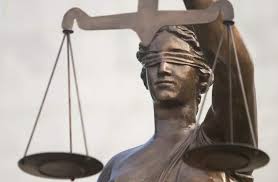
Should Congress criminalize online “revenge pornography”?

1-Blind-JusticeAShould “revenge porn” be made a crime? In California, revenge porn could soon be illegal.

This weekend, in an op-ed for CNN.com, University of Maryland law professor Danielle Citron argues that Congress and other states in the union also should move to criminalize sharing nude pictures of a person without that person’s consent.

“New Jersey is the only state to make it a felony to disclose a person’s nude or partially nude images without that person’s consent,” she writes. “The New Jersey statute is a helpful model for states like California that are considering proposals to criminalize revenge porn. Congress should amend the federal cyberstalking law, 18 U.S.C. § 2261A, to cover the use of any interactive computer service to produce or disclose a sexually graphic visual depiction of an individual without that individual’s consent.”

Citron argues that that, given the profound effects upon someone’s personal and professional life in the schools, workplaces and communities they inhabit “offline,” criminalizing this online action is a necessary curb on the damage it can do. She makes a strong case that the U.S. Code should catch up to the pace of technological change.

We’re several years past the time the world crossed a Rubicon, with respect to the ability to share embarrassing images of one another. The global adoption of cheap camera phones, smartphones, social networks, search engines and wireless Internet access has created a tidal wave of disruptions across industries, governments and nations. Taking pictures with the world has been made trivially easy by those technologies, a capability that can capture both our best and worst moments.

When combined with the capacity to share those images with the rest of humanity in an instant, billions of people now wield great power in their back pockets. Whether they uphold the responsibility that comes with it is in question, given what history shows us of humans acting badly to those who have less power in society. The power to publicize and shame others is not equally distributed, given the expense of devices, data, and unequal access between the sexes.

In her op-ed, Citron anticipates the First Amendment concerns of organizations like the ACLU, arguing that it’s possible to craft sufficient limits into legislation — again, using New Jersey’s law as a model — that will enable the United States to preserve constitutional protections for free speech online.

“First Amendment protections are less rigorous for purely private matters because the threat of liability would not risk chilling the meaningful exchange of ideas,” writes Citron.

“Listeners and speakers have no legitimate interest in nude photos or sex tapes published without the subjects’ permission. That online users can claim a prurient interest in viewing sexual images does not transform them into a matter of legitimate public concern. Nonconsensual pornography lacks First Amendment value as a historical matter, and could be understood as categorically unprotected as obscenity. Although the Court’s obscenity doctrine has developed along different lines with distinct justifications, nonconsensual pornography can be seen as part of obscenity’s long tradition of proscription.”

The American Civil Liberties Union opposes the California legislation and the Electronic Frontier Foundation has expressed concerns with how broadly it has been drafted.

Legal precision in how legislatures make revenge porn a criminal offense really will matter here, given both existing statutes and the number of entities that are involved in the act, from the person who took the image to the site that hosts it to the people who spread it.

Making anyone but the original person who broke the trust of another by uploading the picture culpable would run up against Section 230 of the United States Communications Decency Act, which provides “intermediary liability,” protecting online platforms from being held liable for user-generated content shared on them.

As more people gain the ability to take, store and share digital images, however, improving systems that govern non-consensual surveillance and distribution looks precisely like the kind of thorny problem that our elected representatives should grapple with in the 21st century.

Societies around the world will need to find answers that reconcile online civil rights with longstanding constitutional protections. The way the United States handles the issue could be a model for other states to consider — or not, if a dysfunctional Congress proves unable to enact effective legislation, a scenario that unfortunately seems all too likely over the next year.

Intelligence executive David Bray to become new FCC CIO

david-bray-flack-jacketDavid Bray, a seasoned national intelligence executive (CV), will be the next chief information officer of the Federal Communications Commission. He’s expected to finish his work in the intelligence community at the Office of the Director for National Intelligence and commence work at the FCC in August.

“As the next FCC CIO, I look forward [to] aiding the FCC’s strong workforce in pioneering new IT solutions for spectrum auctions, next-gen cybersecurity, mobile workforce options, real-time enterprise analytics, enhanced open data, and several other vital public-private initiatives,” wrote Bray, in an email sent to staff and partners Monday night.

Bray holds a a PhD in information systems, a MSPH in public health informatics, and a BSCI in computer science and biology from Emory University, alongside a visiting associateship from the University of Oxford’s Oxford Internet Institute, and two post-doctoral associateships with MIT’s Center for Collective Intelligence and the Harvard Kennedy School. He also has served as a visiting associate with the National Defense University. Bray’s career also includes deployments to Afghanistan, projects at the Department of Energy and work at the Center of Disease Control.

Bray will inherit many IT challenges from former FCC CIO Robert Naylor, who announced that he’d be stepping down in December 2012. His background in the intelligence community will serve him well, with respect to network security issues, but he’ll need to continue to transition an agency that has traditionally outsourced much of its technology to 21st century computing standards and approaches to building infrastructure and meeting increasing demand for services.

Bray’s past work in collective intelligence, informatics, public health and data science suggest that he’ll have no shortage of vision to bring to the role. His challenge, as is true for every federal CIO these days, will be to work within limited budgets and under intense scrutiny to deliver on the promise.

To get a sense of Bray, watch his talk on “21st century social institutions at a brunch for Emory University scholars, in 2013:

White House moves to bash patent trolls, though Congress still must enact trollbane

This morning, President Obama moved to curb suits from “patent trolls,” entities that many observers of the technology industry have been warning have increasingly been harming innovation across the United States. As it turned out, those concerned parties have been right to decry the trend: a report (PDF) contained a startling statistic: the number of lawsuits brought by patent trolls has nearly tripled in the past 2 years, now accounting for 62% of all patent lawsuits in America. As Edward Wyatt pointed out in the New York Times, this surge in patent lawsuits is directly related to the passage of a 2011 law that was designed to address the trouble.

The White House announced several executive actions today to take on patent trolls, including a series of workshops, scholarship opportunities, a consumer-facing website and a review of exclusion orders. The administration will also begin a rulemaking process at the U.S. Patent Office to that would “require patent applicants and owners to regularly update ownership information when they are involved in proceedings before the PTO, specifically designating the ‘ultimate parent entity’ in control of the patent or application.”

One interesting additional outcome of the day’s news is that White House Google+ Hangouts matter. Entrepreneur Limor Fried’s unexpected question to President Obama on patent trolls during a White House Hangout in February 2013 led to a frank answer and contributed to the White House’s action today, a connected directly made by the @WhiteHouse Twitter account. Here’s what the president said, back in February:

A couple of years ago we began the process of patent reform. We actually passed some legislation that made progress on some of these issues, but it hasn’t captured all the problems. And the folks that you’re talking about are a classic example. They don’t actually produce anything themselves, they’re just trying to essentially leverage and hijack somebody else’s idea and see if they can extort some money out of them. And, you know, sometimes these things are challenging, because we also want to make sure that the patents are long enough that, you know, people’s intellectual property is protected. We’ve got to balance that with making sure that they’re not so long that innovation is reduced. And, but I do think that our efforts at patent reform only went about halfway to where we need to go. And what we need to do is pull together, you know, additional stakeholders, and see if we can build some additional consensus on some smarter patent laws. This is true, by the way, across the board when it comes to high tech issues. The technology’s changing so fast. We want to protect privacy, we want to protect people’s civil liberties, we want to make sure the Internet stays open. And I’m an ardent believer that what’s powerful about the Internet is its openness and the capacity for people to get out there and just introduce a new idea with low barriers to entry.

I hope President Obama does more Google+ Hangouts and is asked more tough questions regarding drones, patents and other issues on the minds of the People, far outside of the DC media bubble.

Hangouts aside, as Greg Ferenstein pointed out at TechCrunch, the administration is going to need Congress to effectively curb these abuses: the president can’t simply declare an end to this mess: Congress must be involved.

Five relevant bills have been introduced recently, as Michelle Quinn noted out at Politico and Joe Mullen emphasized at Ars Technica, and while the legislative reforms suggested by the White House could make a real difference in curbing the worst of patent troll abuses, it’s not at all clear what this Congress is capable of passing through both chambers at this point.

Timothy Lee, newly ensconced at Wonkblog at the Washington Post, isn’t convinced that such legislation, even if passed, will effectively smash patent trolls. Lee would like to see the federal government fix a broken patent system. Unfortunately for that aspiration, Washington recently passed an America Invents Act and is now moving forward on implementation. It’s not at all clear how soon substantial reform will end up on a president’s desk again soon.

[Animated GIF credit: White House Tumblr. Oh yes, there will be GIFs. ]